Will the ₹500 Note Be Banned? RBI Says No Plan — and What the Viral "₹36 Lakh Crore" Figure Really Means
Money · Currency fact-check · India 2026
Will the ₹500 Note Be Banned? RBI Says No Plan — and What the Viral “₹36 Lakh Crore” Figure Really Means
₹500 notes remain legal tender. The big number doing the rounds is the value of ₹500 notes people hold, not a sum that has been banned.
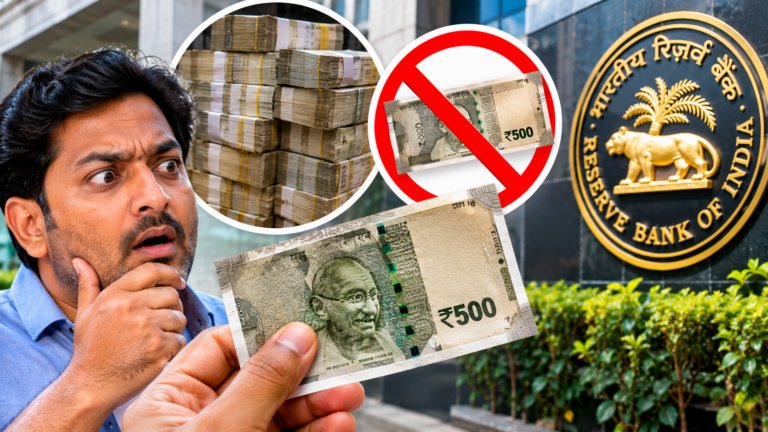
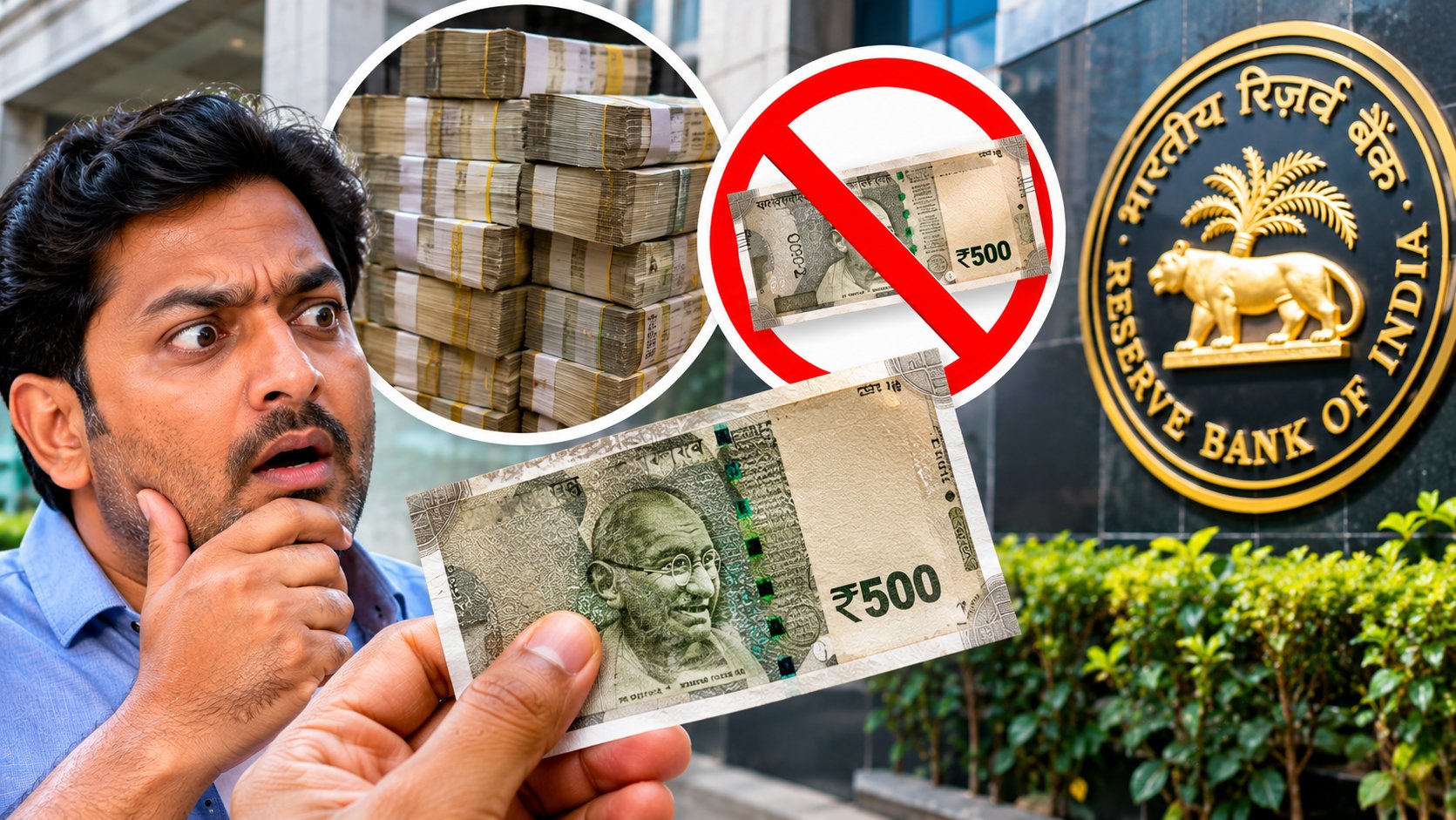
The message usually arrives on a family WhatsApp group, often with a photo of a crisp ₹500 note and a red cross stamped on it. “₹36 lakh crore banned.” Someone forwards it, an uncle asks whether he should rush to the bank, and a shopkeeper starts refusing the note. This week the rumour got fresh fuel, because a sitting chief minister publicly asked the Centre to scrap the ₹500 note. So is the note on its way out?
The short answer is no. Nothing has been notified, the Reserve Bank of India has said it has no plan to withdraw the note, and the government’s own fact-checking unit has knocked the claim down more than once. But the rumour is worth unpacking, because the number inside it is real, and it tells you something important about how India still uses cash.
Where the “Ban” Talk Came From This Week
The trigger was political, not official. Andhra Pradesh Chief Minister N. Chandrababu Naidu, speaking on Monday, 9 November 2026, renewed his demand to scrap ₹500 notes and argued that only ₹100 and ₹200 denominations should remain. His case is that less high-value cash would push people towards digital payments, improve transparency and make corruption easier to trace. He said he had raised the idea with Prime Minister Narendra Modi before and was pressing it again.
Naidu made the same demand in Kadapa on 27 May 2025. A demand from an influential NDA ally is newsworthy, but it is not policy: a chief minister has no power to withdraw a currency note.
Within days, social media took the leap that the speech did not. Posts claimed the note was already banned, or that banks would stop accepting it by a fixed date. On 12 November 2026, The Live Nagpur reported that RBI officials in Nagpur said no such proposal was under examination, that the speculation had no factual basis, and that there was “no plan at present to withdraw ₹500 notes from circulation.”
Status as of 14 November 2026: the ₹500 note is legal tender. No gazette notification, RBI circular or press release withdrawing it exists. You can spend it, deposit it and accept it as normal.
The Number Behind the Panic: What ₹36 Lakh Crore Actually Is
The viral figure did not come from nowhere. It is close to the total value of ₹500 notes sitting in wallets, tills and bank vaults. According to the RBI Annual Report for 2025-26, ₹500 notes in circulation were worth ₹35.27 lakh crore at the end of March 2026, up from ₹31.72 lakh crore a year earlier. Rounded up, and allowing for further growth since March, that is where “₹36 lakh crore” comes from.
So the headline takes a stock figure — how much money exists in this denomination — and attaches the word “banned” to it. That is the core of the misinformation. Nothing worth ₹36 lakh crore has been cancelled. The number is simply a measure of how dominant the ₹500 note has become.
- 7,05,482 lakh₹500 notes in circulation (pieces), end-March 2026
- +11.2%Growth in ₹500 note pieces over the year
- 41.2%₹500 share of all banknotes by number of pieces
- ₹41.23 lakh crTotal banknotes in circulation, March 2026
- +11.9%Growth in banknote value, FY 2025-26
- 16.1%Share of ₹10 notes by volume, the next largest
Value in circulation as of 26 December 2025, from RBI weekly statistics. Shares are our calculation from those figures.
The Eerie Echo of November 2016
Here is the detail that makes the rumour feel plausible to many people. On 8 November 2016, the Centre demonetised the old ₹500 and ₹1,000 notes, invalidating around 86% of the currency then in circulation overnight. Today, the new-series ₹500 note alone accounts for 85.5% of banknote value. The share is almost identical. A decade on, the cash system has rebuilt itself around a single high-value note, just as it had before.
A ban and a withdrawal are not the same thing
The word “ban” gets used loosely, and that confuses people. In 2016, the old notes were demonetised, meaning they ceased to be legal tender under a government notification. In May 2023, the ₹2,000 note was withdrawn from circulation under the RBI’s clean note policy, but it was not demonetised. It remains legal tender to this day, and people can still exchange or deposit it at RBI issue offices. When a forward says “banned,” ask which of these it means. Usually it means neither.
| Event | Notes affected | Scale | Still legal tender? | How it was announced |
|---|---|---|---|---|
| Demonetisation, 8 Nov 2016 | Old ₹500 and ₹1,000 | About 86% of currency in circulation | No | Government notification, effective the same midnight |
| ₹2,000 withdrawal, 19 May 2023 | ₹2,000 | ₹3.56 lakh crore at announcement | Yes | RBI press release under the clean note policy |
| ₹2,000 status, 31 Mar 2026 | ₹2,000 | 98.45% returned to the banking system | Yes | RBI annual report |
| ₹500 “ban” claim, 2025-26 | New-series ₹500 | ₹35.27 lakh crore in circulation | Yes | No announcement exists; repeatedly debunked |
| Naidu demand, 9 Nov 2026 | ₹500 (and ₹2,000) | Political suggestion only | Yes | Speech by a chief minister; no proposal under examination per RBI officials |
A Rumour With a Long Shelf Life
The current wave is the latest in a series. In June 2025, a YouTube channel called Capital TV posted a video claiming the RBI would discontinue ₹500 notes by March 2026. Business Today reported it gathered more than 500,000 views. PIB Fact Check labelled it false. The same channel separately claimed RBI had stopped printing the note.
The claim then mutated into an ATM story. PIB Fact Check addressed the claim again on 2 January 2026, stating that ₹500 notes have not been discontinued and remain legal tender, and once more on 18 January 2026, saying the government had not proposed any such plan.
- Old ₹500 and ₹1,000 notes demonetised; about 86% of currency invalidated.
- RBI announces withdrawal of ₹2,000 notes worth ₹3.56 lakh crore; they stay legal tender.
- Naidu urges the Centre to scrap ₹500 notes at a party meeting in Kadapa.
- Capital TV video claims ₹500 notes end by March 2026; PIB Fact Check calls it false.
- First ATM target: 75% of ATMs to dispense ₹100 or ₹200 from at least one cassette.
- PIB: ₹500 notes have not been discontinued and remain legal tender.
- PIB repeats that no such plan has been proposed.
- ATM target rises to 90%; ₹500 circulation hits ₹35.27 lakh crore.
- Naidu renews demand: keep only ₹100 and ₹200 notes.
- RBI officials in Nagpur: no plan at present to withdraw ₹500 notes.
Why the ATM circular keeps being misread
The ATM version has a grain of truth, which is why it spreads. In 2025 the RBI asked banks and ATM operators to make sure their machines dispense ₹100 and ₹200 notes more regularly, with a target of 75% of ATMs carrying these notes in at least one cassette by 30 September 2025 and 90% by 31 March 2026. The instruction said nothing about removing ₹500 notes.
What the RBI’s Own Numbers Say About the Note’s Future
If a central bank were preparing to retire a note, you would expect to see it in the data: falling supply, a stop to fresh printing, a shrinking share. The 2025-26 figures show the opposite. The value of ₹500 notes rose from ₹31.72 lakh crore to ₹35.27 lakh crore in one year, and the number of pieces rose from 6,34,458 lakh to 7,05,482 lakh.
Value in ₹ lakh crore at end-March, RBI Annual Report 2025-26. Bars scaled to the largest value.
Our calculation: what would be at stake. At the end of March 2026, ₹500 notes were worth ₹35.27 lakh crore out of ₹41.23 lakh crore in total banknotes. If those notes vanished, the remaining paper currency would be about ₹5.96 lakh crore. To replace the lost value only with ₹200 notes, the RBI would need to print about 17,635 crore ₹200 notes (₹35.27 lakh crore divided by ₹200), or roughly 2.5 times the 7,055 crore ₹500 notes now in use.
Fake Notes: The Strongest Argument in the Debate
Supporters of scrapping the note do have data on their side in one area. Counterfeits. The RBI annual report shows the banking system detected 1,41,907 fake ₹500 notes in 2025-26, up 20.5% from 1,17,722 the year before. Total counterfeit notes across all denominations were 2,29,746, up 5.7%. In other words, ₹500 fakes grew much faster than fakes overall.
Pieces detected, RBI Annual Report 2025-26. “Other denominations” is our calculation (total minus ₹500).
Keep the scale in perspective, though. By our calculation, 1,41,907 fake ₹500 notes against more than 7,050 crore genuine ones works out to roughly 2 fakes per 10 lakh notes in circulation. That is a real problem for the unlucky person who receives one, but it is not a currency in crisis.
Printing costs are falling, too
Ban supporters also cite the cost of printing. Spending on printing banknotes fell to ₹4,875.2 crore in 2025-26 from ₹6,372.8 crore the year before, a drop of 23.5%. And per note, the ₹500 is not the costliest to make.
Figures from RTI data as reported by Munsif Daily; the report does not state the year, so treat these as indicative.
Cash Is Not Fading, Even With UPI Everywhere
Naidu’s central argument is that digital payments have made high-value cash unnecessary. UPI is enormous. SBI Research, in a February 2026 report, put monthly UPI transaction value at about ₹28 lakh crore. Yet the same research put currency in circulation at about ₹40 lakh crore, still growing at 11.1% a year. Indians are using both, not choosing one.
Cash still matters for savings at home, rural wages, weddings, emergencies and anyone without a smartphone. Taking the ₹500 note away would push those users towards bulkier ₹200 bundles, not straight to UPI.
What We Know
- The ₹500 note is legal tender and no withdrawal has been notified.
- RBI officials said on 12 November 2026 that there is no plan at present to withdraw it.
- PIB Fact Check debunked ban claims in June 2025 and on 2 and 18 January 2026.
- ₹500 notes were worth ₹35.27 lakh crore at end-March 2026, 85.5% of banknote value.
- Fake ₹500 detections rose 20.5% to 1,41,907 in 2025-26.
What Is Still Unclear
- Whether the Centre will formally respond to Naidu’s renewed demand.
- The exact source of the “₹36 lakh crore” figure; no official document uses it with the word “banned”.
- Up-to-date value of ₹500 notes after March 2026; weekly data lags and was not checked for November.
- Current per-note printing costs; the widely quoted RTI figures do not carry a clear date.
What It Would Take to Actually Retire the ₹500 Note
Under the RBI Act, ending the legal tender status of a denomination requires a notification by the Central Government on the recommendation of the RBI’s Central Board. A softer withdrawal, like the ₹2,000 one, starts with a formal RBI announcement that sets out exchange and deposit arrangements.
- Step 1RBI board proposalCentral Board recommends a change in a recorded meeting.
- Step 2Government notificationGazette notice ends legal tender, or RBI announces a withdrawal.
- Step 3Exchange windowFor ₹2,000, banks handled deposits and exchanges for several months.
- Step 4Public noticeRBI press release and FAQs on rbi.org.in, widely reported.
Watch out for scammers. Fear of a ban is a classic setup for fraud. Anyone offering to “exchange” your ₹500 notes at a discount, or asking for bank details to “register” your notes before a deadline, is not acting on any official scheme.
What You Should Do With the ₹500 Notes You Hold
For most people, nothing changes. Keep using and accepting the notes, and guard against the people who profit from the rumour.
- Check any “ban” claim against rbi.org.in and the PIB Fact Check handle before forwarding it.
- Do not sell or swap ₹500 notes at a discount; there is no reason to accept less than face value.
- If a shop refuses a genuine ₹500 note citing a ban, you can point out that it is legal tender, and report repeated refusals to your bank or the RBI.
- Learn the basic security features, such as the colour-shifting thread and the watermark, since fakes are rising faster than other forgeries.
- If you still hold ₹2,000 notes, remember they can be exchanged or deposited through RBI issue offices.
- Spending ₹500 notes at shops and petrol pumps is fine.
- Depositing ₹500 notes into your bank account is fine.
- Withdrawing ₹500 notes from ATMs and branches is fine.
- Accepting ₹500 notes as payment is fine.
- Selling notes to “exchange agents” at a discount is a scam.
- Sharing OTPs or bank details to “register” notes is a scam.
Frequently Asked Questions
Is the ₹500 note banned in India?
No. As of 14 November 2026, the ₹500 note is legal tender. No government notification or RBI announcement has withdrawn it, and RBI officials said on 12 November 2026 that there is no plan at present to withdraw it.
What does “₹36 lakh crore banned” mean?
It is a misleading framing of a real number. ₹500 notes in circulation were worth ₹35.27 lakh crore at the end of March 2026, according to the RBI annual report. That is the value of notes people hold, not a sum that has been banned.
Why did Chandrababu Naidu ask to scrap ₹500 notes?
The Andhra Pradesh Chief Minister argues that less high-value cash would push digital payments, improve transparency and make corruption harder to hide. He renewed the demand on 9 November 2026, saying only ₹100 and ₹200 notes should remain. It is a political demand, not policy.
Will ATMs stop giving ₹500 notes?
No such instruction exists. The RBI asked banks to ensure 75% of ATMs dispense ₹100 or ₹200 notes from at least one cassette by 30 September 2025 and 90% by 31 March 2026. That is about more small notes, not fewer ₹500 notes. PIB has called the ATM claim fake.
Has the RBI stopped printing ₹500 notes?
There is no evidence of that. The number of ₹500 notes in circulation rose 11.2% in 2025-26 to 7,05,482 lakh pieces, which would not happen if printing had stopped. A YouTube claim that printing had ended was flagged as false.
Is the ₹2,000 note still valid?
Yes, it remains legal tender even though it was withdrawn from circulation in May 2023. By 31 March 2026, 98.45% of the ₹3.56 lakh crore in ₹2,000 notes had returned to the banking system. Remaining notes can be exchanged or deposited through RBI issue offices.
How would I know if the ₹500 note were really being withdrawn?
Any genuine change would come through a government gazette notification or an RBI press release, published on rbi.org.in and pib.gov.in and reported immediately by every major news outlet. It would also come with detailed exchange and deposit rules.
Can a shopkeeper refuse my ₹500 note?
A genuine ₹500 note is legal tender and refusing it on the grounds of a ban has no basis. If a shop insists, pay another way and, if refusals are widespread in your area, report it to your bank or through the RBI’s complaint channels.
The Bottom Line on the ₹500 Rumour
The ₹500 note is not banned, not being phased out and not disappearing from ATMs. The renewed buzz comes from a chief minister’s political demand, amplified by forwards that turned a real statistic — ₹35.27 lakh crore of ₹500 notes in circulation — into a fake headline. The RBI says it has no plan to withdraw the note, and PIB has debunked versions of this claim at least three times.