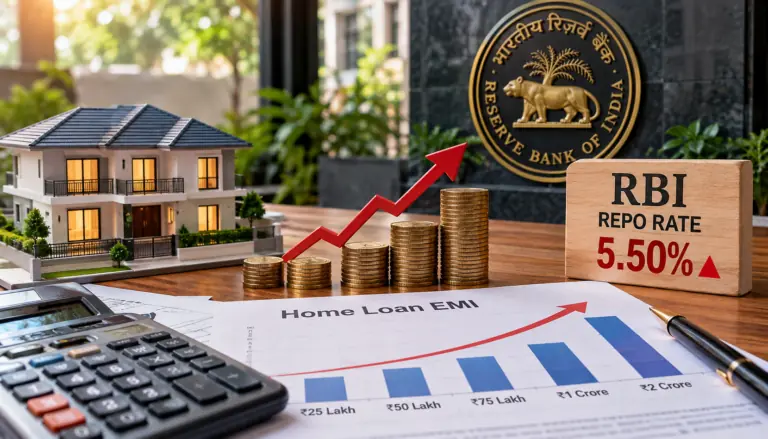
Banking · Customer service · India · 2026 update
Which Bank Customer Care Number Should You Call First in 2026 — and When to Escalate
Your account is debited. The merchant screen says the payment never arrived. It is a Sunday evening, and the search results in front of you list four different helpline numbers for the same bank, two of which are stale and one of which belongs to a fraudster who bought the ad slot. The number you dial in the next fifteen minutes matters more than anything you do over the following fifteen days, because India's banking grievance machinery runs on clocks that start when you make contact and never rewind.
Quick Summary
If money has left your account without your consent, call 1930 first, then your bank. If a genuine transaction simply failed, most types must be auto-reversed within 1 to 5 days, after which the bank owes you ₹100 per day under the RBI's turnaround-time framework. Your bank has 30 days to resolve a written complaint. From day 31 to one year later, the RBI Ombudsman is free, online and open to you. Every genuine bank website now ends in .bank.in, and every genuine service call now arrives from a 1600-series number.
Three things changed in the last eighteen months, and all of them affect which number you dial
The old advice was to save your bank's toll-free number and hope for the best. That advice is now out of date in three specific ways, and each change was introduced precisely because impersonation fraud had outgrown the old system.
First, the domain. On 22 April 2025 the Reserve Bank of India issued a circular directing every commercial, cooperative and district bank to migrate its website to the exclusive .bank.in domain, with the Institute for Development and Research in Banking Technology acting as sole registrar, and set a completion deadline of 31 October 2025. The point is blunt: a customer who cannot evaluate an SSL certificate can still read the last eight characters of a web address. State Bank of India now publishes from sbi.bank.in, HDFC Bank from hdfc.bank.in, ICICI Bank from icici.bank.in, Punjab National Bank from pnb.bank.in. A page that ends in anything else and asks for your card number is not your bank.
Second, the calling number. Following a Telecom Regulatory Authority of India direction dated 19 November 2025, entities regulated by the RBI, SEBI and PFRDA must place service and transactional voice calls only from the 1600-series, with the last tranche of smaller NBFCs, cooperative banks and regional rural banks required to complete onboarding by 1 March 2026. Promotional calls stay on the 140 series. Penalties start at ₹2,00,000 per instance and reach ₹10,00,000 for repeat violations. The practical consequence is a rule you can apply without thinking: a genuine bank service call in 2026 does not come from an ordinary ten-digit mobile number.
Third, the volume. Complaints under the Reserve Bank-Integrated Ombudsman Scheme reached 13.34 lakh in 2024-25, a rise of 13.55 per cent over the previous year, and the 24 Offices of the RBI Ombudsman recorded a disposal rate of 93.07 per cent, down from 95.10 per cent a year earlier. The system still works. It is simply slower and more crowded than it was, which is an argument for getting your paperwork right the first time rather than for skipping straight to escalation.
Why the RBI cares so much about a web address
Fraud is not a rounding error in Indian banking. The RBI's FY25 Annual Report put the total value of bank frauds at ₹36,014 crore, close to triple the previous year's figure. Most of that does not begin with a hacked server. It begins with a customer searching for a helpline, landing on a lookalike page, and calling a number that a criminal placed there. The .bank.in mandate and the 1600-series mandate are both attacks on the same weak point: the moment a worried customer goes looking for a number.
Customer care numbers for 23 leading Indian banks
Each card below carries the same six fields: toll-free number, WhatsApp banking line, email, website, grievance route, and the services that desk actually handles. Toll-free 1800 numbers cost nothing from any Indian mobile or landline, and every main line listed runs 24 hours a day.
Two caveats. Nineteen of these banks are confirmed on the new .bank.in domain; four are marked legacy, meaning their long-standing address still resolves while migration completes. And where the email field points to the Contact Us page, that is deliberate rather than lazy: publishing an unverified bank mailbox on a page about impersonation fraud would defeat the point of the page.












The three numbers that are not on any bank's list
Save these separately, because they sit above every individual bank. 1930 is the national cyber-fraud helpline run by the Indian Cyber Crime Coordination Centre, and it is the number that freezes money moving through someone else's account. 14448 is the RBI's own contact centre for the Alternate Grievance Redressal mechanism, which will tell you how to file and where your complaint stands. cybercrime.gov.in and cms.rbi.org.in are the two portals those calls will point you towards.
Which line to call depends on what kind of problem you have
The single most common mistake is treating every banking problem as one category. It is not. A failed transaction, an unauthorised debit and a service dispute follow different rules, different deadlines and different phone trees, and calling the wrong desk costs you days you cannot get back.
A failed transaction is one where you authorised the payment and something broke: the ATM did not dispense, the merchant terminal timed out, the beneficiary was never credited. These are governed by the RBI's turnaround-time framework and are supposed to fix themselves. The bank must reverse the debit within a set window and, if it misses that window, must credit ₹100 per day of delay on its own initiative, without waiting for you to ask. Your call to the general helpline is to log a reference number, not to plead.
An unauthorised transaction is money that left your account without your consent. That is a different animal, governed by the RBI's 2017 customer-protection circular, and it is a race. Call 1930 first, because that is what triggers the account-freeze request to the receiving bank, then call your bank's dedicated fraud or card-block line. Do not use the general helpline queue for this.
A service dispute is everything else: a wrongly levied charge, a locker issue, a loan account that shows the wrong balance, a credit report that will not update. There is no auto-reversal here. You need a written complaint, a reference number, and the patience to run the thirty-day clock.
The escalation clock: which day should actually worry you
Most people escalate either far too early, which gets the complaint returned as premature, or far too late, which forfeits the remedy altogether. The RBI-Integrated Ombudsman Scheme will not accept a complaint until you have written to the bank and either received a reply you dispute or waited thirty days without one. It also will not accept a complaint filed more than one year after the bank's reply. Between those two walls sits your window.
Normal
Watch
Act
Escalate
Last window
What the bank owes you in money, not apologies
This is the part most customers never invoke, and it is the part that changes the tone of a call. Under the RBI's 20 September 2019 framework on harmonisation of turnaround time, compensation for a delayed reversal is payable by the bank on its own initiative, without a claim from you. If your bank has quietly reversed a failed transaction on day nine and paid you nothing, it is out of compliance, and saying so with the circular date attached moves a conversation considerably faster than raising your voice.
| Failure type | Reversal deadline | If missed | Call first | Evidence to keep |
|---|---|---|---|---|
| ATM: cash not dispensed | T + 5 days | ₹100 per day | Bank toll-free | ATM ID, slip, time |
| Card at POS or online: no confirmation | T + 5 days | ₹100 per day | Card desk | RRN, merchant name |
| UPI or IMPS person-to-person: not credited | T + 1 day | ₹100 per day | App, then bank | UPI reference number |
| UPI merchant payment: no confirmation | T + 5 days | ₹100 per day | App, then bank | Transaction ID |
| Prepaid or wallet card-to-card transfer | T + 1 day | ₹100 per day | Issuer helpline | Wallet statement |
| Aadhaar-enabled payment or Aadhaar Pay | T + 5 days | ₹100 per day | Bank toll-free | Operator receipt |
| Credit report not corrected after complaint | 30 calendar days | ₹100 per day | Lender, then bureau | Complaint reference |
Worked example: what a nine-day delay is actually worth
Ravi pays ₹4,800 to a merchant by UPI on 3 August. The money leaves his account; the merchant is never credited. Under the framework, the debit should be reversed by 8 August, which is T plus 5 days. The credit actually lands on 17 August. That is 9 days past the deadline, and the bank owes ₹100 for each of those days: ₹900 in compensation, over and above the ₹4,800 reversal. Ravi does not have to ask. If it is not credited, the compensation itself becomes a fresh, entirely winnable complaint.
Why complaints fail, and what the national numbers show
The Ombudsman's own data tells you where the pressure is. In 2023-24, the last year for which the full category breakdown is published in absolute numbers, loans and advances produced 85,281 complaints at the RBI Ombudsman offices, or 29.01 per cent of the total, up 42.70 per cent year on year. Mobile and electronic banking accounted for 57,242 complaints, deposit account operation for 46,358, and credit cards for 42,329.
The 2024-25 report shifted that ranking in an instructive direction. Loans and advances held the top spot at 29.25 per cent and credit cards climbed to 17.15 per cent, while mobile and electronic banking complaints actually fell by around 12.7 per cent. The digital rails are getting more reliable. The lending and card relationships around them are not.
How much you lose depends entirely on how fast you report
For unauthorised electronic transactions, the RBI's circular of 6 July 2017 sets a liability ladder that is unusually favourable to customers, and unusually unforgiving about delay. If the loss arises from the bank's own negligence or a third-party breach, and you notify the bank within three working days of receiving its communication about the transaction, your liability is zero. The bank must re-credit the amount within ten working days. Between four and seven working days, your liability is capped but real. Beyond seven working days, it is determined by the bank's board-approved policy, which is a polite way of saying you are negotiating rather than claiming.
What to do, step by step, when a transaction goes wrong
Order matters more than speed here, because two of these steps create the paper trail that every later step depends on. Work through them in sequence rather than doing whichever feels most satisfying.
- Do not repeat the transaction. A second attempt creates a second debit and doubles the reconciliation work for everyone, including you.
- Screenshot everything within the first hour. The debit SMS, the app screen, the transaction reference or UPI reference number, the merchant name and the exact time stamp.
- If the debit was unauthorised, call 1930 before you call the bank. That call is what triggers the freeze request to the beneficiary bank. The bank call cannot do this.
- Call your bank's toll-free line and insist on a complaint reference number. A promise to look into it is worth nothing. A reference number starts the thirty-day clock.
- Put the same complaint in writing the same day through the bank's online grievance form, so that a dated record exists independent of the call centre.
- Wait out the reversal window before escalating. T plus 1 for person-to-person transfers, T plus 5 for ATM, card and merchant failures. Escalating on day two only restarts queues.
- On day 31, or on the day you receive an unsatisfactory reply, file with the RBI Ombudsman at cms.rbi.org.in. It is free, it is online, and it does not need a lawyer.
- Claim the ₹100 per day separately if it was not paid. Non-payment of statutory compensation is itself a valid complaint, and it is one banks rarely contest.
The escalation ladder, rung by rung
Each rung has an expected response time. Skipping a rung usually means being sent back down it, so use the ladder in order unless fraud is in progress.
Decoder: what the bank's status wording actually means
Complaint tracking portals use language that sounds conclusive when it is not. This is what each state means in practice and what it should prompt you to do next.
| What you see | What it means | What to do | Clock |
|---|---|---|---|
| Registered / SR raised | A reference exists. Nobody has looked at it yet. | Save the number. Note the date. | Day 0 |
| Under investigation | Routed to a back office, often the merchant acquirer. | Wait out T+5. Do not refile. | Day 1 to 5 |
| Chargeback raised | A formal dispute has gone to the acquiring bank. | Expect 30 to 45 days. Keep the RRN. | Day 5 to 45 |
| Pending merchant response | The ball is outside your bank. Not an excuse for delay. | Ask for the chargeback reference in writing. | Day 7 onwards |
| Resolved and closed | Closed by the bank, not necessarily settled by you. | Check the credit landed. If not, reopen in writing. | Verify same day |
| Closed: no deficiency found | A rejection. It must have passed the Internal Ombudsman. | This is your trigger for RB-IOS. | Day 31 to 365 |
| Non-maintainable | The Ombudsman cannot hear it, usually a timing or eligibility issue. | Read the reason. Refile correctly or use a consumer forum. | Immediate |
Seven habits that shorten every future call
None of these are dramatic. All of them cut minutes off a call and days off a resolution, mostly by removing the verification friction that consumes the first third of every customer care conversation.
Frequently asked questions
Which bank customer care number should I call first in 2026?
For an unauthorised debit, call 1930 first, then your bank's dedicated fraud or card-block line. For a failed but authorised transaction, call your bank's main toll-free number and get a complaint reference. For a service dispute, use the online grievance form so a dated written record exists. Take the number from the bank's .bank.in website, never from a search advertisement.
How do I know a bank website or phone call is genuine?
Two tests now cover most cases. The website address of every RBI-licensed bank must end in .bank.in following the RBI's circular of 22 April 2025, with migration due by 31 October 2025. Service and transactional calls from RBI-regulated entities must come from the 1600 series under TRAI's direction of 19 November 2025. A ten-digit mobile number claiming to be your bank's service desk is a warning sign.
What is the ₹100 per day compensation and how do I claim it?
Under the RBI's framework of 20 September 2019 on harmonisation of turnaround time, if a failed transaction is not reversed within its prescribed window, the bank must credit ₹100 for each day of delay. It is payable on the bank's own initiative, without a claim. If it was not paid, raise it as a separate written complaint quoting the circular date and your original transaction reference.
How many days does the bank get before I can approach the RBI Ombudsman?
Thirty days. You must first complain to the bank in writing. If the bank rejects the complaint, or you are dissatisfied with the reply, or thirty days pass with no reply at all, you may file with the RBI Ombudsman. The outer limit is one year from the date of the bank's reply, so do not let the file go cold.
Is filing with the RBI Ombudsman free, and do I need a lawyer?
It is free and no lawyer is required. File online at cms.rbi.org.in, or send an email or letter to the Centralised Receipt and Processing Centre in Chandigarh. The RBI's contact centre on 14448 will guide you through filing and tell you the status of an existing complaint. The centre handled around 9.27 lakh calls in 2024-25.
What happens if I report an unauthorised transaction after seven days?
Your liability stops being capped by the RBI schedule and is instead decided by the bank's board-approved policy. Within three working days of the bank's alert your liability is zero. Between four and seven working days it is capped at ₹5,000, ₹10,000 or ₹25,000 depending on the account or card type. That is why the alert timestamp matters so much.
Does calling 1930 replace complaining to my bank?
No. They do different jobs. The 1930 helpline, run by the Indian Cyber Crime Coordination Centre, requests a freeze on the account that received your money and registers your case on the national portal. Your bank still has to investigate the debit and re-credit you where liability rules require it. Do both, in that order, on the same day.
Are WhatsApp banking numbers safe to use for complaints?
They are convenient for balances, statements and cheque status, and most of the banks listed above run one. They are not the right channel for a formal grievance, because you need a complaint reference number and a dated written record. Use WhatsApp for information, the grievance form for anything you may later escalate to the Ombudsman.
How long does the whole process take from first call to resolution?
Most genuine failed transactions resolve inside the T+1 to T+5 auto-reversal window. Chargebacks on card disputes commonly run 30 to 45 days. If it reaches the RBI Ombudsman, the offices disposed of complaints at a rate of 93.07 per cent in 2024-25, and 51.91 per cent of maintainable complaints were settled through conciliation or mediation rather than a formal award.
The short version
Save two numbers per bank, plus 1930 and 14448. Take them from the bank's .bank.in website rather than a search result, and treat any service call from an ordinary mobile number as suspect. If money left without your consent, call 1930 within minutes, then your bank, and report inside three working days to keep your liability at zero. If an authorised payment simply failed, log a reference number and let the T+1 or T+5 auto-reversal window run, then claim the ₹100 per day if it is missed. Give the bank thirty days in writing. On day 31, the RBI Ombudsman is free, online and waiting.