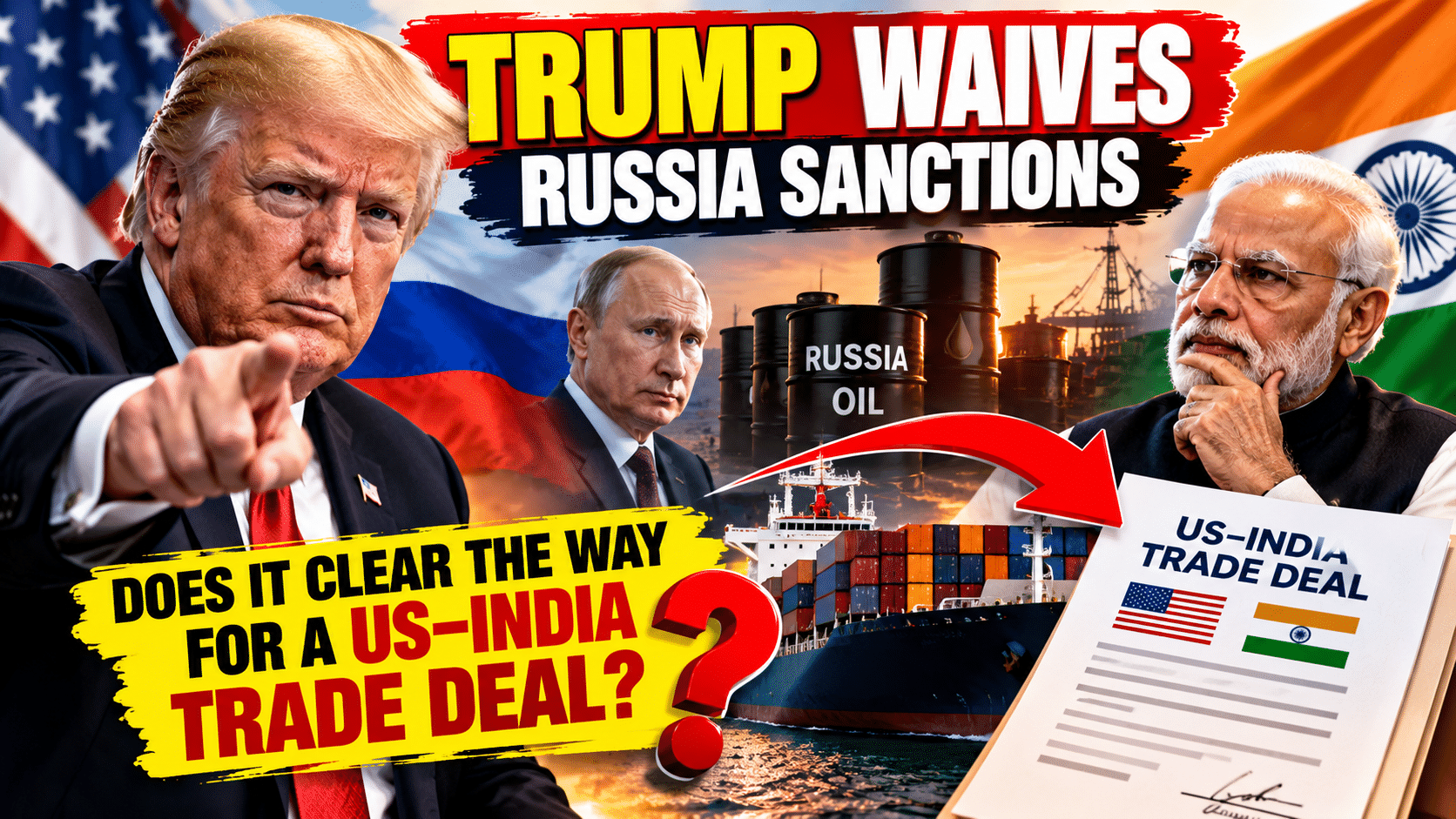
Trump Waives Russia Sanctions: Does It Clear the Way for a US–India Trade Deal?
Trump Waives Russia Sanctions: Does It Clear the Way for a US–India Trade Deal?
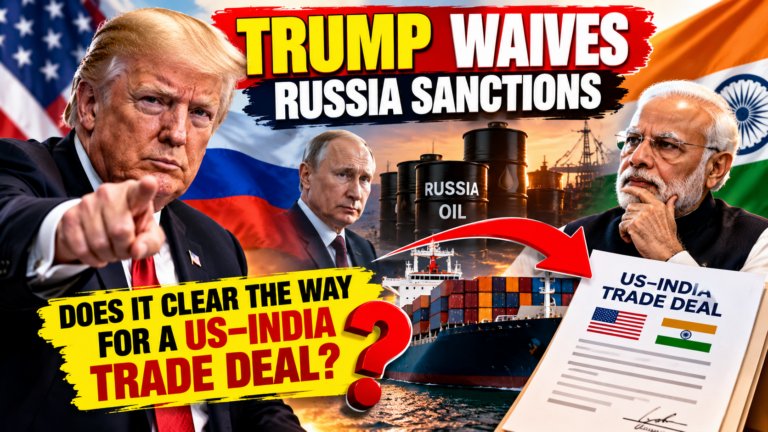
On 16 October 2026, President Trump waived the Russia penalties in the newly passed Graham Act, two days before tariffs of up to 100% could have hit the biggest buyers of Russian oil. India, one of those buyers, was spared a showdown. Whether a trade deal follows is now the open question.
For a few weeks this autumn, Indian exporters faced a date on the calendar that could have doubled what their American buyers paid at the border. From 18 October, a new US law allowed tariffs of up to 100% on goods from the five largest buyers of Russian oil and gas. India was on any plausible list. Then, on Friday 16 October, the threat was switched off with a presidential signature.
That switch has two readings. One is relief: the most serious trade threat to India this year is paused, and Washington’s top diplomat is in India this week talking about a deal. The other is caution: the waiver can be reversed at any time, and the reasons behind it have more to do with American diesel prices than with India. This article sets out what was waived, what India’s oil numbers actually show and what would need to happen for a deal to follow.
Quick Summary
The waiver removes an immediate threat to India, and US officials say a trade deal is “very close”, but nothing has been signed. The Graham Act’s penalties, including tariffs of up to 100% on top Russian energy buyers, were waived on 16 October with no fixed end date. India’s goods face an 18% US tariff under February’s understanding. A pending US investigation into excess manufacturing capacity, which includes India, remains a hurdle.
What We Know
- Trump signed an executive order on 16 October 2026 waiving the Russia provisions of the Graham Act, citing the US national interest.
- The law would have allowed tariffs of up to 500% on Russian goods and up to 100% on the top five buyers of Russian crude and gas from 18 October.
- US tariffs on Indian goods were cut from 50% to 18% in February 2026, tied to India curbing Russian oil purchases.
- Secretary of State Marco Rubio said the US is “very close” to a trade deal with India and arrives for a two-day visit on 20 October.
What Is Still Unclear
- How long the waiver will last: the order gives no end date, while Rubio described a 60-day pause.
- The terms, timing and tariff level of any final US–India agreement.
- How the US Section 301 investigation into excess capacity will treat India.
- Whether Congress will try to override or restrict the waiver after the 3 November midterm elections.
What Exactly Was Switched Off
The law is the Lindsey O. Graham Sanctioning Russia and Iran Act of 2026, named after the senator who championed it and who died in July. It passed the Senate 86 to 11, according to Senator Thom Tillis as quoted by ABC News, and was signed in September. Its Russia penalties were due to begin on 18 October.
ABC News reports that the order waives every operative Russia section of the law. That includes the tariffs, sanctions on banks and the “shadow fleet” of tankers, and the requirement that existing sanctions stay in place. It does not repeal sanctions imposed earlier by executive order. The waivers last until the president or the secretary of state decides further action is warranted.
| Graham Act tool | Maximum rate | Who it targets | Status after 16 Oct |
|---|---|---|---|
| Tariff on Russian goods | Up to 500% | All Russian exports including oil and gas | Waived |
| Secondary tariff | Up to 100% | Top 5 buyers of Russian crude and gas | Waived |
| Evasion tariff | Not specified | Top 5 countries helping evade oil sanctions | Waived |
| Bank sanctions | Not applicable | Foreign banks dealing with Russian state banks | Waived |
| Investment bans | Not applicable | Russian sovereign debt, US investment in Russia | Waived |
| Earlier executive-order sanctions | Varies | Officials, oligarchs, firms | Remain, but can now be lifted unilaterally |
The Diesel Problem Behind the Decision
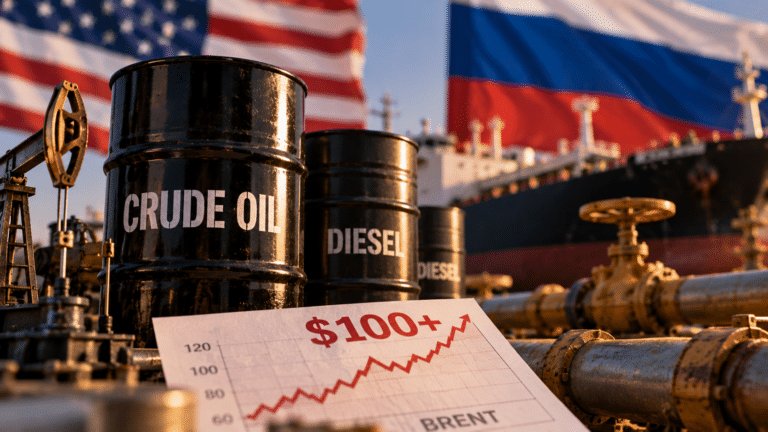
The stated reason is the national interest. The reported reason is energy prices. The Week notes that US diesel prices had risen nearly 70% after the Iran war, attacks on shipping and Ukrainian drone strikes on Russian refineries, with the midterm elections less than three weeks away. Trump called the waiver a “very good decision” and argued that returning Russian energy to world markets would ease supply shortages and inflation.
ABC News reports a parallel move: the Treasury’s sanctions office issued a general licence running through April allowing Russian diesel into the United States, as part of a deal for Russia to supply hundreds of thousands of tons. Without the waiver, the new law would have required tariffs and ship sanctions on exactly those cargoes. Seen this way, India’s relief is a side effect of an American domestic decision.
Why that matters for India
If the waiver was mainly about US fuel prices, its durability depends on those prices, not on India’s behaviour. Should diesel ease after the winter, or should Congress push back after the election, the case for keeping the waiver weakens. That is why Indian officials and analysts describe the moment as breathing room rather than a settlement.
India’s Oil Numbers Tell a Complicated Story
In February 2026, Al Jazeera reported, Trump cut the tariff on Indian goods from 50% to 18% after Prime Minister Modi agreed to stop buying Russian oil. The months that followed did not show a clean exit. Kpler shipping data, reported by Financial Express and Free Press Journal, show Indian imports of Russian crude rising from about 1.6 million barrels a day in April to a record 2.8 million in July.
Reuters, writing on 19 October, said Russia had supplied nearly half of India’s oil imports earlier in 2026 and that purchases fell from August. The reasons cited in Indian reports include refinery maintenance, drone attacks on Russian oil infrastructure and higher crude prices that narrowed the discount on Russian barrels. In September, Russia was still India’s largest supplier by a wide margin.
India’s position has been consistent: it buys oil based on price and supply security for its own consumers. India imports about 90% of its oil, Al Jazeera noted. Reuters adds that cutting Russian supplies too sharply could raise fuel prices before regional elections or strain public finances. Rubio himself said that “for some countries it is very difficult to acquire energy from alternative sources.”
What 18%, 50% and 100% Mean at the Border
Tariff percentages are easier to judge as money. The path for Indian goods has swung sharply in fourteen months, and the waiver keeps the most extreme option off the table for now.
That is the scale of what was avoided. For labour-heavy exporters in textiles, leather, gems and jewellery, where margins are thin, the difference between 18% and 100% is the difference between keeping and losing an American customer.
How Each Side Reads the Waiver
The decision has drawn sharp reactions in both parties and abroad. The views below are as reported by ABC News, The Week and Reuters.
The waivers serve the US national interest. Spokesperson Taylor Rogers said the Act gives the president “additional authorities to pursue a peaceful resolution” as talks continue.
Republican Senator Thom Tillis called it “beyond irresponsible”. Democratic leader Chuck Schumer said there was “nothing America First” about it. Senator John Cornyn said Graham “would be appalled”.
President Zelenskyy said the move “definitely helps only the Russians”. Kremlin envoy Kirill Dmitriev called it a “historic moment”.
Republican Representative Thomas Massie, who opposed the bill, praised the waivers. Michael Kugelman of the Atlantic Council called the pause “an important opening and at a critical moment” for US–India ties.
These reactions show why the waiver may not be the final word. Congress passed the law with a large bipartisan majority, and several Republican senators have urged the administration to reverse course. Congress is in recess until after the elections, The Week reports, so any challenge would come later.
What It Means Away From the Negotiating Table
Sanctions and tariffs can feel remote, but this decision reaches ordinary Indian households and businesses through three channels: the price of fuel, the jobs tied to exports and the strength of the rupee.
Fuel and inflation
Oil prices have been high all year. Free Press Journal put India’s crude basket at an average of $88.62 a barrel in August, up from $82.04 in July. Brent was near $107 at the end of September, KNN reported. Discounted Russian barrels have helped refiners cushion that rise. Had the Graham Act forced India to cut Russian supply abruptly, refiners would have had to buy more from the Gulf at full market prices, with pressure on retail fuel, transport costs and inflation.
Exporters and jobs
The waiver matters even more to exporters. A tariff of up to 100% on Indian goods would have made many products uncompetitive in the US overnight. Sectors that employ large numbers of workers, such as garments, footwear, gems and jewellery and marine products, were the most exposed. With the threat paused, exporters can plan winter and spring orders at the 18% rate, though few will sign long contracts until a deal is final.
The rupee and investor mood
Al Jazeera reported that India was the worst-performing emerging market in 2025, with record foreign investor outflows, as tariffs climbed to 50%. Investors dislike uncertainty more than any single rate. The waiver reduces one source of it, but because it can be withdrawn, it does not remove the risk premium entirely. A signed deal with a fixed tariff would do more.
What the waiver does not change
The order does not lift sanctions imposed earlier by executive order on Russian companies, banks and tankers, which can still complicate payments and shipping for Indian refiners. It does not lower the 18% tariff. And it does not settle the underlying disagreement: Washington wants Russian revenue cut, while New Delhi wants affordable energy. The waiver simply postpones the moment those two goals collide.
So Will India Get a Deal Next?
The signals are more positive than at any point since February. Rubio told reporters in Uzbekistan that the US is “very close” to a trade deal with India and that this was a factor in the waiver, Reuters reported on 19 October. Indian trade officials said the previous week that an agreement was nearly done and expressed hope for a tariff lower than competing countries face. Earlier in October, India joined a US-led initiative against structural overcapacity.
Three obstacles remain. The first is the pending US Section 301 investigation into alleged excess manufacturing capacity, which includes India. The second is the reversibility of the waiver itself. The third is that a full agreement has eluded both sides since a provisional framework was published in May 2026, when Rubio last spoke of “tremendous progress” in New Delhi.
What a deal would likely need to settle
The February understanding offers clues. The White House said then that India intended to buy more than $500 billion of US energy, technology, agricultural and other products, which Outlook Business notes was a stated intention rather than confirmed purchases. Commerce Minister Piyush Goyal has said in the past that India will sign only a deal that protects farmers, fishermen and small businesses. Any final text will have to reconcile US demands on market access with those red lines, and say something about energy purchases that both sides can defend at home. That is a harder task than cutting a headline tariff.
Dates That Shaped This Moment
Five Markers to Watch Before Year-End
Frequently Asked Questions
Why did Trump waive the Russia sanctions?
He said the waiver was in the US national interest. Reports link it to high US diesel prices, a deal to import Russian diesel and the approaching midterm elections. Rubio described it as a 60-day pause to study the effects of enforcement.
What is the Graham Act?
The Lindsey O. Graham Sanctioning Russia and Iran Act of 2026, passed 86 to 11 in the Senate and signed in September 2026. It allowed tariffs of up to 500% on Russian goods and up to 100% on the top five buyers of Russian energy, from 18 October.
Does the waiver help India?
Yes, in the short term. It removes the threat of tariffs of up to 100% on Indian goods linked to Russian oil purchases. It does not remove other US tariffs or earlier sanctions, and it can be withdrawn.
What is the current US tariff on Indian goods?
The latest reported reciprocal rate is 18%, set in February 2026 when the US removed an extra 25% penalty linked to Russian oil.
Has India stopped buying Russian oil?
No. Kpler data show India imported about 1.74 million barrels a day of Russian crude from 1 to 27 September 2026, about a third of its total, down from a record 2.8 million in July.
When will the India–US trade deal be signed?
No date has been announced. Rubio said on 19 October that the two sides are “very close”, and Indian officials have said the agreement is nearly done.
How long will the Russia sanctions waiver last?
The order sets no end date; it lasts until the president or secretary of state decides otherwise. Rubio has described it as a 60-day pause, which would run to about 15 December 2026.
Can Congress reverse the waiver?
Lawmakers from both parties have criticised it and some have introduced bills, but Congress is in recess until after the 3 November elections. Any challenge would come later.
The Short Version
Trump’s 16 October waiver switched off the Graham Act’s Russia penalties, including tariffs of up to 100% on top Russian energy buyers, two days before they began. India, still buying about 1.74 million barrels a day of Russian crude in September, avoided a showdown. US officials say a trade deal is very close, but the waiver can be reversed, a Section 301 probe is pending and no text is signed. Relief, not resolution.