What Democratic Control of Congress Could Mean for India — and Why Tariffs, H-1B and Russian Oil May Not Change Quickly
World · US-India ties · Midterms 2026
What Democratic Control of Congress Could Mean for India — and Why Tariffs, H-1B and Russian Oil May Not Change Quickly
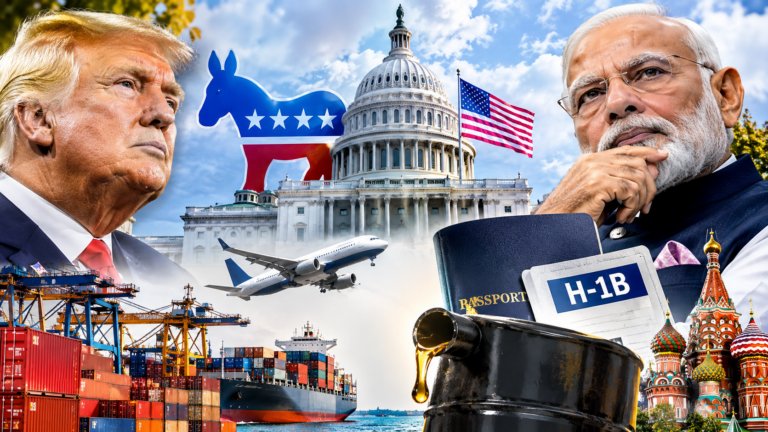
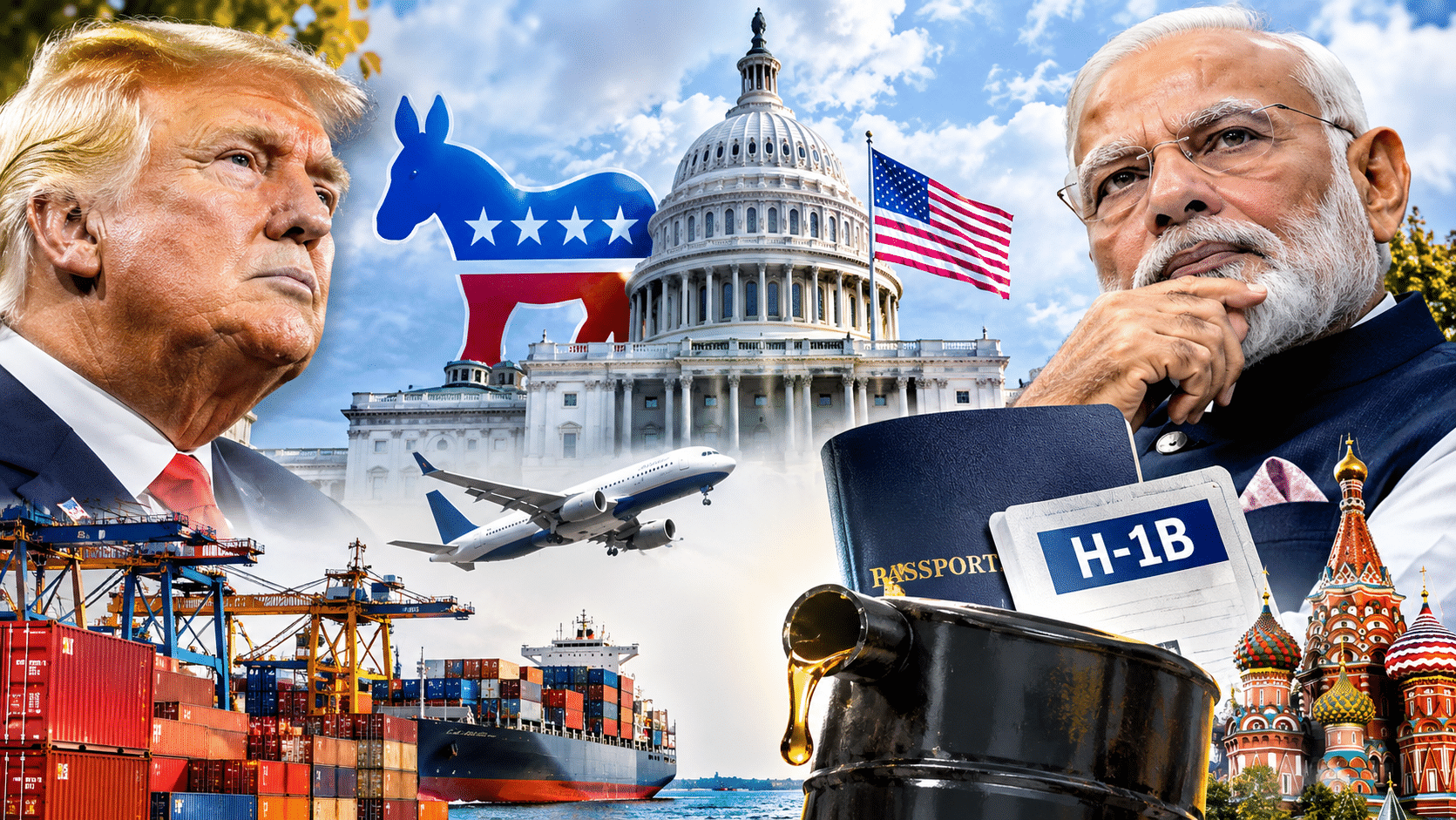
Democrats won both chambers in the 3 November 2026 US midterms, with the new Congress due in January 2027. Most levers that matter to India still sit with President Donald Trump.
An Indian textile exporter in Tiruppur, a software engineer in Bengaluru waiting on an H-1B petition and a refiner buying Russian crude all woke up on 4 November to the same headline: Democrats had won control of the US Congress. Each wanted to know the same thing. Does this change the tariffs, the visa rules or the sanctions threat? The honest answer is: less, and more slowly, than the headline suggests. The new Congress gains real powers of oversight, budgeting and investigation. But tariffs, visa fees and sanctions waivers are largely in the President’s hands, and he can veto bills.
The result, and who called it
The Associated Press, as published by PBS NewsHour late on 3 November, reported that Democrats had retaken control of the US Senate, with wins including Sherrod Brown in Ohio and James Talarico in Texas. NBC News projected that Democrats would also win the House, and Al Jazeera reported the House result had been called for Democrats late on election night. Republicans had held the House since the 2022 midterms.
Exact seat totals were still being finalised several days later, with some races uncalled, and early tallies reported by Indian outlets varied. What matters for India is not the precise margin but the structure: from 3 January 2027, Democrats will chair committees in both chambers, while President Trump keeps the White House, his veto and his executive trade powers until the next presidential election.
- 435House seats contested on 3 November 2026
- 218Seats needed for a House majority
- 51Votes needed to control the 100-seat Senate, with no tie-breaker
- 60Senate votes needed to overcome a filibuster on most bills
- 2/3Majority in both chambers needed to override a veto
- 3 Jan 2027Date the 120th Congress takes office
What Congress controls, and what it does not
US trade and foreign policy powers are split. Congress writes laws, sets budgets, confirms senior officials and investigates the executive. The President negotiates with foreign governments, runs agencies such as the trade representative’s office and immigration services, and has used several trade statutes to impose tariffs without new votes.
Share of each chamber needed. US Constitution and Senate rules; filibuster threshold applies to most legislation.
This is the core reason expectations should be modest. To force a change against the President’s wishes, Democrats would generally need two-thirds of both chambers to override a veto. PBS’s AP report noted that Trump had promised to use his veto to block Democrats’ agenda. Al Jazeera quoted him as saying, “I think the Democrats did a good job.”
- What a Democratic Congress can doHold hearings on tariffs’ cost to US businesses and consumers. Demand documents. Attach conditions in budget and spending bills. Delay or block nominations in the Senate. Pass bills that the President must then sign or veto.
- What it cannot easily doReverse tariffs imposed under existing presidential powers without a veto-proof majority. Change visa fees set by executive action. Negotiate trade deals itself. Force the President to withdraw sanctions waivers or impose new ones.
Tariffs: the equation that may not move
US tariffs on Indian goods have swung sharply. Kotak Neo and Khaleej Times report that punitive duties pushed rates on several Indian exports as high as 50% in 2025, partly over India’s purchases of Russian oil, before the rate on most Indian goods was cut to 18%. PTI reported that from 24 July 2026 the US added a further 10% duty on several countries including India, following a Section 301 investigation into forced labour.
Percentage points above normal MFN tariffs. Sources: Kotak Neo, Khaleej Times, PTI via The Week, Business Today. Graham Act figure is a legal ceiling, not an applied rate.
Business Today reported that Section 301, Section 232 and similar actions are set by the President with limited Congressional role. A second Section 301 investigation, into excess manufacturing capacity in India and 15 other countries, is still under way, and Section 232 sector tariffs on pharmaceuticals and electronics remain a key risk.
“America’s overall trade posture will remain intact.”
Ajay Srivastava, founder, Global Trade Research Initiative, as quoted by PTI, 5 November 2026Emkay Global’s chief economist Madhavi Arora told Business Today that future escalation must go through slower, investigation-based Section 301 and 232 actions, which reduces the risk of sudden tariff shocks. CareEdge Ratings said it did not expect tariff relief from the new Congress.
The trade deal: Congress is not in the room
India and the US finalised the framework for the first phase of an interim trade agreement in February 2026, according to PTI. Later changes in US tariffs led to more negotiation. Sources told PTI on 5 November that the deal does not need Congressional ratification and will not be directly affected by the midterm results.
Commerce Minister Piyush Goyal said in October that most discussions were concluded and the agreement was being fine-tuned. India wants lower US tariffs on its goods than competitors such as Bangladesh, Vietnam and Cambodia. Sources added that the US must finish its excess-capacity investigation before finalising its tariff structure for trading partners.
US$ billion. Source: Commerce Ministry data via PTI, 5 November 2026. Surplus is our calculation.
Reading the numbers. Exports to the US rose 11.11% in the first half of 2026-27 despite higher tariffs, while imports from the US rose 25.98%. That narrowed India’s surplus by about $1.58 billion, our calculation. A smaller surplus helps India’s case in talks, because the size of bilateral deficits has been a stated concern in Washington.
Arora told Business Today the urgency for a deal has faded for India, which may now have more room in negotiations. GTRI’s Srivastava warned that the pressure to announce a deal should not outweigh securing one that serves India’s long-term interests.
Russian oil: a sanctions law that outlives the election
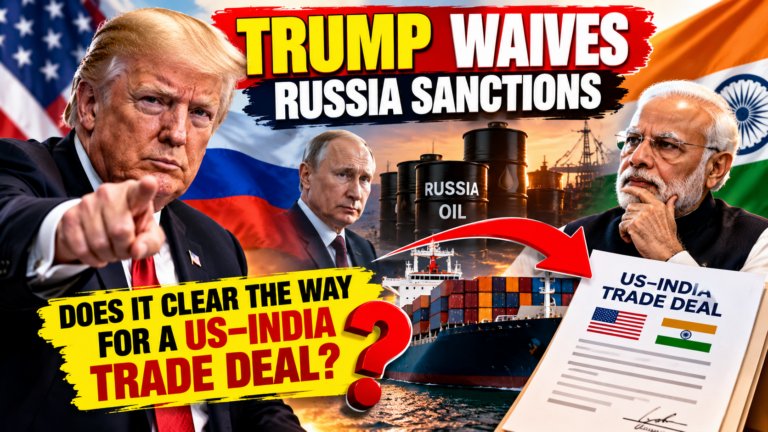
For India’s energy bill, the bigger story may be a law already on the books. Business Today reported that the Lindsey O. Graham Sanctioning Russia and Iran Act of 2026, signed on 18 September, permits tariffs of up to 100% on the largest buyers of Russian crude, a group that includes India. An executive waiver issued on 16 October has no expiry date, CareEdge noted, so the risk persists regardless of who controls Congress.
Kotak Neo reported that Russian crude made up about 44% of India’s crude imports in August 2026. Arora flagged that renewed pressure over India’s oil imports could return if diplomacy with Russia or Iran suffers setbacks. A Democratic Congress could hold hearings on how the waiver is used, but the decision to apply or lift it rests with the executive.
What people get wrong: assuming a change in Congress automatically softens sanctions. Sanctions on Russian oil have broad support across both parties. Democratic committee chairs may press the administration to enforce them more strictly, not less, which could put more scrutiny on India’s purchases.
H-1B visas: courts matter more than Congress for now
Indians are the largest group of H-1B holders, so visa policy is the most personal issue for many families. Kotak Neo reported that President Trump’s proposed $100,000 fee on certain new H-1B petitions has been blocked by two federal courts, and that US Citizenship and Immigration Services has begun approving petitions filed without the payment.
Congressional oversight could draw more attention to the fee and to processing delays. But immigration rules of this kind are largely set by executive action, and any legislative change would still face the veto. For Indian professionals and students, the practical decisions in the next year are likely to be shaped by court rulings and agency practice rather than new laws.
Who decides what: an India issue map
| Issue for India | Who mainly decides | What a Democratic Congress can do | Likely near-term effect |
|---|---|---|---|
| Tariffs on Indian goods | President, via trade statutes | Hearings, oversight, budget pressure | Little direct change |
| Interim trade deal | Executive negotiators | No ratification role, per PTI sources | Talks continue on their own track |
| Russian crude sanctions | President, using 2026 Act waiver | Scrutiny of waiver use | Risk persists |
| H-1B $100,000 fee | Executive action, now in courts | Oversight hearings | Courts more decisive |
| Defence cooperation | Executive, with Congress notified of arms sales | Review of major sales | Broad bipartisan support continues |
| US budget and debt | Congress and President jointly | Full leverage in negotiations | Possible market volatility |
Defence: the most stable part of the relationship
Kotak Neo pointed to a 10-year defence framework signed in October 2025 and shared concern about China as reasons to expect little change. Defence ties with India have long had support from both parties in Washington, and that is unlikely to shift with control of Congress.
Markets, oil and the rupee: what to watch
The midterm result itself is unlikely to be the main driver of Indian markets. Global oil prices, tied to Gulf security and US-Iran diplomacy, matter far more for India’s import bill, inflation and the rupee. If tensions ease and shipping through the region normalises, softer crude would help India. If disruptions continue, prices could stay high whatever happens in Washington.
- Jan 2027New Congress sitsCommittee chairs and investigation priorities announced.
- Q1 2027Budget fightsSpending and debt talks can unsettle global markets.
- OngoingSection 301 probeExcess-capacity finding will shape India’s tariff.
- OngoingOil and waiverGraham Act waiver and Gulf supply drive crude risk.
A divided government can mean slower, more predictable policy. Arora’s point about investigation-based tariff actions cuts both ways: fewer sudden shocks, but also no quick relief. For Indian exporters, planning for current tariff levels, rather than betting on cuts, is the prudent approach.
How the India-US relationship reached this point
- US tariffs on several Indian goods reach as high as 50%, partly over Russian oil purchases.
- India and the US sign a 10-year defence framework.
- Framework for the first phase of an interim trade deal finalised.
- Additional 10% Section 301 duty applies to India and several other countries.
- Graham Act allowing up to 100% tariffs on major Russian crude buyers signed.
- Executive waiver issued under the Act, with no expiry date.
- Midterms: Democrats win the Senate and House, per AP and NBC reports.
- 120th Congress is sworn in.
What Indian businesses and families should check
- Plan exports at current 18% plus 10% tariff levels
- Track the Section 301 excess-capacity probe outcome
- Watch Section 232 actions on pharma and electronics
- Follow the Graham Act waiver issued on 16 October
- H-1B applicants: follow the 2 court rulings on the fee
- Expect hearings, not immediate law changes, after 3 January
- Monitor crude prices more than the vote counts
- Watch US budget talks for market volatility
- Note that the interim deal needs no Congress vote
- Remember the veto needs 2/3 of both chambers to override
Questions Indians are asking after the midterms
Did Democrats win control of the US Congress in 2026?
AP reported that Democrats retook the Senate, and NBC projected Democrats would win the House, in the 3 November 2026 midterms. Final seat totals were still being counted days later.
Will US tariffs on India come down now?
Not automatically. Analysts quoted by Business Today and PTI say most tariffs rest on presidential trade powers, and the US protectionist stance is expected to remain broadly intact.
Does the India-US trade deal need Congress approval?
According to sources quoted by PTI on 5 November, the interim deal does not need Congressional ratification and is not directly affected by the midterm results.
What does the result mean for H-1B visas?
Visa rules are mostly set by the executive. The proposed $100,000 H-1B fee has been blocked by two federal courts; Congress can hold hearings but is unlikely to change rules quickly.
Could India face tariffs over Russian oil?
The 2026 Graham Act allows tariffs of up to 100% on major buyers of Russian crude. A waiver issued on 16 October has no expiry date, so the risk remains whoever controls Congress.
When does the new US Congress start?
The 120th Congress is scheduled to be sworn in on 3 January 2027.
Can Congress override Trump’s veto?
Only with a two-thirds vote in both the House and the Senate, which is a high bar.
Will India-US defence ties change?
Little change is expected. A 10-year defence framework signed in October 2025 and shared concern about China have broad support in both parties.
The short version for a busy reader
Democrats won the US Senate and House on 3 November 2026, and take charge of Congress on 3 January 2027. For India, that means more oversight of US trade and visa policy, but no quick reversal: tariffs, the H-1B fee and Russian oil sanctions mostly rest with President Trump, who can veto bills. The interim trade deal needs no Congressional vote. Plan around current tariffs, watch the Section 301 probe and oil prices, and treat any relief as a bonus.