Kotak 811 vs AU, IDFC First, IndusInd, SBI, and Jupiter — Where the Real Costs Hide
Zero-Balance Digital Savings Accounts Compared: Kotak 811 vs AU, IDFC First, IndusInd, SBI and Jupiter — Where the Real Costs Hide
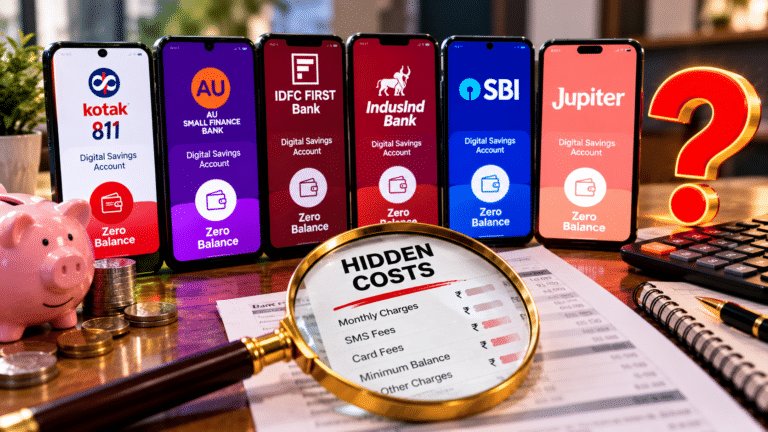
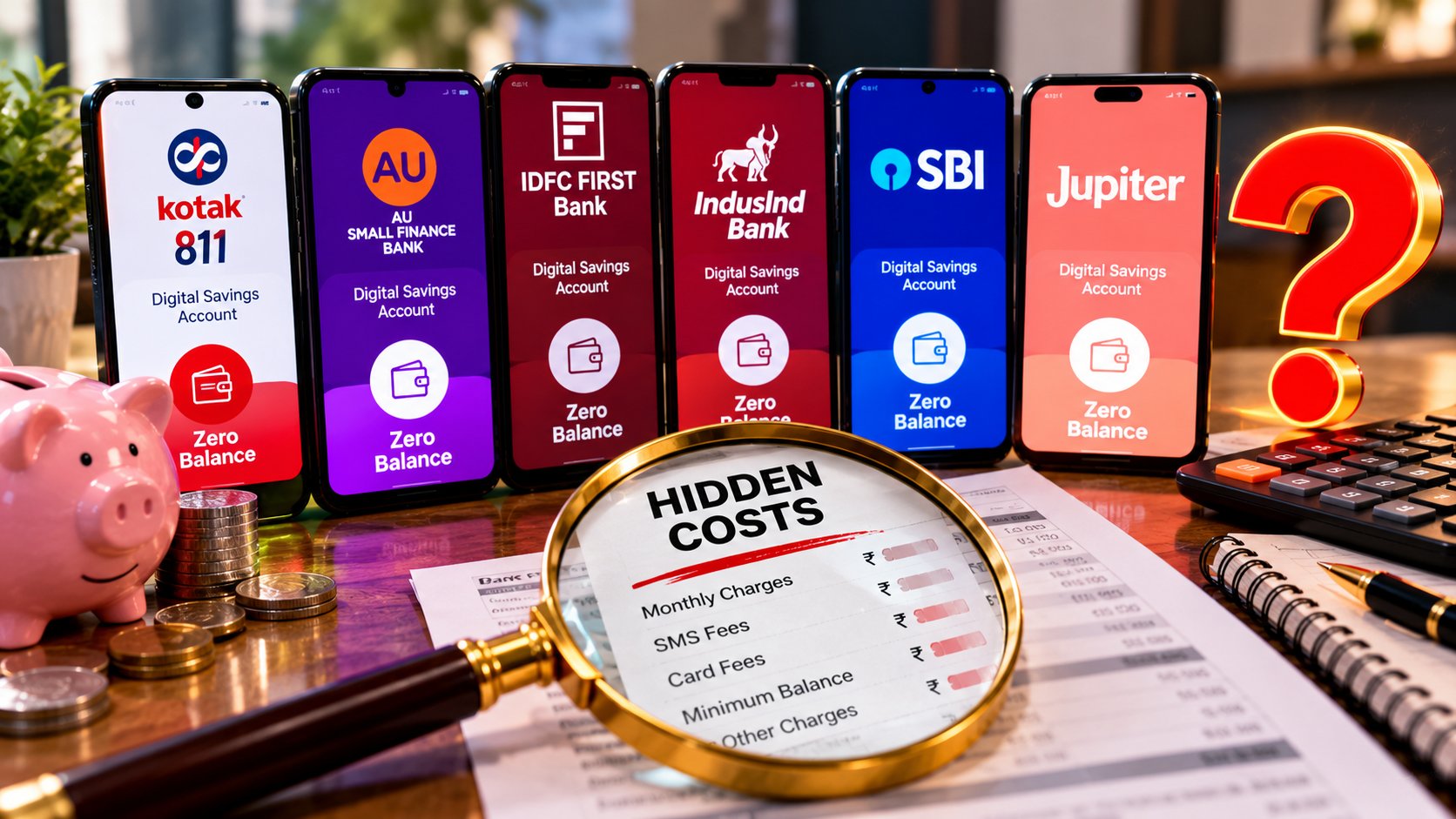
Several digital savings accounts let you open an account by app and video KYC with no minimum balance. They pay similar interest on small balances, but differ sharply on debit card fees, ATM limits, top interest slabs and the fine print on what “zero balance” means.
You want a bank account you can open from your phone in minutes, with no penalty if your balance drops to nothing at the end of a busy month. Many banks now advertise exactly that. The problem is that “zero balance” describes only one charge. The debit card, the ATM withdrawals, the cash deposits and even the interest rate on larger balances can make two zero-balance accounts cost very different amounts over a year.
We compared Kotak Mahindra Bank’s 811 account, the best-known digital zero-balance product, with accounts from AU Small Finance Bank, IDFC First Bank, IndusInd Bank, SBI and the Jupiter app, which runs on Federal Bank. We also looked at the free Basic Savings Bank Deposit account, which RBI rules made far more useful from April 1, 2026.
The Account That Started the Trend
Kotak launched 811 in March 2017, naming it after November 8, 2016, the date of demonetisation. Business Standard described it at launch as a zero-charge digital bank account. The idea was simple: download an app, verify yourself with Aadhaar, and start banking without visiting a branch or keeping a minimum balance.
Nine years later, 811 has grown into a family of variants, and they are not all the same. Kotak’s July 2026 fee schedule lists a Limited KYC account, a Lite Wallet, a full KYC Classic account, an 811 Super account and an 811 Super Salary account. All of them have a zero average balance requirement. What changes between them is what you can do and what you pay for extras.
Side by Side: Six Accounts, Six Different Catches
The table below compares the accounts on the points that decide what you actually pay. Interest rates are the bank’s published savings slabs. “Average balance” is what you must keep to avoid a penalty.
| Account | Average balance | Rate on first ₹1 lakh | Highest slab | Main catch |
|---|---|---|---|---|
| Kotak 811 | ₹0 | 2.50% | 2.50% | Physical card from ₹399; flat rate |
| AU Digital Savings | ₹0 | 2.50% | 6.50% from ₹10 lakh | Higher slabs need large balances |
| IDFC First regular | ₹10,000 or ₹25,000 | 2.50% | 7.00%, ₹3 to 25 lakh | Not zero balance; zero only on BSBD, salary or student |
| IndusInd Digi Start | No monthly average | 2.50% | 5.00% above ₹1 crore | ₹20,000 needed to open |
| SBI (YONO) | ₹0 | 2.50% | 2.50% | Lowest top rate, widest branch network |
| Jupiter (Federal Bank) | ₹5,000 | 2.50% | 2.50% below ₹10 crore | Up to ₹300 a month if below average |
What people often get wrong is assuming a fintech app or a “digital” label means zero balance. Jupiter’s own fee page now says you need an average monthly balance of ₹5,000 to avoid charges of up to ₹300 a month. IDFC First, which advertises some of the highest savings rates in India, charges 6% of the shortfall or ₹500, whichever is lower, if you miss its average balance on a regular account, according to ClearTax.
Interest: Why Your Balance Size Changes the Winner
Almost every account here pays 2.50% on the first ₹1 lakh. So for a typical salary account that rarely holds more than that, the interest difference between them is close to zero. The gap opens only when balances climb, because AU, IDFC First and IndusInd pay higher rates on the portion above set thresholds.
These slabs work progressively. IDFC First’s rate card, for instance, says each rate applies only to the part of the balance inside that slab. So ₹5 lakh at IDFC First earns 2.50% on the first ₹3 lakh and 7% on the remaining ₹2 lakh, not 7% on everything.
Interest is taxable at your slab rate. Under the old tax regime, Section 80TTA allows a deduction of up to ₹10,000 a year on savings account interest for individuals below 60. The new tax regime does not allow this deduction.
The Fees That Decide Whether “Free” Stays Free
For balances under ₹1 lakh, fees matter more than interest. The debit card is usually the first charge people notice. Kotak gives a free virtual card, but a physical card starts at ₹399 a year for the basic Dream Different design and rises to ₹799 for Platinum. Jupiter’s physical card costs ₹350 plus GST to issue, with a ₹299 plus GST annual fee from the second year unless you meet spending or account-status conditions.
The ATM arithmetic
Both Kotak and Jupiter allow 3 free withdrawals a month at other banks’ ATMs in metro cities and 5 elsewhere. Beyond that, Kotak charges ₹23 per cash withdrawal and Jupiter ₹21 plus GST. If you live in a metro and withdraw cash six times a month at other banks’ ATMs, the three extra withdrawals cost ₹69 a month at Kotak, or ₹828 over a year. That alone is more than double the basic Kotak card fee.
Limited KYC: The Fine Print on Instant Accounts
Many app-based accounts open first with Aadhaar OTP verification, before a full video KYC. RBI’s KYC rules cap these accounts, and Kotak’s schedule shows exactly how. Until you complete full KYC, your options are restricted.
| Account state | Balance cap | Credit cap | Cash withdrawal | How to upgrade |
|---|---|---|---|---|
| Kotak 811 Limited KYC | ₹1 lakh | ₹2 lakh a year | Not available | Video KYC or branch visit |
| Kotak 811 Lite Wallet | ₹5,000 | ₹5,000 a month, ₹1.2 lakh a year | Not available | Full KYC before transfers |
| 811 Classic, full KYC | No cap | No cap | Yes | Already complete |
| 811 Super, full KYC | No cap | No cap | Yes | ₹499 a year programme fee |
| BSBD, any bank | No cap | Unlimited deposits | 4 free a month | Ask the bank; 7 days to convert |
RBI’s KYC directions also require OTP-based accounts to complete full customer due diligence within a year. If you open an instant account as your main bank, finish the video KYC early, before a salary credit or a larger transfer bumps against the ₹1 lakh limit.
The Quiet Alternative: The Upgraded BSBD Account
The Basic Savings Bank Deposit account has existed for years, but its features were thin. RBI’s revised rules, effective April 1, 2026, change that. According to Ujjivan Small Finance Bank’s summary, every BSBD account must now come with no minimum balance, a debit card with no annual fee, at least 25 cheque leaves a year, internet and mobile banking, and at least four free withdrawals a month. Deposits are unlimited in number and value.
Digital payments such as UPI, NEFT, IMPS and card payments at shops do not count towards the four-withdrawal limit. You can also ask your bank to convert an existing savings account to BSBD, and it must do so within seven days. The main restriction is that you can hold only one BSBD account across all banks.
How Zero Balance Banking Got Here
What the Comparison Tables Usually Leave Out
Headline rates and card fees are easy to compare. Several other details only show up in the full schedule of charges, and they matter most to people who use an account heavily or keep it close to empty.
Cash deposits and SMS alerts
Kotak’s Classic 811 account allows one free cash deposit, or ₹10,000, whichever comes first, each month. Beyond that, the bank charges ₹5 per ₹1,000 deposited, with a minimum of ₹150. A shopkeeper or freelancer who deposits ₹50,000 in cash in a single visit would pay ₹200 on the ₹40,000 above the free limit. The 811 Super account raises the free limit to two deposits or ₹1 lakh. Kotak also allows 30 free SMS alerts a month on Classic accounts, waives SMS charges entirely if average deposits are at least ₹5,000, and otherwise charges 15 paise per message.
Sweep facilities
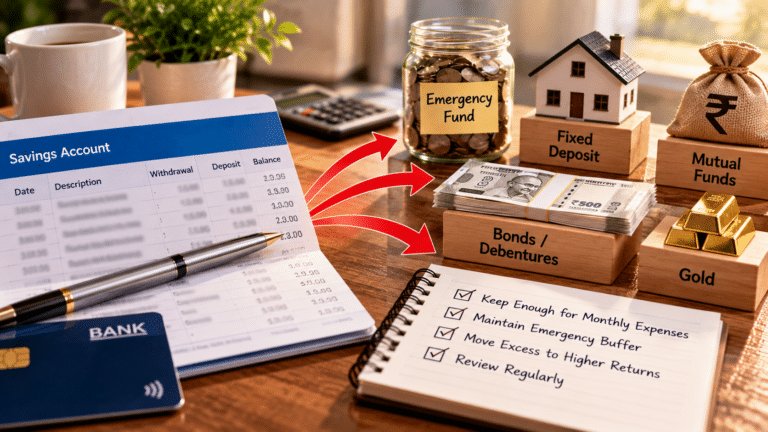
Paisabazaar lists an auto-sweep facility on Kotak 811, which moves surplus balance into a fixed deposit. That can lift returns well above 2.50% on money you do not need immediately, without moving it to another bank. Check the sweep threshold and the premature withdrawal terms before relying on it.
Bank type and service
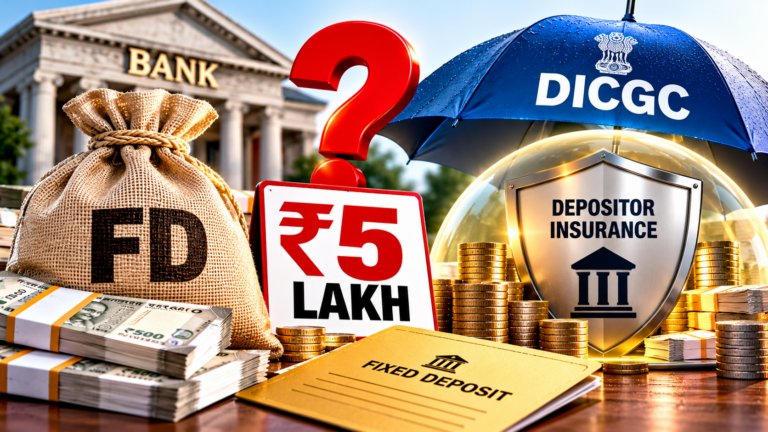
AU Bank is a small finance bank, while Kotak, IDFC First and IndusInd are private sector banks and SBI is a public sector bank. All are regulated by the RBI and covered by the same ₹5 lakh DICGC deposit insurance. The practical differences are elsewhere: branch and ATM reach, the quality of the app, and how quickly complaints are resolved. If the bank does not resolve a complaint within 30 days, you can escalate it to the RBI Ombudsman, whichever bank you choose.
Which One Fits You?
There is no single best account, but there is a sensible way to decide. Start with how you use money, not with the headline rate.
- Check your typical month-end balance. If it is usually under ₹1 lakh, interest will be nearly identical across these accounts, so choose on fees.
- Decide whether you need a physical card. If UPI covers most of your spending, Kotak’s free virtual card or a BSBD card avoids a yearly fee.
- Count your cash withdrawals. More than three a month at other banks’ ATMs in a metro will cost you at Kotak and Jupiter.
- If you park ₹3 lakh or more for long periods, compare the slab-based accounts, starting with IDFC First, and make sure you can keep its average balance.
- Complete full KYC immediately if you plan to receive a salary or keep more than ₹1 lakh.
- Read the bank’s current schedule of charges on the day you apply. Rates and fees here are only a snapshot.
Frequently Asked Questions
Is Kotak 811 really a zero-balance account?
Yes. Kotak’s fee schedule effective July 1, 2026 sets the average balance requirement at zero for all 811 variants, with no penalty for low balances. Other charges, such as physical debit card fees and extra ATM withdrawals, still apply.
What is the Kotak 811 interest rate in 2026?
Kotak pays 2.50% a year on savings balances, effective July 9, 2025, according to its rates page. The rate applies across normal balance levels.
Which zero-balance savings account gives the highest interest?
On balances under ₹1 lakh, most major accounts pay about 2.50%. On larger balances, AU Bank’s digital account offers higher slabs, including 6.50% from ₹10 lakh. IDFC First pays 7% between ₹3 lakh and ₹25 lakh, but its regular accounts are not zero balance.
Is a zero-balance account completely free?
No. Zero balance means there is no penalty for a low balance. Banks can still charge for physical debit cards, ATM withdrawals beyond free limits, extra cash deposits, declined transactions and SMS alerts.
What are the limits on a minimum KYC digital account?
For Kotak 811 Limited KYC, the balance cannot exceed ₹1 lakh and total credits are capped at ₹2 lakh a year. Cash withdrawals are not allowed until you complete full KYC, which RBI rules require within a year for OTP-based accounts.
What changed in BSBD accounts from April 2026?
RBI’s revised rules require a free debit card, at least 25 cheque leaves a year, internet and mobile banking, unlimited deposits and at least four free withdrawals a month. Banks must convert an existing account to BSBD within seven days of a request.
Is Jupiter still a zero-balance account?
Jupiter’s fee page, updated in October 2026, says you need to maintain an average monthly balance of ₹5,000 to avoid charges of up to ₹300 a month. The account is held with Federal Bank.
Is my money safe in a digital savings account?
Digital savings accounts are regular bank deposits. Deposits in banks, including small finance banks, are insured by DICGC up to ₹5 lakh per depositor per bank, covering principal and interest.
The Short Version
Kotak 811 is still a genuine zero-balance digital account, but it pays a flat 2.50%, and a physical debit card costs at least ₹399 a year. Most rivals also pay 2.50% on the first ₹1 lakh, so for small balances the decision rests on card, ATM and cash deposit charges. Bigger savers can earn much more from slab-based accounts such as IDFC First at 7% between ₹3 lakh and ₹25 lakh, if they can meet its average balance. And since April 2026, the humble BSBD account offers a free debit card, cheque book and four free withdrawals a month.