Gold vs FD vs Mutual Funds in 2026: Where Should You Invest When Gold Is Up and Stocks Are Down?
- +16 to 17%Gold ETFs, one-year return, early Nov 2026
- 6.25%SBI one-year FD, general customers
- -6.15%Nifty 50, 2026 year to date, 5 Nov
Personal finance · Investing · November 2026
Gold vs FD vs Mutual Funds in 2026: Where Should You Invest When Gold Is Up and Stocks Are Down?
Gold has beaten both bank deposits and the Nifty over the past year, FD rates are inching up after an RBI rate hike, and inflation is at 5.54%. The right mix depends on when you need the money.
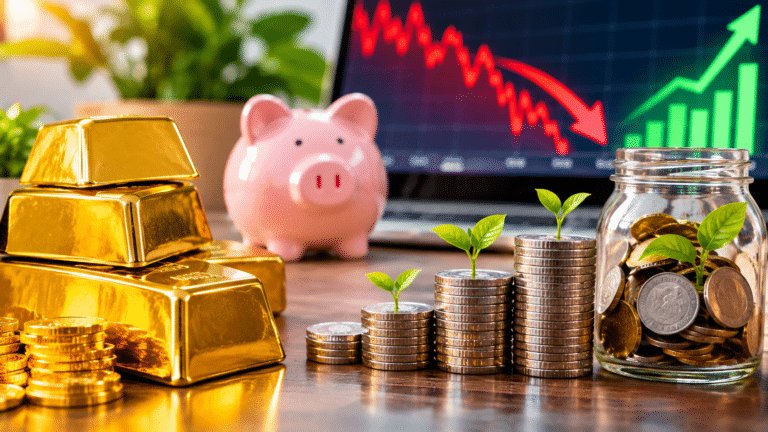
Last Dhanteras you might have bought a gold coin, renewed an FD and kept your SIP going. A year on, the scorecard looks lopsided. Gold ETFs are up about 16% to 17%. The FD paid just over 6%. Your equity fund statement is probably in the red for 2026. Natural question: should you shift more into gold? That is exactly the reflex this article tries to slow down. Last year’s winner is a poor guide to next year’s, and each of these three assets does a different job.
The 2026 scorecard: why the question feels urgent
Three things changed this year. Gold kept climbing: the IBJA benchmark for 24-carat gold was ₹1,41,062 per 10 grams on 4 November 2026, against about ₹1,22,010 reported a year earlier. Equities stalled: Outlook Money reported the Nifty 50 was down 6.15% for the year as of 5 November. And interest rates turned. Upstox reported that the RBI raised the repo rate by 25 basis points to 5.50% in October 2026, its first hike in nearly four years, after holding it at 5.25% for four reviews.
- 16-17%One-year return of large gold ETFs, per AMFI data in Outlook Money
- 30-31%Three-year annualised return of the same gold funds
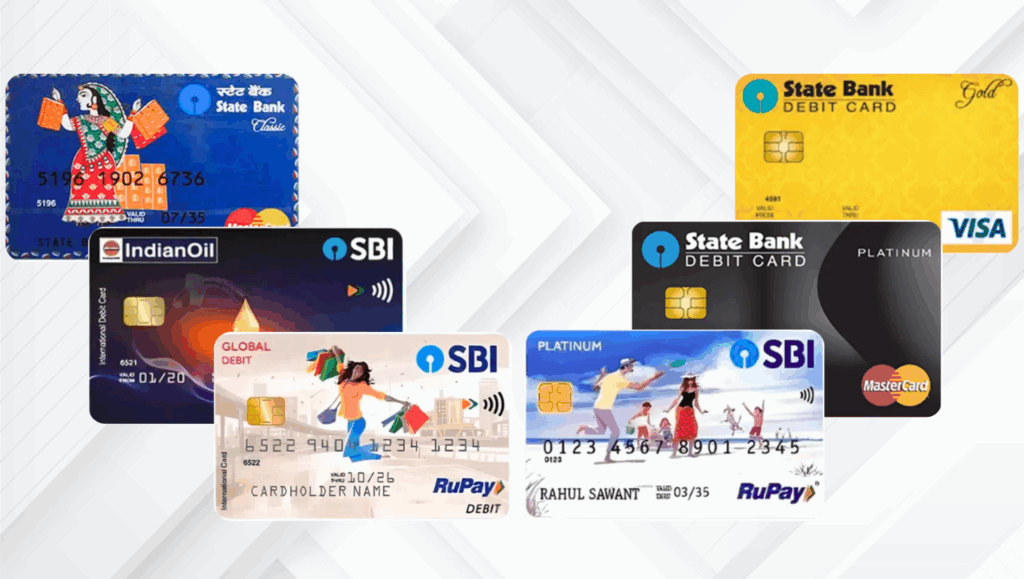
- 6.25-6.45%SBI FD rates for 1 to 3 years, general customers
- -6.15%Nifty 50 return, 1 Jan to 5 Nov 2026
- 7.74%Food inflation, September 2026, MoSPI
- ₹38,307 crNet equity fund inflows, September 2026, AMFI
Per cent. Gold ETF returns per AMFI via Outlook Money (6 Nov 2026); gold price change is our calculation from ₹1,22,010 (Nov 2025, GoodReturns via Business Standard) to ₹1,41,062 (4 Nov 2026, IBJA), so sources differ; SBI rates via Upstox; Nifty is year to date, not 12 months.
Investors have not abandoned equities. AMFI data reported by Upstox shows net inflows into equity funds rose 31% in September 2026 to ₹38,306.55 crore, while gold ETF inflows rose to ₹4,450.61 crore. Savers are buying the dip and adding gold at the same time.
Three tools, three different jobs
Comparing gold, FDs and mutual funds on returns alone is like comparing a seatbelt, an airbag and an engine on horsepower. They protect against different risks.
- Insurance against chaosGoldTends to rise when currencies weaken, geopolitics flare or markets panic. Pays no interest or dividend. Long, flat stretches are common: its return comes in bursts.
- CertaintyFixed depositA known rate for a known period. Deposits up to ₹5 lakh per bank are insured by DICGC. Interest is taxed at your slab, so the real return is often thin or negative.
- Growth engineEquity mutual fundsOwn a slice of company profits. Volatile in any one year, including 2026, but historically the strongest compounder over periods of five years or more.
Which gold you buy matters as much as whether
Jewellery carries 3% GST plus making charges, which can wipe out a year of price gains before you start. Gold ETFs and gold mutual funds track the price with low costs and no purity risk. Sovereign Gold Bonds, which also paid 2.5% interest, have not had a new issue since February 2024, so new buyers can only pick up existing bonds on the stock exchange.
Five years later: what ₹1 lakh actually became
One good year proves little. A five-year window is a fairer test. Business Today, citing data published by Wealthmojo on 18 November 2025, tracked ₹1 lakh invested across assets from about November 2020.
₹ lakh, approximate, before tax. Source: Business Today, 20 Nov 2025, citing Wealthmojo. Annualised returns in brackets are our calculation from those end values.
Two lessons stand out. Gold slightly beat the Nifty 50 over this window, which surprises many people, but broader equity indices did far better than both. And the FD, the “safe” choice, barely kept ahead of inflation before tax. Different start and end dates would change the ranking, and the year since has hurt equities further.
What people get wrong: chasing the asset with the best recent number. Gold’s 30% annualised three-year return is exceptional, not normal. Equity’s poor 2026 is a single year. Rebalancing, which means trimming whatever has run up and topping up what has lagged, has historically worked better than moving everything into last year’s winner.
The FD maths after tax and inflation
FD rates have edged up with the repo hike, but the headline number is not what you keep. Interest is added to your income and taxed at your slab rate every year, even if you reinvest it. Banks deduct TDS once interest crosses ₹50,000 a year, or ₹1 lakh for senior citizens.
Per cent a year, deposits below ₹3 crore, as reported by Upstox on 9 October 2026. Check the bank’s site for the latest card.
Worked example: ₹5 lakh in a one-year SBI FD at 6.25%. Interest is ₹31,250. With 5.54% inflation, you need ₹27,700 just to keep the same purchasing power, our calculation.
No tax (income below the taxable limit): you keep ₹31,250, a real gain of about ₹3,550. In the 20% slab plus 4% cess (20.8%): tax is ₹6,500, you keep ₹24,750, a real loss of about ₹2,950. In the 30% slab plus cess (31.2%): tax is ₹9,750, you keep ₹21,500, a real loss of about ₹6,200. All figures are our illustration and ignore surcharge and compounding within the year.
This is why FDs suit short-term goals and emergency money, where certainty matters more than growth, but struggle as a long-term wealth builder for people in higher tax brackets.
Tax decides more of the winner than people think
The Union Budget of July 2024 reset capital gains rules, and they still apply in FY 2026-27. Equity gains held over 12 months are taxed at 12.5% above ₹1.25 lakh a year, and short-term equity gains at 20%. Gold ETFs held over 12 months, and gold mutual funds held over 24 months, pay 12.5% long-term gains tax, Outlook Money noted.
| Feature | Gold ETF or gold fund | Bank FD | Equity mutual fund | Debt mutual fund |
|---|---|---|---|---|
| Return type | Price change only | Fixed interest | Market-linked | Interest plus price change |
| Recent figure | 16-17% in 1 year | 6.25-6.45% for 1-3 years (SBI) | Nifty -6.15% in 2026 | Varies by fund |
| Short-term tax | Slab rate | Slab rate on interest | 20% | Slab rate |
| Long-term tax | 12.5% after 12 months (ETF) or 24 months (fund) | No long-term rate; always slab | 12.5% above ₹1.25 lakh after 12 months | Slab rate for units bought after 1 Apr 2023 |
| Capital protection | None | DICGC cover up to ₹5 lakh per bank | None | None |
| Liquidity | Sell on exchange or redeem in 1-3 days | Premature withdrawal, often with a penalty | Redeem, usually in 1-3 days | Redeem, often next day |
| Best for | Diversifier, 5-15% slice | Goals under 3 years, emergencies | Goals 5+ years away | Goals of 1-3 years, tax-neutral to FDs |
The 5% to 15% gold range in the table is a band many financial planners use, not a rule. Senior citizens can also claim a deduction of up to ₹50,000 on interest income under Section 80TTB, which softens FD taxation for them.
A goal-by-goal decision ladder
Start with when you need the money, not which asset looks best. The horizon tells you how much volatility you can tolerate.
- 0-12 monthsEmergency fund and near-term spending: savings account, sweep-in FD or liquid fund. Do not hold this in gold or equity.
- 1-3 yearsCar, wedding, home down payment: FDs, ideally laddered across 1, 2 and 3 years, or short-duration debt funds.
- 3-5 yearsMixed goals: a hybrid or balanced advantage fund, plus FDs for the portion you cannot afford to see fall.
- 5+ yearsRetirement, children’s education: equity mutual funds through SIPs as the core, with gold as a 5-15% diversifier.
- Any horizonRebalance once a year: if gold has grown from 10% to 15% of your money, move the extra back to your target mix.
Should you buy gold now, at a record high?
No one can reliably time gold. If you have no gold exposure, building it gradually through monthly purchases of a gold ETF or fund spreads the risk of buying at a peak. If gold has grown to well above your target share after this rally, trimming it is not a prediction that prices will fall. It is simply returning to your plan.
How the backdrop shifted, step by step
- Debt fund gains on new investments taxed at slab rate, ending indexation benefit.
- Last new issue of Sovereign Gold Bonds.
- Budget sets 12.5% long-term gains tax and ₹1.25 lakh equity exemption.
- 24K gold at about ₹1,22,010 per 10g; five-year data shows equity ahead.
- Repo rate held at 5.25% through four policy reviews.
- CPI at 5.54%; equity fund inflows ₹38,307 crore; SIPs ₹32,490 crore.
- RBI raises repo rate to 5.50%, first hike in nearly four years.
- 24K gold at ₹1,41,062 per 10g (IBJA).
- Nifty 50 down 6.15% for the year.
A sample mix for a 35-year-old, and the reasoning
Consider a salaried 35-year-old in the 30% bracket with ₹10 lakh to invest beyond an emergency fund, saving for retirement and a home down payment in three years. One sensible split: ₹3 lakh in FDs or short-term debt for the down payment, ₹6 lakh in diversified equity funds for retirement, and ₹1 lakh in a gold ETF as a diversifier. That is 30%, 60% and 10%, our illustration.
Why not more gold after this rally? Gold produces no income, so its long-run return depends entirely on someone paying more later. It shines as a hedge in bad years for stocks, as in 2026, which is exactly why a modest, fixed slice works better than a large, fear-driven bet.
A 60-year-old retiree would flip the weights: more FDs, senior citizen schemes and debt for income, a smaller equity slice to beat inflation over a 25-year retirement, and the same modest share of gold.
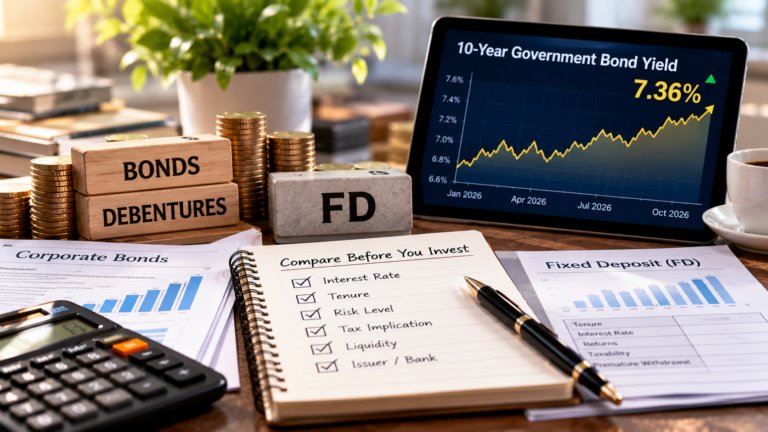
Your before-you-invest checklist
- Emergency fund of 6 months’ expenses in place first
- Each goal labelled with a date: under 3, 3-5 or 5+ years
- FD deposits kept within ₹5 lakh per bank for DICGC cover
- Gold held via ETF or fund, not only jewellery with 3% GST
- Gold kept at 5-15% of investments, not more
- Equity SIPs continued through a falling year like 2026
- Your tax slab used to compare FD and fund returns after tax
- Equity gains booked within the ₹1.25 lakh yearly exemption
- Form 15G or 15H filed if eligible, to avoid TDS on FDs
- Portfolio rebalanced once every 12 months
Gold, FD or mutual funds: answers to common questions
Which is better for investment: gold, FD or mutual funds?
None wins for every goal. FDs suit money needed within about three years, equity mutual funds suit goals five or more years away, and gold works as a 5% to 15% diversifier.
Is it a good time to buy gold in November 2026?
Gold is near record levels after a 16% to 17% one-year gain in ETFs. No one can time it reliably; buying gradually through a gold ETF or fund reduces the risk of buying at a peak.
What are SBI FD interest rates in 2026?
As reported in October 2026, SBI pays 6.25% for 1 to under 2 years and 6.45% for 2 to under 3 years to general customers, and 0.50 percentage points more to senior citizens on most tenures.
Do FDs beat inflation?
Before tax, a 6.25% FD is just above September 2026 inflation of 5.54%. After tax in the 20% or 30% bracket, the real return turns negative.
How are gold ETFs taxed in India?
Gold ETFs held over 12 months pay 12.5% long-term capital gains tax; sales before 12 months are taxed at your slab rate. Gold mutual funds need a 24-month holding for the 12.5% rate.
Should I stop my SIP because the market is down?
For goals five or more years away, falling markets let SIPs buy more units at lower prices. Investors increased equity fund inflows by 31% in September 2026.
Is digital gold safe?
Digital gold sold by apps is not regulated by SEBI or the RBI. Gold ETFs and gold mutual funds are SEBI-regulated and are generally the safer way to hold gold electronically.
How much of my portfolio should be in gold?
Many financial planners suggest 5% to 15%, depending on age and risk appetite. Gold pays no income, so it works as a hedge, not a core holding.
The short version, in 100 words
Gold has had a spectacular year, FDs pay a little over 6%, and equities are down in 2026. That snapshot is a poor basis for a long-term decision. Match each rupee to a goal: FDs for money needed within three years, equity mutual funds for goals five or more years away, and gold as a steady 5% to 15% diversifier. Compare everything after tax and inflation; for higher-bracket investors, FDs currently lose purchasing power. Keep SIPs going in bad years, and rebalance once a year rather than chasing whichever asset topped the last scorecard.