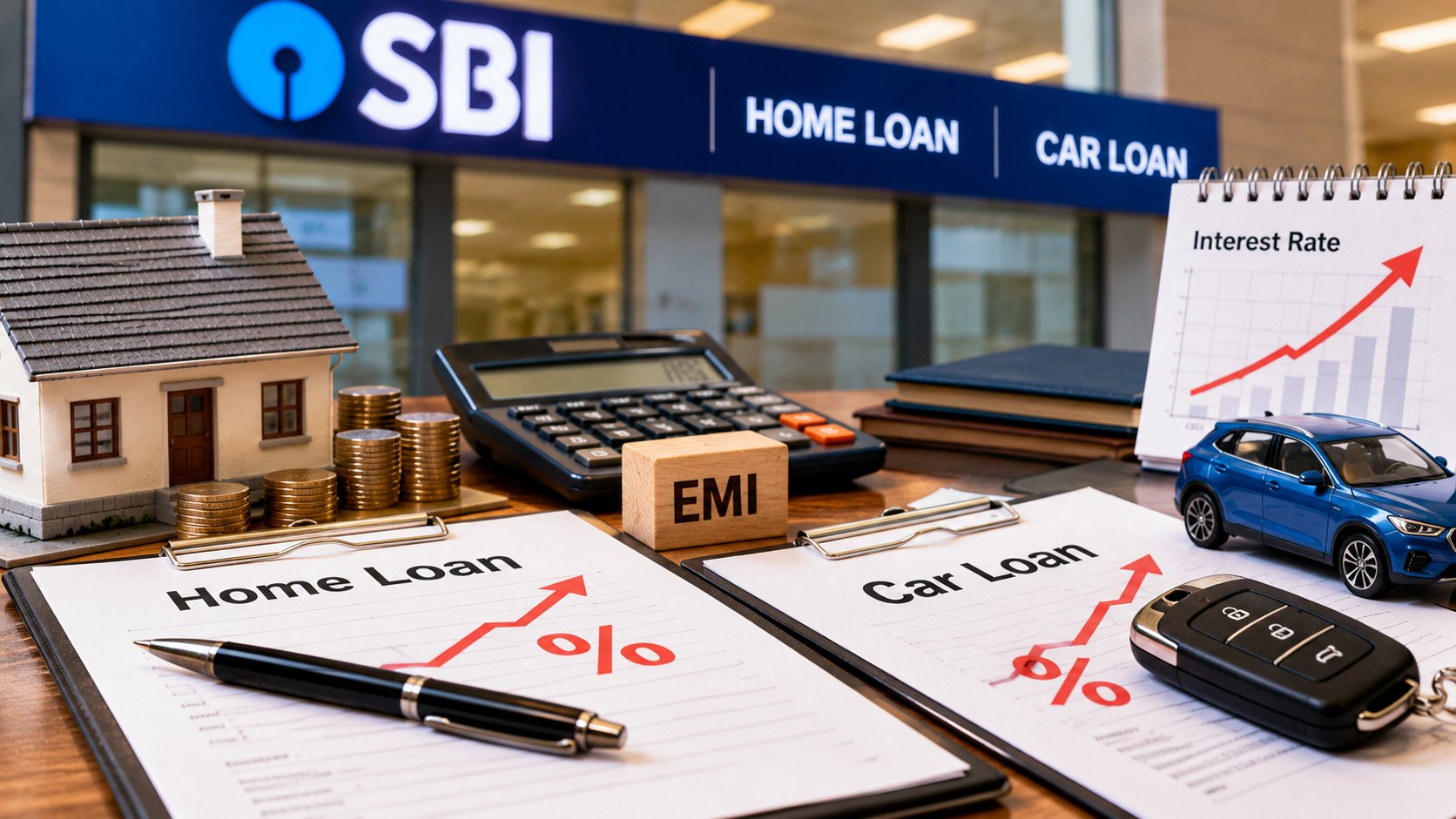
SBI Home and Car Loan Rate Hike: How Much Your EMI Rises — and Why Most Existing Car Loans Won't Change
SBI Home and Car Loan Rate Hike: How Much Your EMI Rises — and Why Most Existing Car Loans Won’t Change
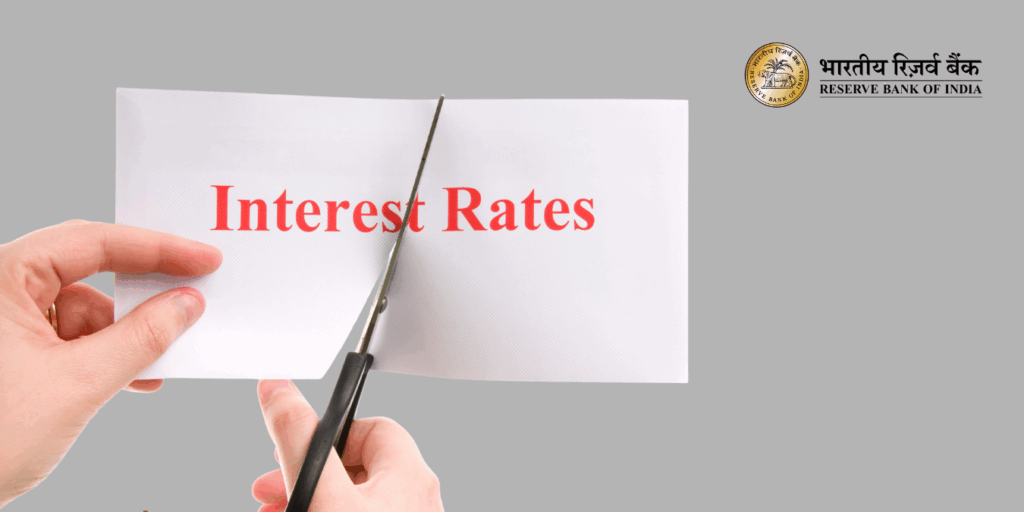
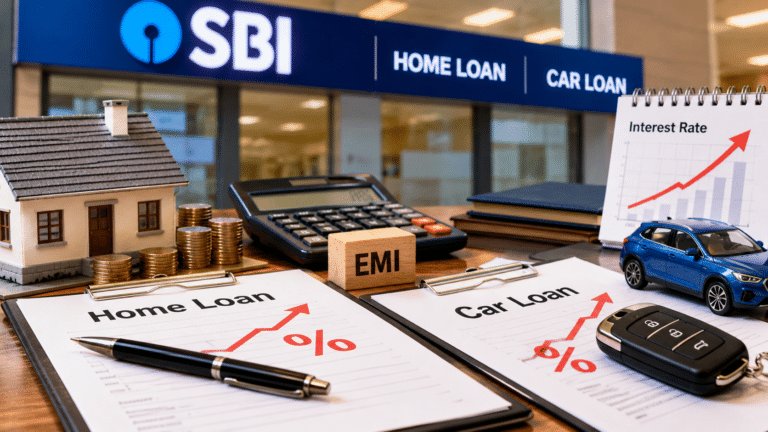
SBI raised its external benchmark and repo-linked lending rates by 0.25 percentage points and its MCLR by 0.15 points from 15 October 2026, after the RBI’s first repo hike in years. On a ₹50 lakh, 20-year home loan, the EMI rises by about ₹761 a month.
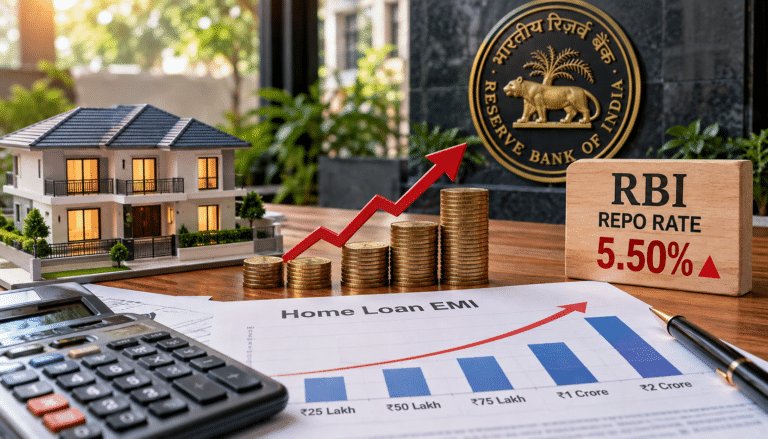
If you have an SBI home loan, an SMS about a revised interest rate is probably on its way, if it has not already arrived. On 15 October, State Bank of India raised the benchmark rates that most of its loans are priced on, a week after the Reserve Bank of India raised the repo rate by 0.25 percentage points to 5.50%. It is the first increase in borrowing costs most current home-loan borrowers have faced since the rate-cut cycle of 2025.
The headline numbers are small, a quarter of a percentage point here and 0.15 points there. What they mean for your monthly budget depends on three things: the size of your loan, how many years are left, and whether it is a floating-rate home loan or a fixed-rate car loan. This guide does the arithmetic for each case and explains the one choice most borrowers get wrong.
Quick Summary
SBI home-loan EMIs rise by roughly ₹15 to ₹16 a month for every ₹1 lakh borrowed over 20 years; most existing car-loan EMIs do not change at all. SBI raised EBLR from 7.90% to 8.15% and RLLR from 7.50% to 7.75%, and lifted MCLR by 0.15 points for tenors from three months to three years. Home loans linked to EBLR rise by 0.25 points at their next reset. SBI’s car loans carry fixed rates, so only new borrowers pay the higher rate.
What We Know
- SBI’s EBLR rose from 7.90% to 8.15% plus CRP and BSP, and RLLR from 7.50% to 7.75% plus CRP, from 15 October 2026.
- MCLR rose 0.15 points for 3-month to 3-year tenors; overnight and 1-month rates are unchanged at 7.85%.
- The RBI raised the repo rate to 5.50% on 7 October and shifted its stance to “calibrated tightening.”
- SBI’s home loan rates now run from 7.50% to 8.80%, depending largely on credit score.
- SBI lists its car loan rates as fixed for the life of the loan.
What Is Still Unclear
- When each existing borrower’s loan resets; this depends on individual loan terms.
- Whether SBI will extend tenures by default rather than raise EMIs for existing borrowers.
- Whether the RBI raises rates again in December, which would mean another round.
- Whether SBI will raise fixed deposit rates; its chairman said deposit hikes are unlikely for two to three months.
What SBI Actually Changed on 15 October
SBI prices loans off several internal benchmarks, and each moved differently. Business Standard’s Hindi edition and Upstox published the revised figures, citing SBI. The external benchmark rate, which almost all new home loans since 2019 are linked to, rose by the full 0.25 points of the RBI’s repo hike. The older MCLR benchmark rose by 0.15 points.
| Benchmark | Before 15 Oct | From 15 Oct | Change | What it prices |
|---|---|---|---|---|
| EBLR | 7.90% | 8.15% | +0.25 | Most home loans |
| RLLR | 7.50% | 7.75% | +0.25 | Some retail and MSME loans |
| MCLR, overnight and 1 month | 7.85% | 7.85% | None | Short-term loans |
| MCLR, 3 months | 8.25% | 8.40% | +0.15 | New car loans |
| MCLR, 6 months | 8.60% | 8.75% | +0.15 | Older home loans |
| MCLR, 1 year | 8.70% | 8.85% | +0.15 | Used car, two-wheeler, older loans |
| MCLR, 2 and 3 years | 8.75% and 8.80% | 8.90% and 8.95% | +0.15 | Longer-tenor loans |
Why the two benchmarks moved differently
EBLR is mechanically tied to the repo rate: SBI’s EBLR has sat 2.65 points above repo, so when repo went from 5.25% to 5.50%, EBLR went from 7.90% to 8.15%. MCLR, by contrast, reflects the bank’s own cost of funds, including deposit rates. SBI chairman C S Setty said banks are unlikely to raise deposit rates for two to three months because of surplus liquidity, which is why MCLR moved less than repo.
Why your rate is not simply 8.15%
No customer pays the EBLR itself. SBI adds a credit risk premium, based mainly on your credit score, and a business strategic premium, a bank-set adjustment that can be negative for its best customers. That is how a loan priced off an 8.15% benchmark can carry a 7.50% rate. HelloBanker notes an extra 0.10 points for non-salaried borrowers with credit scores below 825. The hike changes the benchmark; your premiums usually stay the same, so your rate rises by the same 0.25 points.
The Home Loan EMI Maths, Loan by Loan
SBI’s home loan rates now run from 7.50% to 8.80% for regular term loans, according to rate aggregator HelloBanker, up from 7.25% to 8.55% before the hike. The best rate goes to borrowers with high credit scores. We used a borrower at the best rate, moving from 7.25% to 7.50%, to show the effect. Borrowers on higher rates will see slightly larger increases in rupees.
| Loan amount | EMI at 7.25% | EMI at 7.50% | Extra a month | Extra over 20 years |
|---|---|---|---|---|
| ₹30 lakh | ₹23,711 | ₹24,168 | ₹457 | ₹1,09,564 |
| ₹50 lakh | ₹39,519 | ₹40,280 | ₹761 | ₹1,82,607 |
| ₹75 lakh | ₹59,278 | ₹60,419 | ₹1,141 | ₹2,73,910 |
| ₹1 crore | ₹79,038 | ₹80,559 | ₹1,522 | ₹3,65,213 |
The rule of thumb that falls out of the table: on a 20-year loan, each 0.25-point rise adds roughly ₹15 a month for every ₹1 lakh borrowed. On a ₹50 lakh loan, that is the cost of a couple of streaming subscriptions each month. Over the full term, it is more than ₹1.8 lakh.
If you are already five years into your loan
The table above assumes a fresh loan. Most borrowers are partway through. Take someone who borrowed ₹50 lakh for 20 years at 7.25% five years ago. Their outstanding balance today is about ₹43.3 lakh, with 15 years left. At 7.50%, the EMI needed to finish on time rises from ₹39,519 to about ₹40,131, an increase of about ₹613 a month. The older the loan, the smaller the rupee increase, because there is less principal left for the higher rate to apply to.
Longer loans feel it more
The same 0.25-point rise costs more per month on longer loans, because more of each EMI goes to interest. On ₹50 lakh, the increase is ₹707 a month over 15 years, ₹761 over 20, ₹809 over 25 and ₹852 over 30.
The Choice That Matters More Than the Hike
When a floating rate rises, banks can do one of two things: raise your EMI, or keep the EMI the same and extend the loan. Banks often default to extending the tenure because it avoids an immediate payment shock. That feels painless, but it is usually the more expensive option.
The difference grows with the size of the hike and the number of years left. If the RBI raises rates again, a borrower whose tenure is extended each time can find the loan running well past retirement. Most banks, including SBI, allow you to ask for the EMI to be raised instead. If you can afford ₹761 more a month, that request saves real money.
Still on MCLR? Check whether to switch
Borrowers with older SBI loans linked to MCLR face a different pattern. Their rate moves only on the reset date, usually every six months or a year, and this time by 0.15 points rather than 0.25. That sounds better, but MCLR loans have historically been slower to pass on cuts as well as rises, and many carry higher spreads than new EBLR loans. If your MCLR-linked rate is well above SBI’s current 7.50% starting rate, ask the bank about switching to EBLR; there may be a one-time fee, so compare it with the interest saved.
The hike also flows to SBI’s other home-loan products. HelloBanker lists Home Loan Maxgain, an overdraft-style loan, at 8.00% to 9.30% and top-up loans at 8.00% to 10.75%. Maxgain borrowers who park surplus cash in the linked account reduce the balance on which interest is charged, which partly offsets a higher rate.
Car Loans: Why Your EMI Probably Won’t Budge
Here the news is better for existing borrowers. SBI’s own auto loan rate page states that its car loan rates are fixed: the rate applied at disbursement stays the same for the whole term. So if you already have an SBI car loan, the 15 October change does not affect your EMI.
New car loans are a different story. SBI prices them off the 3-month MCLR, which rose from 8.25% to 8.40%. Its rate page now shows new car loans from 8.55% to 9.50%, with the best rate for borrowers with credit scores of 800 and above on three- to five-year loans.
For a new borrower, the hike itself adds little. On a ₹10 lakh, five-year car loan, a 0.15-point rise from 8.40% to 8.55% lifts the EMI from ₹20,468 to ₹20,541, an extra ₹72 a month or about ₹4,300 over the loan. Your credit score matters far more: the gap between the best and worst bands, 8.55% and 9.40%, is nearly six times as large as the hike.
How We Got Here: The Repo Rate’s U-Turn
For most of 2025, borrowers enjoyed falling rates as the RBI cut the repo rate repeatedly. That cycle has now turned. In its 7 October statement, the RBI cited higher food and fuel prices, crude oil volatility, a deficient monsoon and tighter global financial conditions, and raised its inflation forecast for 2026-27 to 5.2%, SCC Online reported.
- Feb 20256.25%Rate-cut cycle begins
- Jun 20255.50%Large cut of 0.50 points
- Dec 20255.25%Cycle low
- Aug 20265.25%Held, stance neutral
- 7 Oct 20265.50%Hike; “calibrated tightening”
- 15 Oct 20268.15%SBI EBLR raised
The RBI’s new stance, “calibrated tightening,” signals that further increases are possible if inflation does not ease. The central bank expects CPI inflation to peak at 6.0% in the October to December quarter. Punjab National Bank and Bank of Baroda have also raised lending rates, Upstox reported, so switching banks will not fully escape the trend.
What to Do This Month
- Find your benchmark and reset date. Your sanction letter or the SBI app shows whether the loan is linked to EBLR, RLLR or MCLR, and when it resets.
- Check what SBI plans to change. If the bank extends your tenure by default, ask in writing to raise the EMI instead, if your budget allows.
- Compare your rate with new-customer rates. If you pay well above 7.50% with a good credit score, ask SBI about a rate reset or switch-over fee.
- Consider a part-prepayment. Floating-rate home loans to individuals carry no prepayment penalty, and early prepayments cut interest the most.
- Buying a car soon? Lock a fixed rate now if you are ready to buy; the rate stays the same for the whole term.
- Protect your credit score. It moves your rate far more than a 0.25-point hike does.
- Benchmark checked: EBLR 8.15%, RLLR 7.75% or MCLR
- Reset date noted from loan terms
- Remaining tenure checked after reset
- EMI increase requested if affordable
- Credit score checked, ideally 800 or above
- Prepayment of ₹50,000 or more considered
- Car loan confirmed as fixed rate
- Other banks’ rates compared before switching
Frequently Asked Questions
How much has SBI raised home loan rates?
SBI raised its EBLR, which most home loans are linked to, by 0.25 percentage points from 7.90% to 8.15%, effective 15 October 2026. Home loan rates now start at about 7.50%.
How much will my SBI home loan EMI increase?
For a 20-year loan moving from 7.25% to 7.50%, the EMI rises by about ₹457 on ₹30 lakh, ₹761 on ₹50 lakh, ₹1,141 on ₹75 lakh and ₹1,522 on ₹1 crore. Roughly ₹15 a month per ₹1 lakh borrowed.
Will my existing SBI car loan EMI go up?
No, in most cases. SBI states that its car loan rates are fixed for the full term, so existing car loan EMIs do not change. Only new car loans are priced at the higher rate.
When will the new rate apply to my home loan?
At your loan’s next reset date, as set out in your loan agreement. The new benchmark rates took effect on 15 October 2026, but existing loans move on their own reset schedule.
Is it better to increase EMI or tenure after a rate hike?
Increasing the EMI is usually cheaper. On a ₹50 lakh, 20-year loan, extending the tenure by about 11 months costs around ₹4.37 lakh in extra interest, versus about ₹1.83 lakh if the EMI is raised.
What is the current SBI MCLR?
From 15 October 2026: 7.85% overnight and one month, 8.40% three months, 8.75% six months, 8.85% one year, 8.90% two years and 8.95% three years.
Why did SBI raise its lending rates?
The RBI raised the repo rate by 0.25 points to 5.50% on 7 October 2026, citing rising food and fuel prices and other inflation risks. SBI’s EBLR is linked to the repo rate.
Has SBI raised fixed deposit rates too?
No. SBI did not change FD rates with this hike, and its chairman said deposit rate increases are unlikely for the next two to three months because of surplus liquidity.
The Short Version
From 15 October 2026, SBI raised EBLR and RLLR by 0.25 points and MCLR by 0.15 points, following the RBI’s repo hike to 5.50%. For home loans, expect about ₹15 more a month per ₹1 lakh over 20 years: ₹761 on ₹50 lakh. Existing SBI car loans are fixed-rate and unaffected; new ones cost about 0.15 points more. The biggest decision is not the hike itself but how you absorb it: raising your EMI instead of extending the tenure can save around ₹2.5 lakh on a ₹50 lakh loan.