World Bank's $1.1 Billion Emergency Lifeline for Bangladesh: Food Crisis, Fertiliser Costs, and the Hidden Toll of the Middle East Conflict
When Aid Becomes a Lifeline, Not Just a Loan
In the spring of 2024, a quiet but consequential decision was made in Washington, D.C. The World Bank approved a $1.1 billion emergency financing package for Bangladesh — one of the largest single-country emergency disbursements in South Asia in recent memory. On paper, it read like a routine development loan. In reality, it was a financial tourniquet applied to a nation bleeding from multiple wounds at once: a worsening food security crisis, spiraling fertiliser costs, a foreign exchange squeeze, and the cascading economic shockwaves of a Middle East conflict thousands of miles away. Understanding why Bangladesh needed this money — and what it reveals about the fragile architecture of global food systems — matters far beyond Dhaka’s borders.
The Anatomy of Bangladesh’s Crisis
Bangladesh is not a failed state. It is, in fact, one of the most celebrated development success stories of the last three decades. The country lifted millions out of poverty, built a garment industry that now supplies a third of the world’s fast fashion, and achieved food self-sufficiency in rice production that once seemed impossible. So when a country with that track record approaches the World Bank for emergency funds, it signals something systemic — not a local failure, but a global one spilling into a vulnerable economy.
The crisis unfolded in layers. First came the post-pandemic supply chain disruption, which pushed up the price of nearly every imported commodity Bangladesh depends on. Then came Russia’s invasion of Ukraine in 2022, which cut off two of the world’s largest grain and fertiliser exporters from global markets. Bangladesh, which imports significant quantities of wheat, edible oil, and crucially, chemical fertilisers, was hit hard. The country’s import bill ballooned even as its foreign exchange reserves — largely fed by garment export earnings and remittances — came under pressure. By mid-2023, the taka had depreciated sharply, making every dollar of imports more expensive in local currency terms.
Then came the Middle East escalation.
The Hidden Toll: How the Middle East Conflict Reached Bangladesh’s Farms
The connection between conflict in the Middle East and a rice farmer in Sylhet or a small-holder vegetable grower in Rajshahi is not immediately obvious. But it is devastatingly real, operating through three distinct channels.
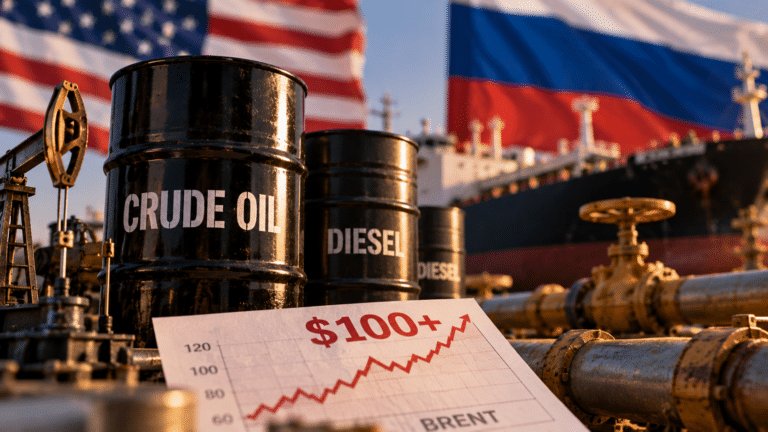
The first is energy prices. Bangladesh is heavily dependent on liquefied natural gas (LNG) imports to fuel its power sector and industrial base. The Middle East conflict — particularly the disruptions around the Strait of Hormuz and broader regional instability following the Gaza conflict’s expansion in late 2023 and into 2024 — caused LNG spot prices to spike unpredictably. Bangladesh, which had already been struggling with power shortages and load-shedding, saw its energy import costs rise at a time when its foreign exchange reserves could least absorb the shock.
The second channel is fertiliser. This is where the story becomes particularly consequential for food security. Urea, the most widely used nitrogenous fertiliser in Bangladesh’s agriculture, is manufactured using natural gas as a primary feedstock. When global gas prices spike, fertiliser prices follow. Russia and Belarus, the world’s two largest potash exporters, were already partially cut off from global markets due to sanctions. The Middle East instability added another layer of uncertainty to global fertiliser supply chains, keeping prices elevated well into 2024. For Bangladeshi farmers — who operate on razor-thin margins and often borrow to buy inputs — higher fertiliser costs translate directly into reduced application, lower yields, or debt they cannot service. None of those outcomes are good for food security.
The third channel is remittances. Bangladesh is one of the world’s top recipients of worker remittances, with millions of Bangladeshi nationals working in Gulf Cooperation Council (GCC) countries — Saudi Arabia, the UAE, Qatar, Kuwait, and Oman. The Middle East conflict created economic uncertainty across the Gulf, slowing construction and infrastructure projects that employ a large share of Bangladeshi migrant workers. Some workers returned home. Others saw their earnings reduced. Remittance inflows, which had been a critical stabilizer for Bangladesh’s balance of payments, softened at precisely the wrong moment.
What the $1.1 Billion Is Actually For
The World Bank’s emergency package was not a single-purpose grant. It was structured across several interconnected interventions, reflecting the multi-dimensional nature of the crisis Bangladesh was navigating.
A substantial portion was directed toward food security support — specifically to help the government maintain its open market sales (OMS) operations, through which subsidized rice and other staples are sold to vulnerable households. These OMS operations are Bangladesh’s most immediate social protection tool during food price shocks. Without adequate government stocks and the fiscal space to subsidize them, urban poor households — particularly garment workers in Dhaka and Chittagong — would be left entirely exposed to market prices that had risen 30 to 50 percent above pre-2022 levels for many essentials.
Another significant tranche was aimed at supporting fertiliser procurement and subsidies. Bangladesh’s government subsidizes fertiliser for farmers, but the fiscal cost of doing so had become punishing. The World Bank financing helped the government sustain these subsidies without crowding out other critical expenditures. This matters enormously: if fertiliser subsidies are cut, farmers reduce application, yields fall, and the country that once achieved rice self-sufficiency risks sliding back toward structural food import dependence — a far costlier outcome in the long run.
The package also included balance of payments support, which is essentially budget support that helps the government manage its external financing needs, maintain adequate import cover, and avoid a full-blown currency crisis. At the time of the approval, Bangladesh’s foreign exchange reserves had fallen to levels that covered less than four months of imports — below the conventional three-month safety threshold that economists use as a warning signal.
Finally, a component addressed energy sector financing, recognizing that power shortages were compounding the economic stress on both households and the industrial sector that employs millions.
E-E-A-T in Development Economics: Why Expert Analysis Matters Here
It is worth stepping back to explain why this story deserves rigorous, expert-level treatment rather than surface-level reporting. Development economics is a field where oversimplification causes real harm. When commentators describe situations like Bangladesh’s simply as “the country ran out of money,” they obscure the structural dynamics that actually drive these crises — and they prevent meaningful public understanding of what policy responses work and why.
The World Bank’s emergency financing model is built on conditionality: countries receive funds in exchange for policy commitments. In Bangladesh’s case, the conditions reportedly included commitments around energy pricing reform (reducing fuel subsidies that were fiscally unsustainable), improvements in social protection targeting, and measures to stabilize the financial sector. These conditions are not universally popular. Energy pricing reform, for instance, means higher electricity and gas prices for consumers and businesses — a painful adjustment, particularly for a population already squeezed by food inflation.
The tension between short-term pain and long-term sustainability is at the heart of every structural adjustment debate since the IMF coined the term in the 1980s. Bangladesh’s situation is a live case study in that tension, playing out in real time with real consequences for 170 million people.
Bangladesh’s Food System: Structural Strengths and Persistent Vulnerabilities
To fully appreciate both the crisis and the lifeline, it helps to understand Bangladesh’s agricultural and food system in some depth. The country has achieved remarkable productivity gains in rice, largely through the adoption of high-yielding varieties developed by institutions like the Bangladesh Rice Research Institute (BRRI) and the International Rice Research Institute (IRRI). These varieties, however, are input-intensive — they require irrigation, fertiliser, and pesticides to deliver their yield potential. This means that while Bangladesh has built food self-sufficiency on a foundation of science and smallholder ingenuity, that foundation is directly exposed to global input markets.
Wheat is a different story. Bangladesh is not self-sufficient in wheat, importing several million tonnes annually. Wheat prices, which spiked dramatically after Russia’s Ukraine invasion, hit urban consumers — particularly the urban poor who had shifted toward wheat-based foods — with direct and immediate force. The government’s wheat procurement and distribution system, while functional, was not designed to absorb shocks of the magnitude seen in 2022 and 2023.
Edible oil is another critical import. Palm oil, largely sourced from Malaysia and Indonesia, is the primary cooking oil for most Bangladeshi households. Its price nearly doubled at peak in 2022, eating into household food budgets in ways that nutritionists have noted with concern — particularly regarding children’s dietary diversity and caloric adequacy in lower-income households.
The Political Dimension: A Government Under Pressure
The food crisis arrived at a politically sensitive moment for Bangladesh. The country held a general election in January 2024, and the ruling Awami League, led by Prime Minister Sheikh Hasina, was navigating a delicate balance between maintaining economic stability and managing an electorate frustrated by high living costs. Food inflation is politically explosive in South Asia — it has toppled governments and triggered mass protests across the region historically. The World Bank financing, in this context, was not merely economic support; it was also political oxygen, giving the government the fiscal space to maintain food subsidies and social protection programs without which public discontent could have become ungovernable.
It is important to note, however, that Bangladesh’s political situation shifted dramatically in 2024. Sheikh Hasina resigned and left the country in August 2024 following a mass student-led uprising, and an interim government led by Nobel laureate Muhammad Yunus took power. The economic stabilization program, including the World Bank financing package, thus transitioned from one political context to another — a complicating factor for program implementation and reform commitment that international financial institutions must now navigate carefully.
What This Means for Global Food Security Architecture
Bangladesh’s crisis — and the World Bank’s response to it — illuminates several fault lines in the global food security architecture that deserve serious attention from policymakers, researchers, and informed citizens alike.
The first is the fertiliser dependency trap. The Green Revolution that transformed food production in Asia was built on chemical fertilisers derived from fossil fuels. Decades later, countries like Bangladesh remain deeply dependent on this input chain, which connects their food security directly to global energy markets and geopolitical stability in major producing regions. Reducing this dependency through agroecological practices, precision fertiliser use, and organic matter management is technically feasible but requires long-term investment and policy commitment that is difficult to sustain during a crisis.
The second is the remittance-food security nexus. For countries with large diaspora worker populations in conflict-prone or economically volatile regions, remittances function as a de facto food security buffer — until they don’t. Bangladesh, the Philippines, Nepal, and several African nations share this structural vulnerability. When the regions that host their workers experience instability, the income shock arrives simultaneously with the commodity price shock, doubling the blow to household food security.
The third is the limits of national food security policies in a globalized world. Bangladesh can manage its rice production with considerable skill, but it cannot manage global wheat prices, global LNG prices, or the geopolitical decisions of distant powers. The architecture of global food governance — through institutions like the FAO, the WFP, the World Bank, and the G20’s Agricultural Market Information System (AMIS) — was designed to provide early warning and coordinated response. The Bangladesh crisis suggests that these systems, while useful, are still too slow and too lightly resourced to prevent harm when multiple shocks converge simultaneously.
The Human Face of the Numbers
Behind every percentage point of food inflation and every million-dollar tranche of emergency financing are real households making devastating trade-offs. In Bangladesh, researchers and journalists documented families in 2023 skipping meals, pulling children from school to send them to work, forgoing medical treatment, and selling productive assets — livestock, small land parcels, sewing machines — to buy food. These are not reversible decisions. A child who falls behind in school due to economic stress rarely fully catches up. A family that sells its land rarely buys it back. The human cost of food crises compounds in ways that GDP statistics and balance-of-payment reports do not capture.
The World Bank’s $1.1 billion helps prevent the worst outcomes, but it does not erase the harm already done. The families who reduced dietary diversity during the peak of the crisis, whose children may have experienced micronutrient deficiencies during critical developmental windows, whose savings were wiped out — they will carry those consequences regardless of what happens to macroeconomic indicators.
Looking Forward: What Resilience Actually Requires
If Bangladesh’s experience teaches the world anything, it is that resilience is not built during a crisis — it is built before one. The country needs, and the World Bank financing partially supports, investments in several areas that will determine its ability to weather future shocks.
Diversifying the agricultural input base — reducing dependence on imported urea through efficiency improvements, biofertiliser development, and precision agriculture — is a decade-long project that requires consistent public investment. Expanding social protection systems that can scale up rapidly during shocks, reaching the most vulnerable households with cash or food transfers, is both technically achievable and fiscally manageable at Bangladesh’s income level. Strengthening the financial system so that banks do not amplify economic shocks through credit contraction is a regulatory challenge that Bangladesh’s central bank is already engaged with, though progress is uneven.
On the global side, Bangladesh’s situation strengthens the case for more robust multilateral food security financing mechanisms — instruments that can mobilize faster than the World Bank’s standard project cycle, with less conditionality burden on countries whose crises are externally caused rather than the result of domestic mismanagement.
A Crisis That Demands Global Attention
The World Bank’s $1.1 billion emergency package for Bangladesh is a significant intervention, and it likely prevented outcomes that would have been far worse. But it is also a signal — a distress signal from a country that did most things right developmentally, and still found itself in crisis because of the cascading, interconnected fragility of the global food and energy system.
The Middle East conflict’s role in Bangladesh’s food crisis is a striking illustration of how conflict anywhere increasingly means instability everywhere. In a world where energy, food, fertiliser, and labor markets are globally integrated, the security decisions made in capitals far from Dhaka ripple through the lives of rice farmers in Mymensingh and garment workers in Narayanganj. Recognizing these connections — and building international systems robust enough to manage them — is not just a matter of development policy. It is a matter of global stability.