Key Economic Drivers: How GDP Growth and CPI Inflation Impact Your Portfolio
The Indian stock market on July 23, 2026, presents a dynamic landscape where the Nifty 50 is navigating resistance near the 23,996 level and the BSE Sensex is balancing robust domestic growth against global headwinds. Driven by strong Q4 FY26 GDP growth of 7.8% and mixed corporate earnings, the current market offers targeted opportunities for investors seeking long-term value despite short-term volatility.5paisa+2
📊 Indian Market Overview
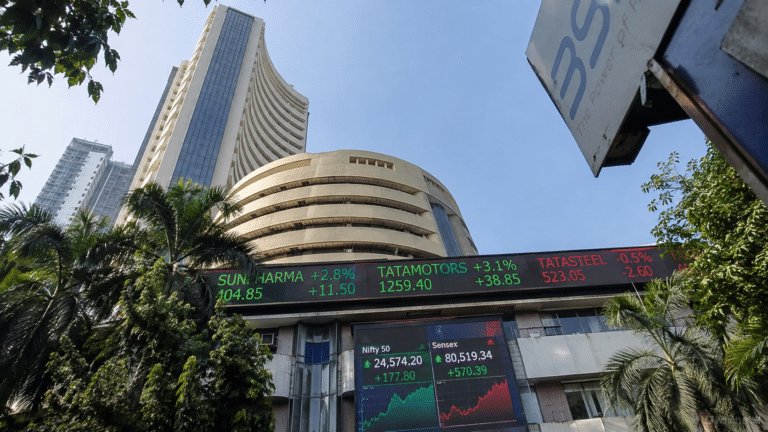
The Indian equity landscape is currently experiencing a consolidation phase heavily influenced by a mix of domestic resilience and global pressure. The BSE Sensex recently saw a sharp 715-point correction to close at 76,755, driven by profit booking in key sectors. Simultaneously, the NSE Nifty 50 ended below the psychological 24,000 mark, closing near 23,996.
The Nifty Bank trend, a crucial barometer for the broader economy, reflects similar caution. The index is trading around 57,238.90, marking a decline of just over 1% amid mixed banking sector earnings and shifting bond yields. Investor sentiment remains cautiously optimistic. For investors tuning in from commercial hubs like Lucknow to Mumbai, the current market is transitioning from a broad-based rally to a stock-picker’s environment, heavily reliant on the latest Q1 FY27 earnings data and global macroeconomic signals.
🏛️ Key Economic Drivers
Understanding the macroeconomic forces is essential to grasp the current Indian stock market trends. Several crucial data points are currently dictating market capital flows:
- India GDP Growth: The Indian economy demonstrated remarkable resilience with Q4 FY26 GDP expanding by 7.8%, bringing the full FY26 growth to an impressive 7.7%. However, the Reserve Bank of India (RBI) has slightly tempered its optimism, lowering its FY27 GDP growth projection to 6.6% due to rising geopolitical uncertainties and global trade shifts.
- CPI Inflation: Price stability remains a focal point for markets. India’s CPI inflation rose to 4.38% in June 2026, up from 3.93% in May. While this is a noticeable uptick, it remains comfortably within the central bank’s tolerance band.
- RBI Repo Rates: With inflation tracking below the upper limit of 6% but edging higher recently, the RBI has maintained a status quo on repo rates. This steady monetary policy ensures adequate liquidity while keeping inflationary pressures under check, providing a stable cost of capital for Indian corporates.
📉 Today’s Nifty 50 Details
The NSE Nifty 50 today exhibits a distinct intraday pattern defined by sector rotation and selective buying.
- The index is currently trading at 23,996.25, representing a drop of 191.45 points from its previous close.
- Market breadth is firmly in the negative, with only 11 advancing stocks compared to 39 declining stocks.
- The decline is primarily led by IT and real estate, with the Realty index slipping by a sharp 2.63%.
- Defensive plays are providing a safety net, as FMCG and select auto components register positive inflows.
⚖️ BSE Sensex vs NSE Nifty 50: July 2026 Trends
| Metric | BSE Sensex | NSE Nifty 50 |
|---|---|---|
| Current Level | 76,755 | 23,996.25 |
| Recent Trend | Corrective; fell 715 points recently | Testing support just below 24,000 |
| Sector Drag | IT, Pharma, Realty | IT, PSU Banks, Real Estate 5paisa+1 |
| Pockets of Strength | Defensive FMCG, Auto | Auto (Bajaj Auto), Consumer Goods (Nestle) 5paisa+1 |
| Market Sentiment | Cautious, awaiting global stability | Stock-specific action amid broader weakness |
📰 Latest Market News Highlights
The latest market news underscores a market reacting swiftly to corporate announcements and international policy shifts.
- Corporate Earnings Surge: IndusInd Bank posted a massive 72% year-on-year surge in Q1 net profit, reaching Rs 1,037 crore, which has kept the banking sector in focus. Meanwhile, FMCG giant Nestle India reported a 48% jump in profit alongside a 25% revenue increase, boosting consumer sector confidence.
- Trade Policy Impacts: Indian pharma stocks, including Sun Pharma, Dr. Reddy’s, and Alkem, faced notable selling pressure following US President Donald Trump’s new tariff plan targeting generic drug imports.
- Energy Sector Woes: Oil Marketing Companies (OMCs) are under severe pressure as global crude oil prices topped $95 per barrel. HPCL subsequently reported a massive Q1 FY27 loss of Rs 11,526 crore, heavily impacting energy sector sentiment.
- New-Age Tech Earnings: Zomato’s parent company, Eternal, reported a 47% drop in Q1 profit to Rs 92 crore, though its revenue rose by 17% quarter-on-quarter, highlighting the mixed fortunes of platform-based businesses.
🌍 Foreign Indices Impacting Indian Markets
Global market movements remain a primary catalyst for domestic volatility.
- Wall Street & Tech Sell-off: The Nasdaq led losses on Wall Street as crude oil spiked over $95, directly impacting Indian IT stocks which rely heavily on US client spending.
- Asian Markets: Conversely, Asian indices showed pockets of strength, with the Kospi and Nikkei surging up to 4% driven by a powerful rally in semiconductor stocks. However, the broader weakness from the West has largely overshadowed these Asian gains in the Indian context.
🚀 Performance Overview: Gainers, Losers, and Top Stocks
For proactive investors, identifying the top NSE/BSE stocks involves looking past daily noise to find sustainable value and earnings momentum.
🏆 Top 10 Stocks to Buy on NSE/BSE for 2026
- Bajaj Auto: Driven by a massive Q1 profit surge, the stock offers over 11% upside potential in 2026 according to brokerages.
- Nestle India: A defensive powerhouse that just delivered a 48% profit increase, providing a safe haven with consistent dividend yields.
- IndusInd Bank: After a 72% YoY net profit jump, the bank represents a high-growth opportunity in the financial sector.
- Tata Consumer Products: Experiencing steady accumulation, benefiting from a shift in urban consumption patterns.
- Power Grid Corp: A low-beta dividend play that benefits from India’s continuous infrastructure and energy grid expansion.
- ONGC: Despite OMC pressures, upstream oil explorers like ONGC stand to benefit from crude prices sustaining above the $90 mark.
- Trent: Recommended by analysts for its strong operational metrics and expanding retail footprint.
- Bata India: Another top pick offering a mix of brand equity and steady consumer demand.
- Hindustan Aeronautics Ltd (HAL): In focus due to a massive long-term LEAP engine deal with French major Safran, highlighting the ongoing defense localization theme.
- Shriram Finance: Identified as a top analyst pick, representing strength in the specialized NBFC lending space.
📈 Today’s Top 10 Gainers and Losers
Based on the latest Nifty 50 heat map, here is the performance overview:
| Top 10 Gainers | Trend / % Change | Top 10 Losers | Trend / % Change |
|---|---|---|---|
| Bajaj Auto | +5.72% | Indigo | Significant decline |
| Nestle India | +2.87% | Jio Financial | Downward pressure |
| Tata Consumer | +1.24% | Infosys (INFY) | Global tech weakness |
| Power Grid | +0.91% | Tata Steel | -0.38% |
| ONGC | +0.80% | Maruti | -0.38% |
| HUL | +0.56% | Wipro | -0.30% |
| NTPC | +0.56% | Trent | -0.26% |
| Titan | +0.49% | Shriram Finance | -0.25% |
| Apollo Hospitals | +0.13% | HCL Tech | -0.18% |
| Bharti Airtel | +0.03% | Hindalco | -0.15% |
💡 Stock Recommendations for Today
- Buy on Dips (IT Sector): While Infosys and Wipro are currently facing headwinds from the Nasdaq drop, long-term investors can use this correction to accumulate top-tier IT.5paisa+1
- Hold Defensives: Keep holdings tight in FMCG stalwarts like Nestle India and HUL, which are currently defying market gravity.5paisa+1
- Avoid High-Beta Pharma: Limit exposure to generic drug manufacturers heavily reliant on US exports until the impact of President Trump’s tariff policies becomes clearer.
🏢 Sector Performance: India 2026
Sector rotation is the defining theme of the current market cycle. Here is a breakdown of how the core pillars of the Indian economy are performing:
| Sector | Current Trend & Earnings Impact | Market Sentiment |
|---|---|---|
| Information Technology (IT) | Weak. Pressured by global tech sell-offs and cautious client spending in the US. | Bearish in the short term, value buy for long term. |
| Banking & Financials | Mixed. Private banks like IndusInd are showing explosive profit growth (72% up), while PSU Banks index recently slipped 1.84%. | Cautiously Optimistic, highly stock-specific. |
| Pharmaceuticals | Under Pressure. Major names fell following new US tariff plans on generic imports. | Bearish until policy clarity emerges. |
| Consumer Goods (FMCG) | Highly Positive. Leading the market as a defensive safe haven with strong Q1 numbers from Nestle. | Bullish. Investors are flocking here for safety. |
🧠 Analysis and Recommendations: Building a Portfolio
The ‘Indian stock market trends’ for 2026 clearly show a market punishing overvalued sectors while handsomely rewarding consistent earnings. Given the FY27 GDP growth moderation to 6.6% and rising CPI inflation, investors must build resilient portfolios.economictimes.indiatimes+1
For aggressive risk appetites, accumulating beaten-down tier-1 IT stocks and defense PSUs like HAL offers a lucrative 3-to-5-year runway. For moderate to conservative investors, shifting 40% of capital into FMCG out-performers (Nestle, Tata Consumer) and dividend-yielding utilities (Power Grid, NTPC) will hedge against the volatility brought on by global crude oil shocks and shifting trade agreements. Always ensure you are tracking the ‘Nifty Bank trend’ as a leading indicator—if Bank Nifty breaks decisively above the 58,000 resistance, it will likely pull the broader market up with it.
🎯 Final Thought
The Indian stock market in July 2026 is a testament to the economy’s structural strength, even amidst global turbulence. While high crude prices and new US trade tariffs inject short-term volatility, the robust 7.8% Q4 FY26 GDP growth acts as a powerful counterbalance. By focusing on earnings quality—as seen in the outperformance of FMCG and select auto stocks—and staying informed on the ‘latest market news’, investors can confidently navigate these waters and optimize their portfolios for the remainder of the year.