MAG7 Earnings Beat Expectations Again — But Here's Why Analysts Are Still Sounding the Alarm
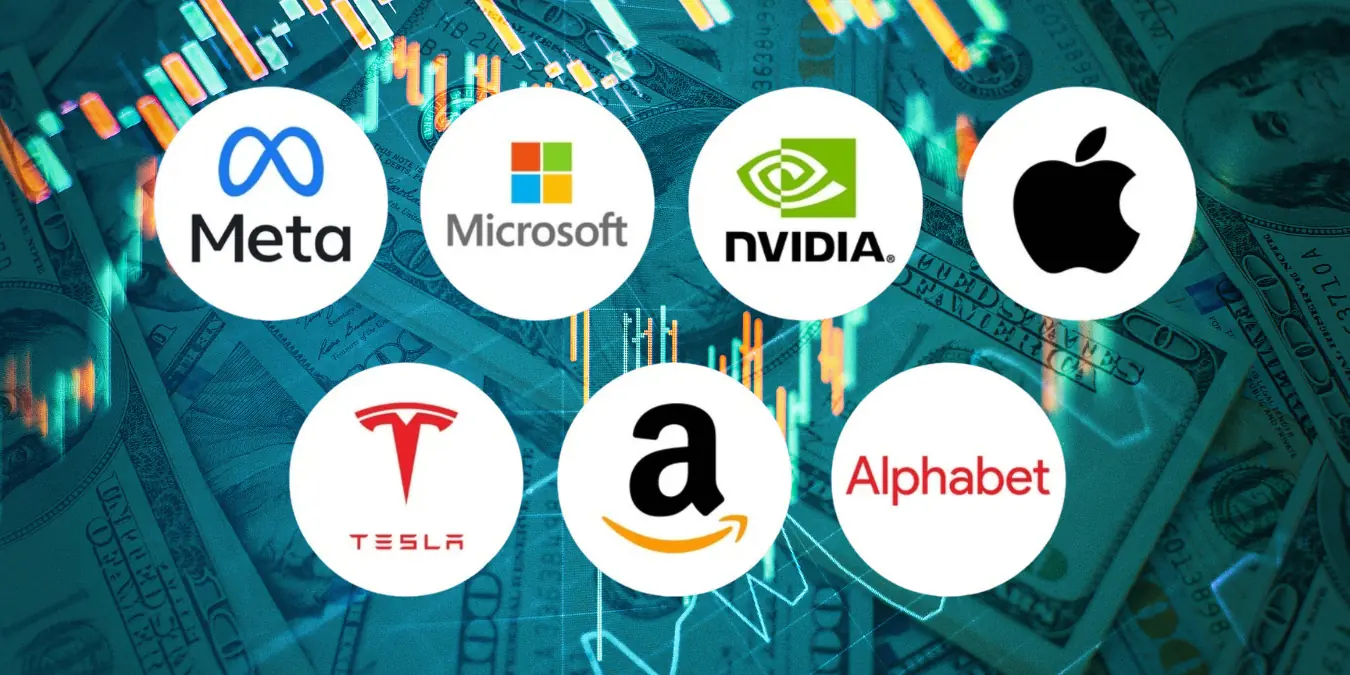
The numbers look extraordinary on paper. Alphabet is up over 22% year-to-date as of early May 2026. Amazon has surged nearly 18%. Meta, Microsoft, and Nvidia continue to post results that make most other public companies look like afterthoughts. For the sixth consecutive quarter, the blended year-over-year earnings growth for S&P 500 companies is tracking at approximately 15.1%, and roughly 84% of reporting companies are beating their EPS estimates — both figures well above 1-, 5-, and 10-year averages. The Magnificent Seven — Apple, Microsoft, Alphabet, Amazon, Meta, Nvidia, and Tesla — remain the undisputed architects of this market rally. And yet, walk into any serious investor’s office right now and you will hear a very different conversation. The wins are real. The warnings are louder.
What the Numbers Actually Show
The Q1 2026 earnings season for the MAG7 was, by nearly every surface-level metric, a triumph. Four of the seven reported on a single night — April 29 — in what analysts described as the single most important earnings cluster of the quarter for U.S. equity investors. Microsoft, Meta, Alphabet, and Amazon all delivered results that moved markets, with AI infrastructure spending and cloud growth remaining the dominant themes on every earnings call.
Microsoft told investors it expects capital expenditure for calendar year 2026 to reach $190 billion. Meta adjusted its own CapEx forecast to between $125 billion and $145 billion — a $10 billion increase on both ends of its prior guidance. Collectively, hyperscalers in the MAG7 have guided to roughly $300 billion in 2026 CapEx, with the majority directed toward AI infrastructure. The message from every C-suite podium was the same: AI is not a bet, it is a certainty, and underspending on it is the only real risk.
For investors who measure success in quarterly EPS beats and revenue surprises, the MAG7 delivered exactly what was expected — or rather, more than expected. Q1 2026 earnings growth for the group is tracking near +19.9% on +9.5% higher revenues. These are not the numbers of companies in trouble. But skilled market watchers are trained to read what the numbers do not say, and right now, there is plenty being left unsaid.
The Valuation Trap Hiding in Plain Sight
Here is the uncomfortable truth that analysts keep returning to: strong earnings growth and dangerous overvaluation can coexist, and often do. The top 10 companies in the S&P 500 now account for approximately 39% of the index’s total market capitalization. To put that in stark historical context, the peak concentration during the dot-com bubble of 1999–2000 was 27%. The MAG7 alone account for roughly a third of the entire S&P 500, representing approximately $20.65 trillion in market value.
The top 10 holdings in the S&P 500 are currently trading at a price-to-earnings ratio of 31, compared to 21 for the rest of the index. When you buy a broad-market index fund today, you are not getting diversification — you are getting a leveraged bet on seven companies. Vanguard and Fidelity have already quietly updated their fund disclosures to warn investors about “non-diversification” risk, and Vanguard’s flagship S&P 500 fund, VFIAX, may technically become “nondiversified” under investment law due to this concentration. That is not a footnote. That is a structural alarm bell ringing from inside the architecture of passive investing itself.
Apollo Global Management’s chief economist Torsten Sløk has flagged the concentration risk directly. The concern is not that the MAG7 are failing — it is that they have become so dominant that the entire market’s fate is now inseparably tied to their performance. When seven companies represent 35% of an index that millions of retirement accounts depend on, a rotation, a correction, or even a slowdown in AI monetization does not stay contained to those seven stocks. It ripples across every passive portfolio in America.
The CapEx Gamble That Could Define the Decade
The MAG7’s collective capital expenditures for 2026 are projected to exceed $500 billion. Let that figure settle. These companies are committing half a trillion dollars in a single year to build the AI infrastructure of the future — data centers, custom chips, energy systems, and the physical hardware that underpins the large language models and cloud services their businesses depend on.
Optimists will point out that Amazon Web Services, Microsoft Azure, and Google Cloud are still growing fast, and that each dollar of AI capex today is a moat-building investment for tomorrow. That logic is not wrong. But historical precedent is sobering. Companies with high CapEx-to-sales ratios have frequently underperformed in subsequent years, because capital intensity compresses free cash flow, reduces share buyback capacity, and increases exposure to execution risk. Goldman Sachs and others have noted that as operating cash flow increasingly flows toward AI-related CapEx, stock buyback activity among the tech giants is declining — which is one of the structural drivers that historically supported their sky-high valuations.
The deeper risk is the return on that investment. Microsoft, Alphabet, and Amazon are spending extraordinary sums on AI infrastructure, and so far, the monetization story remains a work in progress. Cloud growth is accelerating, AI-powered ad revenue is ticking up, and Copilot subscriptions are expanding — but no single MAG7 product has yet demonstrated that AI can generate revenue at a scale proportionate to the capital being deployed. The market is currently pricing in the assumption that it will. Analysts are asking what happens if it takes longer than expected.
The Leadership Split That Investors Cannot Ignore
Not all seven are created equal, and the divergence inside the MAG7 is accelerating. Six of the seven reported Q3 2025 results showing collective earnings growth of +26.7% year over year on +17.6% higher revenue — spectacular numbers by any standard. But beneath that headline figure, Tesla’s earnings plunged 39.5% while Alphabet surged 33%. That is a 72-percentage-point spread within a group that the market often treats as a monolith.
Tesla remains the most vulnerable of the seven. Its foray into robotaxis and the Optimus humanoid robot represents a massive capital commitment with uncertain returns, and its core EV business faces intensifying pressure from Chinese manufacturers like BYD. Nvidia, meanwhile, faces a different kind of structural risk: while it dominates the AI chip market with approximately 86% market share, the emergence of lower-cost AI architectures — demonstrated vividly by DeepSeek’s efficient model performance — raises legitimate questions about whether the hardware arms race will persist at its current velocity. If AI inference becomes dramatically cheaper to run, the demand signal for Nvidia’s most expensive GPUs could moderate faster than current analyst models assume.
Meta is currently the cheapest of the seven by forward earnings multiple, trading at approximately 20 times forward earnings estimates. Its advertising business is genuinely benefiting from AI-driven automation, and its recommendation algorithms continue to generate industry-leading engagement metrics. But Reality Labs — Meta’s metaverse and VR division — continues to bleed money, posting a $4.43 billion operating loss in a single quarter. The market has largely given Zuckerberg a pass on this because the core business is performing, but that patience has limits, especially as CapEx commitments rise.
The Index Fund Time Bomb
The structural consequences of MAG7 dominance extend well beyond the companies themselves. For decades, the investment advice given to ordinary Americans was simple and well-founded: buy a diversified index fund, hold it for the long term, and let compound returns do their work. That advice was built on the assumption that an S&P 500 index fund exposed you to broad economic diversification across hundreds of companies in many sectors.
That assumption is now functionally broken. When just seven companies generate more than half of the S&P 500’s annual gains — as they did in recent years according to RBC Bank analysis — owning an index fund is no longer a diversification strategy. It is a concentration strategy wearing diversification’s clothing. Morningstar’s analysts have been direct about this: investors need to be conscious of how much MAG7 exposure they are carrying in their portfolios, even in funds that are theoretically broad-market vehicles.
The danger scenario is not complex. If AI monetization disappoints, if regulatory pressure intensifies in the U.S. or Europe, if a credit event or rate shock triggers institutional de-risking, or if the current tariff and geopolitical environment accelerates a decoupling from global supply chains — any of these could trigger a simultaneous selloff across all seven MAG7 names. And because they make up such an enormous portion of broad indexes, that selloff would devastate retirement accounts and pension funds that hold no individual tech stocks whatsoever.
Why Earnings Beats Are Not the Full Story
There is a phenomenon well-documented in behavioral finance called “earnings quality.” It refers to the difference between reported earnings and sustainable, cash-generating earnings power. Revenue beats and EPS beats can be manufactured through buybacks, accounting changes, and one-time items. They can also be genuine reflections of business strength. Separating the two requires more than reading the headline number — it requires examining free cash flow trends, CapEx commitments, deferred revenue recognition, and forward guidance language.
What analysts have noticed in recent MAG7 reports is a subtle shift in guidance tone. The companies are beating current-quarter estimates handily, but forward guidance language is increasingly hedged with references to macro uncertainty, tariff exposure, and “evolving regulatory environments”. Apple, with significant revenue exposure to China, faces a particularly complex position as U.S.-China trade tensions remain elevated under the current trade policy landscape. Amazon’s retail segment faces margin pressure from logistics inflation. Microsoft’s cloud growth, while strong, is bumping up against the natural deceleration that comes with massive scale.
Fortune noted in early 2026 that multiple Wall Street analysts believe the MAG7’s dominance is likely to end — not because these companies will fail, but because their valuations cannot expand exponentially forever. Goldman Sachs strategist Sharmin Mossavar-Rahmani flagged that growth rates for the Magnificent Seven are apt to continue declining while the rest of the S&P 500 catches up, and that buyback activity is falling as CapEx absorbs more cash. The 493 other S&P 500 companies have already outperformed the MAG7 since late 2025, a trend that Yardeni Research expects to continue throughout 2026.
What Smart Investors Are Doing Right Now
The most thoughtful institutional investors are not abandoning the MAG7 — they are rebalancing around them. Jonathan Curtis, Chief Investment Officer at Franklin Equity, believes the MAG7 will continue to perform well in 2026, but anticipates a broadening of the AI-driven rally into sectors and companies that have not yet received the market’s full attention. That broadening thesis is gaining traction. Healthcare technology, industrial automation, energy infrastructure, and mid-cap software companies all stand to benefit from AI adoption without carrying the concentration risk embedded in the mega-caps.
Columbia Threadneedle’s analysts have taken a nuanced position: they do not believe the MAG7 are in bubble territory, but they acknowledge that concentration risk is elevated and warranting active management. Their view is that today’s valuations are supported by genuinely stronger earnings power than during the dot-com era, and that consensus estimates of approximately 15% annual earnings growth for MAG7 companies over the next two years remain credible. The difference between now and 1999 is that these companies are actually making real money — enormous amounts of it. The risk is not solvency. The risk is multiple compression at scale.
The Alarm Is Not a Death Sentence
It would be intellectually dishonest to read the analyst warnings as a prediction of collapse. The MAG7 are among the most profitable, cash-generating businesses in human history. Alphabet’s return on invested capital leads the group and remains exceptional by any historical comparison. Amazon’s AWS continues to grow at rates that would be remarkable for a company of any size, let alone one operating at its scale. Microsoft’s enterprise software moat — deepened considerably by OpenAI integration — is not going away. Meta’s advertising machine is growing more efficient with every AI improvement it ships.
The alarms analysts are sounding are calibrated, not catastrophic. They are warnings about concentration, about the gap between CapEx commitments and proven monetization, about the divergence in performance within the group, and about the structural risks embedded in a passive investment ecosystem that is now more tethered to seven stocks than it has ever been to any group of companies in modern financial history. Earnings beats tell you where a company has been. What analysts are measuring right now is the distance between where the market believes the MAG7 are going and what the actual evidence supports.
That distance, right now, is wider than the headlines suggest. And the investors who understand that are not panicking — they are paying very close attention.
This post is intended for informational purposes only and does not constitute financial or investment advice. Always consult a qualified financial professional before making investment decisions.