Danone's €1.2 Billion Huel Acquisition and the Stunning Bet on the Future of Human Nutrition
There are corporate deals that make headlines for a week, get buried in the news cycle, and are forgotten by the next earnings call. And then there are deals that quietly rewrite the rules of an entire industry. Danone’s acquisition of Huel — the British complete nutrition company founded on the audacious premise that human beings shouldn’t have to choose between convenience and nourishment — belongs firmly in the second category. Announced in March 2026, the transaction valued at approximately $1.2 billion is not just a portfolio expansion by a legacy food giant. It is a loud, billion-dollar declaration that the future of human nutrition looks nothing like the past — and that the companies who recognize this early will define the next half-century of what people eat, drink, and believe about food itself.
What Huel Actually Built
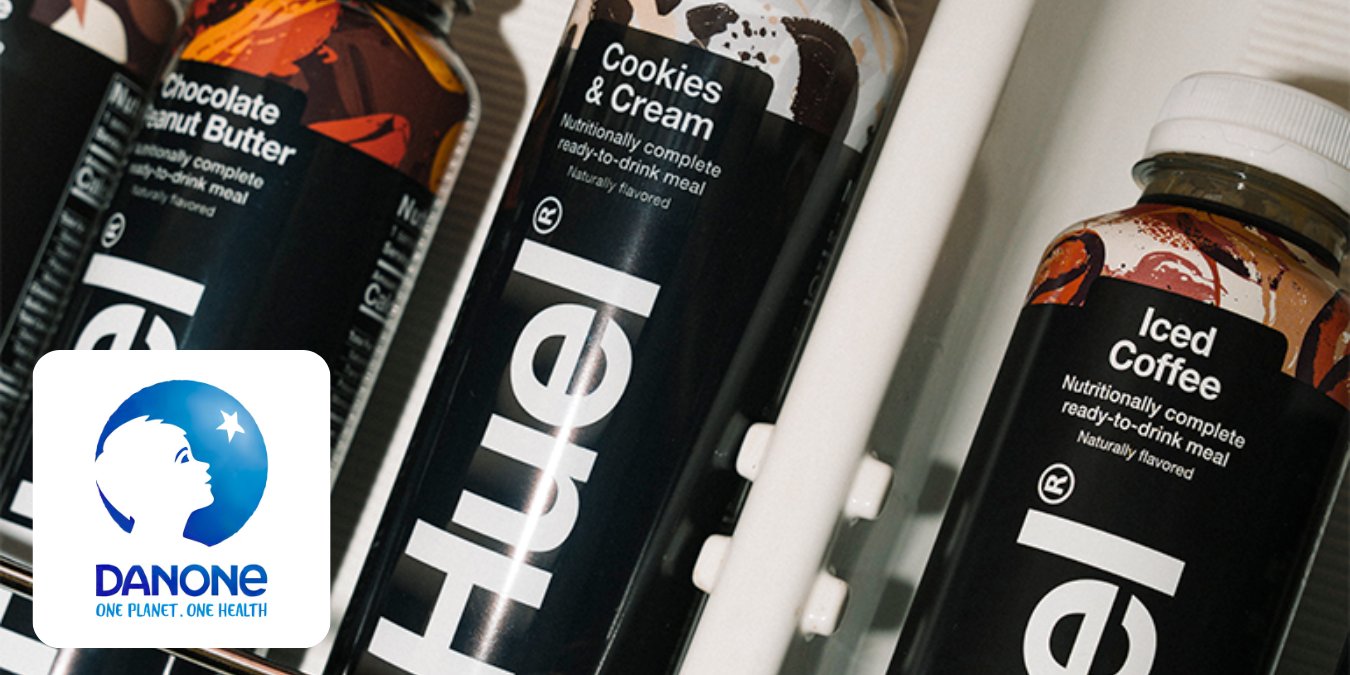
Before dissecting why Danone made this bet, it’s worth understanding precisely what they bought. Huel — a portmanteau of “human” and “fuel” — was founded in 2014 in Buckinghamshire, England. The company’s founding premise was both simple and radical: most people are chronically undernourished not because food is unavailable, but because the food that is available is nutritionally incomplete, and the food that is complete is inconvenient. Huel set out to fix that paradox with a range of products — powdered meal replacements, ready-to-drink shakes, high-protein bars, and hot and savory options — each designed to deliver a full spectrum of macronutrients and micronutrients in a single serving.
What Huel built over eleven years is not merely a product line but a philosophy with a fanbase. By 2024, the company had reported revenues of £214 million, a figure that told investors something important: this was not a niche wellness brand catering to biohackers and gym enthusiasts. This was a mainstream consumer proposition, attracting customers across the UK, Europe, and the United States who were tired of compromising between eating well and eating fast. The company’s direct-to-consumer digital model — which Danone’s own CEO Antoine de Saint-Affrique specifically cited as “best in class” — meant Huel had cultivated a level of customer intimacy and loyalty that traditional food brands spend decades trying and failing to replicate.
The Deal That Reframes Danone’s Identity
Danone is not a company that makes impulsive decisions. The French multinational behind Activia yogurt, Evian water, and Oikos Greek yogurt has navigated over a century of food industry evolution with the kind of deliberate, research-backed strategy that comes from managing a truly global consumer base. So when Danone agreed to pay approximately $1.2 billion for a brand that many traditional food executives might still have dismissed as a “meal replacement startup,” it was worth pausing to ask: what does Danone know that the rest of the market hasn’t fully priced in yet?
The answer lies in a strategic framework the company calls “Renew Danone” — a sweeping internal transformation that repositioned the business around health-driven nutrition categories with genuine long-term tailwinds. Under this strategy, Danone has been systematically moving its portfolio away from commoditized dairy and water categories and toward functional nutrition: products that don’t just taste good or fill you up, but actively contribute to health outcomes. The acquisition of Huel is the most significant expression of that strategy to date, extending Danone’s reach into what the company explicitly called the “fast-growing Complete Nutrition space”. This is not a defensive move. This is a company planting its flag on territory it believes will become the most contested ground in consumer food over the next two decades.
The $5.9 Billion Market They’re Racing Into
The complete nutrition market — targeting health-conscious, time-pressed individuals who want their meals to do more than just provide calories — is currently valued at approximately $5.9 billion. That number is striking on its own, but it tells only part of the story. What makes the category genuinely compelling for investors and strategists is its structural tailwinds, which are unlike anything traditional food categories enjoy.
Consider the convergence of forces driving demand. First, protein awareness has reached a cultural tipping point. According to the International Food Information Council, the proportion of Americans actively trying to increase their protein intake rose to 70 percent in 2025, up from 59 percent in 2022 — a trajectory that shows no signs of reversing. Second, fiber consumption is experiencing a similar surge in public attention, fueled in part by social media phenomena like the #fibermaxxing trend on TikTok, which brought gut health awareness to demographics that legacy food companies had never successfully engaged with fiber-forward messaging. Third, the GLP-1 weight-loss medication revolution — which has already begun reshaping consumer food preferences toward high-protein, nutrient-dense options that work in concert with medications like Ozempic and Wegovy — is creating an entirely new consumer segment with very specific nutritional needs.
Huel sits at the precise intersection of all three of these forces. Its products are engineered around complete protein profiles, robust fiber content, and a micronutrient density that appeals equally to the fitness-focused millennial, the GLP-1 user seeking satiety without excess calories, and the busy professional who simply doesn’t have time to compose a nutritionally balanced meal from scratch three times a day. Danone, which had already been building credibility in the protein and functional nutrition space through brands like Oikos and its low-sugar Too Good lineup, recognized that acquiring Huel was faster and more strategically coherent than attempting to build an equivalent proposition from the ground up.
Huel’s Celebrity Backing and Cultural Credibility
One dimension of Huel’s value that balance sheets alone don’t fully capture is its cultural legitimacy. The company counts actor Idris Elba and broadcaster Jonathan Ross among its notable investors — a detail that might seem like a tabloid footnote but actually speaks to something meaningful. In an era when consumer trust in food brands is deeply intertwined with authentic advocacy rather than paid advertising, having high-profile personalities genuinely invested — financially and reputationally — in a nutrition brand is a form of social proof that money cannot easily manufacture. It signals that Huel’s proposition resonates not just with early adopters or nutrition scientists, but with culturally influential figures who have the resources to eat anything they want and have chosen to put their name and capital behind this particular vision of what food should be.
This kind of organic cultural credibility is precisely what legacy food companies like Danone find hardest to replicate internally. You cannot acquisition-proof it. You can only acquire the company that has it.
The Digital-First Architecture Danone Craved
Perhaps the most strategically underappreciated element of this deal is what Danone is buying in terms of digital infrastructure and direct-to-consumer capability. Traditional food companies distribute through supermarkets and retail chains, which means they operate at a structural distance from their end consumers. They know their retail buyers intimately. They know their actual customers only in aggregate, through market research, focus groups, and scanner data. This gap between brand and consumer has historically been accepted as the cost of scale in the food industry.
Huel built its business on the opposite premise. Its direct-to-consumer model means it has first-party data on its customers: what they buy, how often they reorder, which products they combine, how they respond to subscription pricing, what drives them to refer friends and family. In a post-cookie digital landscape where consumer data is increasingly the most valuable asset a brand can possess, this capability has compounding strategic value far beyond what the revenue figures alone suggest. Danone’s CEO explicitly highlighted Huel’s digital execution as a core rationale for the deal, and the subtext is clear: Danone intends to learn from Huel’s digital playbook and potentially apply it across its broader portfolio.
Complete Nutrition as a Philosophy, Not a Category
What makes the Danone-Huel combination genuinely interesting to anyone watching the long arc of nutrition science is that “complete nutrition” is evolving from a product category into a consumer philosophy — and philosophies, when they genuinely take root, don’t recede. They compound.
The 2026 nutrition landscape is defined by a growing consumer realization that modern diets — despite unprecedented access to food variety — are systematically deficient in the nutrients that matter most. Research consistently shows that large proportions of the population in developed markets fail to meet recommended daily intakes of protein, fiber, omega-3 fatty acids, magnesium, vitamin D, and a host of other micronutrients. This is not a problem of poverty or access in most cases. It is a problem of food design: the foods most available, affordable, and convenient have been optimized for palatability and shelf life, not nutritional completeness. Huel’s entire reason for existing is a rebuttal to that design failure.
Danone, with its stated mission of “bringing health through food to as many people as possible,” is not acquiring Huel to slot it into an existing product matrix and collect royalties. The ambition — at least as expressed in the official announcements — is to use Danone’s global distribution infrastructure, R&D capabilities, and regulatory expertise to take Huel’s nutritional philosophy into markets and demographics it has not yet reached. The prospect of Huel’s complete nutrition products being distributed through Danone’s supply chains in Asia, Latin America, and Sub-Saharan Africa — regions where protein and micronutrient deficiency are acute public health challenges, not lifestyle concerns — represents a dimension of this deal that financial analysts have largely underweighted.
What This Signals to the Broader Food Industry
Every major food acquisition sends a signal. The Danone-Huel deal is transmitting several simultaneously, and the industry is listening. The first signal is that the era of big food companies acquiring legacy brands to protect market share is giving way to an era of acquiring mission-driven nutrition companies to access future growth. The strategic logic has inverted: it is no longer about defending territory but about planting stakes in entirely new categories before competitors do.
The second signal is that direct-to-consumer digital capability is now a core acquisition target in the food sector, not a peripheral consideration. Companies that have built genuine customer relationships through digital channels — subscription models, personalized recommendations, community-driven brand loyalty — possess something that legacy food companies cannot easily replicate and are willing to pay significant premiums to acquire.
The third signal, perhaps most profound in its long-term implications, is that the food industry is beginning to take seriously the distinction between food that feeds people and food that nourishes them. This distinction has existed in nutrition science for decades, but it is only now beginning to drive capital allocation at the billion-dollar level. The Danone-Huel deal is the most prominent marker yet that mainstream food companies have accepted that consumers are increasingly unwilling to make peace with the gap between those two things.
The Challenges That Come With the Prize
Intellectual honesty demands acknowledging the risks that accompany this acquisition. Integrating a digitally native, direct-to-consumer brand with a fiercely loyal customer community into a large multinational corporation is historically one of the hardest things in consumer goods. The history of large food companies acquiring challenger brands is littered with cautionary tales of community erosion, brand dilution, and innovation stagnation once the founders’ energy is absorbed into corporate processes. Huel’s community, in particular, has been built on transparency, a sense of shared purpose, and a degree of anti-establishment nutritional conviction that sits in genuine tension with the corporate identity of a Fortune 500 food company.
The Huel acquisition also follows Danone’s earlier move to acquire a majority stake in Kate Farms, a medical nutrition company, in May 2025 — demonstrating a pattern of acquisitions in the functional nutrition space. Managing the integration of multiple acquired nutrition brands simultaneously, while maintaining the distinct identities and customer relationships that made each worth acquiring in the first place, will test Danone’s organizational capabilities in ways that pure financial engineering cannot prepare for.
A Glimpse of What Food Becomes
Looking past the immediate deal mechanics and into the five-to-ten year horizon, the Danone-Huel acquisition offers a preview of what the food industry is becoming. Nutrition trends in 2026 point unmistakably toward personalization, with AI, genomics, and wearable health technology enabling dietary recommendations tailored to individual metabolic profiles, gut microbiome composition, and genetic predispositions. The complete nutrition category — currently defined by standardized formulations designed to meet average recommended daily intakes — is well positioned to evolve toward increasingly personalized nutritional solutions as the data infrastructure to support precision nutrition matures. Huel’s direct-to-consumer data advantage and Danone’s R&D scale together represent a combination that could accelerate that evolution meaningfully.
The global wellness industry is simultaneously grappling with a backlash against ultra-processed food, a demand for radical ingredient transparency, and a consumer appetite for products that do not require a PhD in nutritional biochemistry to evaluate. Complete nutrition, properly executed, answers all three concerns at once: it is transparent by design, it is formulated by scientists rather than flavor engineers, and its value proposition can be communicated in terms any consumer understands — everything your body needs, in a format you can actually fit into your life.
The Bottom Line
Danone’s €1.2 billion acquisition of Huel is, at its core, a bet that the future of food is functional, transparent, and nutritionally complete — and that the companies who build the infrastructure to deliver on that promise at global scale will command the most durable competitive positions in the consumer food landscape of the 2030s and beyond. It is a bet on changing consumer consciousness, on the compounding power of direct consumer relationships, on the growing intersection of nutrition science and everyday eating, and on the conviction that convenience and nourishment are not opposing forces to be traded against each other, but complementary values that the best food products of the future will deliver simultaneously. Whether Danone executes the integration with the cultural sensitivity and operational discipline that the opportunity demands remains to be seen. But the direction of the bet is clear, the scale of the commitment is unmistakable, and the nutritional philosophy at its center is one that the evidence increasingly supports. In 2026, the most important thing Danone has acquired is not a product line. It is a vision — and the customer base that already believes in it.