Crude Oil Past $95 on US-Iran Escalation — and What Decides the Next $10 Move
If you’ve filled up your gas tank recently or glanced at your grocery bill, you already felt it before any economist confirmed it. Something shifted in mid-May 2026, and the ripple effect moved fast. Oil prices spiked. Markets wobbled. Inflation anxiety, which many Americans had hoped was finally in the rearview mirror, came roaring back with an uncomfortable vengeance. But what actually caused this surge? The answer isn’t a single headline. It’s a convergence of geopolitical pressure, OPEC+ strategy, dollar dynamics, and structural supply vulnerabilities that had been quietly building for months.
The Immediate Trigger: OPEC+ Production Decisions
The most visible catalyst behind the mid-May 2026 oil price surge was a decision by OPEC+ — the alliance of major oil-producing nations led by Saudi Arabia and Russia — to extend and deepen production cuts that had originally been introduced in late 2025. Going into May 2026, market analysts had widely anticipated a gradual unwinding of those cuts as global demand appeared to be stabilizing. Instead, the alliance surprised markets by signaling that output restrictions would remain in place through at least Q3 2026, with some member nations voluntarily cutting further.
Saudi Arabia, in particular, made clear that it was prioritizing price stability over market share — a familiar posture, but one that carried new weight given the kingdom’s ambitious Vision 2030 fiscal commitments. With Brent crude needing to stay above a certain threshold to fund domestic social spending, Riyadh had strong incentives to keep supply tight. Russia, meanwhile, was navigating its own economic pressures under continued Western sanctions, and higher oil prices conveniently helped offset export revenue losses in other sectors.
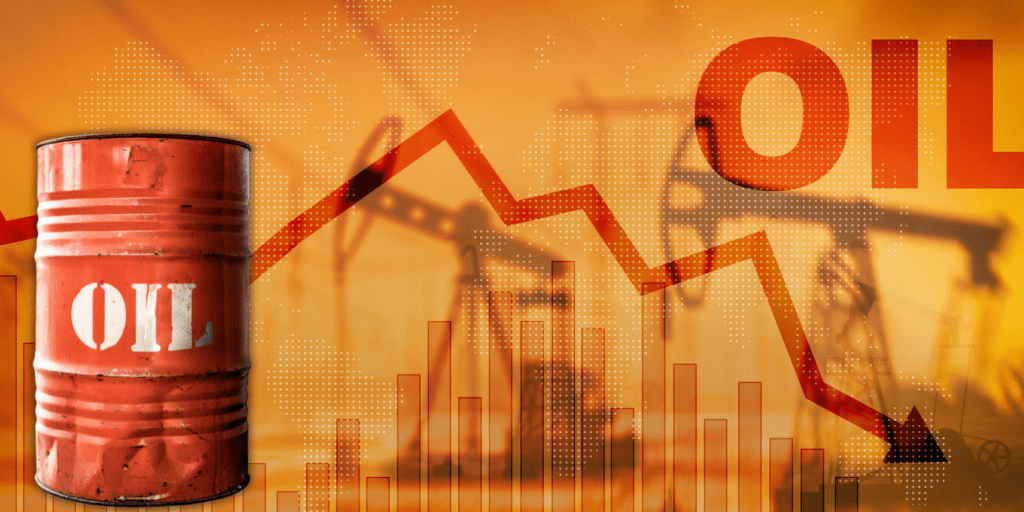
The market’s reaction was swift. Brent crude climbed sharply in the second week of May, and West Texas Intermediate (WTI) followed closely. Traders who had been positioned for a supply increase were caught offside, amplifying the price move through rapid repositioning.
Geopolitical Flashpoints Adding a Risk Premium
Beyond the OPEC+ decision, geopolitical tensions added a significant risk premium to oil prices during this period. The Middle East remained a powder keg, with ongoing instability affecting shipping confidence through critical maritime chokepoints. Concerns about potential disruptions to supply flows through the Strait of Hormuz — through which roughly 20 percent of the world’s oil supply passes — contributed to speculative buying that pushed prices higher than fundamentals alone would have justified.
Simultaneously, drone attacks on energy infrastructure in two separate OPEC member nations in early May created short-term supply disruptions and reignited fears that physical supply could be knocked offline with very little warning. Even when production facilities quickly resumed operations, the psychological impact on oil futures markets lingered. Traders and fund managers began pricing in a higher probability of further disruptions, which is exactly how geopolitical risk premiums embed themselves into commodity prices over sustained periods.
In Eastern Europe, the fragile energy security situation continued to inject uncertainty into European gas and oil markets. European buyers, still working to diversify away from Russian energy dependence, were competing more aggressively for non-Russian crude, tightening global supply further and adding upward pressure to benchmark prices that American consumers ultimately feel at the pump.
The Dollar Dynamic: A Currency-Commodity Relationship Most People Miss
One of the least-discussed but most consequential factors behind the May 2026 oil price surge was the behavior of the US dollar. Oil is priced globally in dollars, which means any weakening of the dollar makes oil cheaper for buyers using other currencies — thereby stimulating demand — while simultaneously making dollar-denominated oil assets more attractive to foreign investors. In the weeks leading up to mid-May 2026, the dollar had softened against a basket of major currencies, partly due to uncertainty around Federal Reserve rate policy.
The Fed, having spent much of 2024 and 2025 in a cautious holding pattern, was facing renewed pressure from a cooling labor market on one side and sticky service-sector inflation on the other. Markets were uncertain about whether the next rate move would be a cut or a hold, and this ambiguity weakened the dollar marginally. That marginal weakening was enough to amplify the upward trajectory already being driven by supply constraints. In commodity markets, even small currency shifts, when layered on top of supply-side shocks, can produce outsized price movements.
This is the part of the oil price story that rarely makes the evening news but absolutely matters if you’re trying to understand why inflation fears flared up so dramatically in the United States during this period.
How Oil Prices Translate Into Inflation — Faster Than You Think
For most people, the connection between oil prices and inflation feels abstract until it becomes painfully concrete. Here’s how the transmission works. The most direct channel is gasoline. When oil prices rise, refiners pay more for crude, and that cost gets passed to consumers at the pump within days to weeks. The average American household spending on gasoline functions as a highly visible, frequently purchased item that shapes consumer sentiment around inflation disproportionately to its share of the overall budget.
But the second-order effects are where things get complicated. Diesel fuel powers the trucks, trains, and ships that move virtually every product in the American economy. When diesel prices rise, freight costs rise, and those costs get embedded into the price of groceries, electronics, clothing, and building materials. Airlines adjust ticket prices. Farmers face higher input costs for fertilizers derived from petrochemicals and for running heavy equipment. Manufacturers see rising energy bills that squeeze margins and eventually get pushed downstream to consumers. The oil price surge of mid-May 2026 was not just a story about filling up your car. It was a story about potential price increases across nearly every segment of the consumer economy.
Federal Reserve officials watched these developments with visible concern. Inflation, by early 2026, had been gradually declining toward the Fed’s 2 percent target, but it had not reached that target definitively. A significant energy price shock at this stage had the potential to stall the disinflation process and complicate the Fed’s ability to cut rates — a policy move that both consumers carrying high-interest debt and businesses financing capital expenditures had been eagerly anticipating.
The Shale Industry’s Muted Response
In past oil price cycles, a surge in crude prices would reliably trigger a rapid supply response from American shale producers, who can bring wells online relatively quickly compared to conventional oil fields. This “shale buffer” had, for years, served as a natural ceiling on how high oil prices could realistically climb before new supply flooded the market. In mid-May 2026, however, this response was notably muted, and understanding why is critical to understanding why the price surge lasted longer than many analysts initially expected.
The US shale industry, after years of investor pressure to prioritize returns over growth, had become structurally more disciplined. Major shale operators in the Permian Basin and other key plays were returning capital to shareholders rather than drilling aggressively into every price spike. Private equity-backed drillers, who had historically been the most aggressive growth players, faced a tighter financing environment given elevated interest rates throughout 2025. The result was a shale sector that was profitable but not expansionary — exactly the kind of market structure that allows supply-driven oil price increases to persist.
Additionally, the best drilling locations in major US shale plays are not infinite. While the Permian Basin in particular still held enormous resources, the highest-quality, lowest-cost acreage had largely been drilled. Incremental production now required more capital and more complex well designs, raising the effective breakeven price for new supply. This structural reality meant that the old playbook — American shale saves the day when OPEC tightens — was no longer as reliable as it once had been.
Consumer Confidence and the Psychological Dimension
Economics is not purely a mechanical system. Consumer psychology plays a powerful role in how price shocks propagate through an economy. The mid-May 2026 oil price surge arrived at a moment when American consumer confidence was already fragile. After several years of inflation that had eroded real purchasing power, households remained sensitive to signals that prices were about to rise again. This sensitivity was not irrational. It was grounded in lived experience.
When gasoline prices began climbing noticeably at stations across the country, consumer sentiment surveys showed an almost immediate deterioration. Small business owners reported increased anxiety about input costs. Retailers began preemptively adjusting inventory strategies, anticipating softer consumer spending ahead. This expectational dynamic can itself become a driver of inflation if businesses raise prices preemptively and workers demand higher wages in anticipation of higher living costs — what economists call an “inflation expectations spiral.”
The Federal Reserve takes consumer inflation expectations very seriously because unanchored expectations can become self-fulfilling. Fed communications in mid-May 2026 were notably careful not to suggest that rate cuts were imminent, a signal designed precisely to prevent the kind of expectations spiral that an energy price shock can sometimes trigger.
What This Means for the Federal Reserve’s Next Move
The Fed’s position in May 2026 was genuinely uncomfortable. On one hand, economic growth had moderated, and parts of the labor market were showing signs of softening — conditions that would normally make a case for rate cuts to support activity. On the other hand, a fresh oil-driven inflation shock threatened to reverse the hard-won progress on bringing inflation down from its post-pandemic peaks.
Rate cuts stimulate borrowing and spending, which can be inflationary. Keeping rates elevated maintains downward pressure on inflation but risks tipping a softening economy into contraction. Oil price shocks sit in an especially awkward place for monetary policy because they represent “supply-side” inflation that rate increases cannot directly address — you cannot drill more oil by raising the federal funds rate. What the Fed can do is dampen demand enough that higher energy prices don’t get amplified across the broader economy through wage and price increases. But this is a blunt tool with real costs.
Markets in mid-May 2026 rapidly repriced their expectations for Fed rate cuts, pushing them further into the future. The yield curve reacted. Mortgage rates, which had been slowly coming down from multi-decade highs, edged back up. This was the mechanism by which an oil price surge in global commodity markets showed up directly in the financial lives of ordinary Americans trying to buy homes or refinance existing debt.
The Global Demand Side: China, India, and the Emerging Market Factor
Supply tells only half the story. The demand side of the oil price equation in mid-May 2026 was also contributing to upward pressure. China’s economy, after a prolonged period of post-pandemic underperformance that had actually served to suppress global oil demand, showed signs of accelerating industrial activity in early 2026. Chinese manufacturing data for Q1 2026 surprised to the upside, and infrastructure investment continued at a strong pace, driving diesel demand higher.
India, now the world’s third-largest oil consumer, continued on its high-growth trajectory. India’s consumption of oil had been rising steadily for years, driven by a rapidly expanding middle class, growing vehicle ownership, and ambitious infrastructure development. Unlike developed economies where oil intensity of GDP growth was declining, India’s growth still required substantial energy inputs, and oil remained central to that energy mix.
The combination of stronger-than-expected demand from these two massive economies, arriving simultaneously with supply tightness engineered by OPEC+, created the classic conditions for a price spike. When supply is constrained and demand rises unexpectedly, prices don’t just adjust proportionally — they can move dramatically in short periods because oil markets have very little short-term elasticity. You can’t easily substitute away from oil to run a container ship or fly a commercial aircraft.
Long-Term Implications: Is the Energy Transition a Safety Valve?
Some observers point to the global clean energy transition as an eventual moderating force on oil prices. As electric vehicles proliferate, as renewable energy displaces oil and gas in electricity generation, and as energy efficiency improves across sectors, the argument goes, oil demand will eventually peak and decline, taking pricing power away from OPEC+. This is a legitimate long-term thesis, and the trajectory of EV adoption globally has indeed been significant.
However, the mid-May 2026 oil price surge is a reminder that “eventually” is doing a lot of work in that argument. The energy transition is a multi-decade process. In the near and medium term, global oil demand continues to grow in absolute terms, driven by developing economies. The infrastructure for mass EV adoption in key markets including the United States, India, and much of Southeast Asia is still being built out. Industrial applications of oil — petrochemicals, aviation fuel, maritime shipping — face longer and harder transition timelines than passenger vehicles.
In the short and medium term, the world remains deeply and structurally dependent on oil, which means events like the mid-May 2026 price surge will continue to be significant economic events capable of reshaping inflation dynamics, central bank policy, and consumer welfare. Pretending otherwise would be a disservice to the millions of Americans and global citizens who feel these price movements directly in their daily lives.
What Consumers and Investors Should Watch
For American households, the most practical near-term concern is whether the oil price surge sustains itself or fades. Geopolitically driven spikes often partially reverse once the immediate risk premium dissipates and markets reassess the actual probability of physical supply disruptions. OPEC+-driven tightness, however, tends to be stickier because it represents deliberate policy rather than a temporary shock.
Investors should watch the Fed’s communication closely. Any hint of a willingness to cut rates despite energy price pressure would signal that the Fed is prioritizing growth over inflation — a significant policy signal with broad asset market implications. Conversely, a hawkish tilt in response to the oil shock could weigh on equities and push mortgage rates higher still.
The oil price surge of mid-May 2026 is not an isolated event. It is a window into the structural vulnerabilities of an economy still deeply tied to a commodity whose supply is controlled, in significant part, by a foreign cartel operating in its own interest. Understanding those vulnerabilities clearly — without panic but also without dismissal — is the foundation of making sound financial decisions in a world where energy prices remain one of the most powerful and unpredictable forces in economics.