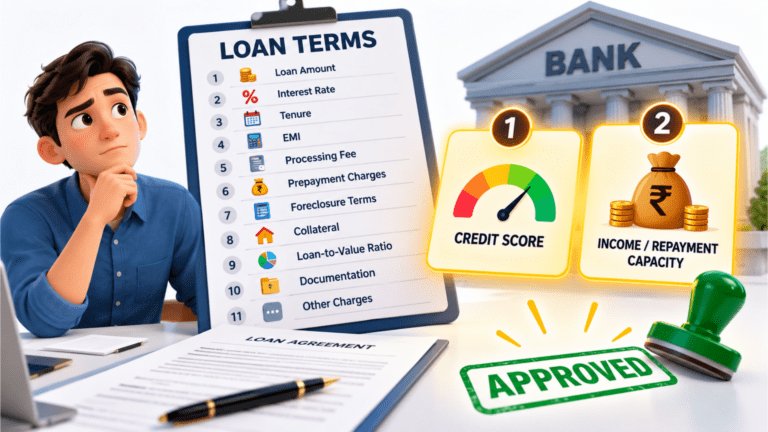
Borrowers Alert: Instant ₹5 Lakh Personal Loans at 1.5% Monthly Interest Explained
In today’s fast-moving financial environment, the promise of instant personal loans up to ₹5 lakh at just 1.5% monthly interest without collateral has captured the attention of millions of Indian borrowers. These offers are widely promoted across fintech apps, social media platforms, and digital marketplaces, often positioned as quick solutions for urgent financial needs. While the convenience and accessibility of such loans are undeniable, it is essential to go beyond the surface and understand what these offers वास्तव में mean. Borrowers who rely solely on marketing claims without evaluating the deeper financial implications may find themselves facing higher costs and repayment pressure than expected. This article provides a comprehensive, experience-driven and expert-backed perspective to help you make informed and responsible borrowing decisions.
Understanding the 1.5% Monthly Interest Rate
At first glance, a 1.5% monthly interest rate appears affordable, especially when compared to credit card interest rates or informal borrowing channels. However, this figure must be interpreted correctly to avoid misunderstanding. A 1.5% monthly rate translates to approximately 18% per annum, excluding additional charges such as processing fees, GST, late penalties, and other administrative costs. Many lenders emphasize the monthly rate because it appears smaller and more appealing, but financial experts always recommend evaluating the Annual Percentage Rate to understand the true cost of borrowing. For example, a ₹5 lakh loan at 18% annual interest over 24 months can result in an EMI of around ₹24,900, and the total repayment can exceed ₹5.9 lakh depending on additional charges. This demonstrates that even seemingly low monthly rates can lead to significant long-term financial commitments.
Why No Collateral Loans Are So Popular
Reduced Processing Complexity
Without collateral-related legal checks and valuation processes, lenders can streamline operations, which benefits borrowers through quicker decisions and fewer procedural hurdles.
No Asset Requirement Removes Entry Barriers
Traditional loans often require borrowers to pledge assets such as property, gold, or fixed deposits, which many individuals either do not possess or are unwilling to risk. No collateral loans eliminate this requirement entirely, making credit accessible to a much wider population, including young professionals and first-time borrowers.
Faster Approval and Disbursement
Since there is no need for asset valuation, legal verification, or documentation related to collateral, the loan approval process becomes significantly faster. Many digital lenders can approve and disburse loans within hours, which is especially valuable during emergencies.
Wider Accessibility Across Income Groups
Unsecured personal loans are designed to cater to salaried employees, freelancers, gig workers, and self-employed individuals. Even those without traditional income structures can qualify based on alternative credit assessments, expanding financial inclusion.
No Risk to Personal Assets
Borrowers do not have to worry about losing their home, gold, or investments in case of repayment difficulties. This reduces psychological stress and makes borrowing feel safer, especially for individuals who are cautious about pledging assets.
Convenience Through Digital Platforms
Most no collateral loans are offered through mobile apps and online platforms. The entire process—from application to KYC verification and disbursal—is digital, reducing paperwork and making borrowing more convenient than ever.
Ideal for Emergency Expenses
These loans are particularly useful for urgent financial needs such as medical bills, education fees, travel emergencies, or home repairs. The quick access to funds without asset requirements makes them a practical solution during time-sensitive situations.
Minimal Documentation Requirements
Compared to secured loans, unsecured loans require fewer documents. Basic KYC, income proof, and bank statements are usually sufficient, which simplifies the process for borrowers.
Helps Build or Improve Credit Score
For first-time borrowers, no collateral loans provide an opportunity to build a credit history. Timely repayments can improve credit scores, increasing eligibility for larger loans in the future.
Flexible Usage Without Restrictions
Unlike some secured loans that are tied to specific purposes (such as home or car loans), personal loans can be used for almost any need. This flexibility adds to their appeal among borrowers.
Growing Trust in Fintech Lending
The rise of RBI-regulated NBFCs and fintech platforms has increased trust in unsecured lending. With transparent processes and faster services, more borrowers are shifting towards these options.
Higher Interest Reflects Higher Risk
Because lenders do not have collateral as security, they face higher risk. To compensate, interest rates on unsecured loans are generally higher than secured loans. Borrowers should understand this trade-off before applying.
Encourages Financial Independence
Borrowers can access funds without relying on family, friends, or informal lenders. This independence is particularly important for young professionals and individuals managing their own finances.
Suitable for Short to Medium-Term Needs
No collateral loans are ideal for short-term or medium-term financial requirements rather than long-term investments. Their structure aligns well with immediate cash flow needs.
The Rise of Instant Loan Apps and Digital Lending
Digital lending platforms have revolutionized the borrowing experience in India. With just a smartphone and basic documents, borrowers can apply for a loan within minutes and receive funds in their bank accounts within hours. These platforms use advanced algorithms, AI-based credit scoring, and alternative data sources to evaluate borrower eligibility quickly. From an expertise standpoint, this shift has significantly reduced the friction associated with traditional loan processes, which often involve lengthy paperwork and waiting periods. However, not all digital lenders operate with the same level of transparency and compliance. Some unregulated apps have been flagged for unethical practices, including hidden charges and misuse of personal data. This makes it critical for borrowers to choose platforms that are backed by RBI-registered NBFCs or banks.
Hidden Charges Borrowers Often Overlook
| Charge Type | What It Means | Typical Cost Range | Impact on Borrower |
|---|---|---|---|
| Processing Fee | Upfront fee charged for loan approval and processing | 1% to 3% of loan amount | Reduces actual disbursed amount; e.g., ₹10,000 deducted on ₹5 lakh at 2% |
| Prepayment Charges | Fee for closing the loan before the tenure ends | 2% to 5% of outstanding amount | Discourages early repayment and increases total borrowing cost |
| Late Payment Fees | Penalty for missing EMI due dates | ₹300 to ₹1,000 or more per instance | Adds to repayment burden and negatively affects credit score |
| EMI Bounce Charges | Fee when EMI payment fails due to insufficient balance | ₹300 to ₹750 per bounce | Multiple bounces can significantly increase overall loan cost |
| GST on Charges | Tax applied on processing fees, penalties, and other service charges | 18% on applicable charges | Increases total payable amount beyond listed fees |
| Foreclosure Charges | Fee for fully closing the loan before scheduled tenure | Similar to prepayment charges | Makes refinancing or early closure less economical |
| Documentation Charges | Cost for handling paperwork or digital verification | ₹500 to ₹2,000 | Small but often overlooked addition to total cost |
| Penal Interest | Extra interest applied on overdue EMIs | 2% to 3% per month on overdue amount | Can quickly escalate dues if payments are delayed |
| Insurance Premium | Optional or bundled loan protection insurance | Varies based on loan amount | Sometimes added without clear consent, increasing loan liability |
| Hidden App Charges | Charges not clearly disclosed in loan apps or agreements | Varies | Reduces transparency and can lead to unexpected deductions |
Transparent lenders clearly disclose all these charges upfront, while unreliable platforms often hide them in fine print. Carefully reviewing the loan agreement and understanding the full cost structure is essential before accepting any loan offer.
Eligibility Criteria and Approval Process
Final Loan Offer and Acceptance
After evaluation, lenders present a loan offer including amount, interest rate, tenure, and charges. The borrower must review and digitally accept the agreement before disbursal.
Age Requirement
Applicants are generally required to be between 21 and 60 years old. Some lenders may extend the upper limit slightly for self-employed individuals with stable income.
Stable Income Source
A consistent and verifiable income is essential. Salaried employees, freelancers, and self-employed professionals can all apply, but income stability plays a key role in approval.
Minimum Monthly Income
Most lenders set a minimum income threshold, often ranging from ₹15,000 to ₹30,000 per month depending on the city, employer profile, and loan amount.
Employment Type Consideration
Salaried individuals working with reputed companies or government organizations often receive quicker approvals, while self-employed applicants may undergo additional scrutiny.
Basic Documentation Required
Common documents include Aadhaar card, PAN card, bank statements (last 3 to 6 months), and income proof such as salary slips or ITR filings.
Credit Score Importance
A credit score above 700 significantly improves approval chances and helps secure lower interest rates. Lower scores may still be accepted but usually at higher interest costs.
Digital KYC Verification
The process typically includes online identity verification using Aadhaar-based OTP or video KYC, eliminating the need for physical paperwork.
Automated Credit Assessment
Lenders use AI-driven systems and algorithms to evaluate creditworthiness based on financial behavior, transaction history, and repayment capacity.
Quick Approval Timeline
Once documents are submitted and verified, loan approval can happen within minutes, with disbursal often completed within a few hours.
Alternative Data Usage
Some fintech lenders assess eligibility using non-traditional data such as utility payments, mobile usage, and transaction patterns, especially for users with limited credit history.
Higher Flexibility for Low Credit Profiles
Certain platforms cater to borrowers with low or no credit score, but they compensate for higher risk by charging higher interest rates.
Bank Account Requirement
Applicants must have an active bank account where the loan amount will be disbursed and EMIs will be auto-debited.
Location and Employer Verification
Some lenders may verify the applicant’s residential location and employer details to assess stability and reduce risk.
Impact on Credit Score and Financial Health
Taking a personal loan can have both positive and negative effects on your credit profile. Timely repayment of EMIs helps improve your credit score, making it easier to access larger loans in the future, such as home or car loans. On the other hand, missed payments, defaults, or excessive borrowing can significantly damage your creditworthiness. Financial experts emphasize maintaining a healthy credit utilization ratio and avoiding multiple simultaneous loans. For example, if a borrower takes a ₹5 lakh loan and fails to manage EMIs properly, the resulting penalties and credit score drop can affect their financial opportunities for years. Responsible borrowing is not just about meeting current needs but also about safeguarding future financial stability.
Comparing Banks vs Fintech Lenders
| Criteria | Traditional Banks | Fintech Lenders |
|---|---|---|
| Interest Rates | Generally lower for borrowers with strong credit profiles | Slightly higher due to higher risk and faster processing |
| Approval Speed | Slower; may take several days to process | Very fast; approval often within minutes or hours |
| Eligibility Criteria | Strict; requires high credit score and stable income | Flexible; caters to a wider range of borrowers, including low credit profiles |
| Documentation | Extensive paperwork and verification process | Minimal documentation; mostly digital submissions |
| Loan Disbursement Time | Typically 2 to 5 working days | Same-day or within 24 hours |
| Customer Trust | High; regulated directly by RBI with strong credibility | Varies; depends on RBI registration or NBFC partnerships |
| Digital Experience | Limited or improving digital interfaces | Fully digital, app-based, user-friendly platforms |
| Transparency | High; clear terms and conditions | Mixed; reliable platforms are transparent, but some may hide charges |
| Flexibility in Approval | Low; strict policies and risk assessment | High; uses alternative data and AI-based credit scoring |
| Target Audience | Salaried individuals with stable financial history | Salaried, freelancers, gig workers, and first-time borrowers |
| Processing Fees | Moderate; clearly defined | Can be higher; sometimes not clearly disclosed |
| Customer Support | Structured and formal support systems | Quick but varies in quality across platforms |
| Regulatory Oversight | Directly regulated by RBI | Indirect; operates via NBFCs or partnerships with regulated entities |
| Risk Factor for Borrowers | Lower due to established systems and compliance | Moderate; depends on platform credibility and transparency |
| Best Use Case | Suitable for planned borrowing with lower cost | Ideal for urgent needs requiring quick access to funds |
A smart borrower should compare both options carefully, considering not just interest rates but also speed, transparency, and overall cost before making a decision.
Red Flags and How to Avoid Loan Scams
The rapid growth of digital lending has also led to an increase in fraudulent loan apps. Borrowers must remain vigilant and watch for warning signs such as unrealistic promises, lack of clear documentation, aggressive approval tactics, and requests for excessive permissions like access to contacts or photos. RBI and government authorities have repeatedly warned against such apps, which may engage in harassment or data misuse. Always verify whether the lender is registered with RBI or operates in partnership with a regulated financial institution. Reading user reviews, checking official websites, and avoiding unknown links can help prevent falling victim to scams. Trustworthy lenders prioritize transparency, data security, and customer support.
Smart Borrowing Strategies for ₹5 Lakh Loans
Borrowing responsibly requires a clear strategy. Instead of taking the maximum loan amount available, borrowers should assess their actual needs and borrow only what is necessary. Choosing a shorter tenure can reduce total interest paid, although it increases monthly EMIs. Maintaining an emergency fund can help avoid reliance on high-interest loans in the future. For instance, a borrower who takes ₹3 lakh instead of ₹5 lakh and selects a 12-month tenure may save significantly on interest while maintaining manageable repayments. Financial discipline, budgeting, and planning are key to ensuring that a personal loan remains a helpful tool rather than a financial burden.
Real-Life Scenario: Two Borrowers, Two Outcomes
Consider two individuals who take the same ₹5 lakh loan at 1.5% monthly interest. The first borrower carefully reviews all terms, plans their finances, and ensures timely EMI payments. As a result, they successfully close the loan with minimal extra costs and an improved credit score. The second borrower, however, overlooks hidden charges, opts for a longer tenure without planning, and misses a few payments. This leads to penalties, increased total repayment, and a damaged credit profile. This example highlights how borrower behavior plays a crucial role in determining the overall impact of a loan. The same financial product can lead to positive or negative outcomes depending on how it is managed.
Is This Loan Right for You
A ₹5 lakh instant personal loan at 1.5% monthly interest can be a useful financial solution in situations that require immediate funding, such as medical emergencies, urgent travel, or short-term cash flow gaps. However, it is not ideal for discretionary spending or non-essential purchases. Borrowers should evaluate their income stability, repayment capacity, and long-term financial goals before applying. A good rule of thumb is to ensure that total EMIs do not exceed 30% to 40% of monthly income. If this threshold is exceeded, the risk of financial stress increases significantly.
Final Thoughts on Responsible Borrowing
The growing availability of instant personal loans reflects the evolution of India’s financial ecosystem, where accessibility and speed are becoming the norm. While these loans offer undeniable benefits, they also require a high level of awareness and responsibility from borrowers. Understanding interest rates, evaluating total costs, verifying lender credibility, and maintaining disciplined repayment habits are essential steps in making the most of these financial products. Borrowers who approach these loans with informed decision-making and caution can leverage them effectively without compromising their financial health.