How a Trump-Xi Meeting Quietly Moved Global Stock Markets From Tokyo to London This Week
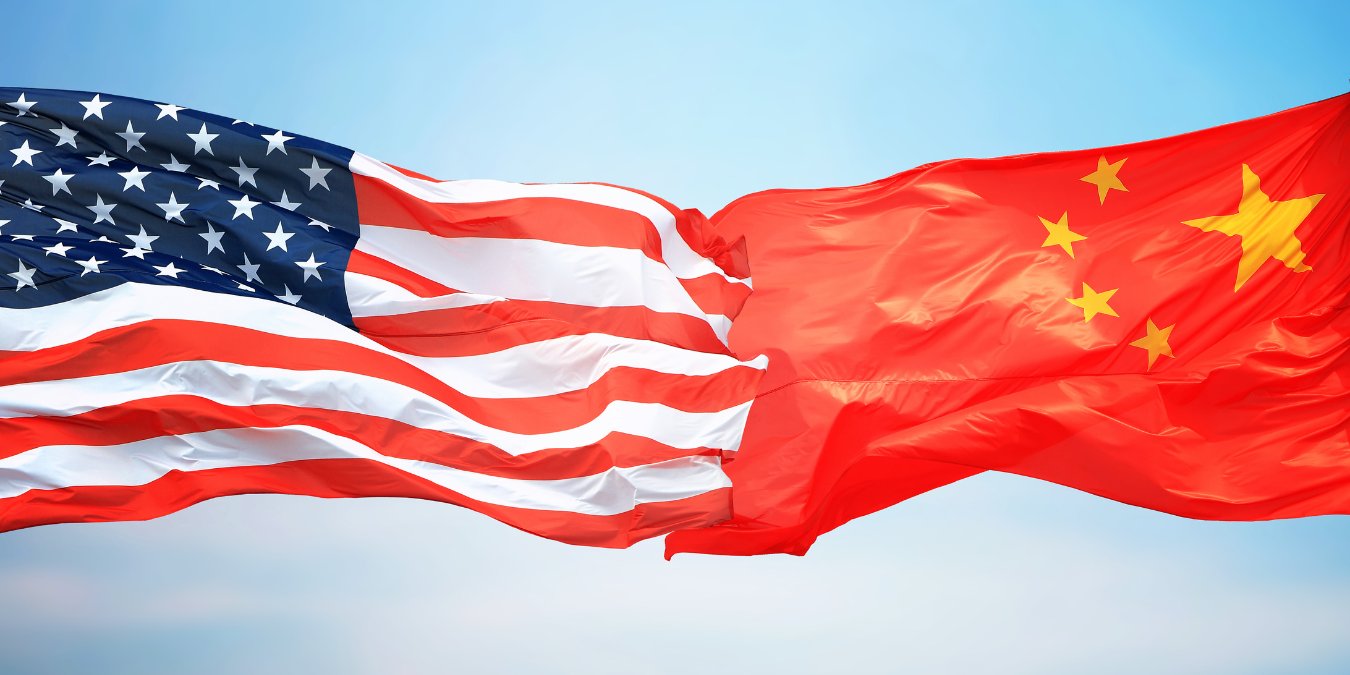
When two of the world’s most powerful leaders sit down in Beijing, the reverberations travel far beyond the Great Hall of the People. This week, U.S. President Donald Trump’s state visit to China for a high-stakes summit with President Xi Jinping did exactly that — sending subtle but measurable shockwaves through equity markets from Tokyo’s Nikkei to London’s FTSE 100, reshaping investor sentiment in ways that were not always loud, but were consistently consequential. The meeting, which marked the first U.S. presidential state visit to China in nine years, reminded global markets of a fundamental truth: geopolitics and finance are inextricably linked, and the mood between Washington and Beijing sets the tone for trillions of dollars in global capital.
The Summit That Shook Sentiment Without Shattering It
Trump arrived in Beijing on May 13, 2026, accompanied by a high-profile American business delegation that included Tesla CEO Elon Musk and Nvidia’s Jensen Huang. The optics alone were striking — two of the most recognizable names in global technology standing alongside the U.S. president on Chinese soil. Markets, which had spent weeks positioning themselves for either a breakthrough or a breakdown, were watching every handshake, every official statement, and every silence for clues about where the world’s most consequential bilateral relationship was heading.
The summit took place at the Great Hall of the People, where Trump and Xi discussed U.S.-China relations, Taiwan, trade dynamics, and the question of extending the tariff truce that has been in place for the past year. Goldman Sachs analysts had anticipated the meeting would focus primarily on trade and export regulations — such as tariffs, restrictions on rare earth elements, and semiconductors — rather than delivering any sweeping transformation of bilateral relations. That framing proved accurate. But “no grand bargain” does not mean “no market impact.” What happened across global exchanges this week was a masterclass in how diplomatic atmospherics, rather than concrete policy outcomes, can steer the hand of institutional investors.
Tokyo’s Nikkei: A Record Reached, Then Released
Japan’s benchmark Nikkei 225 offered one of the week’s most vivid market stories. On Thursday, May 14, the index briefly touched a fresh intraday record above 63,700, driven by a combination of robust Japanese corporate earnings, enthusiasm for artificial intelligence stocks, and cautious optimism surrounding the Beijing summit. The broader market narrative in Tokyo was one of momentum — the Nikkei 225 had been bullish above 61,800 all month, and analysts at FX Empire projected a breakout above 63,800 as potentially opening the path toward 65,000.
But the record did not hold. By the close of Thursday’s session, the Nikkei had retreated, ending down approximately 1% at 62,654. The profit-taking that followed the intraday peak was a textbook market response: investors who had ridden the AI-driven rally and the diplomatic optimism decided to lock in gains rather than wait for concrete deal announcements that never materialized. On Friday, as the second day of Trump-Xi talks produced more ambiguity than clarity, the Nikkei fell again, losing 0.9% and ending the week well below its intraday record. The Topix index, which many analysts view as a broader barometer of Japan’s corporate health, ended flat — suggesting that the damage was concentrated in high-beta, momentum-driven stocks rather than representing a fundamental reassessment of Japan’s economic prospects.
What Tokyo illustrated this week is something experienced traders recognize instinctively: markets price in expectations aggressively before an event and then sell the news when reality fails to meet those expectations. The Trump-Xi summit was no different.
Seoul’s Kospi: The Week’s Most Dramatic Story
If Tokyo experienced a record briefly touched and surrendered, South Korea’s Kospi delivered the week’s most dramatic trajectory. The index surged by 1.8% on Thursday to a record high of 7,981, propelled almost entirely by technology stocks riding the AI wave. South Korea’s semiconductor giants — Samsung Electronics and SK Hynix — had been on a tear all month, with Samsung having crossed the $1 trillion market capitalization mark earlier in May. The Kospi’s surge beyond 8,000 briefly on Friday represented a stunning milestone for an economy that has positioned itself as the backbone of the global AI chip supply chain.
Then came the reversal. On Friday, as Trump departed Beijing with a list of deals but few firm commitments, South Korea’s Kospi fell 1.35%, erasing earlier gains and triggering concern among investors who had grown nervous about concentration risk — Samsung Electronics and SK Hynix together accounting for more than 42% of the entire index. The small-cap Kosdaq dropped a sharper 2%, reflecting the more speculative nature of Korea’s secondary market. The message from Seoul was unambiguous: in markets where single-sector dominance is extreme, diplomatic uncertainty amplifies volatility rather than dampening it.
Hong Kong and Shanghai: The Disappointment Trade
For Chinese equity markets, the week unfolded in two distinct chapters. In the lead-up to the summit, investor sentiment was cautiously constructive. Goldman Sachs analysts described the meeting as a potential “tactical catalyst” for strengthening the Chinese yuan and boosting Chinese equities. Dong Chen, Asia strategist at Pictet Wealth Management, echoed this view, calling the summit a short-term catalyst for Chinese stocks — particularly for the technology sector, which had underperformed U.S. tech for months.
The pre-summit chapter delivered modest green. Hong Kong’s Hang Seng Index gained 0.7% to 26,584 on Thursday, while the Hang Seng Tech Index rose approximately 0.5%. But the second chapter, written as Trump left Beijing without confirming a tariff truce extension and stated explicitly that tariffs were not discussed during his meetings with Xi, was decidedly red. Chinese financial markets declined sharply after the summit failed to deliver concrete breakthroughs. Shanghai’s CSI 300 fell during the post-summit session, and the broader narrative quickly shifted from “diplomatic catalyst” to “diplomatic disappointment.” Soybean futures, which had been sensitive to any signal about Chinese agricultural purchases from the U.S., experienced sharp declines after an unclear commitment language emerged from official statements.
The U.S. Commerce Department had announced 37 deals totaling more than $250 billion before Trump had even left Beijing. On paper, that sounds transformational. In practice, investors — frustrated by the vagueness of the announcements and the absence of tariff clarity — responded by selling. Dow futures dropped over 300 points, the S&P 500 futures fell 1%, and Nasdaq futures declined 1.4%. The market’s message was blunt: dollar figures without structural commitments are marketing, not policy.
London’s FTSE 100: The Quiet Beneficiary and the Cautious Retreat
European markets entered the week with the Trump-Xi summit as a backdrop rather than a central driver, but the FTSE 100’s behavior this week was still shaped by it in measurable ways. On Wednesday, May 13, as Trump’s visit to Beijing began and initial diplomatic signals were positive, London’s benchmark rose 0.72%. The British pound dipped marginally against the U.S. dollar to 1.3526, a dynamic consistent with risk-on flows favoring equities over safe-haven currencies.
By Thursday, the FTSE 100 was up 0.3% to 10,351.36 in early European trading, also supported by a separate positive domestic catalyst — U.K. GDP grew at a faster-than-expected 0.3% in March. Germany’s DAX performed more aggressively, rising 1.15%, while France’s CAC 40 gained 0.54%, suggesting that continental Europe was more directly leveraged to hopes of a U.S.-China trade détente through export-oriented industries. Britain’s FTSE, by contrast, is heavily weighted toward energy, financial services, and consumer staples — sectors less directly tethered to the outcome of U.S.-China semiconductor and agricultural negotiations.
But when the summit produced ambiguity, the mood soured across Europe too. Investors processed the trade agreement details carefully and found them wanting; London’s index slipped in the post-summit sessions, mirroring broader global sentiment. The FTSE’s week was ultimately a reflection of how deeply integrated British market sentiment has become with global risk appetite, even when the domestic economy is performing well. When Beijing and Washington stumble, the FTSE feels it — not through direct trade exposure, but through the universal language of institutional risk positioning.
Why Markets Moved on Diplomacy Rather Than Data
The underlying dynamic driving this week’s global market volatility deserves deeper examination, because it reveals something important about how financial markets function in 2026. In an era of algorithmically driven trading, 24-hour news cycles, and unprecedented retail investor participation, geopolitical signals are priced faster and more aggressively than ever before. J.P. Morgan’s asset management team noted ahead of the summit that investors were hoping primarily for an extension of the tariff truce — not because it represents active progress, but because it avoids reintroducing another headwind to the global economy.
This is a crucial distinction. Markets were not positioned for a breakthrough. They were positioned for the absence of a breakdown. The truce — which had been in place for roughly a year — was functioning as a form of economic anesthesia, numbing the pain of structurally elevated tariff and non-tariff barriers between the world’s two largest economies. When Trump stated he did not discuss a tariff truce extension with Xi, markets had to rapidly reprice the probability of that anesthesia wearing off. The selling that followed was not panic — it was a rational repricing of forward risk.
Bloomberg reported that both nations agreed to establish trade and investment boards during the summit, and Chinese Foreign Minister Wang Yi confirmed that working-level teams would need to discuss implementation details before any plan could be activated. The operative phrase here is “working-level teams” — financial markets do not respond well to the deferral of decisions to bureaucratic working groups. Investors needed certainty; they received process.
The AI Variable: A Market Within the Market
One element that added a unique dimension to this week’s market movements was the omnipresence of artificial intelligence as a cross-market investment theme. Nvidia CEO Jensen Huang’s presence in Beijing alongside Trump was not incidental — it placed the global AI supply chain directly in the middle of the diplomatic conversation. Export controls on semiconductors, which Goldman Sachs identified as a key agenda item for the summit, are among the most consequential policy levers available to either government in the context of the AI race.
South Korea’s Kospi surged in part because AI chip demand shows no sign of slowing. Tokyo’s Nikkei briefly hit records because Japanese semiconductor equipment manufacturers have become indispensable to the global chip production cycle. The Hang Seng Tech Index’s modest gains during the summit reflected hope that restrictions on Chinese AI development might be eased. In London, tech-adjacent stocks in the FTSE tracked global sentiment. AI is no longer a sub-theme in global markets — it is the primary lens through which investors interpret every major geopolitical development, including diplomatic summits between superpowers.
What Experienced Investors Should Take Away
The Trump-Xi summit of May 2026 delivered one clear lesson that applies far beyond this single week of trading: in a structurally decoupled but deeply interconnected global economy, diplomatic process matters as much as diplomatic product. The absence of a formal tariff announcement does not mean nothing changed. The 37 deals worth $250 billion, the agreement to pursue more constructive bilateral relations over the next three years, the establishment of joint trade and investment boards — these are building blocks, not breakthroughs. And building blocks, while unglamorous, are what ultimately prevent structures from collapsing.
For investors positioned across global markets, this week reinforced the value of geographic and sectoral diversification. Tokyo showed the danger of reaching for records in a news vacuum. Seoul illustrated the concentration risk embedded in AI-heavy indices. Hong Kong and Shanghai demonstrated that even well-telegraphed diplomatic signals cannot substitute for concrete policy commitments. And London reminded everyone that even a domestically strong economy is not immune to the gravitational pull of Washington-Beijing dynamics.
The world’s stock markets moved this week not because of what Trump and Xi signed, but because of what they implied, what they withheld, and what they deferred. That gap between expectation and execution — between the promise of stability and the ambiguity of process — is where markets live. And as long as the U.S.-China relationship remains the defining axis of the global economic order, every meeting between these two leaders will continue to quietly move markets from Tokyo to London, and every point in between.
Disclaimer: This article is intended for informational purposes only and does not constitute financial or investment advice. All market data referenced reflects reported figures from the week of May 13–16, 2026. Investors should conduct independent research and consult a qualified financial advisor before making investment decisions.