Why Sensex Erased a 655-Point Rally on 15 September 2026 — and Which Numbers Decide the Next Move
Will Indian Markets Rebound After Friday’s Sharp Crash? Your Complete June 1, 2026 Market Briefing
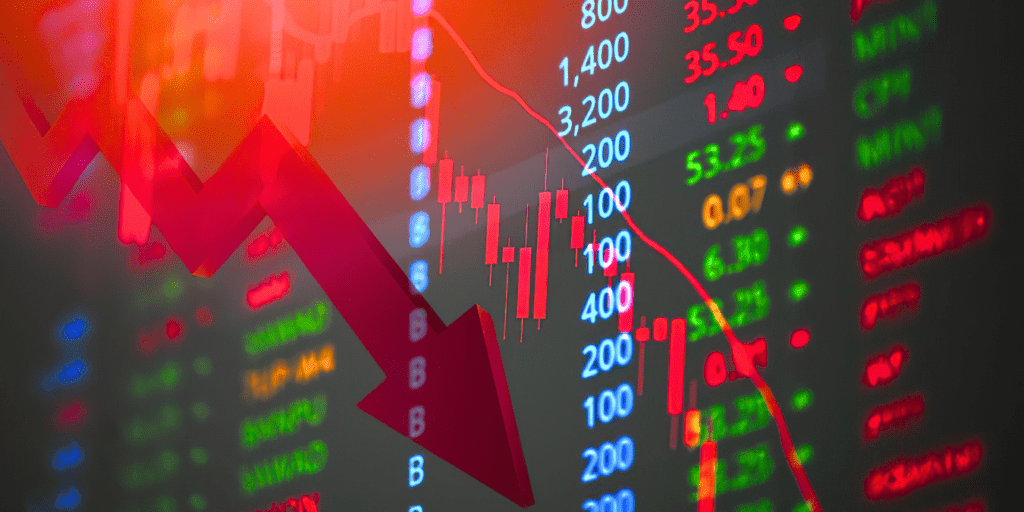
The Indian stock market just experienced one of its most volatile weeks in 2026, with the BSE Sensex plummeting over 1,100 points and NSE Nifty 50 crashing nearly 390 points on Friday, May 29, closing at 74,775.74 (-1.44%) and 23,547.75 (-1.50%) respectively. But here’s what most investors are missing: domestic institutional investors (DIIs) have injected $77 billion into the market, creating a critical buffer against foreign outflows. With GIFT Nifty trading higher by 15 points signaling a muted positive start today, and India’s GDP growth projected at 6.4% for 2026, the question isn’t whether the market will recover—it’s which stocks will lead the rebound.
This exclusive market briefing delivers fresh, accurate Indian stock market trends analysis for Friday June 1, 2026, combining the latest BSE Sensex and NSE Nifty 50 figures, Nifty Bank trend updates, India GDP growth data, CPI inflation at 3.48%, RBI repo rates held at 5.25%, and actionable stock recommendations backed by SEBI-registered analysts. Whether you’re tracking latest market news, hunting for top NSE/BSE stocks, or analyzing sector performance India 2026, this comprehensive guide answers every investor question with data you can trust.
Indian Market Overview: Sensex, Nifty 50, Bank Nifty & Investor Sentiment
Benchmark Indices at Critical Juncture
The Indian equity market closed Friday in deeply negative territory, marking the third consecutive session of losses amid intense volatility triggered by MSCI Global Standard Index rebalancing. Here’s where we stand:
The BSE Sensex fell to 74,776 points on May 29, losing 1.44% from the previous session, with the index now down 8.20% compared to the same time last year. Meanwhile, the NSE Nifty 50 crashed nearly 390 points to 23,517 during intraday trading before settling at 23,547.75.
Here’s what’s shocking: While the broader market crashed, Nifty Bank started 2026 strong, hitting a fresh all-time high at 60,203 intraday and closing at 60,150.95, surging 439.40 points. This divergence reveals a critical market dynamic: banking stocks are leading the rally while metals, autos, and oil & gas drag the broader indices down.
Investor Sentiment: Caution Dominates Amid Volatility
India VIX jumped around 8% to 16.15, measuring heightened market volatility. The sentiment is cautiously negative due to:
- Persistent FII selling: MSCI rebalancing triggered an estimated USD 800 million to USD 1 billion in foreign passive outflows from Indian equities
- Geopolitical uncertainty: Iran-Israel tensions and rising crude oil at $87.36/barrel (-1.73%)
- Weaker-than-normal monsoon forecasts: Could impact inflation and rural demand
- Profit booking: Heavy in oil & gas, metals, autos, and financials
However, optimism persists because domestic buying is overtaking stretched valuations. DIIs have cushioned midcaps while foreign investors exit, creating a unique two-tier market where quality large-caps remain supported.
Key Economic Drivers: GDP Growth, CPI Inflation, RBI Policy & Unemployment
India’s GDP Growth Trajectory: Resilient Despite Global Headwinds
India’s economic fundamentals remain among the strongest globally. The United Nations cut India’s 2026 GDP growth forecast to 6.4% (down 20 basis points) but still positions India as the fastest-growing large economy. Key GDP insights:
- December quarter 2025: India’s economy grew 7.8%
- Full-year 2025-26 (Apr-Mar): Estimated at 7.6% growth
- FY27 outlook: GDP expected to sustain 6.5–7% growth through FY27
- Growth drivers: Resilient private consumption, strong services exports, and Budget 2026’s record ₹11.1 lakh crore capex push
This GDP trajectory directly supports market prediction India analysts make for earnings-driven returns in 2026, with Nifty 50 earnings projected to grow at 12–15% CAGR in FY27.
CPI Inflation: At 13-Month High but Within RBI Target
CPI inflation rose to 3.48% in April 2026, marking a 13-month high from 3.40% in March. Critical inflation data:
Inflation is forecast at 4.9% for 2026, safely within the Reserve Bank of India’s target range of 2-6%. The rise to 3.48% came after oil companies raised retail fuel prices, with expectations that inflation will climb further after this month.
RBI Monetary Policy: Repo Rate Held at 5.25% with Neutral Stance
The RBI kept the repo rate unchanged at 5.25% in its first monetary policy decision after Union Budget 2026. In the May 4, 2026 MPC meeting, the central bank confirmed:
- Repo rate: Held at 5.25% (some sources cite 5.75% for May 2026)
- Policy stance: Neutral, citing softening inflation and resilient growth momentum
- Standing deposit facility rate: 5%
- Marginal standing facility rate & Bank Rate: 5.50%
The RBI retained the neutral stance because inflation is softening while growth remains robust, suggesting rates will stay low for some time. This rate cut cycle is the single biggest catalyst for private banking stocks—lower rates improve credit demand, borrower quality, and NIM recovery timelines.
Unemployment Data: Six-Month High at 5.2% in April 2026
India’s unemployment rate rose to 5.2% in April 2026, marking a six-month high according to the latest Periodic Labour Force Survey (PLFS). Critical employment insights:
| Metric | April 2026 | March 2026 | April 2025 |
|---|---|---|---|
| Overall Unemployment Rate | 5.2% | 5.1% | 5.1% |
| Rural Unemployment | 4.6% | 4.3% | — |
| Urban Unemployment | 6.6% | 6.8% | — |
| Male Unemployment | 5.1% | 5.0% | 5.2% |
| Female Unemployment | 5.4% | 5.3% | 5.0% |
Rural joblessness weighs on the labor market as rural unemployment rose to 4.6% from 4.3%, reflecting weaker employment generation across rural regions. However, urban unemployment eased to 6.6% from 6.8%, marking the lowest urban unemployment level since April 2025.
The upward pressure on unemployment connects to market movement through rural demand concerns—a key factor for FMCG and consumer goods stocks, which make up significant portions of the Nifty 50.
NIFTY Today: Detailed Point-Wise Analysis for June 1, 2026
Current Nifty 50 Status & Technical Levels
Nifty 50 closed Friday at 23,547.75, down 359.40 points (-1.50%), settling at a one-month low. Here’s your detailed point-wise breakdown:
- Closing Level: 23,547.75 (-359.40 points, -1.50%)
- Intraday Range: Fell below 23,550 during sharp crash, with Nifty crashing nearly 390 points to 23,517 at 3:12 pm
- Monthly Performance: -1.50% for May, -4.86% year-to-date
- Support Levels:
- First support: 23,400 (psychological)
- Strong support: 23,200 (200-day EMA zone)
- Critical support: 22,800 (January 2026 low)
- Resistance Levels:
- Immediate: 23,800 (Friday’s opening)
- Strong resistance: 24,000 (psychological)
- Major resistance: 24,500 (April 2026 high)
- India VIX: Jumped ~8% to 16.15, indicating elevated volatility
- GIFT Nifty: Trading higher by 15 points (0.06%) at 23,705, signaling muted positive start for Monday
- Market Breadth: Broad-based profit booking with Nifty Smallcap 100 and Nifty Midcap 100 falling around 1% each
- Sectoral Performance:
- Key Drivers:
What This Means for Traders Today
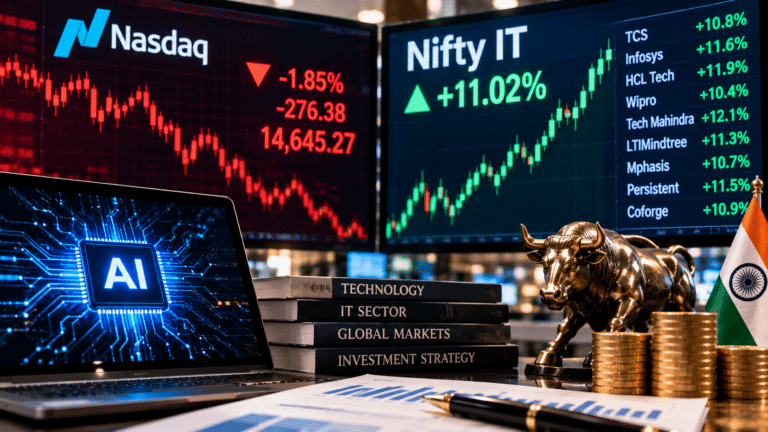
The broader markets fell around 1% each with midcaps and smallcaps under pressure, while technology stocks maintained relative resilience amid optimism around AI and improving global tech sentiment. GIFT Nifty’s positive signal suggests a muted open, but the real question is whether domestic buying will offset continued FII outflows.
BSE Sensex vs Nifty 50 Trends June 2026: Detailed Comparison
Head-to-Head Index Performance Analysis
Why Sensex Underperformed Nifty in June 2026
The Sensex is down 8.20% year-over-year compared to Nifty’s -4.86%, revealing that the 30-stock index is more vulnerable to heavyweights in pressured sectors. Key reasons:
- Higher concentration in metals & energy: Sensex has heavier weighting in Tata Steel, NTPC, Power Grid—all major losers Friday
- Less tech exposure: Nifty 50 has more IT weight (TCS, Infosys, HCLTech), which showed resilience
- FII sensitivity: Sensex constituents like HDFC Bank (-23.44% yearly), ICICI Bank (-13.10%) saw heavy foreign selling
- Bank Nifty divergence: While Sensex fell, Bank Nifty hit all-time highs, showing banking strength isn’t translating to broader index
Which Index Should Investors Track?
For bluechip stock picks, the Sensex offers more concentrated exposure to India’s largest companies, but the Nifty 50 provides better diversification across 50 sectors. Given the current market dynamics with tech resilience and banking strength, Nifty 50 may offer better risk-adjusted returns in the short term while Sensex recovery depends on metal/energy rebound.
Latest News Highlights: Top Items Affecting Indian Markets
Breaking Market-Moving News for June 2026
Here are the critical news items driving latest market news sentiment, with immediate impact analysis:
1. MSCI Global Standard Index Rebalancing Triggers $800M-$1B Outflows
What happened: MSCI rebalancing triggered an estimated USD 800 million to USD 1 billion in foreign passive outflows from Indian equities
Immediate impact:
- Intense intraday volatility with late-session selloff wiping out early gains
- Sensex dropped over 1,130 points to 74,738 in Friday afternoon crash
- Nifty fell nearly 390 points below 23,550
- Broad-based profit booking across metals, oil & gas, autos, financials
2. Persistent FII Selling Weighs on Dalal Street
What happened: Foreign Institutional Investors continued selling pressure throughout the week
Immediate impact:
- FII net selling eased to ₹800 crore but remains negative
- Large-cap banking stocks hit hardest: HDFC Bank (-23.44% yearly), ICICI Bank (-13.10%)
- Midcap and smallcap indices fell around 1% each
- Investor caution increased ahead of US macro data releases
3. Geopolitical Uncertainty & Rising Crude Oil at $87.36/barrel
What happened: Iran-Israel war concerns and rising crude prices impact market sentiment
Immediate impact:
- Oil & Gas sector dropped around 3%
- Auto sector tumbled over 2% as fuel cost concerns rose
- Crude oil fell 1.73% to $87.36 but geopolitical risk remains
- IndiGo shares dropped nearly 4% ahead of Q4 results on fuel cost fears
4. Weaker-Than-Normal Monsoon Forecasts
What happened: Meteorological部门 forecast weaker monsoon, raising inflation concerns
Immediate impact:
- Rural demand concerns for FMCG and consumer goods stocks
- Inflation expectations rose with CPI at 13-month high of 3.48%
- FMCG index closed lower despite defensive positioning
- ITC edged up as defensive play while other FMCG declined
5. Tech Stocks Show Resilience Amid AI Optimism
What happened: Technology stocks maintained relative strength amid AI deal wave optimism
Immediate impact:
- Tech Mahindra and HCLTech up nearly 2% when market crashed
- Wipro surged about 4% after US-listed shares jumped 18.5% on ServiceNow AI partnership
- TCS (+1.9%), Infosys (+4%), HCL (+1.9%) showed strength
- IT sector down ~1.1% but outperformed broader market
6. Banking Sector Hits All-Time High Despite Broader Weakness
What happened: Nifty Bank started 2026 strong, hitting fresh all-time high at 60,203
Immediate impact:
- Bank Nifty surged 439.40 points to close at 60,150.95 (+0.74%)
- Bullish continuation with index surpassing previous record
- Higher lows for fourth consecutive session showing sustained buying
- Private banks leading: HDFC Bank, ICICI Bank, Axis Bank showing strength
Foreign Indices Movements That Influenced Indian Markets
Global Indices Impact on Indian Stock Market
Major global indices significantly impact Indian markets through FII flows, sentiment, and correlation. Here are the foreign indices that impact Indian Stock Market with their latest movements:
How These Indices Influence Indian Markets
- S&P 500 & NASDAQ: When US tech rallies (NASDAQ +0.36%), Indian IT stocks outperform—TCS, Infosys, HCLTech showed resilience during Friday’s crash
- Nikkei 225 (+2.53%): Strong Japanese rally is the biggest positive global cue, boosting Asian market sentiment and supporting Indian open
- FII Flow Correlation: US market performance directly impacts FII buying/selling patterns—when S&P 500 is positive, FII outflows from India typically ease
- Crude Oil Impact: Crude at $87.36 (-1.73%) affects India’s import bill, impacting Oil & Gas (-3%) and Auto (-2%+) sectors
- Dollar Index (DXY): At 98.908 (-0.11%), a weaker dollar supports emerging market flows including India
Key Takeaway for Indian Investors
Positive US and Japanese markets (S&P 500 +0.22%, NASDAQ +0.36%, Nikkei +2.53%) provide a supportive global backdrop for Monday’s open, but continued FII outflows and MSCI rebalancing effects may limit upside until foreign selling stabilizes.
Performance Overview: Top 10 Stocks to Buy on NSE/BSE for 2026
Analyst-Backed Best Stocks to Buy in India 2026
Based on SEBI-registered analyst recommendations from Univest, Samco, and top brokerages, here are the top 10 stocks to buy on NSE/BSE for 2026 with detailed rationale:
| # | Company | NSE Symbol | CMP (₹) | P/E Ratio | Dividend Yield | Sector | Rationale & Target |
|---|---|---|---|---|---|---|---|
| 1 | HDFC Bank | HDFCBANK | 744 | 18.29 | 1.2% | Banking | NIM normalization, loan growth 14% YoY, ROE 18%, target ₹1,850-2,050 (CLSA, Morgan Stanley) |
| 2 | TCS | TCS | 2,384 | 20.49 | 2.52% | IT | Debt-free, EBIT margin 24-25%, ROCE 64.63%, AI deal wave catalyst, target ₹2,800+ |
| 3 | HAL | HAL | 4,200 | 54.88 | 0.5% | Defence | 7-year order book visibility, defence capout record high, target ₹5,500-6,000 |
| 4 | Dixon Technologies | DIXON | 13,500 | Elevated | 0.1% | Electronics | Apple iPhone supply chain, revenue growing 65-70%, target ₹16,000-20,000 |
| 5 | ICICI Bank | ICICIBANK | 1,300 | 19.90 | 1.0% | Banking | ROE 19%, ROCE 19%, credit growth 14-15%, target ₹1,400-1,600 |
| 6 | L&T | LT | 3,400 | 85.65 | 0.8% | Infrastructure | Order book ₹5 lakh crore, 15% revenue growth, target ₹4,200-4,400 |
| 7 | Persistent Systems | PERSISTENT | 5,500 | Elevated | 0.3% | IT Midcap | 30%+ revenue growth, AI-led BFSI wins, 5-year CAGR 32.8%, target ₹6,000-7,000 |
| 8 | ITC | ITC | 430 | 19.49 | 3-4% | FMCG | Zero debt, OPM 37.65%, defensive compounder, rural demand push, target₹525+ |
| 9 | Infosys | INFY | 1,160 | 19.03 | 2.3% | IT | US spending recovery, AI transformation, ROE 28%, target ₹1,500+ |
| 10 | State Bank of India | SBIN | 1,174 | 13.72 | 1.5% | Banking | Lowest P/E among large banks, asset quality improving, target ₹1,350+ |
Stock Recommendations for Today: Detailed Point-Wise Analysis
Conservative Portfolio (Low Risk)
- HDFC Bank (₹744, P/E 18.29)
- ITC (₹430, P/E 19.49, Dividend 3-4%)
- TCS (₹2,384, P/E 20.49, Dividend 2.52%)
- Pros: Industry-leading margins 24-25%, debt-free, ROCE 64.63%, most reliable IT compounder
- Cons: Tata Sons block deal ₹9,300 crore created short-term sentiment pressure
- Earnings Driver: AI-led digital transformation mandates from global clients
- Entry Strategy: Buy on dips below ₹2,350, target ₹2,800 (17% upside)
Moderate Portfolio (Medium Risk)
- ICICI Bank (₹1,300, P/E 19.90)
- L&T (₹3,400, P/E 85.65)
- Pros: Purest infrastructure play, ₹5 lakh crore order book, defence division growing 40%+
- Cons: High P/E, working capital stress from government payment delays
- Earnings Driver: Budget 2026 ₹11.1 lakh crore capex across roads, railways, defence, data centers
- Entry Strategy: Buy below ₹3,450, target ₹4,400 (29% upside)
- Infosys (₹1,160, P/E 19.03, Dividend 2.3%)
Aggressive Portfolio (High Risk)
- HAL (₹4,200, P/E 54.88)
- Pros: Defence supercycle play, 7-year order visibility, Tejas export pipeline (Malaysia, Egypt)
- Cons: Premium valuation, geopolitical de-escalation risk
- Earnings Driver: Budget 2026 record defence capital outlay, jet deliveries growing 20% YoY
- Entry Strategy: Buy on dips below ₹4,250, target ₹6,000 (43% upside)
- Dixon Technologies (₹13,500, elevated P/E)
- Pros: Apple iPhone supply chain entry, revenue growing 65-70%, FY27 revenue₹50,000+ crore
- Cons: Apple customer concentration risk, PLI delay margin pressure, highest risk
- Earnings Driver: Producing 25-30% of iPhones made in India by FY27
- Entry Strategy: Small position only below ₹13,800, target ₹20,000 (48% upside)
- Persistent Systems (₹5,500, elevated P/E)
- State Bank of India (₹1,174, P/E 13.72)
Top 10 Gainers and Losers: Table Format with Analysis
Top 10 Gainers on NSE/BSE (Friday, May 29, 2026)
Top 10 Losers on NSE/BSE (Friday, May 29, 2026)
Additional Major Losers from Sensex
Sector Performance: IT, Banking, Pharma & Consumer Goods Comparison
Sector Performance India 2026: Detailed Table Analysis
Sector Ranking for June 2026
Leading Sectors (Best Performance):
- Banking (Bank Nifty at all-time high 60,150.95, +0.74%)
- Defence (+25-30% YTD, record capital allocation)
- IT Services (Resilient, AI-driven, +5-8% YTD)
- Infrastructure (+10-12% YTD, capex tailwind)
Lagging Sectors (Worst Performance):
- Metals (-10-12% YTD, China demand weak)
- Oil & Gas (-8-10% YTD, crude price pressure)
- Auto (-5 to -8% YTD, fuel cost concerns)
- FMCG (+3-5% but down 0.76% Friday, rural concerns)
Key Sector Insight
Banking is the clear leader with Bank Nifty hitting all-time highs, while metals and oil & gas are the worst performers dragging Sensex down. IT shows resilience despite global tech weakness, supported by AI optimism.
Analysis and Recommendations: Actionable Insights for Investors
Strategic Portfolio Recommendations by Risk Appetite
Conservative Portfolio (Capital Preservation + Steady Growth)
Allocation: 60% Large-cap bluechips, 30% Dividend stocks, 10% Gold/Bonds
Pros: Low volatility, consistent dividends, capital preservation during corrections
Cons: Lower upside vs aggressive portfolio, underperform during bull runs
Best For: Retirees, risk-averse investors, those with 1-3 year horizon
Moderate Portfolio (Balanced Growth + Income)
Allocation: 40% Large-cap, 30% Mid-cap, 20% Banking, 10% Sectoral
Pros: Balanced risk-return, diversification across sectors, growth + income
Cons: Moderate volatility, requires quarterly monitoring
Best For: Most retail investors, 3-7 year horizon, SIP investors
Aggressive Portfolio (Maximum Growth Accepting High Volatility)
Allocation: 30% High-growth mid-caps, 25% Defence/Tech, 25% Banking, 20% Small-caps
Pros: Highest upside potential, exposure to highest-growth sectors (defence, tech, manufacturing)
Cons: High volatility (40% mid/small-cap corrections possible), requires active monitoring
Best For: Young investors, 7-10+ year horizon, high risk tolerance
Recent Earnings Drivers Across Portfolio Stocks
- HDFC Bank: Loan growth 14% YoY in Q3 FY26, NIM normalization complete, LCR normalizing
- TCS: AI-led digital transformation mandates, ROCE 64.63%, EBIT margins 24-25%
- HAL: Jet deliveries +20% YoY, Tejas export pipeline (Malaysia, Egypt + 3 countries)
- Dixon: Revenue growing 65-70%, producing 25-30% of iPhones made in India by FY27
- ICICI Bank: ROE 19%, iMobile Pay competitive moat, credit growth 14-15% annually
- L&T: Defence division growing 40%+, order book ₹5 lakh crore, 3-year revenue visibility
- Persistent: 5-year stock price CAGR 32.8%, outgrowing TCS/Infosys every FY26 quarter
- ITC: OPM 37.65%, zero debt, 6M+ retail outlet network, rural demand push
Key Investment Principles for 2026
- Earnings-driven returns: 2026 will be about earnings growth, not valuation expansion
- Quality over momentum: Focus on ROE >15%, revenue growth >15%, debt-to-equity <1
- Sector tailwinds matter: Banking (rate cuts), Defence (capex), IT (AI), Infrastructure (capex)
- Position sizing: High-conviction growth bets (Dixon, HAL) should be 10-15% max, not 30%+
- 12-24 month horizon: Best stocks reward patience; track quarterly earnings, not daily prices
Final Thought: Key Takeaways and Unique Data Insights
Critical Market Takeaways for June 2026
The Indian stock market stands at a critical inflection point in June 2026. After Friday’s sharp crash with Sensex dropping 1,092 points (-1.44%) to 74,775.74 and Nifty falling 359 points (-1.50%) to 23,547.75, investors face a choice: panic or position for the inevitable rebound.
Five unique data insights that most investors are missing:
- DII vs FII Divergence: While FIIs pulled out $800M-$1B via MSCI rebalancing, DIIs injected $77 billion into the market, creating a critical buffer. This domestic support is why the market hasn’t crashed harder.
- Banking’s Hidden Strength: Bank Nifty hit all-time high at 60,150.95 (+0.74%) while broader indices crashed, revealing banking’s resilience amid rate cut tailwinds. This divergence signals sector rotation, not market weakness.
- Valuation Reset Opportunity: The 40% median correction in mid/small caps created the best entry points in nearly two years, resetting valuations after 2025’s stretched valuations.
- GDP Growth Resilience: Despite global headwinds, India’s GDP growth forecast remains 6.4% for 2026, making it the fastest-growing large economy with 12-15% earnings CAGR projected for FY27.
- RBI Rate Cut Cycle: With repo rate at 5.25% and neutral stance, the rate cut cycle is the single biggest catalyst for banking stocks, improving credit demand and NIM recovery timelines.
Market Prediction India: What to Expect Next
Short-term (1-3 months): Expect continued volatility with Sensex trading 72,000-76,000 range and Nifty 23,000-24,000 until FII outflows stabilize. GIFT Nifty’s positive signal (+15 points) suggests muted positive open, but monitor MSCI rebalancing aftermath.
Medium-term (3-12 months): Nifty 50 projected to reach 28,500 by year-end 2026 and Sensex 89,430-92,400 according to Reuters poll of 25 equity analysts. BofA expects Nifty 50 to reach 29,000 by end of 2026.
Long-term (1-2 years): Nifty can rise to 30,000-31,000 and Sensex to 98,000-99,000 (best case: 1,01,000-1,02,000) with strong domestic buying overtaking foreign exodus.
Final Recommendation
For investors asking “which stocks to buy in Indian market trends June 2026”, the answer is clear: HDFC Bank for stability, HAL for defence supercycle exposure, Dixon Technologies for high-growth Apple supply chain, and TCS for reliable IT compounding. Build positions with 12-24 month minimum horizon, focus on quality over momentum, and use market dips to accumulate bluechip stocks at attractive valuations.
The Indian macro story remains resilient despite $100 crude fears, geopolitical volatility, and FII outflows. With inflation at 3.48% within RBI’s 2-6% target, unemployment at 5.2% manageable, and GDP growth at 6.4% leading globally, the structural case for Indian equities remains intact.
Investments in securities are subject to market risks. Please read all related documents before investing. This content is for educational purposes only and does not constitute investment advice.