The Central Government increasing the minimum wage, effective from October 1:
- Effective Date: The new minimum wage rates will come into effect from October 1, 2024.
- Revision Details: The increase is a result of the revision in the Variable Dearness Allowance (VDA), aimed at helping workers cope with the rising cost of living.
- Beneficiaries: Workers in various sectors, including construction, loading and unloading, watch and ward, sweeping, cleaning, housekeeping, mining, and agriculture, will benefit from the revised wage rates.
- Skill-Based Categorization: The minimum wage rates are categorized based on skill levels—unskilled, semi-skilled, skilled, and highly skilled.
- Geographical Classification: The wages are also classified by geographical areas—A, B, and C.
- New Wage Rates:
- Area A:
- Unskilled: ₹783/day (₹20,358/month)
- Semi-skilled: ₹868/day (₹22,568/month)
- Skilled: ₹954/day (₹24,804/month)
- Highly skilled: ₹1,035/day (₹26,910/month).
- Area A:
- Frequency of Revision: The Central Government revises the VDA twice a year, effective from April 1 and October 1, based on the six-month average increase in the Consumer Price Index for industrial workers.
- Previous Revision: The last revision was done in April 2024.
- Support for Unorganized Sector: This adjustment is particularly aimed at supporting workers in the unorganized sector, ensuring fair compensation amidst rising living costs.
- Government’s Commitment: This move underscores the government’s commitment to supporting workers and ensuring they receive fair wages in light of inflation.
-

UPI Is Free for Consumers, Merchants Will Pay — So Who Really Absorbs the 0.4% UPI MDR From October 15?
UPI MDR From October 15: If Merchants Pay 0.4%, Who Really Bears the Cost? Digital Payments · UPI MDR · India, September 2026 UPI Is Free for Consumers, Merchants Will Pay — So Who Really Absorbs the 0.4% UPI MDR From October 15? A 0.4% merchant discount rate on person-to-merchant UPI payments above ₹2,000 takes…
-

How Much Money Should You Keep in Your Bank Account in 2026 — and When Does Safe Cash Start Losing Value?
How Much Money Should You Keep in Your Bank Account in 2026? A Layer-by-Layer Guide for Indians Personal Finance · Banking · India 2026 How Much Money Should You Keep in Your Bank Account in 2026 — and When Does Safe Cash Start Losing Value? A layer-by-layer answer for Indian households, built on August 2026…
-
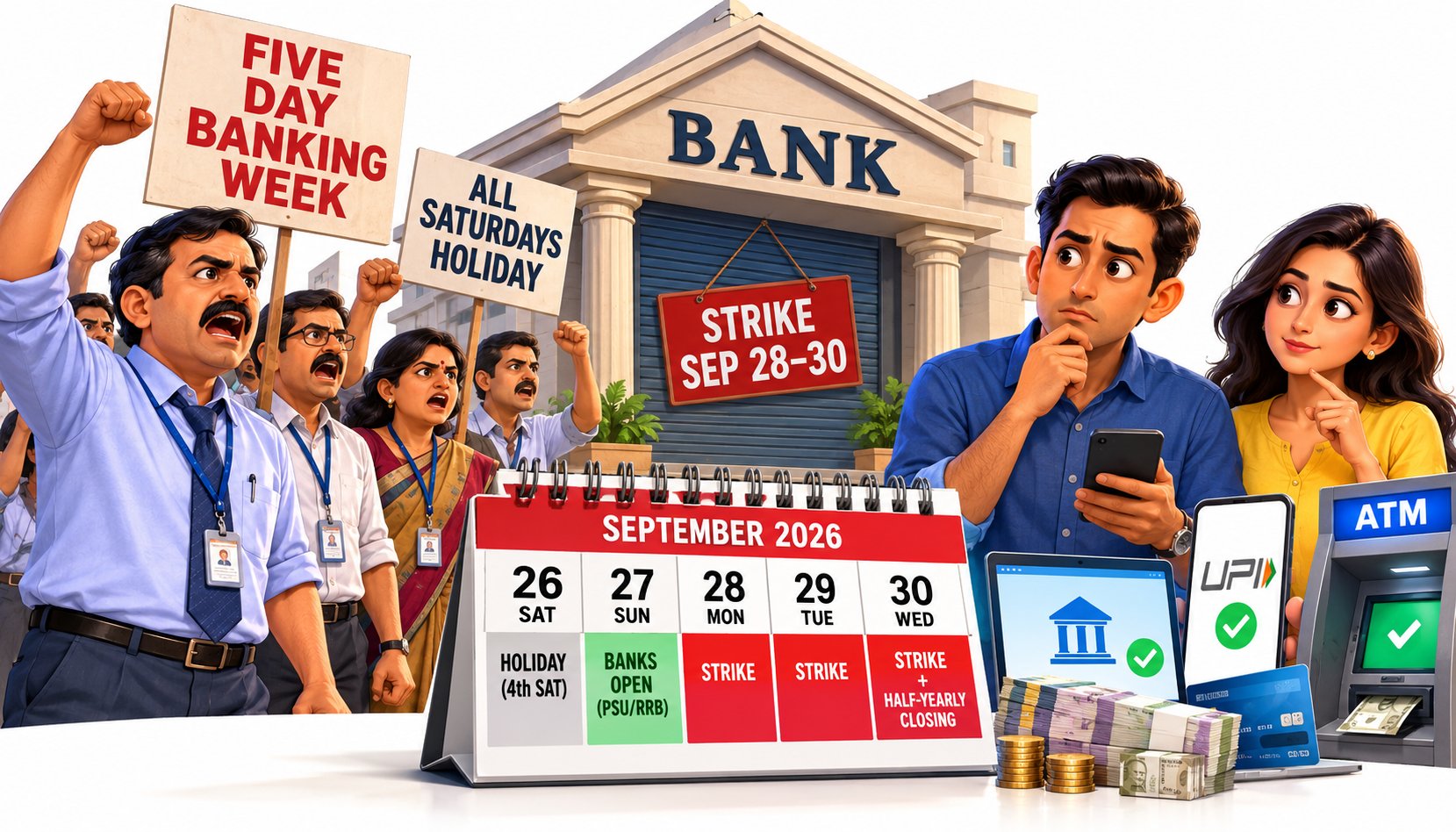
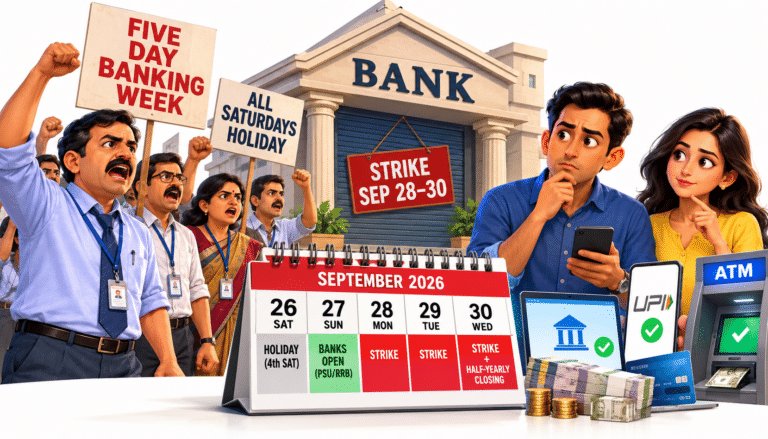
Bank Strike September 28–30: Why Unions Are Fighting Over Saturdays, and How to Bank Around It
Bank Strike Sept 28–30, 2026: Why UFBU Is Striking and How to Bank Around It Banking · Strike Watch · India Bank Strike September 28–30: Why Unions Are Fighting Over Saturdays, and How to Bank Around It The United Forum of Bank Unions has called a three-day nationwide strike at public sector banks. The five-day…
-

Why the Nifty Slipped to 23,329 as FIIs Dumped ₹3,810 Crore, and the Exact Levels to Watch Before the Bell
Markets Briefing · Sensex & Nifty · 23 September 2026 Why the Nifty Slipped to 23,329 as FIIs Dumped ₹3,810 Crore, and the Exact Levels to Watch Before the Bell Dailyfinancial.in Markets Desk · Updated 23 September 2026 · Cross-checked against NSE, BSE, MoSPI and RBI data. Timing note: this pre-market briefing uses closing figures…
-

Stock Market Today, 22 September 2026: Can Sensex and Nifty 50 Build on Monday’s 564-Point Relief Rally — or Is $100 Oil Still Calling the Shots?
Markets · Pre-Market Briefing · Tuesday, 22 September 2026 Stock Market Today, 22 September 2026: Can Sensex and Nifty 50 Build on Monday’s 564-Point Relief Rally — or Is $100 Oil Still Calling the Shots? By the Dailyfinancial.in Markets Desk Fact-checked against NSE, BSE, RBI, MoSPI and PIB releases Updated 22 Sept 2026, 8:30 AM…
-

Share Market Today 21 September 2026: Can Sensex and Nifty Break a Six-Week Losing Streak With Crude Still Above $100?
Stock Market Today · Sensex · Nifty · Monday 21 September 2026 Share Market Today 21 September 2026: Can Sensex and Nifty Break a Six-Week Losing Streak With Crude Still Above $100? Dailyfinancial.in Markets DeskChecked against NSE, BSE, MoSPI and RBI data Updated 21 September 2026, 8:30 AM ISTPre-market edition built on the settled session…