Gold Loans Surged 50.4% in 2026: Should You Take a Personal Loan Instead? (May 2026 Analysis)
Gold loans surged 50.4% in 2026, but is this boom a trap? Discover the shocking truth: taking a personal loan might actually save you thousands. Why are millions pledging gold when a cheaper, safer alternative exists? The May 2026 analysis reveals the forbidden financial secret most lenders won’t tell you before you sign.
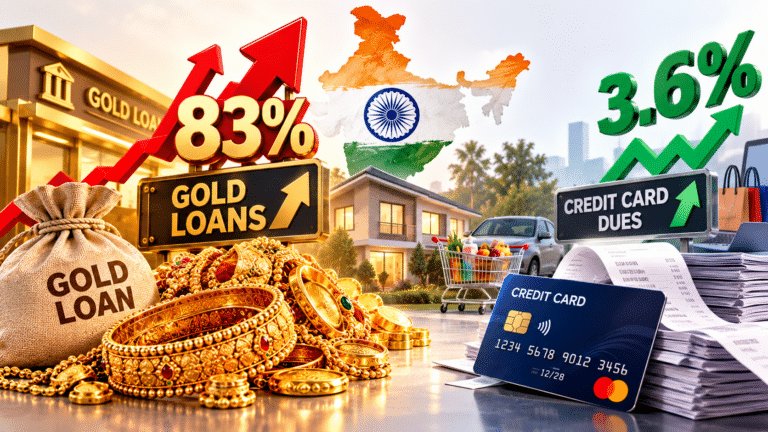
Gold loans exploded by 50.4% year-on-year in FY26, reaching a record ₹18.6 trillion in outstanding portfolio value, making them India’s fastest-growing retail credit segment according to Experian and CRIF High Mark reports released in May 2026. This surge happened because gold prices climbed more than 80% in 2025, touching ₹18,000 per gram in late January 2026, which enabled lenders to offer larger loan amounts against the same weight of gold. While gold loans now outperform personal loans in total outstanding amount, the critical question for borrowers remains whether a gold loan or personal loan makes more sense for their specific financial situation in May 2026.
Why Gold Loans Surged 50.4% in FY26
The gold loan boom stems from three converging factors that created perfect conditions for secured borrowing growth. First, record gold prices increased the collateral value dramatically. Gold prices rose more than 80% in 2025 and hit ₹17,885 per gram on January 29, 2026 when international prices topped $5,600 per ounce. This price surge meant borrowers could access significantly larger loan amounts without pledging additional gold.
Second, RBI regulatory changes made gold loans more accessible. As of April 2026, the Reserve Bank of India introduced a tiered Loan-to-Value (LTV) structure allowing up to 85% LTV for loans up to ₹2.5 lakh, 80% for loans between ₹2.5-₹5 lakh, and 75% for loans above ₹5 lakh. These borrower-friendly regulations prompted a shift away from unsecured products toward collateral-backed financing.
Third, non-banking finance companies (NBFCs) captured growing market share. NBFCs like Muthoot Finance, Manappuram Finance, and IIFL increased their gold loan market share from 28% in FY25 to 40% in FY26, while public sector banks’ share fell from 41% to 34%. The average ticket size also rose sharply from ₹1 lakh in FY24 to ₹1.7 lakh in FY26, indicating borrowers are taking larger gold loans.
New loans surged to ₹7.6 trillion in Q4 FY26, representing 115% year-on-year growth, while assets under management (AUM) rose 47% annually to ₹11.9 trillion as of March 2026. Gold loans now stand as the second-largest product in retail lending after home loans, underscoring their growing relevance in customer credit portfolios.
Interest Rate Comparison: Gold Loan vs Personal Loan in May 2026
Interest rates represent the most significant difference between these two loan types, and the gap favors gold loans substantially in 2026.
Gold Loan Interest Rates
Gold loan interest rates from banks and major NBFCs range from approximately 7.5% to 17% per annum in 2026. HDFC Bank’s gold loan IRR ranged from 9.00% to 19.00% with an average of 10.86% during Q4 FY25-26 (January-March 2026). Axis Bank offers gold loans with processing fees up to 1.5% of the sanctioned amount. Most major lenders keep gold loan rates between 9% and 15% per annum because the collateral reduces lender risk.
Personal Loan Interest Rates
Personal loan interest rates in May 2026 start from 8.75% for borrowers with exceptional credit scores but typically range from 10% to 24%+ depending on credit profile. SBI personal loans start from 10%, HDFC Bank from 9.99%, and Kotak Mahindra Bank from 9.98%. However, borrowers with average or below-average credit scores often face rates between 14% and 24%, with some NBFCs charging up to 31%.
Bajaj Finserv personal loans range from 16% to 31%, while KreditBee charges 12% to 28.5%. NBFC personal loans generally carry higher rates than bank personal loans, with Bajaj Finance offering 11%-38% p.a. and Aditya Birla Finance charging 13%-28% p.a..
The key takeaway is straightforward: gold loan interest rates typically start at 9-11% versus 12-24% for personal loans, making gold loans cheaper for most borrowers. However, borrowers with exceptional credit scores (750+) might access personal loans at rates competitive with gold loans.
Processing Speed and Paperwork: Where Gold Loans Dominate
Disbursement speed represents another critical differentiator where gold loans clearly outperform personal loans.
Gold Loan Disbursement
Gold loans can be disbursed in 30 minutes to 45 minutes with minimal paperwork. The process requires only gold jewelry (18-24 carats), identity proof, and address proof. Lenders value the gold on the spot and disburse up to 85% of its value instantly. Many lenders now offer fully digital gold loan processing through mobile apps, completing the entire process without visiting a branch.
Personal Loan Disbursement
Personal loans typically take 24 hours to 7 days for approval and disbursement. The process requires extensive documentation including income proof (salary slips or IT returns), bank statements for 6 months, employment verification, and credit score checks. Even digital personal loan applicants usually wait 24-48 hours for approval, with disbursement taking an additional 1-2 business days.
For emergency situations like unexpected medical bills or urgent home repairs, gold loans provide immediate liquidity while personal loans involve waiting periods that may not suit urgent financial needs.
Credit Score Requirements: The Critical Difference
Your credit score fundamentally determines which loan option is accessible to you.
Gold Loans and Credit Scores
Gold loans do not require a credit score or have minimal impact on credit requirements. Since the loan is secured against physical gold collateral, lenders focus primarily on the gold’s value rather than your credit history. This makes gold loans accessible to borrowers with poor credit scores, no credit history, or irregular income patterns who would face rejection for unsecured loans.
Personal Loans and Credit Scores
Personal loans rely entirely on your financial reputation, making credit scores crucial. Lenders prefer CIBIL scores of 750 or higher for approval at competitive rates. Borrowers with scores below 650 face high rejection rates or significantly elevated interest rates. Personal loan approval is likely if your CIBIL score is low or income is unstable.
For borrowers with credit scores below 700, gold loans represent the only viable option for accessing significant loan amounts quickly.
Loan Amount Limits and Tenure Comparison
Maximum loan amounts and repayment tenures differ substantially between these loan types.
Loan Amount Limits
Gold loan amounts are strictly limited by the market price of gold and the weight of gold pledged. You can borrow up to 75-85% of gold’s current market value depending on RBI’s tiered LTV structure. The average ticket size rose to ₹1.7 lakh in FY26, but borrowers can typically access up to ₹15-20 lakh against substantial gold holdings.
Personal loans offer much higher maximum amounts. Bank personal loans can go up to ₹40 lakh, with Bajaj Finserv offering up to ₹15.5 lakh and Tata Capital up to ₹35 lakh. For loan amounts above ₹15 lakh, personal loans become the only practical option since few borrowers possess enough gold to secure such large amounts.
Repayment Tenure
Gold loan tenure typically extends up to 3 years maximum. Most gold loans come with 6-month or 12-month tenures, with options for renewal. Some lenders offer bullet repayment options where borrowers pay only interest monthly and the principal at maturity.
Personal loans offer longer repayment periods up to 5-7 years. Longer tenures make EMIs more affordable for large loan amounts, reducing monthly financial pressure. For borrowers needing extended repayment periods, personal loans provide better cash flow management.
Fees and Charges: Complete Cost Comparison
Beyond interest rates, various fees impact the total cost of borrowing.
Gold Loan Fees
Gold loan processing fees range from 0.25% to 2% of the loan amount. HDFC Bank charges processing fees up to 2%, while Axis Bank charges up to 1.5%. Foreclosure charges vary by lender and tenure: ICICI Bank charges up to 2% of outstanding principal if foreclosure happens within 30 days, but waives charges after 180 days for most products. Ax is Bank charges 2% foreclosure fee if closed between 0-6 months, but waives it entirely after 6 months. Documentation charges range from ₹350 to ₹1,750 depending on loan amount.
Personal Loan Fees
Personal loan processing fees range from 1% to 4% of the loan amount. Many banks charge 2-3% processing fees plus GST. KnowledgeBee charges up to 5.10% plus GST, while Dhai charges 3% onwards plus taxes. Prepayment charges typically range from 2% to 5% of outstanding principal for fixed-rate personal loans. Variable-rate personal loans often have waivable prepayment charges.
Personal loan fees are generally higher than gold loan fees, adding to the overall cost disadvantage for unsecured borrowing.
Risks and Downsides: What Borrowers Must Consider
Each loan type carries distinct risks that borrowers need to understand before committing.
Gold Loan Risks
The primary risk with gold loans is losing your pledged gold if you default. Defaulting on a gold loan has consequences beyond financial loss, including emotional distress from losing family assets that may have sentimental value. One common pitfall is complacency—borrowers may delay repayment because the loan feels cheaper, allowing interest to accumulate over time.
Lenders may invoke loan-to-value rules or seek additional margin if gold prices fall sharply, though this remains rare. Using gold loans for long-term lifestyle spending or consumption without a clear repayment plan is widely seen as risky. They are unsuitable for borrowers with unstable incomes where the lower interest rate does not compensate for the risk of losing the pledged asset.
Personal Loan Risks
Personal loans carry no risk of losing physical assets since they are unsecured. However, high interest rates mean you pay significantly more over the loan tenure. Rejection is likely if your CIBIL score is low or income is unstable. Defaulting on personal loans damages your credit score severely, making future borrowing difficult and expensive.
Personal loans can lead to debt cycles if borrowers use them for consumption without clear repayment capacity. The easy availability of unsecured credit sometimes encourages overspending beyond repayment ability.
When to Choose a Gold Loan: 5 Clear Scenarios
Choose a gold loan when these specific conditions apply to your situation:
- You need money instantly within 30-45 minutes for emergency expenses like medical bills or urgent repairs
- You have a poor credit score below 700 or no credit history, making personal loan approval unlikely
- You want the lowest possible interest rate for a short-term need under 3 years
- You have gold jewelry to pledge and don’t mind temporarily unlocking its value
- Your loan requirement is under ₹15 lakh, which typical gold holdings can secure
Gold loans work particularly well for business owners with seasonal cash flow who need working capital short-term and possess gold assets. Southern states lead gold loan adoption, with Tamil Nadu, Andhra Pradesh, Karnataka, Telangana, and Kerala accounting for nearly 75% of outstanding gold loans.
When to Choose a Personal Loan: 5 Clear Scenarios
Choose a personal loan when these conditions match your needs:
- You need a large sum above ₹15 lakh that exceeds what your gold holdings can secure
- You prefer longer repayment periods up to 5-7 years to keep EMIs affordable
- You do not want to risk your physical assets or pledge family jewelry
- You have a strong credit score above 750 and stable income proving repayment capacity
- You’re financing events, vacations, or consumption where losing gold would be emotionally devastating
Personal loans remain the preferred choice for borrowers with steady incomes and predictable cash flows who can plan repayments confidently. They work well for debt consolidation, wedding expenses, home renovation, or education financing where amounts exceed gold loan limits.
Cost Illustration: ₹5 Lakh Loan Comparison
Let’s compare the total cost for a ₹5 lakh loan over 12 months to illustrate the financial difference.
Gold Loan at 11% average rate
Using the average gold loan rate of 11.10% APR from HDFC Bank data, a ₹5 lakh gold loan for 12 months with EMI repayment would cost approximately ₹44,550 in total interest. Adding 1.5% processing fee (₹7,500) brings total borrowing cost to ₹52,050.
Personal Loan at 16% average rate
Using 16% as a typical personal loan rate for average credit borrowers, a ₹5 lakh personal loan for 12 months would cost approximately ₹54,400 in total interest. Adding 2.5% processing fee (₹12,500) brings total borrowing cost to ₹66,900.
The gold loan saves approximately ₹14,850 over 12 months for this loan amount, representing 22% cost savings.
For borrowers with excellent credit accessing personal loans at 10%, the personal loan would cost approximately ₹27,487 in interest plus ₹10,000 processing fee, totaling ₹37,487—actually cheaper than gold loans in this specific scenario.
Expert Recommendations from Financial Advisors
Mohit Jain, Group Head at Axis Bank, stated that the gold loan segment has now emerged as the second-largest product in retail lending after home loans, underscoring its growing relevance in customer credit portfolios. Experts warn that lower interest rates do not mean lower risk when it comes to gold loans.
“If you earn steadily and can plan repayments, a personal loan is often more effective,” financial experts note, emphasizing that disciplined borrowing matters more than rate differences. Lower interest rates do not mean lower risk, and one common pitfall is complacency where borrowers delay repayment because the loan feels cheaper.
Using gold loans for long-term lifestyle spending without a clear repayment plan is widely seen as risky. Experts recommend gold loans for short-term liquidity needs and personal loans for structured, long-term financing when borrowers have repayment capacity.
The Bottom Line: Your Decision Framework
The choice between gold loans and personal loans in May 2026 depends on four critical factors: urgency, credit score, loan amount, and risk tolerance.
Gold loans surge 50.4% because they offer lower rates (9-15% vs 12-24%), instant disbursement (30 minutes vs 24-48 hours), and no credit score requirement. They dominate for emergency funding, borrowers with poor credit, and loan amounts under ₹15 lakh. However, you risk losing your gold if you default, creating emotional and financial consequences beyond pure cost.
Personal loans offer asset-free borrowing with longer tenures up to 7 years, making them suitable for large amounts above ₹15 lakh and borrowers with strong credit scores above 750. They work best when you have steady income, predictable cash flows, and don’t want to pledge family assets.
Before finalizing any loan offer, consult a certified financial advisor to match the loan type with your specific financial situation and repayment capacity. The fastest-growing credit segment isn’t automatically the best choice for every borrower—your individual circumstances determine whether the 50.4% gold loan surge represents opportunity or warning for your financial health.
For most borrowers needing urgent funds with modest loan requirements and varying credit quality, gold loans provide the optimal balance of speed, cost, and accessibility in 2026. For structured financing of large amounts with extended repayment needs and strong credit profiles, personal loans remain the superior choice despite higher rates.
The key is matching the loan product to your specific need, not following market trends blindly. Gold loans surged because they solve specific pain points—speed, accessibility, and cost—not because they’re universally better than personal loans for every borrowing scenario in India’s evolving credit landscape.