Debt Consolidation Boom: Why SBI & HDFC Are Approving ₹30–50 Lakh Loans at 10.10% in 2026
SBI & HDFC Bank are secretly approving ₹30–50 lakh debt consolidation loans at just 10.10% in 2026—lower than home loans! Discover the shocking truth behind this lending boom, who qualifies, and how one ₹45 lakh consolidation erased ₹4.8 lakh in interest. The secret could transform your financial life overnight before banks change the rules.
India is witnessing an unprecedented debt consolidation boom in 2026, with State Bank of India and HDFC Bank leading the charge by approving massive loans ranging from ₹30 lakh to ₹50 lakh at attractive interest rates starting at just 10.10% per annum. This shift represents a fundamental transformation in how Indian banks approach personal lending, particularly for borrowers looking to consolidate multiple high-interest debts into a single, manageable payment. For millions of Indians juggling credit card bills, personal loans, and other unsecured debts, this development offers a lifeline to financial stability that was previously unavailable.
The timing of this lending boom is no coincidence. As the Reserve Bank of India maintains a stable monetary policy environment and banks become more confident in their credit assessment capabilities, financial institutions are aggressively competing for high-quality borrowers. SBI and HDFC Bank, India’s two largest lenders by asset base, have recognized that debt consolidation represents a lower-risk lending segment compared to fresh personal loans. When borrowers consolidate existing debts, they are essentially proving their repayment intent while reducing their overall interest burden, which paradoxically improves their likelihood of defaulting less compared to taking on entirely new debt obligations.
Understanding the Debt Consolidation Landscape in 2026
Debt consolidation has evolved from a niche financial product into a mainstream solution for Indian households drowning in unsecured debt. According to recent data from personal finance experts, the average Indian household with multiple loans now carries 3 to 4 separate EMIs, with credit card interest rates hovering between 36% to 42% annually. This crushing interest burden leaves little room for savings, emergency funds, or investment growth. The debt consolidation loan addresses this problem head-on by replacing expensive debt with a single loan at approximately 10.10% to 15% interest rates.
What makes 2026 particularly significant is the scale of loans being approved. Previously, personal loans for debt consolidation rarely exceeded ₹15 lakh for most borrowers. Today, SBI and HDFC Bank are routinely approving loans of ₹30 lakh to ₹50 lakh for salaried professionals with strong credit profiles. This represents more than a threefold increase in lending limits, driven by improved income verification systems, higher salary benchmarks in metropolitan areas, and banks’ confidence in borrowers with CIBIL scores above 750. The combination of higher loan amounts and lower interest rates creates a powerful financial tool that can transform a borrower’s entire financial trajectory.
Why SBI and HDFC Bank Lead the Debt Consolidation Revolution
State Bank of India, as India’s largest public sector bank with over 400 million customers, brings unparalleled reach and trust to the debt consolidation market. SBI’s personal loan scheme now offers loans up to ₹50 lakh with interest rates starting at 10.05% for customers maintaining salary accounts with the bank and possessing CIBIL scores above 780. The bank’s massive customer base provides it with extensive historical data on repayment behavior, enabling more accurate risk assessment and consequently lower interest rates for creditworthy borrowers. SBI’s reputation as a government-backed institution also provides borrowers with confidence that their loan terms will remain stable throughout the tenure without unexpected changes.
HDFC Bank, India’s largest private sector lender, has taken an equally aggressive approach to debt consolidation lending. The bank offers personal loans up to ₹55 lakh for debt consolidation purposes, with promotional rates as low as 10.10% for qualified applicants. HDFC’s strength lies in its technology-driven lending process, which enables rapid approval decisions often within 24 to 48 hours for pre-approved customers. The bank’s extensive digital infrastructure allows it to verify income, employment, and credit history much faster than traditional processes, making it particularly attractive to busy professionals who need quick financial solutions. HDFC also offers flexible repayment tenures up to 72 months, which significantly reduces monthly EMIs for large loan amounts.
Both banks have invested heavily in AI-powered credit scoring models that go beyond traditional CIBIL scores to analyze cash flow patterns, spending behavior, and even utility payment history. This holistic view of creditworthiness allows them to approve larger loans for borrowers who might have been rejected under older assessment models, while still maintaining portfolio quality. The result is a win-win situation where banks expand their lending business profitably and borrowers gain access to affordable credit for debt resolution.
The Mathematics of Debt Consolidation: Real Savings Examples
Understanding the actual financial impact of debt consolidation requires examining concrete examples. Consider a 35-year-old software engineer in Bangalore earning ₹1.8 lakh per month who currently carries multiple debts: a credit card balance of ₹8 lakh at 36% interest, a personal loan of ₹12 lakh at 18% interest, and another personal loan of ₹10 lakh at 16% interest. Their total monthly EMI burden is approximately ₹1,45,000, leaving minimal disposable income after expenses. The weighted average interest rate across all debts is roughly 22%, resulting in annual interest payments exceeding ₹3.5 lakh.
By consolidating all three debts into a single SBI or HDFC loan of ₹30 lakh at 10.10% interest for 60 months, this borrower’s monthly EMI drops to approximately ₹64,000. This represents an immediate cash flow relief of ₹81,000 per month, which can be redirected toward savings, investments, or emergency funds. Over the loan tenure, the borrower saves approximately ₹4.8 lakh in interest payments compared to continuing with multiple high-interest debts. More importantly, the simplified single EMI makes budgeting easier and reduces the risk of missed payments that could damage credit scores.
For a higher-income professional earning ₹3 lakh per month with debts totaling ₹45 lakh across credit cards, personal loans, and an outstanding business loan, consolidation becomes even more transformative. A ₹50 lakh loan at 10.10% for 72 months results in an EMI of Approximately ₹88,000, compared to the previous combined EMI of ₹2,10,000. The monthly savings of ₹1.22 lakh completely changes the borrower’s financial picture, enabling them to build an emergency fund, start investing for retirement, and even plan for major life events like buying a home or funding children’s education. These real savings demonstrate why debt consolidation has become such an attractive option for financially stressed but income-stable individuals.
Eligibility Criteria for ₹30–50 Lakh Consolidation Loans in 2026
Securing a large debt consolidation loan from SBI or HDFC Bank requires meeting specific eligibility criteria that have evolved significantly in 2026. The primary determinant is monthly income, with banks typically requiring a minimum net monthly salary of ₹75,000 for ₹30 lakh loans and ₹1.25 lakh for ₹50 lakh loans. These thresholds reflect the debt-to-income ratio standards that banks maintain, generally capping total EMI obligations at 50% to 60% of monthly income. Salaried individuals in metropolitan cities like Mumbai, Delhi, Bangalore, Hyderabad, and Pune have an advantage due to higher salary benchmarks in these locations.
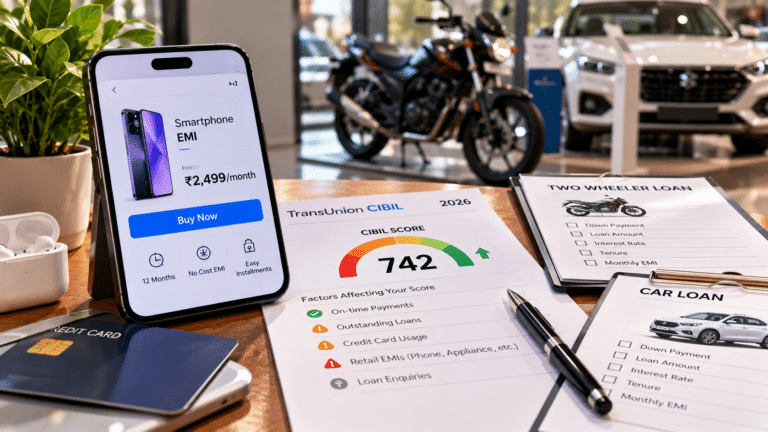
Credit score remains the second most critical factor, with SBI and HDFC Bank typically requiring a CIBIL score of 750 or higher for loans in the ₹30–50 lakh range. Scores above 780 qualify borrowers for the best interest rates starting at 10.10%, while scores between 750 and 780 may receive rates in the 10.50% to 11.50% range. Applicants with scores below 750 can still get approved but will face higher interest rates that reduce the benefits of consolidation. Maintaining a clean credit report with no defaults, settlements, or late payments in the past 24 months is essential for approval.
Employment stability constitutes the third pillar of eligibility. Banks prefer borrowers with at least 3 years of total work experience and 2 years with the current employer, particularly for loans exceeding ₹30 lakh. Professionals working with multinational corporations, top-tier IT companies, government organizations, or established private sector firms with strong market reputations receive favorable consideration. Self-employed professionals and business owners can also qualify but must demonstrate consistent income through ITR filings for the past 3 years, with minimum net profit thresholds of ₹12 lakh annually for ₹30 lakh loans.
Age restrictions apply with most banks approving loans only for individuals between 23 and 58 years for salaried employees and 25 to 65 years for self-employed professionals. The loan tenure cannot extend beyond the borrower’s retirement age, which naturally limits the maximum tenure for older applicants. Having an existing salary account with SBI or HDFC Bank provides an additional advantage, as these customers often receive pre-approved offers with simplified documentation and faster processing times.
The Application Process: From Inquiry to Disbursal in 48 Hours
The debt consolidation loan application process at SBI and HDFC Bank has become remarkably streamlined in 2026, with digital-first approaches enabling rapid turnaround times. For pre-approved customers, the process begins with logging into the bank’s mobile app or internet banking portal, where the pre-approved limit and interest rate are displayed. Selecting the debt consolidation option and entering details of existing debts triggers an instant eligibility check. Within minutes, the bank generates a loan offer specifying the amount, interest rate, tenure, and EMI. Accepting the offer through digital signature and uploading scanned copies of KYC documents completes the initial application.
First-time applicants follow a slightly longer but still efficient process. The journey starts with checking pre-approved offers on the bank’s website or visiting a branch. After submitting a formal application online or at the branch, the bank’s relationship manager schedules a call to understand the borrower’s debt situation and financial goals. The applicant then submits required documents including identity proof (Aadhaar, PAN), address proof, salary slips for the last 3 months, bank statements for the last 6 months, and a list of existing debts with outstanding amounts and interest rates. For self-employed individuals, ITR copies for 3 years and business proof documents are necessary.
Verification happens through the bank’s automated systems that instantly validate PAN, Aadhaar, and CIBIL score. Employment verification occurs through direct contact with the employer’s HR department or through employment verification agencies. Income verification uses bank statement analysis to confirm salary credits and assess cash flow patterns. Once all verifications are complete, typically within 24 to 48 hours for digital applications, the credit committee approves the loan. The sanction letter is generated digitally, and upon acceptance, the loan amount is disbursed directly to the applicant’s existing lender accounts, ensuring the consolidation happens seamlessly without the borrower handling large cash amounts.
The entire process from application to disbursal now takes 48 hours to 5 business days depending on documentation completeness and whether the applicant is a pre-approved customer. This rapid turnaround contrasts sharply with the 2 to 3 weeks typical even a few years ago, making debt consolidation a practical solution for urgent financial stress.
Risks and Considerations Before Consolidating Your Debts
While debt consolidation offers substantial benefits, borrowers must carefully evaluate potential risks before proceeding. The most significant risk is the temptation to accumulate new debt after clearing existing obligations. Some borrowers, freed up by reduced EMIs, may resume using credit cards aggressively, ultimately ending up with both the consolidation loan and fresh high-interest debt. This cycle exacerbates financial stress rather than resolving it. Responsible borrowers must commit to a strict spending discipline after consolidation, treating credit cards as payment tools rather than credit sources.
Loan tenure extension presents another consideration. While consolidating debts into a 60 or 72-month loan reduces monthly EMIs significantly, it may increase total interest paid over the complete tenure compared to aggressively paying off shorter-term debts. Borrowers must calculate whether the cash flow relief justifies potentially higher total interest costs. For instance, paying off a ₹10 lakh personal loan at 18% over 24 months costs less in total interest than consolidating it into a 60-month loan at 10.10%, even though the monthly EMI is lower. Financially disciplined individuals should consider shorter tenures that balance EMI affordability with total interest minimization.
Processing fees and prepayment charges also affect the net benefit of consolidation. SBI and HDFC Bank typically charge processing fees of 1% to 2.5% plus GST on debt consolidation loans, which can amount to ₹30,000 to ₹1 lakh on ₹30–50 lakh loans. Some banks also levy prepayment charges of 2% to 4% if borrowers repay the loan before the scheduled tenure. These costs must be factored into the savings calculation to ensure consolidation makes financial sense. Borrowers should negotiate fee waivers, especially if they are existing customers or have strong negotiating leverage through pre-approved offers.
Another critical consideration is the impact on credit score in the short term. Applying for a large personal loan triggers a hard inquiry on the credit report, which may temporarily reduce the CIBIL score by 5 to 10 points. Additionally, closing multiple existing accounts after consolidation can affect the credit mix and average account age, potentially lowering the score further. However, consistent on-time repayment of the consolidation loan rebuilds the score within 6 to 12 months, often pushing it higher than the pre-consolidation level due to improved payment history and reduced credit utilization.
Expert Strategies for Maximizing Debt Consolidation Benefits
Financial experts recommend several strategies to maximize the benefits of debt consolidation while minimizing risks. The first strategy involves creating a comprehensive budget before applying for consolidation. Borrowers should document all income sources, fixed expenses, variable expenses, and current debt obligations to understand their true financial position. This baseline helps determine the appropriate loan amount and tenure, preventing overborrowing. A detailed budget also serves as a roadmap for maintaining financial discipline post-consolidation.
Second, borrowers should prioritize paying off the highest-interest debts first within the consolidation framework. While consolidation merges all debts into one loan, the psychological benefit comes from seeing expensive credit card debt eliminated. Some financial advisors suggest using a portion of the consolidation loan to pay off credit cards immediately while keeping personal loans active for a short transition period, though this approach requires careful coordination with lenders.
Third, establishing an emergency fund immediately after consolidation prevents future debt accumulation. With reduced monthly EMIs, borrowers should allocate at least 20% of the monthly savings toward building a 3 to 6 month emergency fund in a liquid savings account or liquid mutual fund. This safety net prevents the need for new loans when unexpected expenses arise, breaking the cycle of debt that led to consolidation initially.
Fourth, automating EMI payments ensures no missed payments that could damage credit scores. Setting up automatic debit from the salary account on the due date eliminates the risk of forgetfulness and may also qualify borrowers for small interest rate discounts offered by some banks for automated payments. Consistent on-time payments for 12 months can improve CIBIL scores by 30 to 50 points, opening doors to even better loan offers in the future.
Fifth, borrowers should consider making partial prepayments when they receive bonuses, tax refunds, or other windfalls. Even occasional prepayments of ₹50,000 to ₹1 lakh significantly reduce the loan tenure and total interest paid. HDFC Bank allows prepayments without charges after 12 months of repayment, while SBI has similar flexibilities for certain loan products. Strategic prepayments can cut loan tenure by years and save lakhs in interest.
The Future of Debt Consolidation in India’s Evolving Financial Landscape
The debt consolidation boom of 2026 reflects broader trends shaping India’s financial sector. As digital lending platforms mature and regulatory frameworks strengthen, banks are becoming more comfortable extending large unsecured loans to creditworthy individuals. The Reserve Bank of India’s emphasis on financial inclusion and responsible lending has created an environment where banks balance growth objectives with borrower protection. This balance benefits consumers through better rates and terms while maintaining portfolio quality for lenders.
Looking ahead, experts predict that debt consolidation products will become even more sophisticated, with personalized offerings based on real-time financial data. Banks may soon offer dynamic interest rates that adjust based on repayment behavior, income changes, or broader economic conditions. Integration with financial planning apps will enable borrowers to visualize their debt-free journey and receive automated suggestions for accelerating repayment. Some fintech companies are already experimenting with AI-powered debt management tools that automatically optimize repayment strategies across multiple loans.
The rise of alternative credit scoring models incorporating non-traditional data points like utility payments, rent history, and even social media behavior will further expand access to consolidation loans for borrowers currently underserved by traditional credit assessment methods. This expansion could bring millions more Indians into the formal credit system, promoting financial stability and economic growth. As India’s middle class continues to expand and incomes rise, the demand for debt consolidation solutions will likely grow, prompting banks to innovate continuously in this space.
Making the Right Decision for Your Financial Future
Deciding whether to pursue debt consolidation requires honest self-assessment and careful financial planning. The ideal candidate for consolidation is someone with stable income, a clear understanding of their spending habits, and genuine commitment to breaking the debt cycle. If you find yourself consistently missing payments, paying only minimum amounts on credit cards, or borrowing fresh loans to service existing debts, consolidation combined with behavioral changes can provide the reset button you need. However, if you lack spending discipline or expect consolidation to be a quick fix without lifestyle adjustments, the problem will likely recur.
Before applying, gather all your debt details including outstanding amounts, interest rates, and monthly EMIs. Calculate your total monthly income and expenses to understand your true cash flow. Check your CIBIL score and review your credit report for any errors or discrepancies that might affect approval. Research loan offers from multiple lenders including SBI, HDFC Bank, and other reputed banks to compare interest rates, processing fees, and tenure options. Use online EMI calculators to model different scenarios and identify the optimal loan structure for your situation.
Once you receive loan approval, resist the urge to immediately resume heavy credit card spending. Instead, treat the consolidation as a fresh start, implementing strict budgeting and financial discipline. Set up automatic savings transfers, build an emergency fund, and focus on income growth through career advancement or side income streams. Remember that debt consolidation is a tool, not a solution by itself. The real solution lies in changing financial behaviors and building habits that prevent future debt accumulation.
The debt consolidation boom driven by SBI and HDFC Bank in 2026 represents a significant opportunity for millions of Indians to regain financial control. With loans up to ₹50 lakh at interest rates as low as 10.10%, the math often works in favor of consolidation for borrowers with multiple high-interest debts. However, success depends on choosing the right loan structure, maintaining financial discipline, and committing to long-term financial health. By approaching consolidation thoughtfully and leveraging the competitive offerings from India’s top lenders, you can transform your financial situation and build a foundation for lasting prosperity. The question is not whether you can afford to consolidate but whether you can afford not to take control of your debt situation today.