Why Your Bank's AI Assistant Knows What You Need Before You Even Ask It
The Eerie Feeling That Technology Understands You
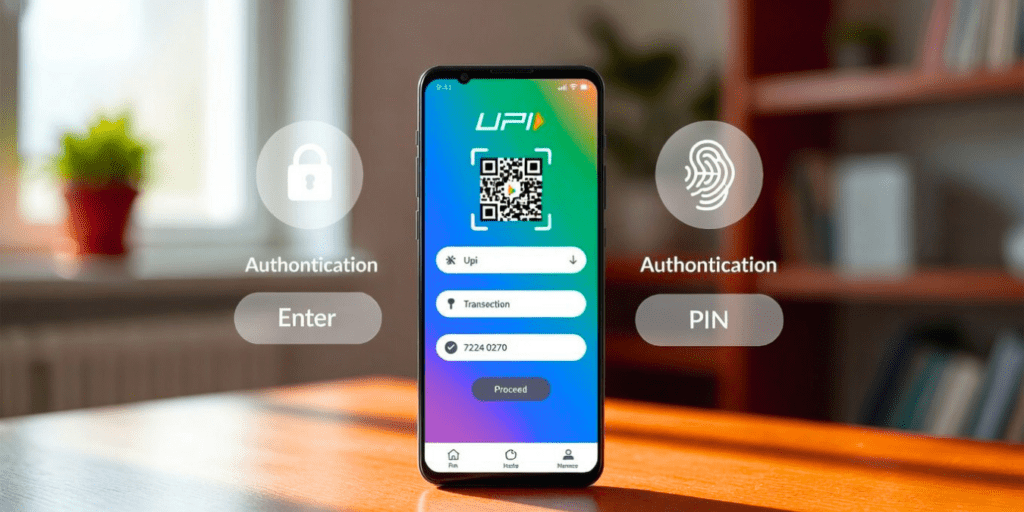
You open your banking app on a Tuesday morning, and before you type a single word, the AI assistant has already surfaced a notification: “Your insurance premium is due in three days. Would you like to transfer funds from your savings?” You didn’t ask. You didn’t mention it. Yet there it was, sitting quietly in your interface like a patient financial advisor who has been watching over your money for years. If you’ve ever experienced this moment, you know the strange mix of convenience and unease it brings. That feeling is not accidental. It is the product of some of the most sophisticated artificial intelligence engineering happening in financial services today, and understanding how it works can transform how you think about your relationship with your bank.
How Behavioral Data Becomes Predictive Intelligence
Every time you use your banking app, you leave behind a trail of micro-signals. The time of day you check your balance. The order in which you navigate screens. The transactions you review twice. The bills you pay early versus the ones you push to the last minute. Individually, these signals mean very little. Aggregated across months and years, they form a behavioral fingerprint that is surprisingly accurate at predicting what you will need next.
Modern banking AI systems use a branch of machine learning called predictive behavioral modeling. These models are trained on anonymized data from millions of customers and then fine-tuned on your specific account history. The result is a system that understands not just what you have done, but what you are statistically likely to do next — and what financial event is probably approaching on your horizon that you may not have consciously registered yet.
Consider a simple example. If your electricity bill has arrived between the 5th and 8th of every month for the past two years, the AI doesn’t need you to tell it that a payment is coming. It has already calculated the probability, cross-referenced your current balance, and flagged a potential shortfall if you make that large restaurant reservation it noticed you browsing. This is not magic. It is pattern recognition operating at a scale and speed that no human advisor could match.
The Three Pillars of Anticipatory Banking AI
Transactional Pattern Analysis
The most foundational layer of anticipatory AI is transactional pattern analysis. Every debit, credit, transfer, and inquiry you make is timestamped, categorized, and stored. The AI builds what data scientists call a temporal transaction graph — a map of your financial behavior across time. This graph reveals recurring obligations like rent, subscriptions, and utility bills, but it also captures irregular patterns like seasonal spending spikes during festivals, the annual school fee payment, or the quarterly insurance premium.
Banks like HDFC, ICICI, and SBI in India, along with global institutions like JPMorgan Chase, HSBC, and Barclays, have invested heavily in these transactional intelligence layers. The AI running behind their interfaces can detect anomalies not just for fraud prevention, but for proactive customer service. If your grocery spending drops by 40% for two consecutive weeks, the system may flag this as a potential financial stress signal and offer you information about overdraft protection or a short-term credit line, without you having to feel the embarrassment of asking for help.
Contextual Signal Integration
Transactional data alone is only part of the story. The second pillar involves integrating contextual signals that go beyond the bank’s internal data. With your explicit consent, many banking AI systems now pull in signals from connected services. Your calendar integration might tell the AI that you have a flight booked next week, prompting it to pre-enable international transaction alerts without waiting for you to land and discover your card is blocked. Your location data might indicate you’ve been visiting a new neighborhood frequently, which the system interprets as a possible home purchase exploration, triggering relevant mortgage pre-approval information in your app feed.
This contextual integration is regulated carefully under frameworks like India’s Personal Data Protection rules and Europe’s GDPR, meaning banks must operate within strict consent boundaries. But within those boundaries, the depth of contextual awareness these systems can achieve is genuinely remarkable. The AI is not just looking at your bank account — it is building a financial life context around you, using only the data you have agreed to share.
Psychographic and Sentiment Modeling
The third and perhaps most sophisticated pillar is psychographic modeling — understanding not just what you do, but how you feel about money. This sounds invasive at first, but in practice it is derived from behavioral cues rather than private thoughts. How quickly you dismiss financial product offers tells the AI your risk tolerance. Whether you obsessively check your balance after large purchases suggests financial anxiety. Whether you consistently transfer money to savings before spending suggests a disciplined savings personality.
These psychographic signals allow the AI to personalize not just the content of its suggestions, but the tone and timing. A financially anxious customer gets reassuring language and proactive alerts about upcoming bills. A risk-tolerant investor gets timely prompts about new investment opportunities. A first-time earner gets educational nudges about building an emergency fund. The AI is not treating all customers the same — it is adapting its communication style to match your financial personality, a level of personalization that would have required a dedicated personal banker just a decade ago.
The Role of Large Language Models in Modern Banking Assistants
The conversational front-end of your bank’s AI — the chatbot you type questions to or speak with through voice — has undergone a dramatic transformation in the last three years. The earlier generation of banking chatbots operated on rigid decision trees. You asked about your balance, it checked your balance. You asked about a branch near you, it pulled the nearest location. These systems were useful but brittle. They could not handle ambiguity, context-switching, or nuanced financial questions.
The integration of large language models (LLMs) into banking interfaces has changed this fundamentally. Modern banking AI assistants can now understand the intent behind your question even when you phrase it poorly. “I think I might have been charged twice for something last week” is enough for the system to pull up your recent transactions, identify duplicate charges, and initiate a dispute process — all without you needing to know the account number, transaction ID, or formal dispute terminology.
More importantly, LLMs allow the AI to synthesize information across multiple data sources simultaneously. When you ask “Can I afford to go to Goa this December?” the system doesn’t just check your balance. It looks at your projected income for the next three months based on your salary credit history, calculates your recurring obligations through December, estimates your typical festival spending based on last year’s data, and then gives you a contextually intelligent answer — sometimes even suggesting a budget breakdown for the trip. This is financial advice of a quality that most middle-income customers would never have had access to through traditional banking channels.
Why This Matters More Than You Might Think
The implications of anticipatory banking AI extend well beyond convenience. For the roughly 190 million people in India who are first-generation banking customers — people who grew up without inherited financial literacy — this technology represents an equalizing force. A sophisticated AI banking assistant can guide someone through the complexities of a home loan application, explain the difference between a fixed deposit and a mutual fund in plain language, and alert them to better interest rate options before they unknowingly accept suboptimal terms.
In mature markets, anticipatory AI is also proving transformative for financial wellness. Research from Deloitte’s 2024 global banking report found that customers who actively engaged with their bank’s AI-driven financial insights reduced their instances of overdraft fees by 34% over 18 months. The AI wasn’t just predicting needs — it was actively preventing financial harm through timely, personalized intervention. This is the real promise of anticipatory banking technology: not just answering questions faster, but improving the financial outcomes of ordinary people who don’t have the time or knowledge to manage every aspect of their financial lives manually.
The Trust Architecture Behind the Curtain
None of this works without trust, and the banks that are deploying these systems know it. The technical sophistication of anticipatory AI means nothing if customers feel surveilled rather than served. This is why leading institutions have invested as heavily in what technologists call explainable AI (XAI) as they have in predictive accuracy.
Explainable AI refers to systems that can articulate why they made a particular recommendation. Instead of the AI simply saying “We recommend you increase your emergency fund,” it now says “Based on your spending patterns, we noticed your car maintenance costs have increased 28% this year. We recommend setting aside an additional ₹2,000 per month as a buffer.” That explanation transforms a potentially eerie suggestion into a genuinely helpful insight because you can verify the reasoning and decide whether you agree.
Banks are also building layered consent architectures — granular permission systems that let you decide exactly which data signals the AI can use. You might allow it to use your transaction history but not your location data. You might allow it to analyze your bill payment patterns but not share insights with partner institutions. This level of user control is both ethically important and strategically smart — customers who feel in control of their data are more likely to engage deeply with AI features, which creates better training data and more accurate predictions over time.
How the Technology Will Evolve Over the Next Five Years
The anticipatory banking AI you experience today is impressive, but it is genuinely just the beginning. Several emerging developments are going to push this technology into territory that will feel even more transformative in the near future.
Multimodal AI will allow banking assistants to process not just text and transactional data, but voice tone, document images, and video. Imagine describing a financial problem verbally while the AI simultaneously reads the PDF statement you uploaded, cross-references your account history, and identifies a discrepancy in real time. This kind of fluid, multimodal financial consultation is already in late-stage testing at several major institutions.
Federated learning will allow banks to improve their AI models using insights drawn from shared patterns across their customer base without ever moving individual customer data off-device. This addresses one of the biggest privacy concerns around banking AI while actually improving the quality of predictions. Your phone’s local AI model gets smarter from aggregate patterns, but your raw data never leaves your device.
Agentic AI is perhaps the most significant coming shift. Current AI assistants advise you and wait for your approval. Agentic AI will, with your permission, act autonomously on your behalf — negotiating a lower interest rate with your credit card provider, automatically rebalancing your investment portfolio in response to market conditions, or canceling a subscription you forgot about and recovering the prorated amount. The AI moves from assistant to active financial agent, handling tasks that previously required either significant personal effort or expensive professional help.
Real-World Applications That Are Already Here
It’s easy to discuss this technology in theoretical terms, but the applications are already embedded in products millions of people use daily. Paytm’s financial services layer uses behavioral prediction to offer instant credit at the exact moment a user’s account signals a cash flow gap. Axis Bank’s AI platform proactively flags unusual merchant charges within hours, not days. ICICI Bank’s iMobile Pay assistant uses conversational AI to walk customers through complex processes like NPS enrollment or tax-saving investment decisions in plain Hindi and English.
Globally, Bank of America’s Erica assistant has handled over 1.5 billion client interactions and is widely credited with helping customers avoid unnecessary fees through proactive account management. Capital One’s Eno uses machine learning to identify subscription charges customers have forgotten about, saving users an average of several hundred dollars annually. These are not future promises — they are measurable outcomes from systems operating at scale right now.
What You Should Do With This Knowledge
Understanding that your bank’s AI is watching your patterns — ethically and with your consent — should prompt you to engage with it more deliberately rather than dismissively. Most customers use only a fraction of the capabilities their banking AI offers because they don’t realize the depth of what is available.
Start by reviewing the permissions you have granted your banking app. If the AI has limited data access, its predictions will be correspondingly limited. Consider enabling the financial insights features that most banking apps now offer — these are the gateways through which the AI surfaces its most valuable anticipatory recommendations. Pay attention to the proactive notifications rather than dismissing them as promotional noise. Many of them represent genuine, data-backed financial guidance.
Most importantly, treat your bank’s AI assistant as a collaborator in your financial life rather than a customer service tool you only reach for when something goes wrong. The more you interact with it, correct its misassumptions, and engage with its suggestions, the better its model of your financial personality becomes. This is a system that genuinely improves with use, and the customers who engage most actively with it are, statistically, the ones who see the greatest financial benefit.
The Human Question That Technology Cannot Answer
For all its sophistication, anticipatory banking AI cannot replace the judgment and values that should ultimately guide your financial decisions. An AI can tell you that you can afford to buy a luxury item based on your current balance and spending trajectory. It cannot tell you whether that purchase aligns with your long-term values, your family’s needs, or the kind of financial legacy you want to build. These remain irreducibly human questions.
The best way to think about your bank’s AI assistant is as a highly capable analyst who works for you around the clock, never forgets a number, and has studied your financial behavior more carefully than you probably have yourself. Like any analyst, its recommendations are inputs to your decision-making, not substitutes for it. The technology is extraordinary. The wisdom about what to do with the insights it surfaces still has to come from you.
What your bank’s AI has mastered is the art of asking the right question at the right moment — presenting you with the information you need precisely when you need it most. Learning to listen to those prompts, evaluate them critically, and act on the ones that serve your genuine interests is the financial skill that will matter most in the decade ahead.