Most Indians Use UPI Wrong in 2026 — 12 Features You've Never Tried That Could Change How You Pay Forever
You open PhonePe, scan a QR code, enter the amount, and hit pay. Done. That’s how most Indians use UPI every single day, and honestly, there’s nothing wrong with that. UPI is fast, free, and works everywhere from your neighborhood kirana store to a five-star hotel. But here’s the thing — you’re using maybe 15% of what this system can actually do. The remaining 85%? It’s sitting there, quietly available, waiting for someone to discover it.
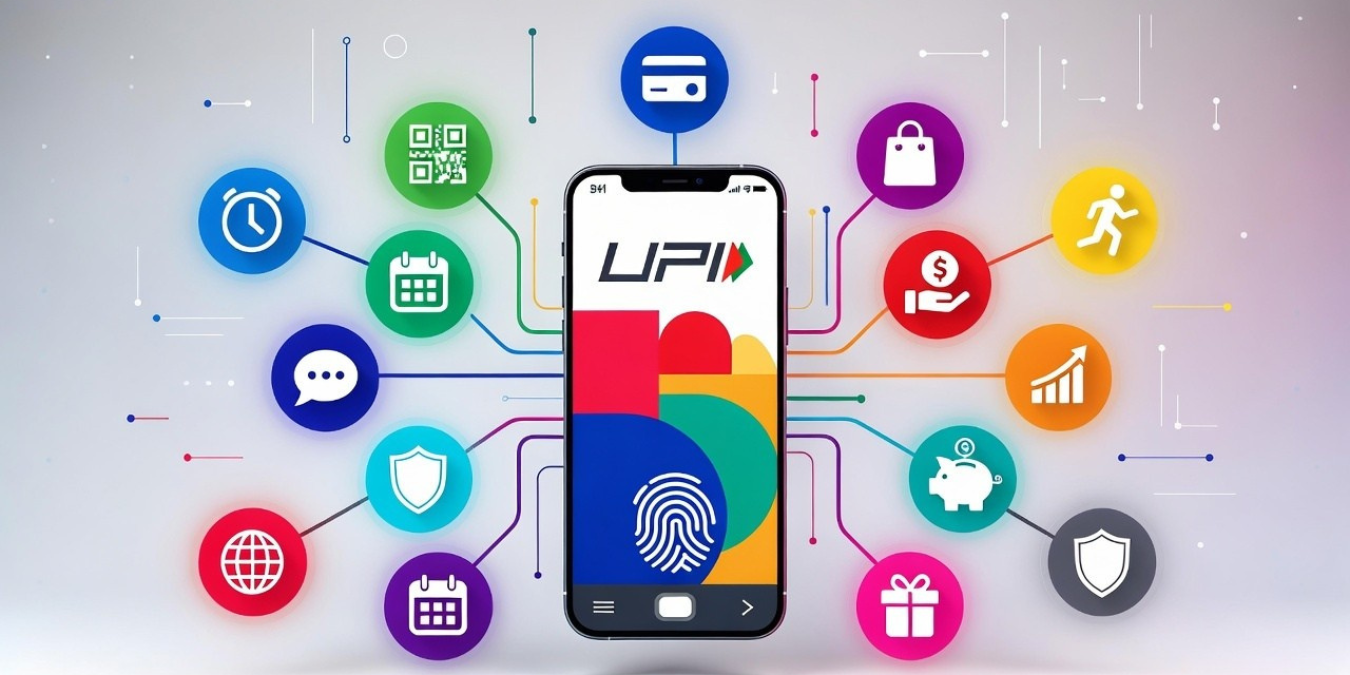
India processed over 18 billion UPI transactions in a single month in early 2026. That’s not just a number — that’s a civilization that has genuinely embraced digital payments like nowhere else on earth. And yet, when you ask most users what UPI features they actually use, the list is short: send money, scan and pay, maybe check transaction history. The National Payments Corporation of India (NPCI) has been rolling out features for years that most users have simply never explored. Some of these can protect your money, some can save you time, and a few could genuinely transform the way you manage your finances.
This isn’t a list of obscure developer tricks or features that require a technical background. These are real, available, and surprisingly easy to use. Let’s go through all twelve — and by the end, you’ll probably open your UPI app with a completely different perspective.
UPI Lite: Payments Without Internet
Most people don’t know that UPI has an offline mode, and it’s not experimental anymore. UPI Lite X, which builds on the original UPI Lite framework, allows you to make payments even when you have no internet connection. It works through Near Field Communication (NFC) technology, and both the payer and receiver need to be on UPI Lite X-enabled apps and devices. You load a small balance (up to ₹2,000) onto UPI Lite, and those funds can be transacted without hitting the server at all. This is a game-changer in metro stations, basement shops, rural areas with weak signals, or literally any place where your network decides to take a break at the worst possible moment.
Recurring Payments With UPI AutoPay
If you’re still manually paying your OTT subscriptions, electricity bills, SIP instalments, or insurance premiums every month, you’re doing it the hard way. UPI AutoPay lets you set up a standing instruction directly from your UPI app. Once authorized, payments are pulled automatically on the scheduled date without you having to lift a finger. What makes this better than traditional NACH mandates is the level of control you retain — you can pause, modify, or cancel a mandate anytime through the same app. Your Netflix subscription, Jio recharge, mutual fund SIP, and electricity bill can all run on autopilot while you get on with your life.
UPI Circle: Delegate Payments to Family Members
This is one of the most underused features in the entire UPI ecosystem, and it’s perfect for families. UPI Circle lets a primary account holder delegate limited UPI access to a trusted person — a spouse, elderly parent, or even a college student. The delegate can make payments up to a limit set by the primary user, without needing direct access to the primary bank account. Think about what this solves: your parents don’t have to call you every time they need to pay a bill, your spouse can make payments from your account without knowing your UPI PIN, and you remain in full control of the limits and permissions. It’s financial inclusion built into the payment layer itself.
One-Time Mandates for Large Transactions
When you’re buying something expensive online — say a laptop, a flight ticket, or a piece of furniture — you’ve probably noticed that some payment gateways ask you to “pre-authorize” a UPI payment. This is a one-time mandate, and most people either abandon the transaction or complete it without understanding what just happened. A one-time UPI mandate lets the merchant block a certain amount in your account, which is only debited after the service is delivered or confirmed. It’s essentially a payment escrow built into UPI. For services like hotel bookings or food delivery where the final amount might vary, this protects both you and the merchant from disputes. Learning to recognize and correctly authorize these mandates can prevent confusion and accidental double payments.
UPI Credit Line: Pay Later on UPI
As of 2025-2026, RBI-approved lenders can now link a pre-sanctioned credit line to your UPI ID. This means you can essentially use a credit facility directly from your PhonePe, Google Pay, or BHIM app — without a credit card. If your bank has approved a credit line for you (many public and private sector banks now offer this), you’ll see it as a payment option alongside your regular bank account. This is not a loan in the traditional sense; it works like a credit card but routes through UPI infrastructure. For small businesses and self-employed professionals who need short-term working capital, this feature is quietly revolutionary. Check your UPI app’s “Add Bank Account” section — your credit line might already be waiting there.
International UPI Payments
If you’ve traveled abroad recently and pulled out cash or fumbled with a forex card, you missed something important. UPI now works in over 20 countries including UAE, Singapore, France, Mauritius, Nepal, Sri Lanka, and several others. You can scan QR codes at international merchants the same way you do in India, with the conversion happening automatically. NPCI International has been aggressively expanding this network, and by 2026, UPI acceptance at major tourist and business destinations has become genuinely mainstream. Before your next international trip, check whether your UPI app supports international transactions and activate the feature — it’s typically a one-time enablement in the app settings.
UPI for Secondary Devices and Wearables
Your UPI account doesn’t have to live only on your smartphone. NPCI has enabled UPI on feature phones through UPI123Pay, and more recently, on smartwatches and other wearables. If you have a compatible Android smartwatch, you can link your UPI to it and make tap-to-pay transactions without taking out your phone. For runners, gym-goers, and anyone who moves through the day without wanting to carry a phone everywhere, this is genuinely useful. The transaction limits are lower for wearable-based UPI payments as a security measure, but for everyday small purchases, it works seamlessly.
TPAP vs. PSP: Understanding Who Controls Your Data
This one isn’t a feature you activate — it’s knowledge that protects you. Most UPI users don’t understand the difference between a Third-Party Application Provider (TPAP) like Google Pay or PhonePe and a Payment Service Provider (PSP) bank. When you use Google Pay, Google is the TPAP, but your actual UPI handle is managed by a PSP bank (like SBI, Axis, or HDFC). Your money never sits with Google — it stays in your bank. Understanding this structure means you won’t panic if a TPAP app has a technical issue, you’ll know exactly who to contact if a transaction goes wrong, and you’ll make smarter decisions about which apps to trust with your payment data. This clarity is a form of financial self-defense.
Balance Check Without Opening the App
Almost no one knows about this: you can check your UPI-linked bank balance without opening any app at all. Through USSD-based UPI, accessible by dialing 99# from your registered mobile number, you can check balance, send money, and view recent transactions entirely through a text-based interface. This works on any mobile — smartphone or feature phone — without internet. It’s how NPCI designed UPI to be inclusive for the 200+ million Indians who don’t have reliable data access. If you’re ever in a situation where your phone data has run out or your app refuses to load, 99# has your back.
UPI Vouchers and Smart Payments
Many large employers, government schemes, and fintech platforms now issue UPI-based vouchers — a feature called UPI Voucher or e-RUPI in the government context. These are purpose-specific payment instruments, meaning a voucher issued for healthcare can only be used at a pharmacy or hospital. Corporate meal vouchers, fuel allowances, and government subsidy disbursements are increasingly flowing through this channel. If your employer offers digital meal benefits or your state government has announced welfare transfers, ask specifically whether they’re issuing e-RUPI or UPI vouchers — you might be leaving money on the table simply because no one told you where to look.
Transaction Limits and How to Raise Them
The default UPI transaction limit is ₹1 lakh per transaction, but this is not fixed for everyone or for all use cases. For verified merchants and specific categories like capital markets, IPO applications, and insurance, limits can go up to ₹5 lakh or more. Many users abandon large transactions because they assume UPI won’t support them, then go through the friction of NEFT or IMPS. But often, the limit can be raised by completing your bank’s KYC, linking a higher-tier account, or using a specific payment flow designed for high-value transactions. Before you assume UPI can’t handle a big payment, check your bank’s UPI settings — you might be capping yourself unnecessarily.
Dispute Resolution Through NPCI: The Nuclear Option
Finally, the most important feature that nobody talks about enough — the formal dispute resolution process. When a UPI transaction fails but money gets debited, most people call the customer care of their app and wait for days. Fewer people know that NPCI runs a dedicated grievance system accessible at npci.org.in where you can escalate disputes that haven’t been resolved by your PSP bank within 30 days. There’s also the Banking Ombudsman framework under RBI that specifically covers digital payment failures. Knowing this escalation path — app complaint, then PSP bank complaint, then NPCI grievance, then RBI Ombudsman — means you will always get your money back if the transaction genuinely failed. Most people give up at step one. Don’t be that person.
Why This Matters More Than You Think
UPI isn’t just a payment tool anymore — it’s becoming financial infrastructure. The NPCI is building on top of UPI to enable credit, investment, insurance, and even identity verification. The people who understand how UPI actually works, what its limits are, and what its advanced features can do will be dramatically better positioned as this infrastructure matures. India’s digital public infrastructure stack — Aadhaar, UPI, ONDC, Account Aggregator — is being studied and replicated by countries around the world. You’re not just a user of this system; you’re a participant in one of the most ambitious financial technology projects in human history.
The irony is that the most powerful features of UPI are free, available right now, and designed to make your financial life easier. UPI AutoPay alone can save you hours of manual effort every year. UPI Circle can give your family members financial autonomy without compromising security. UPI Lite can make payments possible in situations where connectivity fails you. And knowing your dispute rights can ensure that a failed transaction never becomes a permanent loss.
The next time you open your UPI app to “just scan and pay,” spend two minutes exploring the settings, the linked accounts section, and the mandates page. You might be surprised by what you find. India built one of the world’s best payment systems — the least we can do is use it properly.