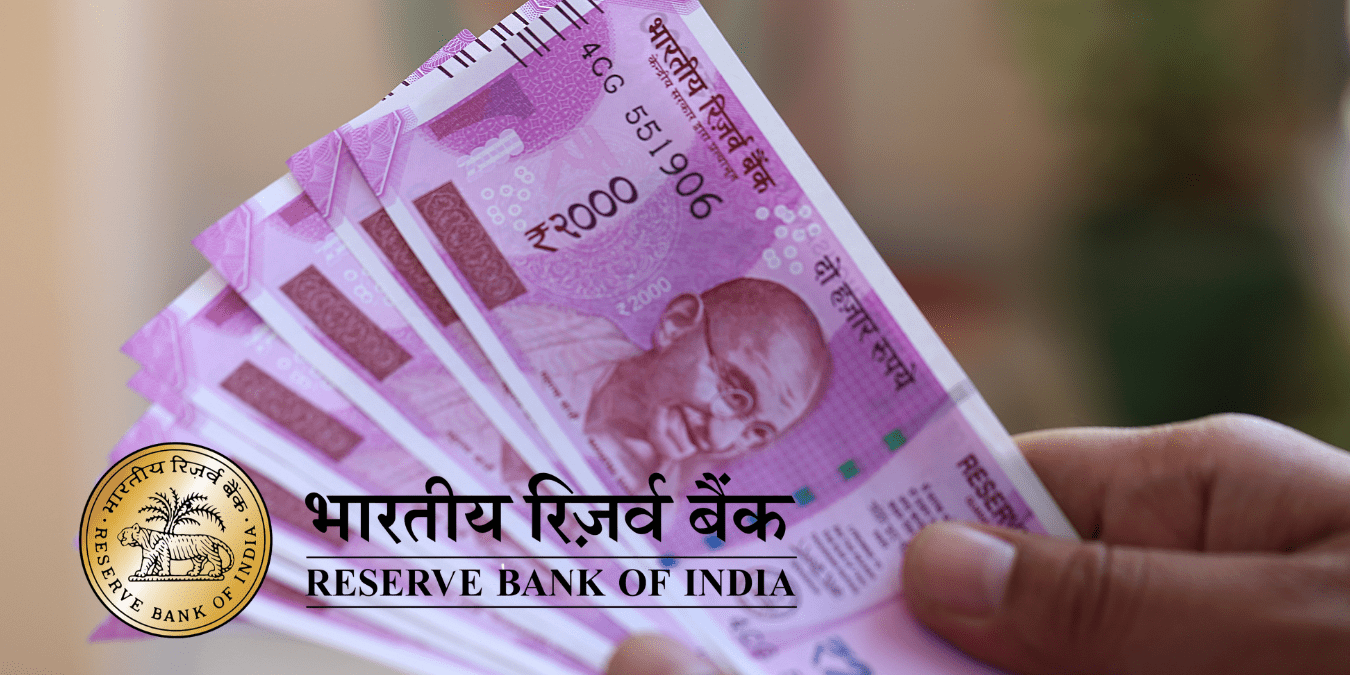
RBI Just Returned 98.47% of ₹2,000 Notes — So Where Did the Rest Go?
When the Reserve Bank of India announced the withdrawal of ₹2,000 denomination banknotes from circulation in May 2023, it set off one of the most closely watched currency recall exercises in recent Indian economic history. By the time the dust settled, the RBI had confirmed that 98.47% of all ₹2,000 notes issued had been returned to the banking system. That number sounds like a success story — and in many ways, it is. But the remaining 1.53% tells a far more interesting tale, one that touches on everything from rural savings habits and informal economies to cross-border currency flows and outright hoarding.
To understand where those notes went, we first need to understand the scale of what we are talking about. When the withdrawal was announced, approximately ₹3.56 lakh crore worth of ₹2,000 notes were in circulation. The 98.47% return translates to roughly ₹3.51 lakh crore coming back into the system. The remaining 1.53% — approximately ₹5,460 crore worth of notes — did not return. In absolute terms, that is not a small number. It is enough to fund a mid-sized infrastructure project or cover the annual education budget of a small Indian state.
Why the RBI Withdrew ₹2,000 Notes in the First Place
Before diving into the mystery of the missing notes, it is worth revisiting the RBI’s stated rationale for the withdrawal. The central bank cited the “Clean Note Policy” as its primary justification, noting that ₹2,000 notes were introduced in November 2016 largely to quickly recapitalize the economy after demonetization and had since served their purpose. The high-denomination notes had largely stopped being used for everyday transactions — they were being stored rather than circulated, which is precisely the opposite of what healthy currency circulation looks like.
Economists had long pointed out that ₹2,000 notes had become a preferred instrument for storing black money, facilitating large informal transactions, and parking wealth outside the formal banking system. The note’s high value made it easy to store large amounts of cash in compact physical form. A bundle of ₹2,000 notes representing ₹1 crore fits easily into a standard briefcase, which made it significantly more convenient than the ₹500 note for those operating in cash-heavy, opacity-dependent environments. The withdrawal was, in part, a calculated move to disrupt these patterns without the economic shock of a full-scale demonetization.
How the Return Process Worked
Unlike the chaotic demonetization of November 2016, the withdrawal of ₹2,000 notes was handled with far greater operational care. The RBI gave the public a generous window — originally until September 30, 2023, later extended — to either deposit the notes in bank accounts or exchange them at RBI counters directly. Crucially, there was no cap on deposits and no requirement to explain where the cash came from, which made the exercise far less confrontational than 2016’s overnight ban.
Banks across India became collection points, and the RBI monitored inflows in near real-time. The income tax department also watched large cash deposit patterns closely, with tax authorities issuing notices to individuals who deposited unusually large sums without adequate explanation of their source. This dual-track mechanism — easy return on one side, scrutiny of large deposits on the other — was designed to maximize voluntary compliance while minimizing economic disruption.
The result was a remarkably smooth return curve. Within the first three months, nearly 85% of notes had come back. By the six-month mark, the figure crossed 93%. The final tally of 98.47% was achieved over a period of roughly 12 to 15 months, with the RBI announcing the near-completion of the exercise in late 2024.
The 1.53% That Didn’t Come Back
Now we arrive at the genuinely fascinating part of this story. Where did ₹5,460 crore worth of ₹2,000 notes go? The answer is almost certainly not a single explanation but a combination of several distinct phenomena operating simultaneously.
Destroyed or damaged notes account for a meaningful portion of unreturned currency in any recall exercise. Notes that have been in circulation for years suffer physical wear — they get torn, burned, eaten by pests, damaged in floods, or simply disintegrate. In rural India, where cash is sometimes stored in unconventional places like inside walls, buried in the ground, or tucked into agricultural storage containers, physical damage to currency is more common than urban observers might assume. The RBI has historically accounted for note destruction in its models, and some portion of the 1.53% almost certainly represents genuinely lost or destroyed physical notes.
Cross-border cash holdings represent another significant slice. The Indian rupee, while not freely convertible on capital account, circulates informally in several neighboring countries and regions. Nepal and Bhutan have formal currency arrangements with India, and ₹2,000 notes were widely used across the border. Informal trade zones along the borders with Bangladesh, Myanmar, and even parts of the Middle East see Indian rupee cash flow in quantities that official statistics struggle to capture. When the RBI announced withdrawal, some of this cross-border cash simply did not make its way back into the Indian banking system within the stipulated timeframe.
Collectors and numismatists may seem like a marginal explanation, but high-denomination notes that are newly issued or part of a recall exercise often acquire collector value relatively quickly. The ₹2,000 note, with its distinctive magenta color and Mars rover imagery on the reverse, became a mild collector’s item. While this segment would not account for thousands of crores, it adds up when multiplied across tens of thousands of collectors and curiosity-driven hoarders.
Undisclosed cash reserves deserve honest acknowledgment. A portion of the unreturned notes almost certainly represents money that holders chose not to return because doing so would require explaining its origin to tax authorities. The RBI and income tax department’s coordination meant that depositing large amounts of ₹2,000 notes without a plausible income trail carried real risk. Some holders, particularly those with accumulated unaccounted cash, likely made a calculated decision that ₹5,000 or ₹50,000 in ₹2,000 notes was not worth the scrutiny it might invite. They effectively wrote off the cash as the cost of maintaining their financial privacy. Scaled across millions of households, even small individual decisions of this kind accumulate into significant aggregate sums.
Informal lending and chit fund ecosystems in semi-urban and rural India operate partly on physical cash in ways that formal financial data does not fully capture. ₹2,000 notes embedded in these networks may have been difficult to extract and return within the designated period, either because tracing them through layers of informal borrowing and lending was logistically complex or because participants in these networks preferred to wait and see whether the deadline would be extended further.
What This Tells Us About India’s Cash Economy
The 98.47% return rate is genuinely impressive when compared with international precedents. When the European Central Bank withdrew legacy euro notes or when other central banks have conducted similar exercises, return rates have varied considerably. India’s high return rate suggests that the formal banking infrastructure has deepened meaningfully since 2016, that Jan Dhan account penetration has had a real effect, and that the average Indian’s willingness to engage with the formal banking system has grown significantly.
At the same time, the 1.53% that didn’t return serves as a reminder that India’s cash economy retains pockets of informality, cross-border complexity, and deliberate opacity that even the most carefully managed currency exercise cannot fully reach. This is not unique to India — every major economy has a shadow financial ecosystem that operates at the margins of formal banking — but in India’s case, the sheer scale of cash transactions means that even marginal percentages represent economically significant absolute sums.
The RBI’s own annual reports have consistently noted that India’s currency-to-GDP ratio remains higher than peer economies at similar income levels. This reflects a combination of legitimate factors — limited digital infrastructure in rural areas, preference for privacy in transactions, cultural comfort with cash — and less legitimate ones. The ₹2,000 note withdrawal was partly an attempt to nudge that ratio in the direction of greater formalization, and the 98.47% return rate suggests partial but genuine success.
The Macroeconomic Implications
From a monetary policy standpoint, unreturned currency notes have an interesting effect on the RBI’s balance sheet. When notes are in circulation, they represent a liability of the central bank — the RBI effectively owes the holder the value of the note. When notes are returned and destroyed, that liability is extinguished. When notes are not returned and the RBI declares them effectively demonetized or past their exchange window, those liabilities can eventually be written off, creating what is called a “windfall” on the central bank’s balance sheet.
This mechanism was much discussed during the 2016 demonetization episode, when there was early speculation that a significant portion of ₹500 and ₹1,000 notes would not return, effectively gifting the RBI — and by extension the government — a large balance sheet gain. That expectation was disappointed when nearly all demonetized notes did return. With the ₹2,000 note withdrawal, the unreturned 1.53% represents a far smaller sum but follows the same logic. The ₹5,460 crore in unreturned notes will, at some point, be written off as a liability on the RBI’s books, marginally improving its balance sheet position.
For the broader economy, the successful return of 98.47% of notes means that liquidity was not meaningfully disrupted. The fear with any large-scale currency recall is that it will create temporary cash shortages in regions or sectors that depend heavily on physical currency. The extended timeline and smooth execution of this exercise largely prevented that outcome, distinguishing it sharply from the supply-side chaos of 2016.
Lessons for Future Currency Policy
The ₹2,000 note withdrawal offers several instructive lessons for how India — and other emerging market economies — should think about currency management going forward. First, gradual withdrawal with an extended exchange window is dramatically less disruptive than overnight demonetization. The operational success of this exercise will likely inform RBI thinking for years. Second, coordinating currency recall with tax administration creates both compliance incentives and deterrence effects, but must be calibrated carefully to avoid discouraging legitimate cash deposits from informal sector workers who simply prefer cash. Third, cross-border currency flows are a structural feature of India’s monetary environment, not an anomaly, and policy frameworks need to account for them systematically.
There is also a broader lesson about the limits of currency-based interventions in reducing the shadow economy. The 1.53% that did not return almost certainly includes some deliberately withheld unaccounted money, but the number’s smallness relative to the total suggests that most cash holders — even those operating in gray areas — found ways to return their notes without triggering scrutiny. This may reflect the sophistication of India’s informal financial networks as much as the effectiveness of tax enforcement. Reducing the shadow economy ultimately requires structural reforms in tax administration, digitization of payments, and formalization of labor markets — currency exercises are at best a complementary tool, not a standalone solution.
Where India Goes From Here
With ₹2,000 notes now largely out of circulation, India’s highest denomination note in active use is ₹500. There has been periodic debate about whether India should introduce a ₹1,000 note or even a ₹2,000 replacement, and the RBI has so far resisted that pressure. The logic is straightforward: keeping the highest denomination at ₹500 makes large-scale cash hoarding more physically cumbersome, which nudges high-value transactions toward digital rails and formal banking channels.
Digital payment infrastructure in India has grown extraordinarily over the period since 2016. UPI transactions now routinely exceed ₹20 lakh crore per month in value, and India has become a global reference case for real-time retail payment systems. The trajectory of this growth suggests that the relevance of high-denomination physical notes will continue to diminish, not because of regulatory fiat but because of the organic convenience of digital alternatives. In that context, the ₹2,000 note’s withdrawal may come to be seen as a relatively minor chapter in a much larger story about India’s financial modernization.
The 1.53% that stayed out of the system is, in the end, a small but telling detail in that larger story — a reminder that financial systems are human systems, shaped by trust, habit, convenience, fear, and sometimes deliberate concealment. The RBI’s currency recall was a success by any reasonable metric. But the notes that didn’t come back are the ones worth thinking about most carefully, because they point to the work that still remains in building a financial system that every Indian, regardless of income level or sector, feels both able and willing to participate in fully.
This article is written for informational and educational purposes. All figures cited are based on publicly available RBI communications and financial reporting through early 2025.