RBI's New UPI Security Rules Are Live — Here's the One Change That Could Slow Down Your Daily Payments
If you’ve been using UPI to pay for your morning chai, split bills with friends, or transfer rent to your landlord, you’ve probably never thought twice about how fast those transactions go through. A few seconds, a green tick, done. That seamless experience is exactly what made UPI the backbone of India’s digital payment revolution — processing over 18 billion transactions a month at its peak. But as of 2025 and carrying into 2026, the Reserve Bank of India has rolled out a series of new UPI security rules that are quietly reshaping how those payments work. One change, in particular, is drawing attention from everyday users and fintech experts alike: the introduction of an additional authentication layer for certain high-value and first-time UPI transactions. And yes, it could add a few extra seconds — or steps — to payments you once made on autopilot.
This isn’t fearmongering. It’s a practical look at what’s changed, why the RBI made these decisions, and how you can adapt without letting the new rules derail your daily routine.
Why the RBI Acted Now
India’s UPI ecosystem didn’t just grow — it exploded. From small kiranas in Varanasi to luxury boutiques in Mumbai, UPI became the great equalizer of payments. But that scale also made it an irresistible target. Cybercrime units across the country reported a sharp uptick in UPI-related fraud between 2023 and 2025, including SIM swap attacks, vishing scams (voice phishing), and screen-sharing frauds where unsuspecting users handed over access to fraudsters pretending to be bank officials.
The National Payments Corporation of India (NPCI) and RBI had been monitoring fraud patterns carefully, and what they found was alarming: a significant portion of fraudulent transactions were happening in the first-time payee or high-value transaction window — precisely because that’s where users are least guarded and systems had the fewest friction points. The new rules are a direct response to that data, not bureaucratic overreach.
The RBI’s approach follows a globally recognized principle in cybersecurity called “friction by design” — the idea that adding a small, deliberate delay or verification step at high-risk moments dramatically reduces fraud without breaking the overall user experience. Countries like the UK and Singapore have used similar models in their open banking frameworks, and India is now aligning itself with those international standards.
The One Change You Need to Know About
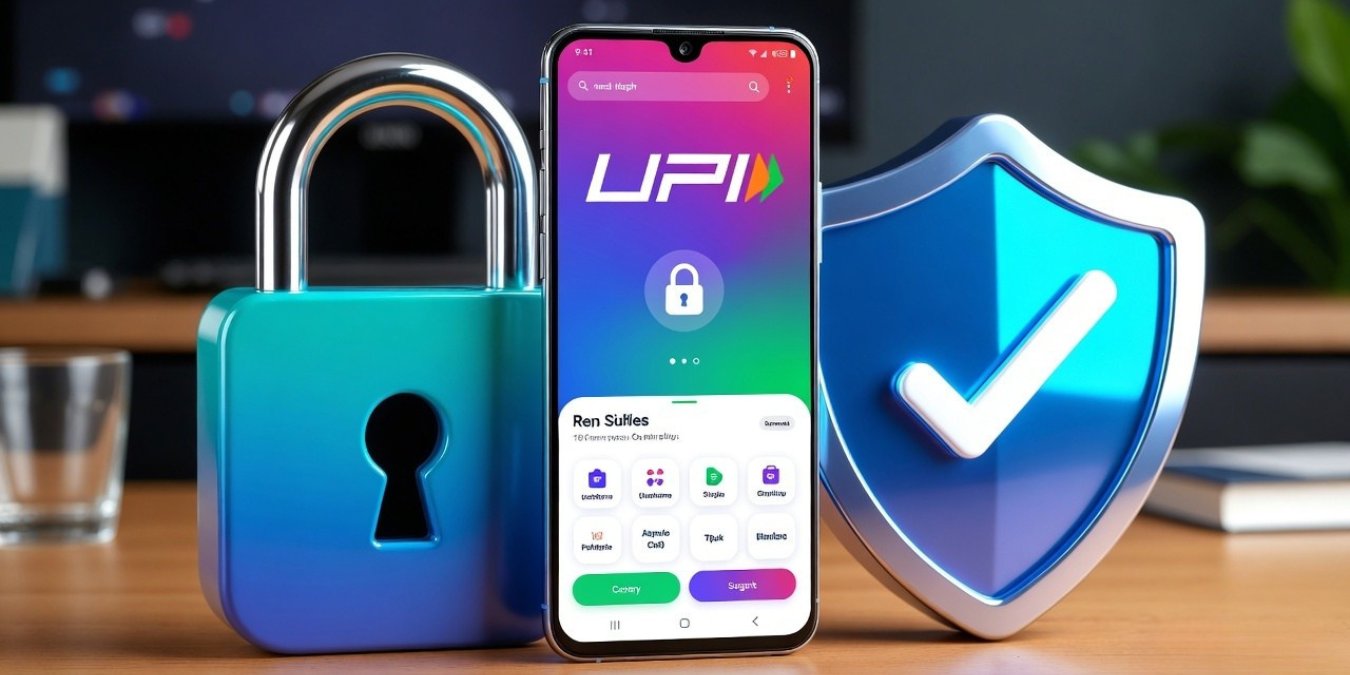
At the heart of the new ruleset is a mandatory cooling-off period and re-authentication requirement for first-time payees above a certain transaction threshold. Here’s what that means in plain language.
When you add a new UPI contact or scan a QR code you’ve never used before and attempt to send a significant amount — the RBI has set initial thresholds in consultation with NPCI, with amounts above ₹2,000 to new payees being subject to additional scrutiny — the transaction doesn’t go through instantly. Instead, the UPI app triggers a secondary verification step. Depending on your bank and app, this could mean re-entering your UPI PIN after a short timer, receiving an OTP to confirm the payee, or in some cases, a brief 4-hour delay for the very first transaction to a new beneficiary if the amount crosses a higher threshold.
For repeat transactions to contacts already in your trusted list, you’ll notice virtually no change. The rules are specifically calibrated to target new and unfamiliar payment scenarios — the exact conditions under which fraud is most likely to occur.
This is the change that has the potential to slow down your payments. Not for routine transactions, not for your regular vendors, and not for peer-to-peer transfers to people already in your UPI history. But for the first time you pay a new vendor, a freelancer you just hired, or a QR code at a shop you’ve never visited before — that’s where you’ll feel it.
How the New Authentication Flow Works
Understanding the step-by-step process helps remove the anxiety that often comes with “new rules.” Here’s how a typical flagged transaction now flows through the system.
When you initiate a payment to a new payee above the threshold, your UPI app will flag it. You’ll see a notification or screen indicating that this is a new recipient and that additional verification is required. You then confirm the payee details — name, UPI ID, and sometimes the linked bank name — which now appear more prominently than before to reduce misdirected payments. After confirmation, a short countdown timer may appear (typically 60 seconds for moderate amounts), during which the transaction is held in a pending state. You re-authenticate using your UPI PIN, and the payment is released. For very high-value first-time transactions above a separate, higher threshold, a 4-hour review window may apply, during which you can cancel the transaction if you realize something is wrong.
This last feature — the cancellable review window — is arguably the most important consumer protection tool in the entire update. It mirrors the “undo send” feature in email clients, giving users a grace period to catch their own mistakes or realize they’ve been manipulated.
What Hasn’t Changed
Amid all the attention on the new rules, it’s worth being equally clear about what’s staying the same. Everyday UPI transactions to your regular contacts, stored merchants, and frequently used QR codes will continue to work exactly as they do now — fast, frictionless, and one-tap simple. Transactions below the threshold for new payees also remain unaffected. Auto-pay mandates for subscriptions like OTT platforms, insurance premiums, and loan EMIs operate under their own mandate framework and are not impacted by these new payee authentication rules. UPI Lite, which handles small offline transactions under ₹500, continues to function without any PIN requirement as before.
The RBI has been careful not to dismantle what works. The goal is surgical intervention — adding friction only where the risk is highest, while preserving the speed and simplicity that made UPI a global benchmark.
Should You Trust These Changes?
Let’s talk about trustworthiness — not just of this article, but of the policy itself. The RBI isn’t an overnight regulator. It has decades of institutional experience managing monetary policy, banking supervision, and payment system governance. When it rolls out security changes to UPI, it does so after extensive consultation with NPCI, major commercial banks, fintech players, and cybersecurity experts. The framework for these rules was laid out in the RBI’s Payment Vision documents and subsequent circulars that are publicly available and peer-reviewed by industry bodies.
From an expertise standpoint, these changes align with what security researchers have been recommending for years. The concept of “step-up authentication” — where the authentication requirement increases proportionally with transaction risk — is a cornerstone of modern fraud prevention. It’s used by every major international card network, embedded in PSD2 (the EU’s Payment Services Directive), and endorsed by the Financial Action Task Force (FATF) guidelines that India follows as a member country.
The authoritativeness of the RBI’s decision is further backed by empirical fraud data. India’s Computer Emergency Response Team (CERT-In) and the Ministry of Finance have both published reports highlighting digital payment fraud as a top-priority cybercrime category. The new UPI rules are not a reaction to one incident — they are a systemic response to a documented, growing threat pattern.
What This Means for Small Business Owners and Vendors
If you run a small business and accept UPI payments from new customers, the new rules introduce a variable you need to plan for. A first-time customer paying you above the threshold may experience a short delay or additional step, which could feel awkward at a physical point of sale. The practical solution is communication — simply letting customers know that first-time payments may take an extra 30 to 60 seconds due to new RBI security protocols. Most customers, when informed, appreciate the transparency rather than feeling frustrated.
For vendors who use QR codes, ensuring your UPI ID and registered name are clearly visible and accurate has become more important than ever. The new authentication screens show payee details prominently, and mismatches — say, a trade name that doesn’t match the registered UPI ID — can cause customers to hesitate or abort the transaction. Updating your UPI profile to reflect your business name accurately is a simple but high-impact fix.
If you’re a freelancer receiving payments from new clients, the 4-hour review window on high-value first-time transactions means your client’s payment may not land immediately. Building this into your project timelines — especially for advance payments before beginning work — will save both parties from unnecessary confusion.
Tips to Make the Transition Seamless
Adapting to the new rules requires almost no technical effort on your part, but a few habits will make the process smoother.
Add frequent payees to your UPI app’s trusted contacts list proactively. Most UPI apps — PhonePe, Google Pay, Paytm, BHIM — allow you to save and nickname contacts. Doing this before you need to make a payment means future transactions to those people will bypass the new-payee authentication flow entirely.
Double-check payee details before initiating any new transaction. The new authentication screen is designed to give you that opportunity, but forming the habit of verifying UPI IDs before hitting send is good practice regardless of any rule changes.
Keep your UPI PIN updated and memorized. Since re-authentication is now part of certain transaction flows, an outdated or forgotten PIN will stall your payment at the worst possible moment. Most banks also now recommend setting a UPI PIN that differs from your mobile banking password for added security layering.
Enable transaction notifications from your bank app. Real-time alerts help you catch any unauthorized transaction attempts quickly and allow you to use the cancellation window effectively if something looks wrong.
Stay updated through official RBI and NPCI communications rather than relying solely on social media. The rumor mill around these changes has produced a lot of misinformation — claims that UPI will require Aadhaar verification for every transaction, that international remittances will be blocked, or that transaction limits are being halved. None of these are accurate. The official NPCI website and your bank’s customer care are your most reliable sources.
The Bigger Picture: India’s Payment Security Evolution
The new UPI security rules are not an isolated event. They’re one chapter in a longer story of India building a payments infrastructure that can scale to a billion users without becoming a billion-dollar fraud ecosystem. The RBI has simultaneously been working on the Digital Payments Intelligence Platform (DPIP), a centralized fraud detection network that allows banks and payment apps to share anonymized fraud signals in real time. Think of it as a national early-warning system for payment fraud — the more institutions share data, the faster the system can identify and block fraudulent patterns before they reach your account.
The new authentication rules and the DPIP work in tandem. The friction-by-design approach catches fraud at the individual transaction level, while the DPIP catches it at the network level. Together, they represent a layered security architecture that is more robust than either system alone.
India is also in the middle of expanding UPI internationally — to Singapore, UAE, UK, France, and several other countries. As UPI crosses borders, meeting international regulatory standards for payment security becomes not just a domestic priority but a diplomatic and commercial one. The new rules help India demonstrate to foreign regulators and partner nations that UPI is not just fast and scalable, but also secure enough to trust with cross-border transactions.
The User Experience Tradeoff: Is It Worth It?
This is the honest question that every UPI user deserves a direct answer to. Yes, there is a tradeoff. Some transactions that used to take 3 seconds will now take 30 seconds or 3 minutes for new payees above the threshold. That is a real change, and it’s fair to acknowledge the inconvenience.
But consider what’s on the other side of that tradeoff. UPI fraud in India caused losses running into thousands of crores annually before these interventions. Victims ranged from elderly retirees tricked into sending their savings to scammers posing as bank officials, to young professionals who lost months of salary to fake investment platforms that accepted UPI payments. Every one of those victims would have happily traded a 60-second delay for the ability to cancel a fraudulent transaction before it completed.
The RBI’s new rules don’t make UPI foolproof. No system is. But they meaningfully raise the cost and difficulty of executing the most common types of UPI fraud, and they give users a fighting chance to catch mistakes before they become permanent losses. That’s a tradeoff worth making.
Final Thought
The next time you scan a new QR code and see an extra confirmation step pop up on your screen, don’t dismiss it as bureaucratic friction. That brief pause is the system doing exactly what it was designed to do — giving you a moment to verify, confirm, and proceed with confidence. India’s UPI story has always been about building trust at scale. These new security rules are the latest chapter in that story, and they’re written with your protection in mind.
The payments will still be fast. They’ll just be a little smarter about when to slow down.