Why Booking a 5-Year Tax-Saving FD in April 2026 Could Save You More Than Just Taxes — A Financial Planner Explains
Every April, millions of Indian taxpayers scramble to make last-minute tax-saving investments before the financial year closes. But here’s what most people get wrong: they treat tax-saving as a reactive exercise rather than a proactive wealth-building strategy. I’ve been advising salaried professionals and self-employed individuals on personal finance for over a decade, and one pattern I see repeat itself every single year is the missed opportunity of booking a 5-year Tax-Saving Fixed Deposit at the start of the financial year — specifically in April — rather than at the end.
If you’re reading this in April 2026 and haven’t yet made your Section 80C investments for this financial year, you are sitting on one of the most straightforward and underrated financial moves available to you right now. Let me explain not just why a Tax-Saving FD makes sense, but why doing it this month creates a compounding advantage that most people never account for.
What Exactly Is a Tax-Saving FD?
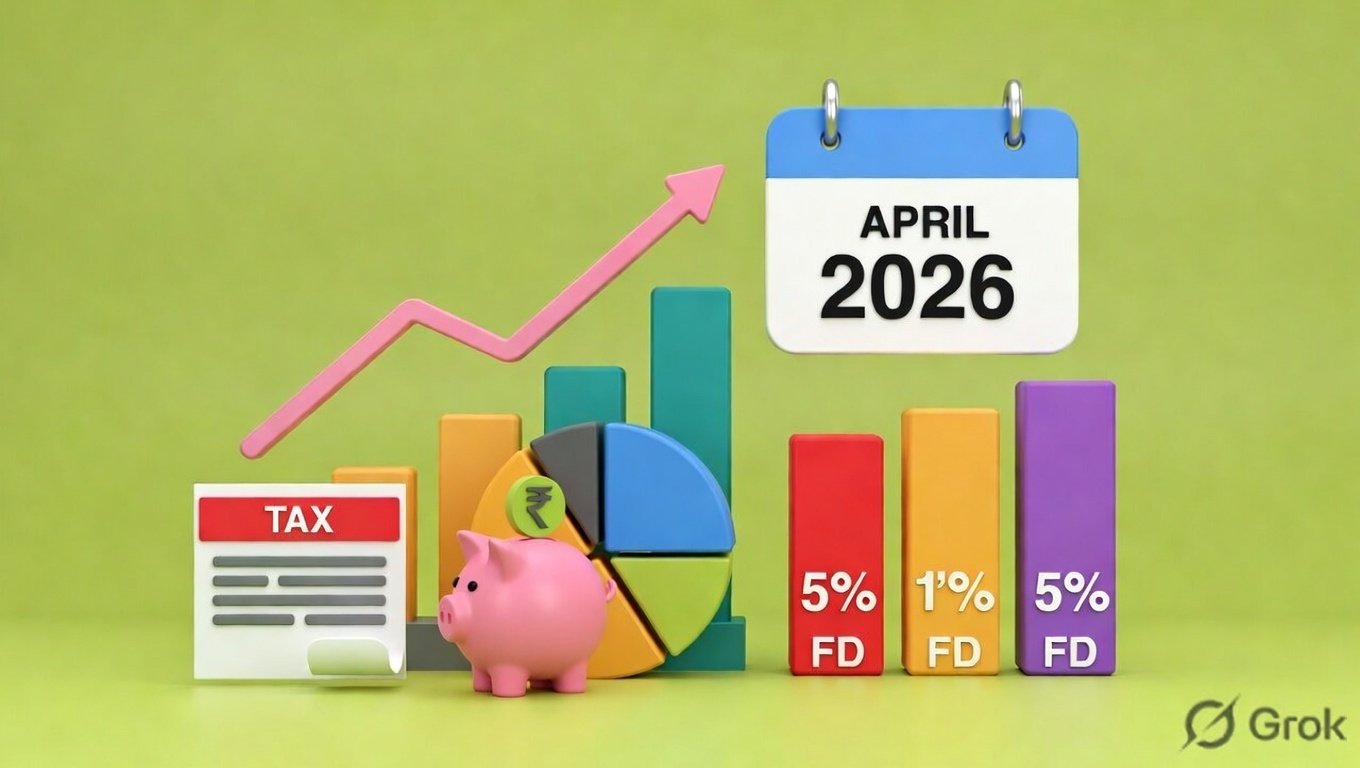
A Tax-Saving Fixed Deposit, also called a Section 80C FD, is a special fixed deposit offered by banks and select post offices that qualifies for a tax deduction of up to ₹1.5 lakh per financial year under Section 80C of the Income Tax Act, 1961. It carries a mandatory lock-in period of five years, which means you cannot withdraw the amount prematurely. Interest earned on this FD is taxable as per your income slab, but the principal investment gives you an immediate tax benefit.
Most major public and private sector banks in India offer this product, and as of early 2026, interest rates on 5-year FDs have remained relatively attractive following the rate cycle of the past few years. Banks like State Bank of India, HDFC Bank, ICICI Bank, Axis Bank, and Bank of Baroda continue to offer competitive rates for senior citizens and general public alike. While rates vary by institution, the general range for a 5-year tax-saving FD sits between 6.5% and 7.25% per annum for regular citizens, with senior citizens typically earning an additional 0.25% to 0.50% premium.
The April Advantage: Why Timing Changes Everything
Most people book their tax-saving investments in January, February, or March — the final quarter of the financial year. This is largely driven by the annual investment declaration cycle at workplaces, where employers ask employees to submit proof of investments. The problem with this approach is purely mathematical, and it works against you in a very specific way.
When you book a Tax-Saving FD in April 2026, your five-year lock-in ends in April 2031. More importantly, you earn interest for the full 12 months of the financial year 2026-27. When someone books the same FD in February 2027 to meet their Section 80C obligation for the same financial year, they only earn interest from February onward. Over a five-year period, that difference in compounding is not trivial — it can translate to thousands of rupees in additional returns, depending on the principal and interest rate.
Let me give you a concrete example. Suppose you invest ₹1.5 lakh in a Tax-Saving FD at 7% per annum compounded quarterly in April 2026. By April 2031, your maturity value would be approximately ₹2,12,000. If you had made the same investment in February 2027, your five-year tenure would carry you only to February 2032, but more critically, your effective return for the financial year 2026-27 would be calculated only from February — meaning you lose roughly 10 months of compounding on the same principal. The monetary difference may seem small in isolation, but when you replicate this mistake across 10 to 15 years of your earning life, the lost corpus becomes significant.
The Real Tax Saving: Breaking Down the Numbers
The phrase “tax saving” often tricks people into focusing only on the deduction and ignoring the full financial picture. Let me break this down with clarity.
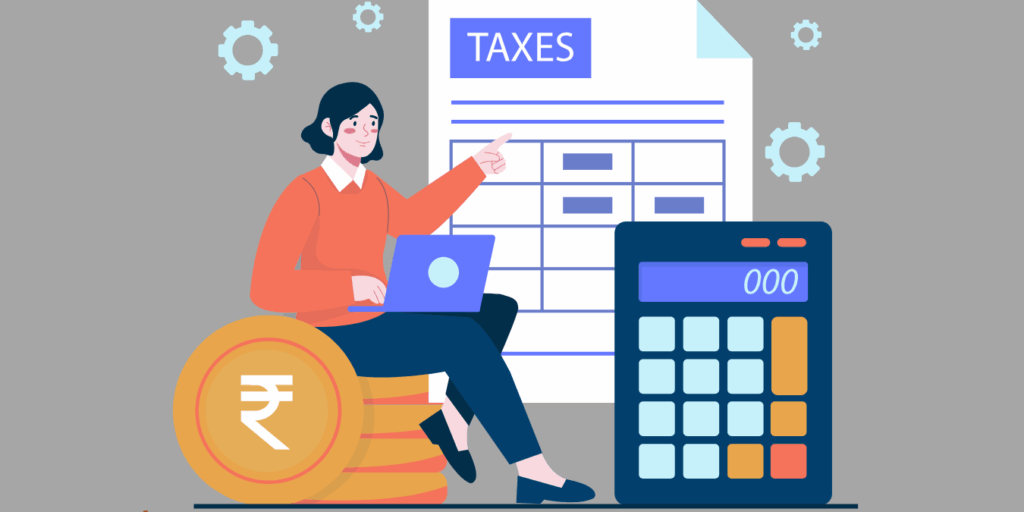
If you are in the 30% income tax slab (which applies to taxable income above ₹15 lakh under the old tax regime), investing ₹1.5 lakh in a Tax-Saving FD gives you a tax deduction that effectively reduces your tax outgo by ₹45,000 (30% of ₹1.5 lakh, excluding surcharge and cess). For someone in the 20% slab, the saving is ₹30,000, and for the 5% slab, it is ₹7,500. These are real, tangible rupees staying in your pocket rather than going to the government.
However, the interest you earn is taxable. This is where many people feel the FD loses its shine compared to instruments like ELSS mutual funds or PPF. But here’s the nuanced reality that I always explain to my clients: the Tax-Saving FD is not competing with ELSS on returns. It is offering you certainty — predictable, guaranteed returns with capital protection, zero market risk, and the backing of deposit insurance under DICGC up to ₹5 lakh per depositor per bank. For a risk-averse investor, a retiree, or someone who already has equity exposure through other instruments, a Tax-Saving FD is a powerful stabiliser in the portfolio.
Who Should Prioritise a Tax-Saving FD in April 2026?
Not every financial product is right for every person, and a responsible financial planner will always tell you that. Here is a clear breakdown of who benefits most from booking a Tax-Saving FD this April.
Salaried professionals in the 20% or 30% tax slab who choose the old tax regime gain the maximum benefit since the deduction directly reduces their taxable income at a meaningful rate. If you have not yet opted out of the new tax regime for FY 2026-27, check with your employer quickly — the window for declaring your regime preference is typically the start of the financial year.
Senior citizens benefit from higher interest rates, and since their income tax liability may be lower (owing to the basic exemption limit of ₹3 lakh and the additional deduction of ₹50,000 under Section 80TTB), the FD makes sense as a safe, predictable instrument. The higher rate offered to seniors, combined with the tax deduction, creates a solid, low-effort investment.
Conservative investors or those nearing a financial goal in five years — such as a home down payment or a child’s education milestone — find the Tax-Saving FD useful because it forces disciplined savings with a known maturity date and guaranteed return.
First-time investors who are overwhelmed by market volatility often benefit from starting with a Tax-Saving FD before venturing into equity-linked instruments. It builds the habit of structured, goal-based investing without exposing them to drawdown risk in their first year.
The Interest Rate Environment in 2026: A Window Worth Using
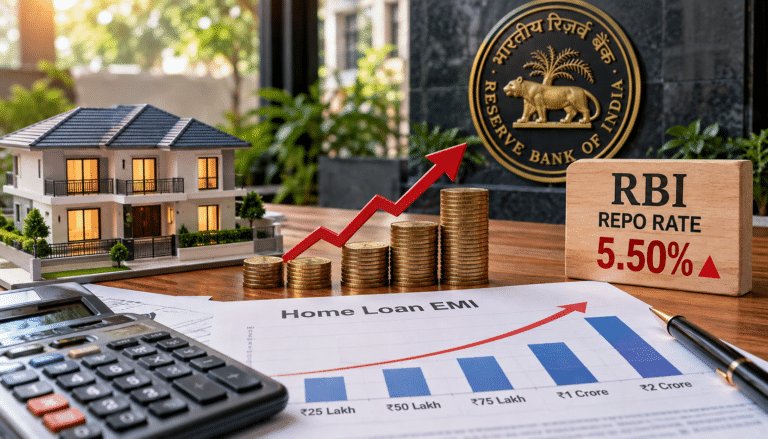
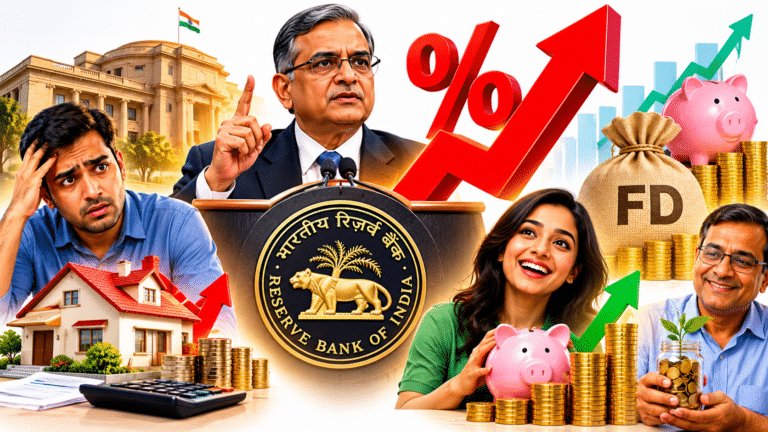
Understanding the macroeconomic context matters here. The Reserve Bank of India has been navigating a delicate balance between managing inflation and supporting economic growth. Following the rate cuts that began in late 2024 and continued cautiously into 2025 and 2026, fixed deposit rates are generally expected to soften further as liquidity in the banking system improves and credit demand stabilises.
This creates a meaningful opportunity: locking in a 5-year Tax-Saving FD today at current rates — which are still relatively attractive compared to where they may be in 12 to 18 months — protects you against rate declines. Fixed deposits work on a locked-in rate, meaning the rate you get today is the rate you earn for the entire tenure. If rates drop by 50 to 75 basis points over the next year, someone who waits until February or March 2027 to book their FD will earn meaningfully less over the five-year period. This interest rate lock-in benefit is an often-overlooked dimension of the April booking strategy.
Comparing Tax-Saving FD with Other Section 80C Options
A complete picture requires honest comparison. The Section 80C basket offers multiple instruments — ELSS mutual funds, PPF, NSC, NPS contributions, life insurance premiums, and more. Each has its own risk profile, liquidity, and return potential.
ELSS funds offer the shortest lock-in (three years) and the highest potential returns, but they come with equity risk. In a bull market year, ELSS can deliver 15-20% returns. In a bad year, it can deliver negative returns. PPF offers tax-free returns and a 15-year horizon, making it excellent for retirement planning, but the current PPF rate of 7.1% (as of the most recent revision) is not dramatically different from what a good Tax-Saving FD offers. NSC offers a fixed return and is backed by the government, making it comparable to the FD in safety, but its interest is reinvested and therefore eligible for Section 80C deduction in subsequent years, adding a layer of complexity.
The Tax-Saving FD stands out for its simplicity, flexibility across banks, instant booking (often done digitally in under five minutes), and the credibility of being a bank-backed product. For investors who already have ELSS or PPF exposure, the FD fills the remaining Section 80C limit efficiently and safely.
The Psychological Dividend of Early Investment
There is a psychological benefit to investing early in the financial year that rarely gets discussed in financial planning literature, but I consider it just as important as the numerical advantage. When you make your tax-saving investment in April, you remove the anxiety of the year-end scramble. You are not making a rushed, poorly-evaluated decision in January because your employer is demanding proof of investment. You are making a calm, deliberate decision at the start of the year, with full clarity about your income, expenses, and financial goals for the coming 12 months.
Over the years, I have seen clients make costly mistakes under year-end pressure — buying insurance policies they did not need, locking into unsuitable ELSS funds during market peaks, or simply not investing at all and paying higher taxes. The discipline of investing in April 2026, right now, eliminates all of these risks. It also means your money starts working for you from month one of the financial year rather than sitting idle and then being deployed in month ten or eleven.
Step-by-Step: How to Book a Tax-Saving FD in April 2026
The process has become remarkably simple, and most people can complete it entirely online. Here is how to do it without any friction.
First, decide which bank you want to use. Compare current 5-year FD rates across banks on your preferred comparison platform or directly on bank websites. Check if the bank is offering any special promotional rates for the April season, as some banks do run limited-time rate enhancements.
Second, log in to your internet banking or mobile banking app. Most major Indian banks — SBI YONO, HDFC Bank app, ICICI iMobile, Axis Mobile, Kotak 811, and others — allow you to book a Tax-Saving FD directly from the app in under five minutes. Select the “Tax-Saving FD” or “80C FD” option specifically, as this is distinct from a regular fixed deposit.
Third, enter the amount (up to ₹1.5 lakh for the tax deduction benefit), choose the payout option (cumulative or non-cumulative based on your cash flow needs), and confirm the booking. You will receive a digital FD receipt and a certificate of deposit, which you can submit as proof of investment to your employer.
Fourth, note the maturity date (five years from the booking date) and update your financial calendar accordingly. If you are doing this for multiple family members, remember that each individual has a separate ₹1.5 lakh limit — so a couple can invest ₹3 lakh in total across two separate FD accounts.
A Word on the New vs. Old Tax Regime
This is absolutely essential context for 2026. The new tax regime, which was made the default regime by the government in the 2023 budget, does not allow deductions under Section 80C. This means the Tax-Saving FD’s primary benefit — the ₹1.5 lakh deduction — is only available if you opt for the old tax regime.
Before booking a Tax-Saving FD, calculate your tax liability under both regimes using a reliable tax calculator. For many salaried individuals with significant deductions (HRA, 80C, 80D, home loan interest), the old regime continues to offer a lower effective tax rate. For individuals with fewer deductions or higher incomes, the new regime’s lower slab rates may result in lower overall tax. The decision requires personalised calculation, and I strongly recommend consulting a chartered accountant or a certified financial planner before the financial year begins — which is precisely why April is the ideal time for this conversation, not March.
Beyond the Numbers: The Long-Term Habit That Builds Wealth
I want to close with something that goes beyond spreadsheets and tax calculations. The habit of investing early, consistently, and with purpose is the single biggest predictor of long-term financial health that I have observed across hundreds of client portfolios. A Tax-Saving FD booked in April 2026 is not just a ₹1.5 lakh investment. It is a declaration that you are taking your finances seriously from day one of the financial year. It is a signal to yourself that you are not going to be reactive, rushed, or manipulated by year-end anxiety. It builds a pattern — one that, repeated over 20 or 25 years of your working life, creates a financial foundation that genuinely changes outcomes.
The guaranteed return, the tax deduction, the interest rate lock-in advantage, and the psychological peace of mind combine to make the April Tax-Saving FD booking one of the cleanest, most rational financial decisions available to an Indian taxpayer right now. The window is open. The rates are decent. The process takes five minutes. The only question is whether you will act on it today or let another April slip by without making the most of it.
This article is written for informational purposes and does not constitute personalised investment or tax advice. Please consult a SEBI-registered investment advisor or chartered accountant before making financial decisions based on your specific circumstances.