Why the IMF Just Slashed Global Growth Forecasts to the Weakest Since 2009 — And What It Means for Your Money
The International Monetary Fund does not panic easily. As the world’s most influential financial watchdog, it chooses its words carefully, releases its data methodically, and tends to project cautious optimism even when storm clouds gather. That’s what makes its latest move so striking. In April 2026, the IMF cut its global growth forecast to levels not seen since the aftermath of the 2008 financial crisis, citing a dangerous cocktail of trade fragmentation, geopolitical tension, sticky inflation, and weakening consumer demand across both advanced and emerging economies. If the IMF is sounding the alarm this loudly, the rest of us should be paying close attention — especially when it comes to our personal finances, investments, and long-term economic plans.
What the IMF Actually Said
The IMF’s World Economic Outlook, released in April 2026, projected global GDP growth at approximately 2.8%, down sharply from earlier estimates and the weakest reading since 2009 when the world was crawling out of the wreckage of the global financial crisis. To put that number in context, the global economy is generally considered to be in a “growth recession” — not technically shrinking, but expanding so slowly that unemployment rises, living standards stagnate, and businesses delay investment. The IMF pointed to several simultaneous forces compressing growth: the cumulative drag of elevated interest rates in the United States and Europe, renewed trade barriers driven by tariff escalations between major economies, slowing momentum in China, and a debt overhang in lower-income countries that is limiting fiscal firepower precisely when governments need it most.
The fund also flagged a deteriorating confidence environment. Business investment decisions are being deferred. Households in developed markets are drawing down savings buffers built during the pandemic era. And international capital flows are becoming more erratic as investors try to price in an increasingly unpredictable policy landscape in Washington, Brussels, and Beijing. These are not abstract macroeconomic footnotes. They translate directly into slower wage growth, tighter credit, weaker job markets, and lower returns on financial assets — the bread-and-butter concerns of everyday people trying to build and protect their wealth.
The Trade War Dimension
No analysis of the current slowdown is complete without examining the role of trade policy. The escalation of tariffs between the United States and its major trading partners — China in particular, but also the European Union, Canada, and Mexico — has introduced a level of supply chain uncertainty that economists have struggled to fully model. When tariffs rise unpredictably, companies cannot confidently plan their procurement, manufacturing, or distribution strategies. That uncertainty translates into canceled expansion projects, deferred hiring, and reduced capital expenditure across entire industries.
The IMF’s models suggest that the current round of trade fragmentation could subtract between 0.5% and 1.5% from global output over the medium term, depending on how far the barriers extend and how long they persist. For an economy already operating near the 2.8% growth threshold, that kind of structural drag is deeply significant. It’s the difference between an economy that creates enough jobs to absorb a growing workforce and one that generates persistent slack — and with it, political discontent, social instability, and further pressure on governments to pursue populist economic policies that compound the underlying problem.
Why 2009 Is the Benchmark That Should Concern You
The comparison to 2009 is not incidental. The IMF chose it deliberately because 2009 represents the modern world’s most severe peacetime economic contraction outside of the COVID-19 pandemic year of 2020. In 2009, global GDP actually shrank by approximately 0.1%. The years immediately surrounding that contraction — 2008 and 2010 — saw growth well below long-run potential. For millions of people around the world, that era meant job losses, mortgage defaults, collapsed retirement savings, and a decade-long recovery that many economists argue never fully closed the output gap it created.
The IMF is not forecasting a repeat of 2009 in terms of outright contraction. But it is saying that the structural headwinds now in place are severe enough to push us to that same neighborhood of fragility. When the world’s economies are growing this slowly, the margin for error vanishes. A single additional shock — a major bank failure, a military escalation, a severe weather event disrupting agriculture or energy supply, or a sudden spike in oil prices — could tip multiple economies from slow growth into recession simultaneously. That interconnected vulnerability is precisely what makes this forecast so sobering, and so relevant to personal financial decision-making.
What This Means for Inflation and Interest Rates
One of the cruelest dynamics in the current environment is the interaction between slow growth and persistent inflation. In a normal economic slowdown, central banks cut interest rates aggressively to stimulate demand, making borrowing cheaper for businesses and consumers alike. But in much of the world right now, inflation — while it has receded from its 2022 peaks — remains sticky enough that central banks are navigating a difficult dilemma. Cutting rates too aggressively risks reigniting price pressures, particularly in sectors like housing, services, and energy. Keeping rates elevated risks deepening the growth slowdown the IMF is warning about.
For borrowers, this means that the era of near-zero interest rates is not coming back anytime soon. Mortgage rates, auto loan rates, and credit card interest charges will remain elevated relative to the 2010s for the foreseeable future. For savers, the picture is more nuanced — higher rates on cash and bonds provide better returns than the past decade offered, but those returns need to be weighed against inflation that is still eroding purchasing power in many markets. The IMF’s forecast essentially means that this uncomfortable middle zone — too slow for comfort, too hot for rate cuts — is likely to persist through at least 2026 and into 2027.
Emerging Markets: The Hidden Pressure Point
While much of the public conversation about the IMF’s forecast focuses on the United States, Europe, and China, some of the most acute pain is being felt in emerging and developing economies. Countries across South Asia, Sub-Saharan Africa, and Latin America are grappling with a triple burden: high external debt denominated in US dollars (which becomes more expensive to service as the dollar remains strong), limited fiscal space to implement stimulus measures, and reduced demand for their exports as the major economies slow down.
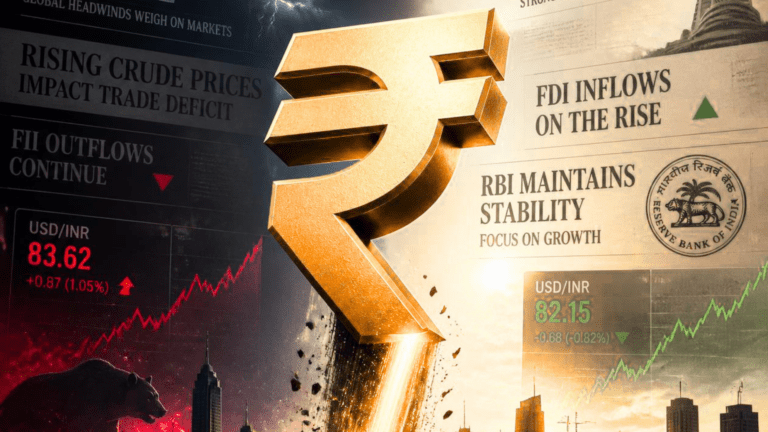
India presents a complex case within this picture. The IMF revised India’s growth forecast downward in its April 2026 update, though India continues to be one of the relatively brighter spots in a dim global landscape. However, “relatively bright” does not mean insulated. A global slowdown of this magnitude affects Indian exports, reduces foreign investment inflows, puts pressure on the rupee, and can feed through into domestic inflation and employment conditions. For Indian investors and savers specifically, the global macro backdrop adds a layer of external risk to an otherwise domestically resilient growth story that must be factored into any serious financial planning exercise.
What It Means for Stock Markets
Equity markets are forward-looking, which means they are constantly trying to price in not just current conditions but the trajectory of growth, earnings, and monetary policy. A world growing at 2.8% is one in which corporate revenue growth slows, profit margins come under pressure from both weaker demand and persistently high input costs, and the earnings-per-share growth that drives stock valuations becomes harder to sustain.
Historically, periods of sub-3% global growth have been associated with elevated equity market volatility, sector rotation away from cyclical industries toward defensives, and a general compression of valuation multiples as investors demand higher risk premiums. That doesn’t mean equity markets necessarily fall dramatically — central bank policy, corporate buybacks, and sector-specific dynamics can offset some of the macro headwinds. But it does mean that the easy returns generated by passive index investing during the 2010s bull market are unlikely to be replicated. Active asset allocation — thinking carefully about which sectors, geographies, and asset classes you hold — becomes more important in this environment, not less.
What It Means for Real Estate
Property markets around the world are already feeling the effects of elevated interest rates, and the IMF’s downgraded growth outlook adds another layer of complexity. In markets where housing affordability has already been stretched to its limits — much of urban India, the United Kingdom, Australia, Canada, and coastal US cities — slower economic growth means slower income growth, which further constrains the pool of qualified buyers. Demand softening combined with higher mortgage costs is a challenging environment for property values in the short to medium term.
For long-term property investors, the key question is not whether prices will dip but whether the income-generating capacity of real estate — rental yields — can keep pace with the cost of financing and the opportunity cost of capital. In a world where fixed-income instruments are offering meaningfully positive real returns for the first time in over a decade, the calculus for leveraged real estate investment has shifted. This doesn’t make property a bad investment, but it does mean that the assumptions underpinning decisions made three to five years ago — near-zero borrowing costs, strong capital appreciation, and structurally undersupplied urban markets — need to be revisited in light of the new macro reality the IMF is describing.
Gold, Commodities, and Alternative Assets
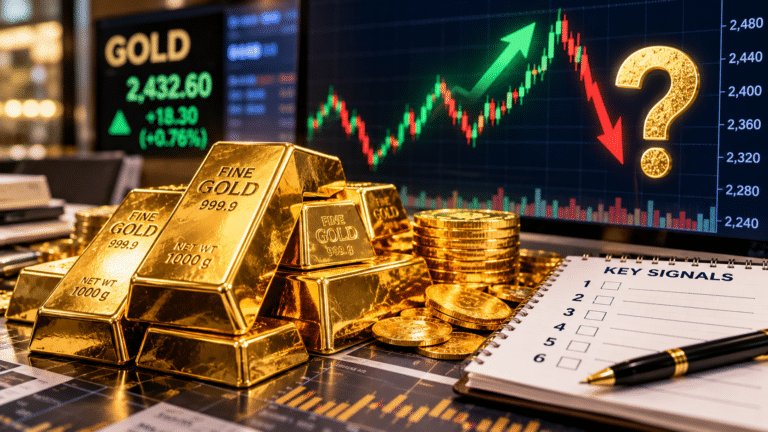
Periods of heightened global uncertainty have historically driven investors toward assets perceived as stores of value or uncorrelated to traditional financial market performance. Gold has been one of the standout performers in this environment, reflecting both geopolitical anxiety and a structural shift in reserve asset composition by central banks globally. The IMF’s forecast reinforces the case for maintaining some allocation to gold as a portfolio hedge, though investors should be mindful that gold generates no yield and its price can be volatile in the short term.
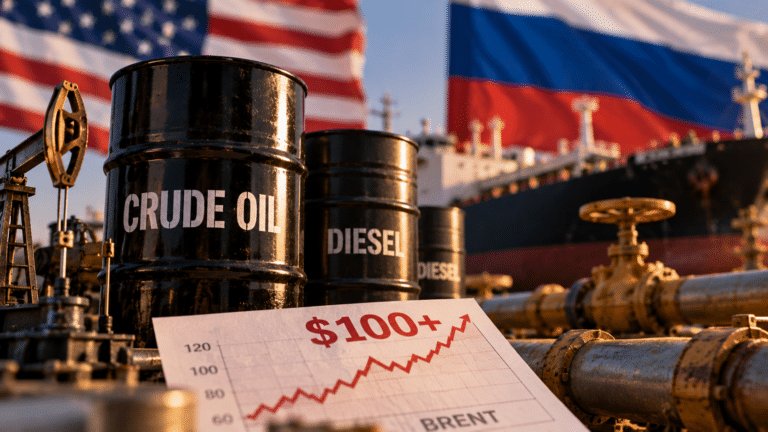
Commodities more broadly present a mixed picture. Slower global growth is generally bearish for industrial commodities like copper, iron ore, and oil, as manufacturing activity and infrastructure investment decline. However, supply-side constraints — driven by years of underinvestment in resource extraction, geopolitical disruptions to key supply routes, and climate-related production disruptions — can offset some of the demand-side weakness. The net effect is likely to be commodity price volatility rather than a clear directional trend, which creates both risks and opportunities for investors with the sophistication to navigate it.
Practical Steps to Protect and Grow Your Wealth
Understanding the macro environment is one thing. Translating that understanding into concrete financial actions is another. The following principles are especially relevant given the IMF’s outlook.
- Diversify across geographies and asset classes. A world growing unevenly creates both risks and opportunities that are geographically dispersed. Concentrating all your wealth in one market — whether that’s your home country’s equity index or a single real estate market — amplifies your exposure to localized shocks.
- Reassess your debt position. In a high-rate, slow-growth environment, debt is more costly and less easily serviced than it was during the low-rate decade. Prioritizing debt reduction, particularly variable-rate debt, is a prudent strategy when the growth environment is uncertain.
- Maintain liquidity. Periods of economic stress create asset price dislocations that reward investors who have cash or liquid assets available to deploy. Building and maintaining an emergency fund — and beyond that, a strategic liquidity reserve — positions you to take advantage of opportunities rather than being forced to sell at the worst moment.
- Focus on quality in equities. Companies with strong balance sheets, pricing power, and consistent free cash flow generation tend to be more resilient in slow-growth environments than highly leveraged, growth-dependent businesses. Quality over momentum is a sensible equity philosophy for this phase of the cycle.
- Don’t abandon equities entirely. Market timing is notoriously difficult, and periods of slowdown are often followed by sharp recoveries that reward those who stayed invested. A diversified, quality-tilted equity portfolio remains a core wealth-building tool over the long run, even if near-term returns are muted.
- Stay informed about policy changes. Central bank decisions, fiscal stimulus announcements, and trade policy shifts can rapidly alter the investment landscape. Following credible economic sources — including IMF publications, central bank communications, and quality financial journalism — keeps you ahead of changes that others may react to only after the fact.
The Bigger Picture: Structural Shifts Underway
Beyond the immediate cyclical slowdown, the IMF’s forecast reflects deeper structural changes in the global economy that will shape the financial landscape for years to come. The era of seamless globalization — where goods, capital, and labor flowed with minimal friction across borders — is giving way to a more fragmented world of regional supply chains, competing economic blocs, and deliberate decoupling in strategic industries. This structural shift has profound implications for productivity growth, inflation dynamics, and the risk-return profiles of different asset classes.
At the same time, the green energy transition is reshaping capital allocation at a massive scale. Fossil fuel industries face stranded asset risks while renewable energy, electric mobility, and grid infrastructure are absorbing enormous investment flows. Demographic aging in developed markets is compressing labor supply and fiscal capacity simultaneously. Artificial intelligence and automation are beginning to reshape labor markets in ways that could either boost productivity dramatically or deepen inequality — and the distribution of those outcomes will vary enormously by country, sector, and individual skill level.
The IMF’s 2.8% growth forecast is, in many ways, a symptom of a world navigating all of these transitions at once without a coherent global governance framework to manage them. For individuals, the appropriate response is not fatalism but strategic adaptability — staying diversified, staying liquid, staying informed, and making financial decisions that are robust to a range of outcomes rather than dependent on any single optimistic scenario.
The Bottom Line
The IMF does not issue this kind of warning lightly, and the comparison to 2009 is a deliberate signal that the stakes are high. A global economy growing at 2.8% is one walking a narrow path with steep drops on either side. For your personal finances, that means the environment rewards caution, diversification, quality, and liquidity — not speculation, leverage, or complacency. The decisions you make in the next twelve to eighteen months, informed by a clear-eyed understanding of the global macro backdrop, could have a significant impact on your financial resilience for the decade ahead. The IMF has given you the warning. What you do with it is up to you.