The Strait of Hormuz Is "Reopening" — But Here's Why Energy Markets Are Still in a Dangerous Mess
The Announcement Everyone Wanted to Hear
When news broke in early 2026 that tensions around the Strait of Hormuz were easing — with diplomatic signals suggesting a de-escalation between Iran and Western powers — energy traders exhaled. Oil prices dipped slightly. Headlines called it a turning point. Social media lit up with relief. But seasoned energy analysts, geopolitical strategists, and anyone who has watched the Middle East closely for the past two decades knows a sobering truth: a headline does not fix a structural problem. The Strait of Hormuz may be “reopening” in the diplomatic sense, but the global energy market it serves is sitting on a foundation riddled with cracks — and a few reassuring press releases won’t seal them.
This piece is not about pessimism for its own sake. It is about understanding what is actually happening beneath the surface of the news cycle, why energy markets remain exposed to severe volatility, and what the road ahead genuinely looks like for producers, consumers, and governments alike. If you rely on energy costs for your business, your household, or your investment portfolio, this is a conversation you cannot afford to skip.
What the Strait of Hormuz Actually Represents
Before diving into the mess, it is worth grounding the conversation in the geography. The Strait of Hormuz is a narrow waterway sitting between Iran to the north and Oman and the United Arab Emirates to the south. At its narrowest point, it is only about 33 kilometers wide. Yet through that slim passage flows roughly 20 to 21 million barrels of oil per day — an estimated 20 percent of the world’s total petroleum liquids consumption. Add to that a significant share of global liquefied natural gas (LNG) exports from Qatar, the world’s largest LNG exporter, and you begin to understand the strategic weight of this chokepoint.
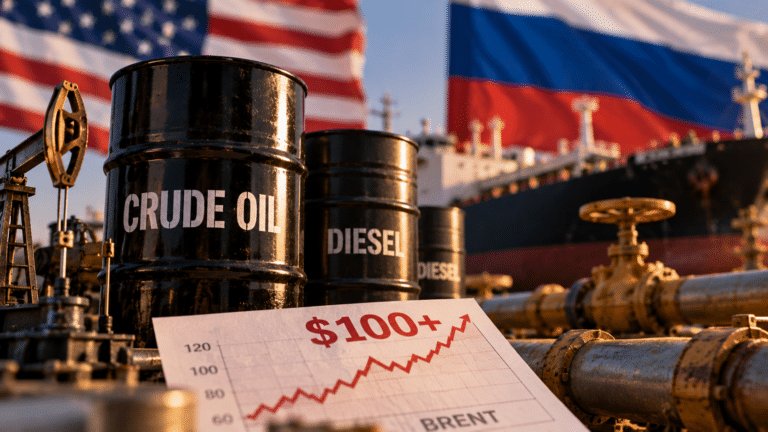
When analysts describe the Strait of Hormuz as the world’s most important oil transit chokepoint, that is not hyperbole. It is arithmetic. No other single geographic feature on Earth concentrates so much energy transit risk in such a small area. The United States Energy Information Administration has repeatedly flagged it as a systemic vulnerability in global supply chains. Any disruption — even a partial one lasting just a few days — can spike Brent crude prices by double digits and send shockwaves through LNG spot markets from Tokyo to Rotterdam.
What “Reopening” Actually Means — and What It Doesn’t
When officials and media outlets say the strait is “reopening,” what they typically mean is that the immediate threat of Iranian naval interference, mine-laying, or seizures of commercial tankers has receded. Iran, under particular diplomatic or economic pressure, has signaled it will not directly block transit for now. This matters. But it is a narrow and fragile definition of stability.
Here is what “reopening” does not mean. It does not mean that Iran has dismantled its naval infrastructure in the Persian Gulf. It does not mean the Iranian Revolutionary Guard Corps (IRGC), which has historically been the most aggressive actor in strait confrontations, has changed its doctrine. It does not mean that the underlying disputes over nuclear enrichment, regional proxy conflicts in Yemen, Iraq, Syria, and Lebanon, or the broader U.S.-Iran sanctions regime have been resolved. These are structural tensions that have been simmering for over four decades. A diplomatic communiqué does not erase four decades of institutional hostility.
Energy markets, at their most rational, price in not just current conditions but the probability distribution of future disruptions. And that probability distribution, even after a de-escalation announcement, remains uncomfortably high.
The Inventory Problem Nobody Is Talking About Enough
One of the most underreported dimensions of the current energy market crisis is the state of global oil inventories. During periods of strait tension, buyers rush to build strategic reserves. Refiners over-order. Countries that can afford to stockpile do so aggressively. This creates a temporary demand surge that inflates prices even before a single barrel is actually disrupted.
But when the tension eases — as it appears to be doing now — the unwinding of those inventory builds creates its own chaos. Buyers pull back. Spot prices swing. OPEC+ members, who had been calibrating output assumptions around elevated risk, suddenly face a market that is softer than their models anticipated. The result is a pricing environment that is neither accurately reflecting supply nor demand — it is reflecting the echo of fear, the residue of a crisis that has not fully passed but is no longer fully acute.
This inventory whipsaw effect is particularly damaging for smaller oil-producing nations whose fiscal breakeven prices — the oil price at which their national budgets balance — are clustered between $70 and $90 per barrel. When Brent crude swings 15 percent in three weeks due to geopolitical noise rather than fundamental supply-demand shifts, these countries face real budgetary pain with no clean policy lever to pull.
Why OPEC+ Is Not the Safety Net It Once Was
For much of the past decade, the market’s implicit assumption was that OPEC+ — the coalition of major oil producers led by Saudi Arabia and Russia — would act as a reliable shock absorber. When prices fell too far, they would cut production. When supply disruptions threatened to spike prices, they would open the taps. It was an imperfect mechanism, but it provided a floor and ceiling to extreme price movements.
That assumption is now considerably shakier than it used to be. The Russia-Ukraine war fractured the geopolitical consensus within the coalition. Russia, facing Western sanctions and desperate for revenue, has had strong incentives to cheat on its production quotas — a fact that Saudi Arabia and other Gulf members have noted with increasing frustration. Meanwhile, the emergence of the United States as the world’s largest oil producer has fundamentally altered the supply dynamics that OPEC+ was designed to manage.
In 2026, U.S. shale production remains highly responsive to price signals, which means American producers can and do ramp up output quickly when prices rise — effectively capping the upside that OPEC+ cuts are supposed to generate. This creates a situation where the traditional swing producer role is being contested by multiple actors with diverging interests. The Strait of Hormuz drama landed in a market that was already structurally less stable than it appeared on the surface.
The LNG Market Is Even More Fragile
While the oil market gets most of the headlines, the LNG market is arguably in a more precarious position right now. Qatar, which exports a massive share of the world’s LNG through the Strait of Hormuz, has been expanding its production capacity aggressively through its North Field Expansion project. European buyers, desperate to replace Russian pipeline gas after 2022, have locked in long-term Qatari LNG contracts with unusual urgency.
The problem is that LNG infrastructure is extraordinarily capital-intensive and inflexible on short timescales. You cannot redirect a liquefaction terminal the way you can reroute a truck. If the strait faces even a temporary disruption — a few weeks of elevated threat levels that cause shipping insurers to spike war-risk premiums — the cost impact on European and Asian gas buyers is immediate and severe. Spot LNG prices in Northeast Asia, which are already sensitive to cold winters and industrial demand cycles, can double or triple in a matter of days under supply shock conditions.
The post-2022 energy landscape in Europe has made the continent significantly more dependent on LNG than its infrastructure was originally designed to handle. Floating storage and regasification units (FSRUs) have been deployed at scale to compensate, but these are workarounds, not solutions. The underlying vulnerability — a heavy concentration of LNG exports flowing through a single chokepoint — has not been engineered away. It has been managed around. That is a meaningful distinction.
The Insurance and Shipping Layer Nobody Mentions
There is an often-overlooked financial layer that sits between geopolitical risk and real-world energy delivery: the maritime insurance market. When tensions in the Strait of Hormuz escalate, Lloyd’s of London and other major underwriters immediately revise their war-risk coverage rates for vessels transiting the region. These rate spikes are not symbolic. They translate directly into higher freight costs, which translate into higher delivered energy prices for end consumers.
During the peak of the 2024-2025 tension cycle, war-risk premiums for tankers transiting the Gulf reportedly increased by several hundred percent over baseline rates. Even with a de-escalation announcement, insurance markets do not snap back to pre-crisis pricing overnight. Underwriters maintain elevated rates until a sustained period of incident-free transit demonstrates that the risk has genuinely receded. In practice, this means energy consumers continue paying a geopolitical premium for weeks or months after the headlines have moved on.
This shipping insurance dynamic is one of the clearest examples of how the “reopening” of the strait does not immediately translate into lower energy costs at the pump, on utility bills, or in industrial supply chains. The market’s memory is longer than the news cycle’s attention span.
What About Alternatives? The Honest Assessment
Every time Hormuz tensions spike, the conversation turns to alternatives. The East-West Pipeline in Saudi Arabia, which can carry crude from the Eastern Province to the Red Sea port of Yanbu, bypassing the strait, is frequently cited. The UAE’s Abu Dhabi Crude Oil Pipeline, which terminates at Fujairah on the Gulf of Oman, is another example. These are real infrastructure assets, and they do provide some redundancy.
But the honest assessment is that their combined bypass capacity falls well short of the volume transiting the strait daily. If you are moving 20 million barrels a day through the strait and you have bypass capacity for perhaps 5 to 6 million barrels a day, you have reduced your vulnerability but you have not eliminated it. The math does not support the narrative that there is a clean alternative route waiting to absorb a full Hormuz disruption.
The energy transition argument — that renewable energy will eventually make the strait irrelevant — is also true in a long-run sense but misleading as a near-term comfort. Solar panels and wind turbines do not power container ships, long-haul aircraft, or most petrochemical production. Global oil demand, despite years of forecasts predicting its imminent peak, has consistently surprised analysts by remaining higher than expected. The International Energy Agency’s own data shows demand continuing at levels that make Hormuz centrally important well into the 2030s.
The Geopolitical Undercurrent That Hasn’t Changed
Beyond the immediate strait dynamics, there is a broader geopolitical undercurrent that the current de-escalation does not address. Iran’s strategic calculus has not fundamentally changed. Tehran views its ability to threaten Hormuz as one of its most powerful deterrents against military action and its most effective economic leverage against Gulf rivals and Western powers. This is not a secret — Iranian officials have said as much publicly on numerous occasions.
As long as Iran retains the naval capability, the political incentive, and the institutional will to threaten the strait — all of which remain intact — the risk premium embedded in energy markets will never fully disappear. It will fluctuate. It will compress during periods of diplomatic engagement and expand during periods of confrontation. But it will not go to zero. The structural reality of Iranian strategic doctrine, combined with the concentrated geography of Gulf energy exports, creates a baseline level of market instability that is simply part of the landscape.
Meanwhile, U.S. foreign policy in the region remains a variable rather than a constant. Shifts in American political leadership, changes in the U.S.-Saudi relationship, the evolving status of the Abraham Accords, and the ongoing question of Iranian nuclear negotiations all feed into the stability calculus in ways that are genuinely difficult to predict. Energy markets hate uncertainty, and the Middle East in 2026 is offering plenty of it.
What This Means for Consumers and Businesses Right Now
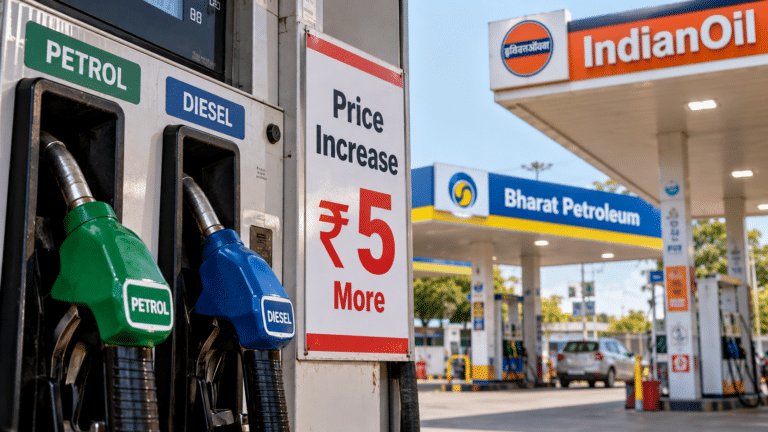
For households, the practical implication is that energy price relief, if it comes, will be slower and shallower than the headline de-escalation might suggest. Petrol prices, natural gas utility bills, and electricity costs in regions heavily exposed to global LNG and oil markets — including India, Japan, South Korea, and much of Europe — will remain elevated relative to pre-2022 baselines for the foreseeable future.
For businesses with significant energy exposure — manufacturers, logistics companies, airlines, chemical producers — the current environment argues strongly for maintaining hedging strategies rather than abandoning them on the strength of positive news cycles. The volatility that has characterized energy markets since 2022 is not a temporary aberration. It is the new operating environment, shaped by structural factors that a single diplomatic development cannot resolve.
For policymakers, especially in energy-importing nations like India, the Hormuz situation reinforces the case for accelerating domestic energy development, diversifying import sources, and building strategic petroleum reserves to meaningful levels. India’s Strategic Petroleum Reserve capacity, while growing, remains modest relative to the country’s import dependence. The current moment of relative calm is the right time to fill those reserves, negotiate longer-term supply agreements, and invest in the infrastructure that provides genuine resilience rather than the appearance of it.
The Dangerous Comfort of Good News
There is a cognitive trap that affects both markets and policymakers: the tendency to mistake de-escalation for resolution. When a crisis eases, the pressure to act, reform, and invest in resilience also eases. The urgency that drives difficult decisions dissipates. And the structural vulnerabilities that made the crisis possible remain unaddressed, waiting for the next trigger.
The Strait of Hormuz has seen this cycle play out multiple times since the 1980s. Tensions rise, markets spike, diplomacy engages, pressures ease, and the world collectively moves on — until the next incident. The Tanker War of the 1980s, the 2019 tanker attacks attributed to Iran, the 2021 seizure of vessels, the 2024-2025 escalation cycle: each episode followed a recognizable pattern of crisis, response, and incomplete resolution.
What breaks that cycle is not a press conference. It is structural change — in energy infrastructure, in diplomatic frameworks, in regional security architecture, and in the energy mix itself. None of that structural change has happened yet. The strait may be reopening, but the conditions that make it a perpetual flashpoint are very much still in place.
The energy market’s dangerous mess is not a product of this particular crisis. It is the product of decades of underinvestment in alternatives, overreliance on a single chokepoint, and a geopolitical environment that has grown more fractured, not less, over the past decade. The good news of today deserves acknowledgment. But it does not deserve the complacency that so often follows it.