Brent Crude Crosses $100 Again: How a Middle East Ceasefire Is Still Failing to Calm Oil Markets
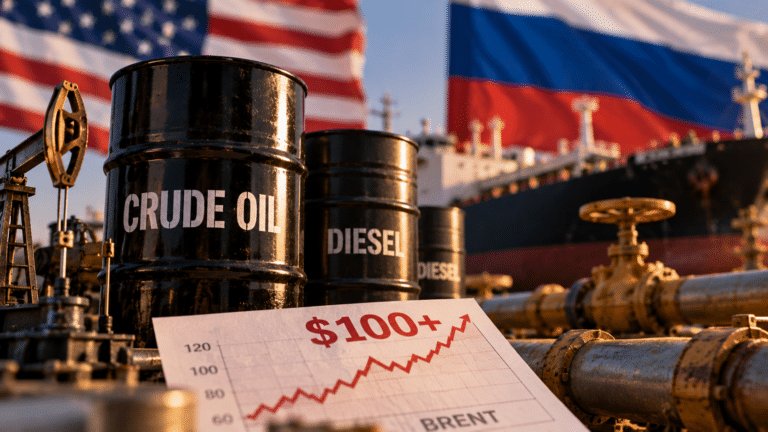
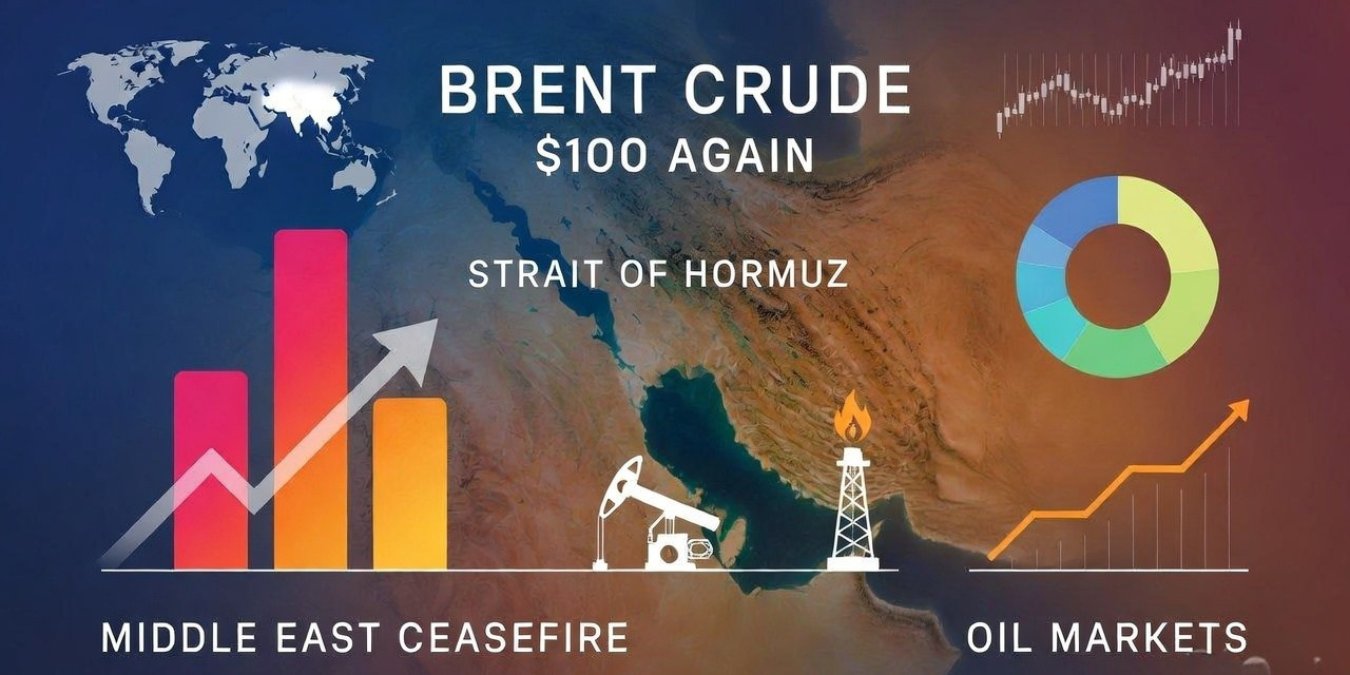
Oil traders woke up to an uncomfortable reality this week. Brent crude, the global benchmark that energy analysts, finance ministers, and everyday consumers watch with equal anxiety, has crossed the $100 per barrel threshold again — a psychological and economic milestone that reverberates across supply chains, inflation forecasts, and household budgets worldwide. What makes this surge particularly striking is that it comes despite a widely publicized ceasefire agreement in the Middle East, a development that markets would typically greet with relief and a downward correction in prices. Instead, the opposite has happened. The rally has continued, volatility remains elevated, and the question on every energy desk from London to Singapore is the same: why isn’t peace calming the oil market?
To answer that, you need to understand something fundamental about how oil markets actually work — and why geopolitics is only one piece of a far more complex puzzle.
The $100 Barrier and What It Means
The $100 per barrel level is not just a number. It carries enormous psychological weight in global finance. When Brent crude breached this threshold in 2022 following Russia’s invasion of Ukraine, it triggered a wave of inflation that central banks spent the next two years fighting aggressively. Consumers felt it at the petrol pump, in airline ticket prices, in the cost of fertilizers, plastics, and shipping. Governments scrambled to release strategic reserves. The International Energy Agency convened emergency meetings. Now, with Brent crossing that line again in April 2026, the anxiety is familiar but the causes are more layered than a single geopolitical flashpoint.
At its core, crude oil pricing reflects the intersection of physical supply and demand, speculative financial flows, currency dynamics, geopolitical risk premiums, and forward expectations about production policy. A ceasefire announcement addresses one narrow slice of that equation — geopolitical risk — while leaving all other structural variables entirely intact. And in 2026, those structural variables are telling a story that markets cannot ignore.
The Ceasefire That Markets Stopped Believing In
The ceasefire agreement brokered in the region was met with cautious optimism when it was announced. Diplomatic channels had been working for months, and the deal — facilitated through multilateral pressure — appeared to offer a genuine pathway toward de-escalation. Energy analysts initially forecast that Brent could pull back to the mid-$80s range as risk premiums unwound. That forecast aged poorly within days.
The problem is that markets trade on expectations, not announcements. And experienced traders have lived through enough Middle East ceasefires to know that the gap between a signed agreement and durable stability on the ground can be vast. Violations are reported almost immediately after these agreements come into force. Supply routes that were supposed to reopen remain disrupted. Insurance premiums for tankers transiting sensitive corridors haven’t moved meaningfully lower. Lloyd’s of London war-risk clauses are still being applied to vessels operating in the region. When the shipping insurance market — one of the most unsentimental risk-assessment mechanisms in global commerce — refuses to price in the ceasefire, it sends a powerful signal to crude traders that the paper agreement hasn’t translated into operational security on the water.
This credibility gap is one of the most underappreciated dynamics driving the current rally. Markets aren’t simply ignoring the ceasefire; they’re actively discounting it based on observable ground realities.
OPEC+ Production Strategy: The Deeper Driver
While geopolitical drama dominates the headlines, the more structurally significant force behind $100 crude is the deliberate production restraint being maintained by the OPEC+ alliance. Saudi Arabia, Russia, the UAE, Iraq, and their coalition partners have spent the past several years constructing a remarkably disciplined production management framework. Unlike the OPEC of the 1990s or early 2000s, which frequently saw members cheat on quotas in pursuit of short-term revenue, the modern OPEC+ structure has demonstrated a capacity to hold production lines even under significant market pressure.
The alliance’s most recent ministerial meeting reinforced that restraint remains the dominant strategy. With Saudi Arabia’s fiscal breakeven oil price — the level needed to balance its national budget — hovering around $90 to $95 per barrel according to IMF estimates, Riyadh has no incentive to flood the market. At $100+, the kingdom is in comfortable surplus territory. Russia, navigating sanctions-related revenue pressures, shares the preference for elevated prices. The incentive alignment within the core of OPEC+ is unusually strong right now, and markets recognize it.
What makes this particularly significant in the context of the ceasefire is that even if regional stability were fully restored and every geopolitical risk premium evaporated overnight, OPEC+ production policy alone could sustain oil prices well above $85. The supply side of the equation has been deliberately tightened, and that tightness doesn’t dissolve because diplomats shook hands in a Gulf capital.
Demand Recovery Is Outpacing Expectations
On the demand side of the ledger, the story is equally important. Global oil demand in 2026 is running ahead of many forecasts that were written in the cautious, post-pandemic analytical framework of 2023 and 2024. India has emerged as the single most powerful demand growth engine in the world, with its economy expanding at a pace that keeps fuel consumption, petrochemical feedstock demand, and aviation fuel consumption climbing quarter after quarter. The International Energy Agency’s most recent Oil Market Report revised Indian demand growth upward for the second consecutive quarter.
China’s demand picture is more complicated. The structural shift toward electric vehicles has dampened gasoline consumption growth, but jet fuel and petrochemical demand have continued to expand as the services economy and manufacturing sector consume energy in different forms. The narrative that Chinese EV adoption would be a decisive bearish force for oil has proven too simplistic — the transition is real, but it’s displacing only part of the demand curve, not collapsing it.
Meanwhile, Southeast Asia, the Middle East itself, and Sub-Saharan Africa are all contributing to a broadening demand base that the energy transition has not yet meaningfully disrupted. The infrastructure for widespread EV adoption, green hydrogen, and renewable energy simply doesn’t exist at scale across most of the developing world, and fossil fuel demand is filling that gap.
The Strategic Reserve Question
One of the tools governments reach for when crude prices spike is the release of strategic petroleum reserves — the emergency stockpiles maintained by major consuming nations. The United States deployed this instrument aggressively in 2022, releasing record volumes from the Strategic Petroleum Reserve in coordination with IEA member countries. That move provided temporary relief but also left reserves at historically low levels. The subsequent process of refilling those reserves — buying oil back into storage — actually added demand to the market at a time when it was already tight.
In 2026, the strategic reserve toolkit looks less potent than it did four years ago. U.S. SPR levels have been partially rebuilt but remain below pre-2022 levels. More importantly, the market’s memory of 2022 is fresh enough that traders have largely priced in the limitations of this mechanism. A coordinated reserve release might knock $5 to $8 off the price in the short term, but without a fundamental change in supply-demand balance or a genuine improvement in geopolitical conditions, the price would likely recover within weeks. Markets have tested this hypothesis before and found it to be accurate.
Currency Dynamics and the Dollar Factor
Oil is priced in U.S. dollars, which means the dollar’s relative strength or weakness has a direct mechanical impact on crude prices for buyers operating in other currencies. In early 2026, the dollar has faced headwinds from shifting interest rate expectations as the Federal Reserve navigates a soft-landing scenario with inflation that has proven stickier than policymakers hoped. A softer dollar makes oil more affordable for buyers in euros, rupees, yuan, and other currencies — effectively stimulating demand and supporting prices simultaneously.
This currency dimension is often overlooked in mainstream coverage of the oil market, but it adds a self-reinforcing quality to the current rally. Higher oil prices, if sustained, will feed back into inflation data in import-dependent economies, complicate central bank decisions, and create additional macroeconomic turbulence that in turn affects currency valuations. The feedback loops in this system are complex and move in multiple directions.
What This Means for India and Emerging Markets
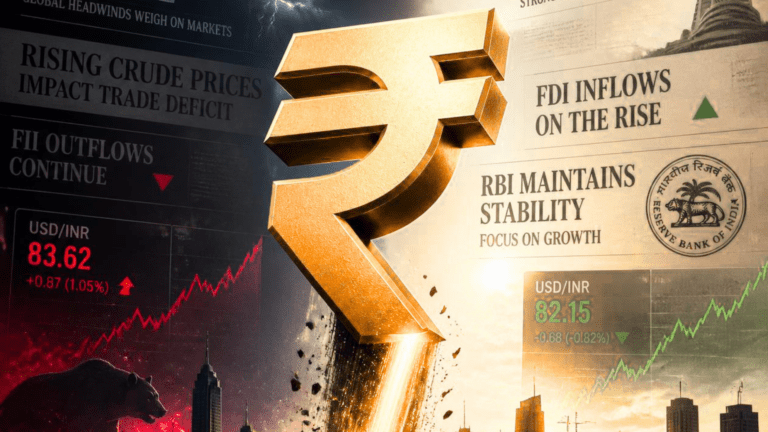
For a country like India — the world’s third-largest oil importer — Brent crude at $100 creates significant fiscal and macroeconomic challenges. India imports approximately 85 percent of its crude oil requirements, and every $10 increase in crude prices adds meaningfully to the country’s import bill, widens the current account deficit, and puts downward pressure on the rupee. The Indian government has historically cushioned domestic consumers from global price spikes through fuel subsidies and excise duty cuts, but those tools have fiscal costs that complicate deficit management.
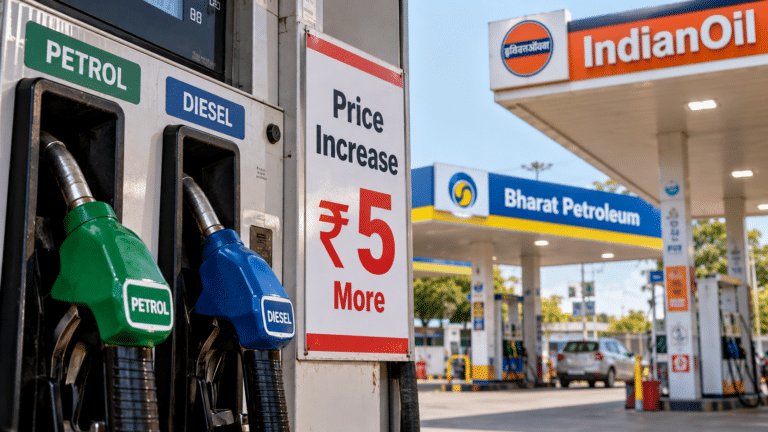
The Reserve Bank of India is watching crude prices with particular attention because oil is one of the most important transmission channels between global commodity markets and domestic inflation. A sustained period above $100 would challenge the RBI’s inflation management framework and could delay any interest rate easing that the economy might benefit from. For Indian households, the most direct impact is felt at the petrol pump and in cooking gas prices, both of which have political as well as economic significance.
Across other emerging markets — from Indonesia to South Africa to Brazil — the story rhymes. Oil-importing developing economies are hit with a double burden: higher energy costs that inflate domestic prices and a stronger dollar (or weaker local currency) that makes those dollar-denominated oil purchases even more expensive in local currency terms.
The Energy Transition Paradox
There is a deeper irony embedded in the current price environment that energy economists have been writing about for several years but that is now playing out in real time. The global energy transition — the shift from fossil fuels to renewables — requires an enormous amount of capital investment in new infrastructure. Governments and multilateral institutions have been encouraging oil companies and national energy producers to reduce investment in new fossil fuel capacity in anticipation of declining long-term demand. Many major international oil companies have responded by tightening their upstream capital expenditure, particularly for large, long-lead-time projects.
The result is a market where existing production capacity is aging, new supply development is constrained, and demand — while eventually expected to peak and decline — is still growing in the near term. This mismatch between near-term demand realities and long-term investment decisions is one of the structural reasons why oil prices can spike sharply and stay elevated for extended periods. The ceasefire in the Middle East doesn’t address this structural underinvestment problem. Neither does a diplomatic agreement alter OPEC+ strategy or accelerate the pace at which renewable energy replaces oil in the global energy mix.
What Professional Traders Are Watching Now
On the trading floors of commodity desks in London, New York, Dubai, and Singapore, the conversations this week are focused on a specific set of forward-looking indicators. The first is the durability of the ceasefire — specifically, whether tanker traffic through key maritime corridors begins to normalize and whether war-risk insurance premiums start to compress. The second is the next OPEC+ ministerial meeting and any signals from Saudi energy officials about whether the alliance might consider modest production increases to prevent a demand destruction scenario. The third is U.S. crude inventory data, released weekly by the Energy Information Administration, which provides the most timely and granular read on physical market tightness.
Options market positioning also tells an important story. When crude prices are in a structurally bullish phase, the options skew — the relative pricing of calls versus puts at equivalent distances from the current price — tilts toward calls, reflecting a market that is more worried about prices going higher than lower. That skew is currently elevated, suggesting that sophisticated market participants are hedging against further upside rather than positioning for a significant correction.
The Policy Response Dilemma
Governments face a genuinely difficult policy environment. Intervening to cap domestic fuel prices protects consumers in the short term but creates fiscal burdens and can delay the energy transition by keeping fossil fuels artificially cheap. Allowing prices to pass through to consumers encourages efficiency and investment in alternatives but creates inflation, reduces real wages, and generates political pressure. There is no costless option.
The Biden administration’s approach in 2022 — aggressive reserve releases combined with diplomatic pressure on OPEC — had limited lasting success. Europe’s combination of windfall profit taxes on energy companies and targeted consumer subsidies provided some relief but also created distortions. India has leaned on state-owned oil companies to absorb some of the margin compression, effectively using public sector balance sheets as buffers. None of these approaches are sustainable over a multi-year period of elevated prices, and all of them create their own second-order problems.
Looking at the Road Ahead
The question investors, policymakers, and consumers most want answered is simple: how long does this last? The honest answer is that the duration of the current above-$100 regime depends on the resolution of multiple variables that are simultaneously uncertain. If the ceasefire holds and regional stability genuinely improves, some risk premium will eventually unwind. If OPEC+ decides that $100+ crude is attracting too much demand destruction and competitive supply response — particularly from U.S. shale producers who become increasingly profitable at these prices — the alliance might gradually ease restraint. If global economic growth slows more sharply than expected, demand could soften and bring prices down without any supply-side response at all.
What experienced energy market observers will tell you is that oil price cycles tend to overshoot in both directions. The 2020 collapse to negative prices was an overshoot to the downside; the 2022 spike above $130 was an overshoot to the upside. Current positioning, structural supply tightness, and the credibility gap in the ceasefire all support a view that prices could remain elevated — and possibly push higher — in the near term. But the seeds of the eventual correction are typically planted during the spike itself, as high prices incentivize efficiency, alternative investment, and eventually demand reduction.
For now, the oil market is delivering a clear message to anyone willing to read it: ceasefires are written on paper, but supply and demand are written in physics. Until the physical balance of the global oil market shifts meaningfully, $100 crude is not an anomaly. It is the new baseline.