RBI Just Proposed 4 Game-Changing Rules to Kill UPI Fraud — And Most Indians Have No Idea
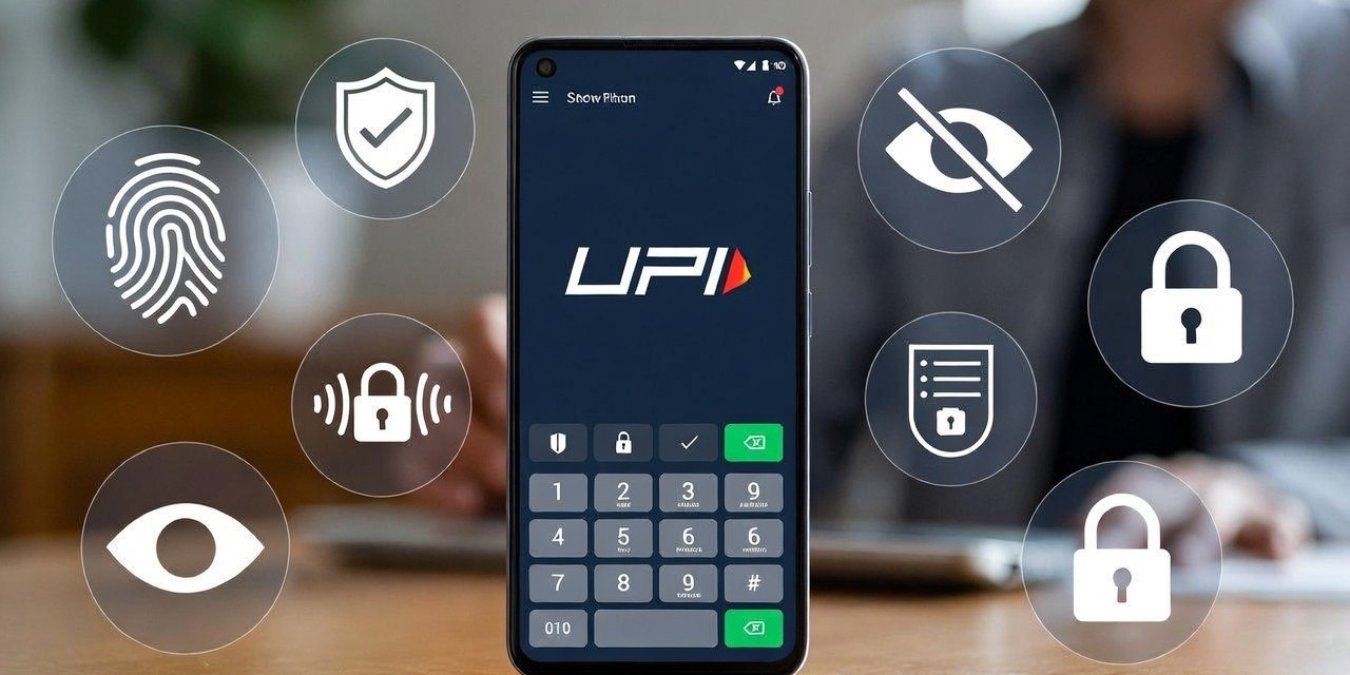
India’s digital payments revolution has been nothing short of extraordinary. With over 18 billion UPI transactions recorded monthly and a total value crossing ₹20 lakh crore, the Unified Payments Interface has become the backbone of how ordinary Indians send money, pay bills, and run small businesses. But this explosive growth has carried a dark shadow: UPI fraud has quietly become one of the fastest-growing financial crimes in the country, costing victims thousands of crores every year. Now, the Reserve Bank of India has stepped in with four bold proposals that could fundamentally change how safe your money is — and most people scrolling through their phones right now have absolutely no idea this is happening.
The RBI’s proposals, outlined as part of its ongoing effort to strengthen the digital payments ecosystem, reflect a deeper understanding of how fraudsters operate and where the gaps in the current system lie. These aren’t cosmetic changes. Each proposal targets a specific vulnerability that has been exploited by scammers, social engineers, and cybercriminals who have become increasingly sophisticated in their methods. If implemented effectively, these rules could mark the single biggest leap in UPI security since the platform launched in 2016.
Why UPI Fraud Has Become a National Crisis
Before diving into the four proposals, it is important to understand the scale of the problem. According to data from the Ministry of Finance and the Indian Cybercrime Coordination Centre (I4C), online financial fraud — a large portion of which involves UPI — has been growing at an alarming rate year over year. Victims range from elderly pensioners in small towns to educated urban professionals who are tricked through elaborate scams involving fake customer care numbers, phishing links, screen-sharing apps, and what has come to be known as “digital arrest” fraud, where scammers impersonate law enforcement officials to extort money.
The anatomy of a UPI scam is often disturbingly simple. A fraudster sends a collect request and convinces the victim that they are receiving money, not approving a payment. Or they send a QR code and tell someone to scan it to “claim” a prize. In more sophisticated cases, victims are talked into downloading remote access apps, after which scammers drain accounts within minutes. The problem isn’t just technical — it is deeply behavioral and social. That is precisely why the RBI’s new proposals are significant: they address both the technological and human dimensions of the fraud problem.
Proposal 1: Beneficiary Account Name Verification Before Payment Confirmation
One of the most commonly exploited loopholes in UPI transactions has been the absence of real-time beneficiary name verification. When you transfer money using a UPI ID or mobile number, the current system does not always prominently display the registered account holder’s name before you confirm the payment. Fraudsters exploit this by creating UPI IDs that mimic legitimate businesses, government services, or even individuals known to the victim. You think you are paying your electricity provider or a trusted vendor, but the money goes to a completely different account.
The RBI has proposed a mandatory beneficiary name display and verification step before any UPI transaction is confirmed. This means that when you initiate a payment, you will see the exact name linked to the receiving bank account — pulled directly from the bank’s records — before you hit confirm. This single change has the potential to dramatically reduce the success rate of impersonation-based fraud. It forces a moment of pause and verification that currently doesn’t exist in a consistent, standardized way across all UPI apps. If your electricity board’s official name is “UPPCL” but the UPI ID shows “UP Power Services Pvt Ltd,” that discrepancy becomes immediately visible and actionable. The proposal essentially borrows from what the UK’s banking sector implemented through Confirmation of Payee, a system that has already shown measurable reductions in authorized push payment fraud.
Proposal 2: A Centralized Fraud Risk Intelligence Framework
The second proposal addresses one of the most frustrating realities of the current fraud response system: the fragmentation of information. Right now, when a fraud is reported, the data largely stays within the ecosystem of whichever bank or payment app received the complaint. There is no seamless, real-time intelligence-sharing mechanism that allows one bank to instantly flag a suspicious UPI ID or phone number to every other bank and payment platform simultaneously. This gap means a fraudster whose account has been flagged at one bank can continue operating freely through accounts at other institutions.
The RBI has proposed building a Centralized Fraud Risk Intelligence Framework — essentially a shared, real-time database that aggregates fraud signals from banks, payment service providers, and law enforcement, making that data accessible across the entire financial ecosystem within seconds. Think of it as a credit bureau, but for fraud risk instead of creditworthiness. If a UPI ID is flagged for suspicious behavior on one platform, that signal propagates instantly to all platforms, and future transactions to or from that ID get automatically flagged or blocked pending review. This kind of network-level intelligence sharing exists in card payment networks and has been remarkably effective at reducing fraud velocity. Bringing it to UPI is overdue and could cut the window of opportunity that fraudsters currently exploit — which is often just a matter of hours between the first fraud and the account being frozen.
Proposal 3: Introducing a “UPI Lite” Transaction Monitoring Layer for Small-Value Payments
This proposal is subtle but strategically important. A significant portion of UPI frauds involve small-value transactions that individually fly under the radar of automated fraud detection systems. Scammers have learned that repeated small debits — sometimes under ₹500 each — are less likely to trigger alerts than a single large transfer. Cumulatively, these micro-transactions can drain thousands of rupees before the victim notices anything unusual.
The RBI’s proposal involves creating a dedicated monitoring and analytics layer specifically designed to detect patterns in low-value UPI transactions. Rather than applying the same static threshold-based detection to every transaction, this system would use behavioral analytics to identify anomalies — for example, a user whose phone is suddenly initiating 15 transactions of ₹499 each within an hour, sent to 15 different UPI IDs never previously transacted with. This kind of pattern is a strong fraud signal, but it currently often goes undetected because each individual transaction looks “normal” by standard parameters. The proposed monitoring layer would flag such patterns in real time and trigger step-up authentication or temporary holds, giving both the bank and the user a chance to intervene before significant money is lost. This is aligned with the RBI’s broader push toward principle-based, intelligence-driven fraud prevention rather than rule-based systems that are easy for fraudsters to game once they understand the rules.
Proposal 4: Mandatory “Cooling Period” for First-Time Transactions to New Beneficiaries
Perhaps the most consumer-protective of the four proposals is the introduction of a mandatory cooling period for first-time high-value transactions to beneficiaries you have never paid before. The concept is straightforward: if you are sending money above a specified threshold — likely in the range of ₹5,000 to ₹10,000 — to a UPI ID or bank account that has never appeared in your transaction history before, the payment would not execute instantly. Instead, it would be held for a short window, potentially 10 to 30 minutes, during which you can cancel the transaction if you realize something is wrong.
This cooling period is specifically designed to break the psychological spell that most UPI frauds depend on. Fraudsters are masters of urgency. They tell you that your electricity will be cut in 10 minutes, that your bank account will be frozen, that police are on their way, or that a loved one is in danger and needs money immediately. That artificial urgency is what prevents victims from pausing to think critically. A mandatory cooling period structurally removes the fraudster’s most powerful weapon — time pressure — from first-time large transactions. Research from behavioral economics strongly supports the effectiveness of forced delay in preventing impulsive decisions made under psychological stress. Countries that have tested similar mechanisms have seen meaningful reductions in social engineering fraud. For India, where a vast population of new-to-digital users is onboarding onto UPI every year, this proposal could be particularly transformative.
What This Means for the Everyday UPI User
You might be wondering: will these proposals make UPI slower or more inconvenient? That is a fair and important question. The honest answer is that some friction will increase, particularly for new or large transactions. The cooling period will add a few minutes of wait time in specific situations. The beneficiary name verification step will add one more screen to the payment flow. But this is friction by design — the same way a seatbelt adds a second or two to every car journey but saves thousands of lives annually.
The RBI has been careful in framing these proposals to ensure they do not disrupt the fluidity of everyday low-value transactions that form the bulk of UPI’s volume. Paying ₹50 for chai or ₹300 for groceries at your regular vendor will remain instant and seamless. The additional layers kick in precisely where the fraud risk is highest: new beneficiaries, high-value transfers, unusual behavioral patterns. For the vast majority of legitimate use cases, the user experience changes minimally. For fraud attempts, these proposals create multiple new points of failure in the scam pipeline, and that is exactly what the RBI intends.
RBI’s Approach
What makes these proposals credible and significant isn’t just their content — it’s who is proposing them and why. The Reserve Bank of India is India’s apex monetary authority, with constitutional and statutory authority over the banking and payments ecosystem. Its proposals emerge from detailed consultation with banks, payment aggregators, fintech companies, and consumer protection bodies. The RBI has also been informed by its own regulatory sandbox data, incident reports from banks, and international best practices from bodies like the Financial Action Task Force (FATF) and the Bank for International Settlements (BIS).
The RBI’s increasing focus on UPI fraud also reflects a maturation in regulatory thinking. Early fintech regulation in India was primarily growth-oriented — the goal was adoption, accessibility, and volume. The regulatory environment rightly removed friction to help a billion-plus population embrace digital payments. Now, having achieved extraordinary scale, the focus is shifting toward sustainability and safety. Regulations that protect users from fraud ultimately strengthen trust in the entire ecosystem, which in turn supports continued growth. This is not a tension between growth and safety — it is a recognition that long-term growth requires safety as its foundation.
What You Should Do Right Now
While the RBI’s proposals are still in the consultation and implementation phase, there are immediate steps every UPI user should take to protect themselves. Always verify the beneficiary name before confirming a payment. Never scan a QR code sent by someone you don’t personally know to “receive” money — QR codes are for making payments, not receiving them. Register your mobile number on the National Cybercrime Reporting Portal (cybercrime.gov.in) if you’ve been victimized, and report suspicious UPI IDs to your bank’s fraud helpline immediately. Enable transaction notifications and review your statement weekly, even if you think everything is fine. Share information about these proposals and fraud tactics with elderly family members who are statistically the most vulnerable demographic.
Being aware of what the RBI is building is not just good financial citizenship — it is a form of personal protection. Fraudsters adapt quickly, and the window between a new security measure being announced and criminals finding a workaround is shrinking. The best defense remains a combination of smart regulation and an informed, vigilant user base.
The Bigger Picture: India’s Fight for a Safer Digital Economy
India’s UPI story is already one of the great success stories of financial innovation in the 21st century. No other country has achieved this scale of real-time digital payment adoption in such a short time. But scale without security is a liability. Every successful UPI fraud erodes the trust of millions of potential users who are still on the fence about adopting digital payments, and it harms millions of existing users who lose real money to crimes that are preventable.
The four proposals the RBI has put forward represent a serious, experience-backed effort to close the gaps that have allowed fraud to flourish alongside growth. Beneficiary name verification removes the ambiguity that impersonation frauds exploit. The centralized intelligence framework eliminates the information silos that fraudsters use to stay ahead of detection. The behavioral monitoring layer for small transactions catches the patterns that rule-based systems miss. And the cooling period for first-time large transactions dismantles the urgency-driven psychological manipulation at the core of most UPI scams.
These are not perfect solutions — no regulatory framework ever is. Fraudsters will continue to evolve, and the RBI will need to evolve with them. But this moment represents a genuine inflection point in India’s approach to digital payment security. The question is not whether these rules will be implemented. The question is whether the public conversation around them will be loud enough to hold institutions accountable for implementing them effectively and quickly. Every Indian with a UPI-linked bank account has a stake in that answer.