Introduction
In the realm of retirement planning, SBI Life Insurance has introduced a unique product, the SBI Life Retire Smart Plan. This plan is an individual, unit-linked, non-participating pension savings product designed to help individuals build a substantial retirement corpus and enjoy income stability after retirement.
Features of SBI Life Retire Smart Plan
Market-Linked Returns
The SBI Life Retire Smart Plan offers the potential for market-linked returns. This means that the performance of your investment is linked to the financial market’s performance, providing the opportunity for higher returns compared to traditional savings instruments.
Guaranteed Additions
One of the key benefits of the SBI Life Retire Smart Plan is the provision of guaranteed additions. These additions can go up to 210% of the annual premium, thereby boosting the fund value. This feature is applicable for a policy term of 35 years under the Regular/Limited Plan.
Flexible Premium Payment Options
The plan offers flexible premium payment options. This means you can choose to pay premiums as per your financial capabilities, making it easier to manage your finances and ensure that your retirement planning is not hampered by financial constraints.
Tax Benefits
The premiums paid and claims received under the SBI Life Retire Smart Plan are eligible for tax deductions under the Income Tax Act as per section 80CCC and section 10 ( 10D). This feature adds an extra layer of financial benefit to the plan, making it an even more attractive retirement planning option.
Eligibility criteria for SBI Life Retire Smart Plan
Age Criteria: The minimum age to apply for this plan is 30 years, and the maximum age is 70 years.
Vesting Age: The vesting age, which is the age at which the policy matures, ranges from 40 to 80 years.
Policy Period: The policy period can be anywhere between 10 to 35 years.
Premium Payment: The minimum annual premium is Rs. 24,000 for regular pay and Rs. 40,000 for single pay. There is no maximum limit.
Return Guaranteed: The minimum guaranteed return is Rs. 1 lakh, while there is no maximum limit.

Benefits of SBI Life Retire Smart Plan
Guaranteed Maturity Benefit
The SBI Life Retire Smart Plan guarantees a maturity benefit of 101 % of total premiums paid. This means that upon maturity, you are assured of receiving at least 101 % of the total premiums you have paid over the policy term.
Protection against Market Volatility
The plan offers a unique feature called the ‘Advantage Plan’ which safeguards your Guaranteed Maturity Benefit against market volatility. This feature ensures that your retirement corpus is not adversely affected by fluctuations in the financial market.
Hassle-Free Investment Management
Investments under the SBI Life Retire Smart Plan are managed by SBI Life through the Advantage Plan. This means that you do not have to worry about managing your investments as it is taken care of by the experts at SBI Life.
For applying SBI Life Retire Smart Plan, you will need to submit the following documents:
- Duly Filled Application Form: This is the primary document where you provide all the necessary details about yourself and your chosen plan.
- Proof of Identity: This could be your Passport, Driving License, Voter ID, PAN, etc3.
- Proof of Address: Documents such as Utility Bills, Ration Card, Aadhaar, Driving License, etc., can serve as your proof of address.
- Age Proof: You can submit your Birth Certificate, Driving License, Passport, etc., as your age proof.
- Income Proof: This is required based on the sum assured selected. It could be your salary slip, Income Tax Return, Form 16, etc.
- Correct Medical History: This is to assess your health condition and determine the terms of your policy.
- Passport Size Photograph: This is needed for identification purposes.

Can I apply online or do I need to visit a branch?
Yes, you can apply for the SBI Life Retire Smart Plan online. You can visit the official SBI Life Insurance website and follow the instructions to apply. This makes the application process convenient as you can apply from the comfort of your home.
However, if you prefer, you can also visit an SBI Life Insurance branch and apply in person. The branch staff can guide you through the application process and answer any questions you may have.
Remember, whether you apply online or in person, you will need to provide all the necessary documents and meet the eligibility criteria. It’s always a good idea to consult with a financial advisor before making any decisions about retirement plans.
How can I track my application status?
You can track the status of your SBI Life Retire Smart Plan application online. Here’s how you can do it:
- Visit the official SBI Life Insurance website.
- Navigate to the ‘Application Tracker’ section.
- Enter your Proposal Number and Date of Birth.
- Click on the ‘Submit’ button to view the status of your application.
You can also track the status of your policy instantly via SMS. Please ensure to use the registered mobile number for this service.
Please note that the specific process may vary, and it’s always best to check the latest details on the official SBI Life Insurance website or consult with a financial advisor for the most accurate information.
Charges associated with this plan
The SBI Life Retire Smart Plan comes with a set of charges that are deducted from the premium or the fund value. Here are some of the key charges:
- Premium Allocation Charge: This is a percentage of the premium appropriated towards charges before allocating the units under the policy. It is deducted from the premium.
- Policy Administration Charge: This is the charge for the administrative working of the policy and is deducted by cancelling units on a monthly basis.
- Fund Management Charge: This is charged as a percentage of the value of assets and is appropriated by adjusting the Net Asset Value.
- Mortality Charge: This is the cost of the insurance cover which is deducted on a monthly basis.
- Switching Charge: A certain number of switches are allowed free of charge, after which a charge is levied for additional switches.
- Partial Withdrawal Charge: A certain number of partial withdrawals are allowed free of charge, after which a charge is levied for additional withdrawals.
- Surrender Charge: If the policy is surrendered before the completion of the lock-in period, a surrender charge is levied.
- Service Tax Charge: Service tax is deducted from the risk premium.
Please note that the specific percentage or amount for these charges can vary
Lock-in period for this plan
The SBI Life Retire Smart Plan comes with a lock-in period of 5 years. This means that you cannot surrender or withdraw the monies invested in the plan completely or partially till the end of the fifth year. If due to some reason you can’t pay the premium within the first 5 years of the policy, the risk cover will cease and funds will be paid at the end of the lock-in period.
Partial withdrawals during the lock-in period
No, partial withdrawals are not allowed during the lock-in period of the SBI Life Retire Smart Plan. The lock-in period for this plan is 5 years. If you need the money during the lock-in period, you have the option to surrender the policy.
Calculation of retirement corpus using this plan
To calculate your retirement corpus using the SBI Life Retire Smart Plan, you can use the online retirement calculator provided by SBI Life. Here’s how you can do it:
- Visit the official SBI Life Insurance website.
- Navigate to the ‘Retirement Planner’ or ‘Retirement Calculator’ section.
- Enter your personal details such as your age, gender, annual income, and other relevant information.
- The calculator will determine how much premium you must pay to accumulate your desired retirement corpus.
This tool will help you to determine the approximate corpus (total amount) you will need for the post-retirement life you envision for yourself. It will also tell you how much you need to save regularly to achieve your retirement goal3.
What if application is rejected?
If your application for the SBI Life Retire Smart Plan is rejected, don’t worry. There are a few steps you can take:
- Understand the Reason: The first step is to understand why your application was rejected. The insurance company should provide a reason for the rejection.
- Review Your Application: Review your application to see if there were any errors or omissions. Sometimes, applications are rejected due to incomplete or incorrect information.
- Reapply: If the issue can be resolved, you can correct the errors and reapply.
- Explore Other Options: If your application is still not accepted, you can explore other retirement plans offered by SBI Life or other insurance companies.
- Consult a Financial Advisor: A financial advisor can help you understand the reasons for the rejection and guide you on the next steps.
Remember, rejection of one application does not mean you cannot secure a retirement plan. There are many options available in the market, and you can find one that suits your needs and circumstances.
Also, the SBI Life Retire Smart Plan comes with a free look period of 15 days. During this period, you can cancel the plan if you are dissatisfied with the terms and conditions of the policy. In such a case, you will receive a refund.
Please note that the specific process may vary, and it’s always best to check the latest details on the official SBI Life Insurance website or consult with a financial advisor for the most accurate information.
How can we improve our chances of approval in reapplication?
Improving your chances of approval in reapplication for the SBI Life Retire Smart Plan involves several steps:
- Provide Accurate Information: Ensure all the information provided in your application is accurate and complete. Any discrepancies or missing information can lead to rejection.
- Disclose Medical History: If you have any pre-existing medical conditions, treatments, medications, or previous hospitalizations, disclose them to the insurer. This helps in reducing claim rejections and allows the insurer to provide the right kind of coverage.
- Understand the Policy Terms: Thoroughly read and understand the policy’s terms and conditions. Pay attention to aspects such as waiting periods, exclusions, and sub-limits.
- Pay Premiums On Time: Ensure that the premium of the plan is paid on time. Delay in payment can result in policy termination, leading to denial of claims.
- Consult a Financial Advisor: A financial advisor can help you understand the reasons for the rejection and guide you on the next steps.
Remember, each application is evaluated on its own merits. So, even if your previous application was rejected, it does not necessarily mean that your reapplication will also be rejected. It’s always best to check the latest details on the official SBI Life Insurance website or consult with a financial advisor for the most accurate information.
Pros and Cons of SBI Life Retire Smart Plan
The SBI Life Retire Smart Plan, like any financial product, has its own set of pros and cons. Here are some of them:
Pros:
- Market-Linked Returns: The plan offers the potential for market-linked returns, providing the opportunity for higher returns compared to traditional savings instruments.
- Guaranteed Additions: The plan provides guaranteed additions which can boost the fund value.
- Flexible Premium Payment Options: You can choose to pay premiums as per your financial capabilities.
- Tax Benefits: The premiums paid and claims received under the plan are eligible for tax deductions under the Income Tax Act.
- Protection Against Market Volatility: The plan offers a unique feature called the ‘Advantage Plan’ which safeguards your Guaranteed Maturity Benefit against market volatility.
- Hassle-Free Investment Management: Investments under the plan are managed by SBI Life through the Advantage Plan.
Cons:
- Investment Risk: The investment risk in the investment portfolio is borne by the policyholder2. This means that SBI will not take any risk on the investment and there is no guarantee of return of capital or investment made by the policyholder.
- Liquidity: The plan does not offer any liquidity during the first five years of the contract. The policyholders will not be able to surrender or withdraw the monies invested in the plan completely or partially till the end of the fifth year.
- Limited Death Benefit: Even though the plan is an insurance-cum-investment policy, it does not offer any Sum Assured as Death Benefit1. Hence, in any worst-case scenario, your nominee is likely to receive 105% of the premiums paid.
- Annuity Only Option: There is no option of getting a lump sum by way of surrender, complete withdrawal, or maturity and the only option is to get an annuity.
Conclusion
The SBI Life Retire Smart Plan is a comprehensive retirement solution that offers a blend of guaranteed returns, market-linked growth potential, and flexible premium payment options. It is designed to help you build a substantial retirement corpus and ensure financial stability in your golden years. With its unique features and benefits, the SBI Life Retire Smart Plan is indeed a smart choice for retirement planning.
Disclaimer: The information provided in this article is based on the details available as of May 2024. The features and benefits of the SBI Life Retire Smart Plan may vary. Please note that these criteria are subject to change and it’s always best to check the latest details on the official SBI Life Insurance website or consult with a financial advisor.
Frequently Asked Questions (FAQs)
- What is the SBI Life Retire Smart Plan?
The SBI Life Retire Smart Plan is a non-participating unit linked pension plan that helps individuals build a retirement corpus and enjoy income stability after retirement.
- What are the eligibility criteria for this plan?
The minimum age to apply for this plan is 30 years, and the maximum age is 70 years. The vesting age ranges from 40 to 80 years. The policy period can be anywhere between 10 to 35 years.
- What are the premium payment options?
The plan offers flexible premium payment options. The minimum annual premium is Rs. 24,000 for regular pay and Rs. 40,000 for single pay. There is no maximum limit.
- What are the tax benefits of this plan?
The premiums paid and claims received under the SBI Life Retire Smart Plan are eligible for tax deductions under the Income Tax Act as per section 80CCC and section 10 (10D).
- What is the ‘Advantage Plan’?
The ‘Advantage Plan’ is a unique feature of the SBI Life Retire Smart Plan that safeguards your Guaranteed Maturity Benefit against market volatility.
- Can I apply for this plan online?
Yes, you can apply for the SBI Life Retire Smart Plan online through the official SBI Life Insurance website.
- How can I track my application status?
You can track the status of your application online through the ‘Application Tracker’ section on the official SBI Life Insurance website.
- What happens if my application is rejected?
If your application is rejected, you can understand the reason for rejection, review your application for any errors, and reapply. You can also explore other retirement plans or consult a financial advisor.
- What are the pros and cons of this plan?
The pros include market-linked returns, guaranteed additions, flexible premium payment options, tax benefits, protection against market volatility, and hassle-free investment management. The cons include investment risk, lack of liquidity during the first five years, limited death benefit, and annuity only option
- What documents are required for application?
The documents required include a duly filled application form, proof of identity, and proof of address, age proof, income proof, correct medical history, and a passport size photograph.
-

Why KOSPI and KOSDAQ Hit Circuit Breakers on ‘Black Thursday’ — and What the 7.6% Crash Means Now
Why KOSPI and KOSDAQ Hit Circuit Breakers on ‘Black Thursday’ — and What the 7.6% Crash Means Now KOSPI 5,554.22 ▼ 7.57%KOSDAQ 760.82 ▼ 7.65%SK hynix ▼ 11.06%Samsung Elec. ▼ 9.48%Fri: KOSPI ▲ 2.05% Markets · South Korea · 15 to 16 October 2026 Why KOSPI and KOSDAQ Hit Circuit Breakers on ‘Black Thursday’ —…
-

Texas Polls Show Democrats Narrowly Ahead as Trump’s Inflation Approval Falls to 22% — How Real Is the Shift?
Texas Polls Show Democrats Narrowly Ahead as Trump’s Inflation Approval Falls to 22%: What the Numbers Mean US Politics · 2026 Midterms · Texas and the Economy Texas Polls Show Democrats Narrowly Ahead as Trump’s Inflation Approval Falls to 22% — How Real Is the Shift? A University of Texas poll has Democrats leading four…
-

Are Mobile Prices Really Crashing? Diwali Deals vs a 16% Rise — Plus iPhone Duo’s India Price and What iQOO Neo 12 Brings
Are Mobile Prices Really Crashing? Diwali Deals vs a 16% Rise, iPhone Duo India Price and iQOO Neo 12 Specs Tech News · Smartphones · India · October 2026 Are Mobile Prices Really Crashing? Diwali Deals vs a 16% Rise — Plus iPhone Duo’s India Price and What iQOO Neo 12 Brings Festive discounts are…
-

The 10 Rule Changes Already Shaping Your Money by 17 October — UPI Charges, LPG Checks, ATM Limits and More
10 Rule Changes in Force Across India by 17 October 2026: UPI Charges, LPG Checks, ATM Limits and More OCT 202617Rules in force as of this date Money and Daily Life · India · Rule Changes The 10 Rule Changes Already Shaping Your Money by 17 October — UPI Charges, LPG Checks, ATM Limits and…
-

LIC’s 3 New Plans From 19 October: New Jeevan Dhara-II, Health Shield and New Cancer Cover — What Each Pays and Who It Suits
LIC’s 3 New Plans From 19 October: New Jeevan Dhara-II, Health Shield and New Cancer Cover Explained Insurance · LIC Product Launch · October 2026 LIC’s 3 New Plans From 19 October: New Jeevan Dhara-II, Health Shield and New Cancer Cover — What Each Pays and Who It Suits LIC opens sales of a deferred…
-

After the Sensex Rocketed 1,534 Points, Can Nifty Finally Conquer 23,000?
After the Sensex Rocketed 1,534 Points, Can Nifty Finally Conquer 23,000? Dailyfinancial.in Market Desk | Friday, 16 October 2026 | Closing data as of market close, 15 October 2026, with pre-open and early-trade cues for 16 October Quick Summary: The Numbers That Matter (as of market close, 15 October 2026) BSE Sensex: 74,315.61, up 1,533.72…
-
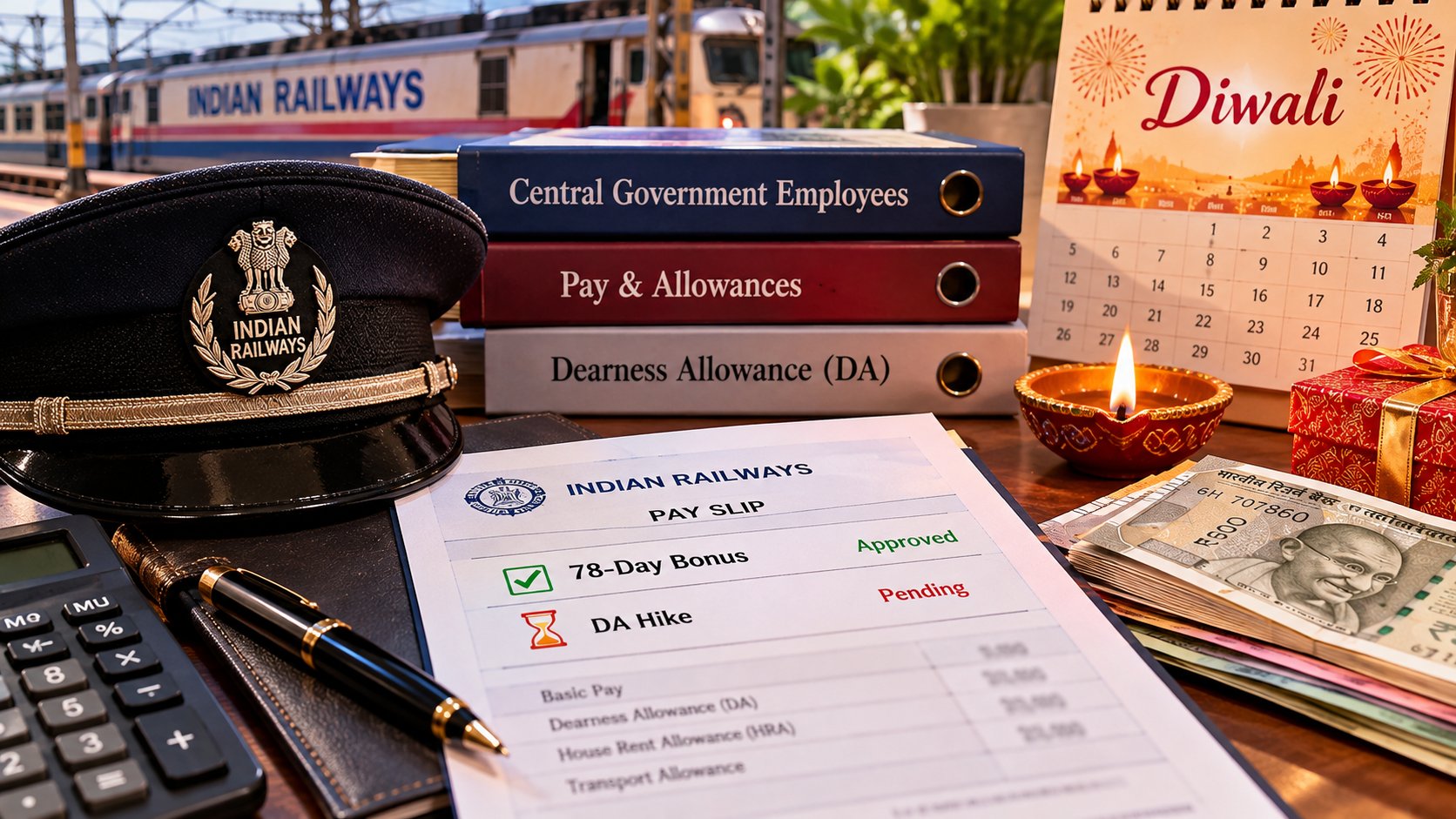
Railway Staff Get the 78-Day Bonus, but the DA Hike Is Still Pending: What Central Employees Will Actually Receive This Diwali
Railway 78-Day Bonus Approved, DA Hike Still Pending: What Central Employees Get This Diwali Pay and Allowances · Central Government · Festive 2026 Railway Staff Get the 78-Day Bonus, but the DA Hike Is Still Pending: What Central Employees Will Actually Receive This Diwali The Cabinet cleared a productivity linked bonus of up to ₹17,951…
-
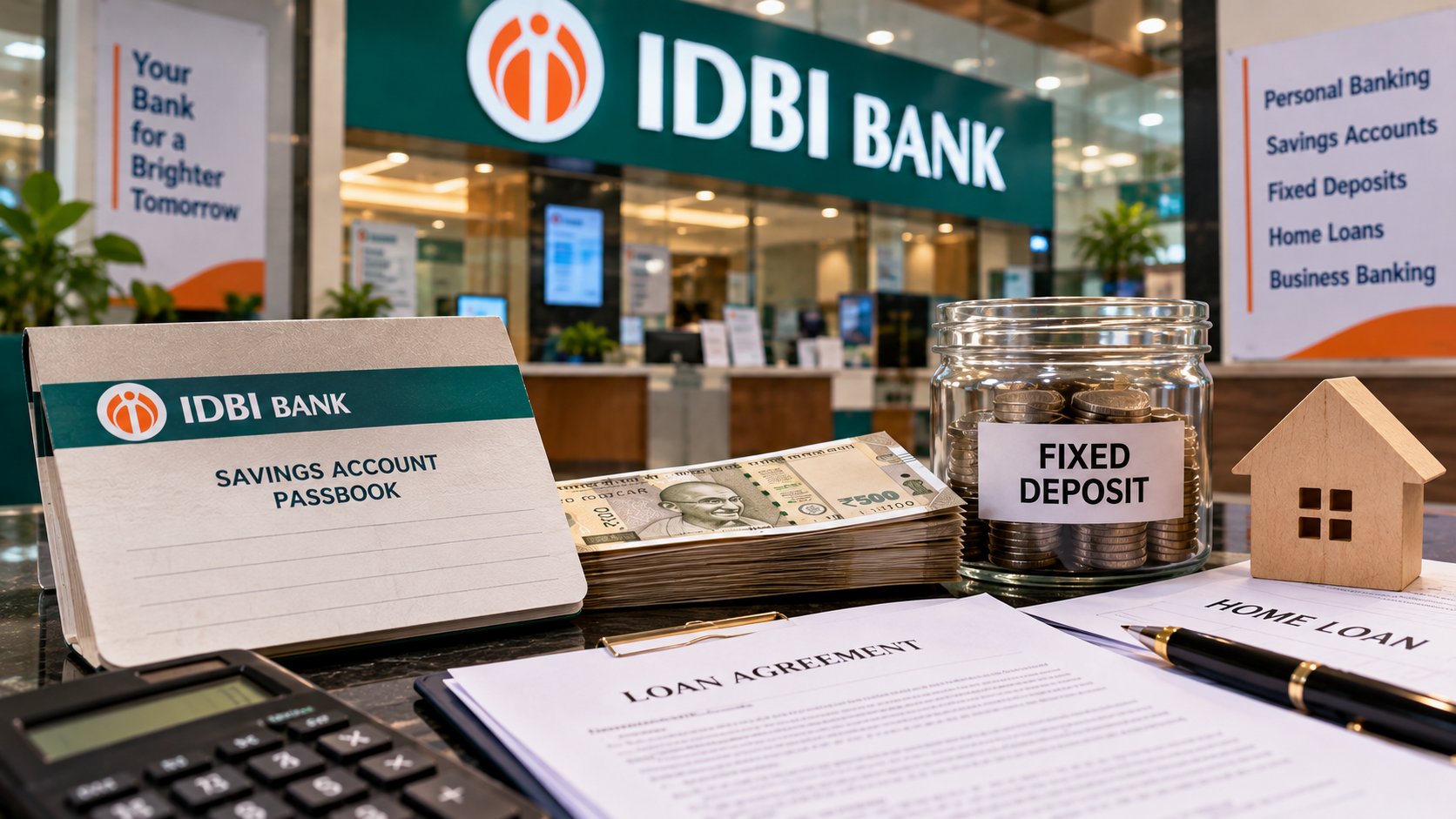
Government Sold IDBI Bank: What Happens to Your Savings Account, FD, Loan and Money Now?
Government Sold IDBI Bank: What Happens to Your Savings Account, FD, Loan and Money Now? Your Money · IDBI Bank · Customer Guide Government Sold IDBI Bank: What Happens to Your Savings Account, FD, Loan and Money Now? The government and LIC are selling control of IDBI Bank to Canada’s Fairfax. For customers, accounts, deposits…
-

Nasdaq Falls on AI Fears While Nifty IT Jumps 11% — Can Indian IT Stocks Keep Rallying?
Nasdaq Falls on AI Fears While Nifty IT Jumps 11% — Can Indian IT Stocks Keep Rallying? Markets · IT Stocks · India and US, October 2026 Nasdaq Falls on AI Fears While Nifty IT Jumps 11% — Can Indian IT Stocks Keep Rallying? US tech had its worst day since July on 14 October…
-
Why the Government and LIC Are Keeping 34% of IDBI Bank After the Fairfax Sale — and When They Can Sell
Why the Government and LIC Are Keeping 34% of IDBI Bank After the Fairfax Sale — and When They Can Sell BankingIDBI BankDisinvestment Why the Government and LIC Are Keeping 34% of IDBI Bank After the Fairfax Sale — and When They Can Sell Selling 60.72% to Fairfax leaves the government with 15% and LIC…