PhonePe, Google Pay & Paytm Secretly Changed How Your Transactions Get Approved — Did You Notice?
If you’ve been tapping “Pay” on PhonePe, Google Pay, or Paytm without giving it a second thought, there’s something important you may have completely missed: behind the scenes, all three of India’s biggest UPI apps have fundamentally changed the way your transactions get approved — and most users have no idea it even happened.
The Quiet Revolution Nobody Announced
India’s digital payment ecosystem is the envy of the world. With over 12 billion UPI transactions processed every single month, the system has become the backbone of how a billion-plus people exchange money. But what happens when a system that massive needs an overhaul? Apparently, it happens quietly, in rolling updates, policy circulars, and backend changes that never make it into your notification feed.
Between August 2025 and April 2026, both NPCI (National Payments Corporation of India) and RBI (Reserve Bank of India) pushed through a series of sweeping changes to how UPI transactions are verified and approved. These weren’t just cosmetic tweaks. They changed the very architecture of transaction approval — from what gets checked before you send money, to how the apps interact with your bank’s servers. Most users experienced these changes as minor friction: a new verification screen here, a slightly different payment flow there. Few understood what was actually changing beneath the surface.
The Big Shift: From Single-Layer to Multi-Layer Approval
For years, UPI worked on a beautifully simple model: link your bank account, create a UPI PIN, and that PIN was your only gate to authorizing a payment. One password, one transaction, done. That model is now officially over.
Starting April 1, 2026, UPI payments — across PhonePe, Google Pay, and Paytm — are no longer approved by your UPI PIN alone. A second verification layer is now mandatorily required before high-value or flagged transactions can go through. Depending on your bank and app configuration, this second factor can be an OTP sent to your registered mobile number, biometric authentication via your fingerprint or face ID, or a device-based approval check that confirms the transaction is being initiated from your trusted registered device.
This change, mandated by RBI and NPCI, directly targets some of the most common fraud vectors that plagued Indian UPI users — SIM-swap attacks where criminals clone your mobile number and hijack your transactions, phishing scams where your UPI PIN is tricked out of you, and credential stuffing where stolen passwords are tested across multiple platforms. The two-factor authentication (2FA) mandate is designed to ensure that even if your PIN is compromised, a second dynamic layer stands between a fraudster and your bank account.
What NPCI Quietly Changed in the Backend
The April 2026 two-factor mandate was the most visible change, but it wasn’t the only one. NPCI had already been restructuring the UPI approval pipeline since early 2025, and several critical shifts happened without any mainstream media coverage.
Balance check restrictions — As of early 2026, UPI apps can now only perform up to 50 balance enquiries per app per day. This may sound like a technical footnote, but it directly affects how apps like PhonePe and Google Pay pre-verify your account before processing transactions. In the old system, apps could ping your bank’s servers continuously, leading to server overloads during peak hours like festival sales and salary credit days. The cap was introduced to prevent exactly those kinds of cascading failures.
Autopay mandate windows — Scheduled payments and subscription autopayments — those Netflix charges, SIP installments, and electricity bills you’ve set to auto-deduct — must now process within specific off-peak windows. This means your autopayments are no longer triggering at whatever time the app desires, but within NPCI-defined time slots that protect server stability.
Pending transaction status checks — When a transaction fails or goes into pending status, apps are now limited in how many times they can query the bank for a status update, with enforced gaps between each check. This was a direct response to the “double-debit” complaints that flooded payment apps when two competing status checks triggered duplicate approvals.
Dormant UPI ID restrictions — UPI IDs that have not been used for an extended period now face temporary restrictions until the user re-verifies their account. If you’ve been relying on a secondary UPI ID that hasn’t seen a transaction in months, you may find it locked behind a fresh verification screen the next time you try to use it.
The Verified Name Rule Nobody Talked About
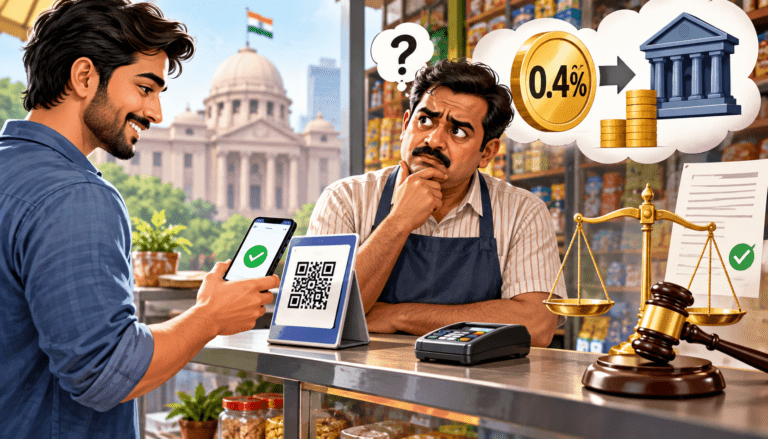
One of the most significant anti-fraud changes NPCI introduced went almost completely unnoticed by ordinary users, despite being one of the most impactful. Starting June 30, 2025, all UPI apps are required to display the verified bank-registered name of a recipient before you complete any payment.
Before this rule, the name you saw on your screen before approving a payment could come from the QR code, a user-defined name, or any other label the payer had previously saved. This was a significant fraud vulnerability — scammers could create QR codes with legitimate-sounding names while routing money to entirely different accounts. Now, under the NPCI circular, apps must exclusively show the name pulled from the Validate Address API — the banking name directly from the bank’s core system. QR codes, saved names, and user-defined labels are no longer permitted to override this verified name on the pre-transaction confirmation screen.
What this means practically: the next time you scan a QR code at a medical shop or a street vendor, the name you see on the confirmation screen before hitting “Pay” is the actual, bank-verified account holder’s name — not whatever label was printed on the QR code sticker. That single change has likely prevented thousands of impersonation scams already.
How Each App Responded Differently
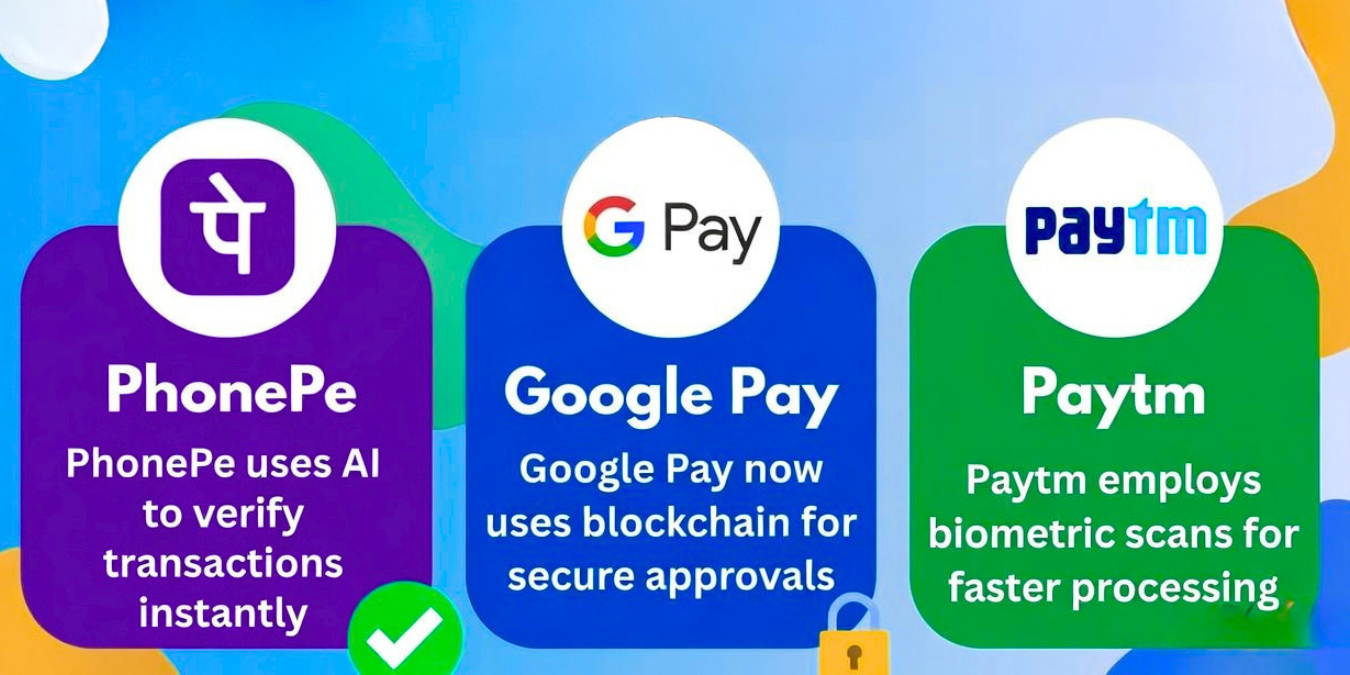
While the NPCI and RBI mandates apply uniformly across all UPI apps, the three dominant players — PhonePe, Google Pay, and Paytm — have each layered their own security intelligence on top of the baseline requirements, and the differences are meaningful.
Google Pay has been the most aggressive in deploying AI-driven fraud detection on top of the regulatory baseline. The platform uses advanced machine learning models to automatically trigger additional identity verification challenges when a transaction pattern looks suspicious — even if it falls within normal UPI parameters. If you’re paying from a new location, an unusual device, or at an odd hour, Google Pay may ask for a secondary confirmation that isn’t strictly required by NPCI but is added by Google’s own risk algorithms. Google Pay also introduced a redesigned payment sheet with smarter card selection and enhanced in-app browser payment flows.
PhonePe, which leads the UPI market by transaction volume, has focused on strengthening device binding — the process by which your specific smartphone is tied to your UPI account as a trusted verification anchor. Device binding means that even if someone has your phone number and UPI PIN, they cannot approve transactions from a device that hasn’t been registered and verified as yours. PhonePe’s approach keeps financial data private while tightening the hardware-level authentication chain.
Paytm, which has been navigating regulatory scrutiny and rebuilding user trust after its earlier compliance challenges, has significantly ramped up its encryption and fraud detection infrastructure. Because Paytm also operates as an e-commerce and financial services platform beyond just payments, its transaction approval model carries additional layers of merchant verification and purchase authenticity checks that the pure-UPI apps don’t require.
The Architecture Behind Every “Approved” Notification
To truly understand what changed, it helps to understand how a UPI transaction was — and now is — actually approved. Most users think of UPI as a two-step process: enter PIN, money moves. The reality has always been more complex, and it’s now significantly more layered.
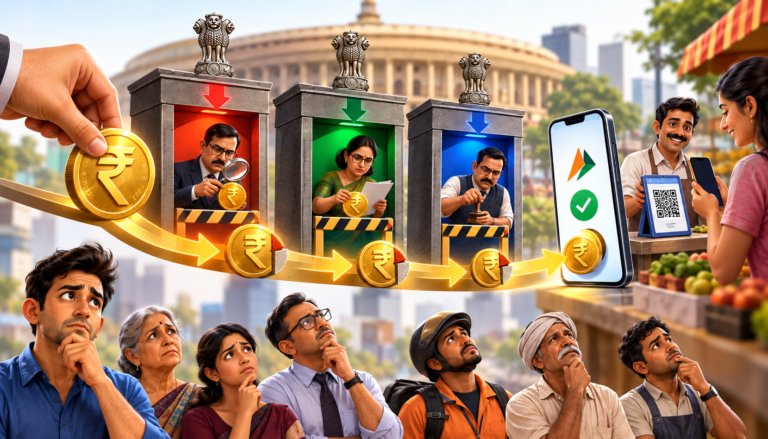
Every UPI transaction begins with device binding — your mobile number, your device, and your UPI app are cryptographically linked at registration. This is the first layer of trust. When you initiate a payment, the app sends a transaction request that carries this device signature to your bank’s UPI server. The bank checks whether the request is coming from a registered, trusted device — if it isn’t, the transaction is flagged immediately. Your UPI PIN then encrypts the authorization, which is validated by your bank’s PSP (Payment Service Provider). Under the new two-factor framework, this is where the second dynamic factor now enters — whether an OTP, a biometric confirmation, or a real-time device challenge.
Only after both factors are validated does the NPCI’s central switch route the approval, debit your account, and credit the recipient — all within the mandated 10-second transaction completion window that NPCI has now formally codified. Every step of this pipeline was quietly tightened between 2025 and 2026, and the result is a fundamentally more resilient system than what existed just 18 months ago.
The Collect Request You Can No Longer Receive
Here’s another change that flew completely under the radar for most users: as of October 1, 2025, NPCI officially discontinued the peer-to-peer “collect request” — also known as a pull transaction. This was the feature where someone could send you a payment request, and if you approved it, money would move from your account to theirs.
While legitimate uses existed for collect requests, this feature had become one of the most widely exploited fraud vectors in the UPI ecosystem. Scammers would pose as customer service representatives, “refund” agents, or bank officials, send fake collect requests to victims claiming the request was required to “receive” a refund or resolve an issue, and when victims approved the collect request — believing they were receiving money — they were actually authorizing an outgoing payment from their own account. The complete removal of P2P pull transactions for retail users eliminates this entire class of fraud at the infrastructure level.
What the Credit Line UPI Change Means for You
Looking slightly ahead — because the changes are still rolling out — NPCI has confirmed that from August 2026, users will be able to make payments or access pre-approved credit lines directly through their UPI apps. This means PhonePe, Google Pay, and Paytm will be able to process buy-now-pay-later type transactions, EMI payments, and credit drawdowns entirely within the existing UPI interface, without needing a separate credit card or loan app.
This is architecturally significant because it means the transaction approval pipeline for UPI will need to accommodate real-time credit limit checks, interest calculations, and credit bureau interactions — all within that same 10-second window. The groundwork being laid in 2026 — tighter authentication, cleaner API behavior, server load management — is not just about improving current payments. It is preparing the UPI infrastructure for a much heavier, more complex transaction ecosystem.
Why “Quietly” Was Actually the Right Call
It’s natural to feel unsettled when you learn that a system you use daily has been fundamentally changed without your explicit awareness. But the honest truth is that rolling out security infrastructure changes silently — without telegraphing the exact technical shifts to the public — is deliberate, and it’s actually protective.
When security upgrades are announced in detail before they’re implemented, fraudsters and malicious actors have a runway to engineer workarounds before the protections go live. The phased, low-profile rollout of 2FA, verified name display, dormant ID restrictions, and collect request removal was a deliberate strategy to close security gaps faster than exploitation could catch up. The downside is that regular users were left to discover these changes through app updates, new screens, and minor friction in their payment flows — without ever being told why.
What You Should Do Right Now
Understanding that these changes have happened is step one. Here’s what every PhonePe, Google Pay, and Paytm user should actively verify today:
- Update all three apps to their latest versions. Many of these backend security changes are surfaced through app-level prompts only when you’re on current versions. An outdated app may not properly support the new 2FA flows.
- Verify your registered mobile number is active and in your possession. Since OTP-based second-factor authentication is now part of the approval chain for flagged transactions, a lapsed or ported number is a serious vulnerability.
- Activate biometric authentication within your preferred UPI app if you haven’t already. Biometric unlock adds the dynamic second factor your transactions now require at a hardware level that is significantly harder to spoof than an OTP.
- Review your active UPI IDs across all linked accounts. Dormant IDs linked to old numbers or unused bank accounts could be locked and should be deactivated proactively.
- Familiarize yourself with the verified name screen. Before approving any payment — especially to new merchants or via QR code — pause and confirm that the name shown matches who you intend to pay. That name is now legally and technically verified.
- Stop approving any “collect requests.” The feature is discontinued, but fraudsters may still attempt social engineering using screenshots or fake app interfaces. No legitimate refund, cashback, or bank process requires you to approve an incoming collect notification.
The Bigger Picture
India’s UPI system has grown from a convenient alternative to cash into a critical national financial artery. With that scale comes responsibility — and vulnerability. The changes that PhonePe, Google Pay, and Paytm have quietly implemented throughout 2025 and 2026 are not the result of casual tinkering. They represent a coordinated, multi-stakeholder effort by RBI, NPCI, and the apps themselves to harden an infrastructure that hundreds of millions of people trust with their daily financial lives.
The fact that most users didn’t notice these changes is, in many ways, a measure of how well they were executed. The best security is the kind that works without interrupting your life. But being an informed user — knowing what protections are now in place, what fraud vectors have been closed, and what steps you can take to maximize your own security — is what separates a passive digital payment user from a genuinely protected one.
Your UPI apps have been quietly working harder for you. Now it’s time you knew exactly how.