Indian Stock Market Trends: Shocking 2026 Data Reveals Which Sectors Will Explode (May 25 Analysis)
Is India’s bull market gathering momentum or walking into a storm? With the Nifty 50 hovering near the critical 24,000 level, Bank Nifty testing key support zones, oil price volatility, geopolitical noise, and a resilient GDP story, Indian investors are standing at a pivotal crossroads this Wednesday morning. This deep-dive market briefing has everything you need — fresh data, sector breakdowns, top stock picks, and clear-headed analysis — to make every investment decision count today.
🌐 Indian Market Overview: Sensex, Nifty 50 & Bank Nifty Snapshot
Where Dalal Street Stands Right Now
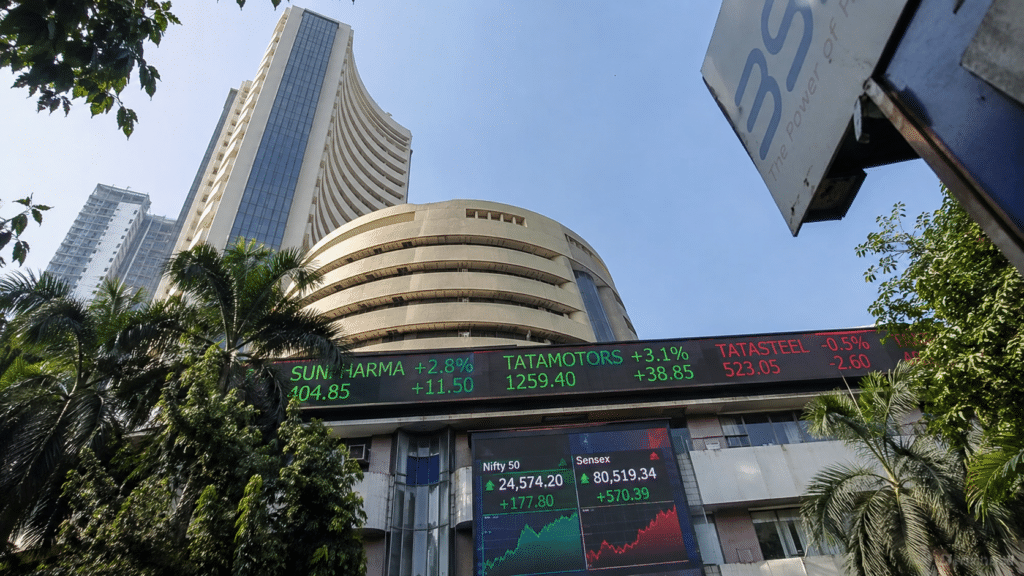
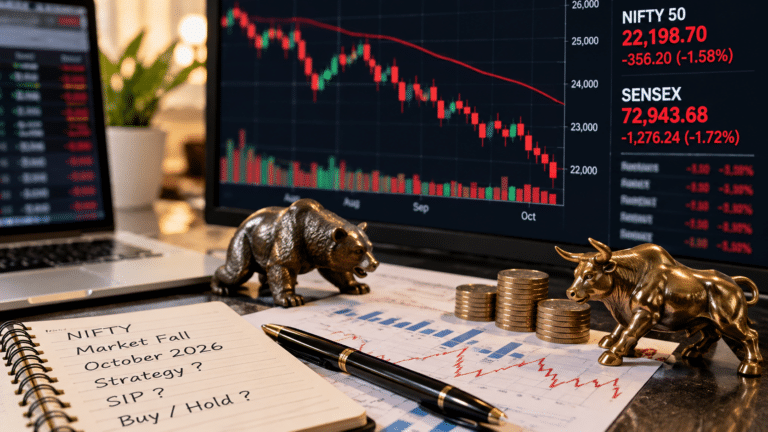
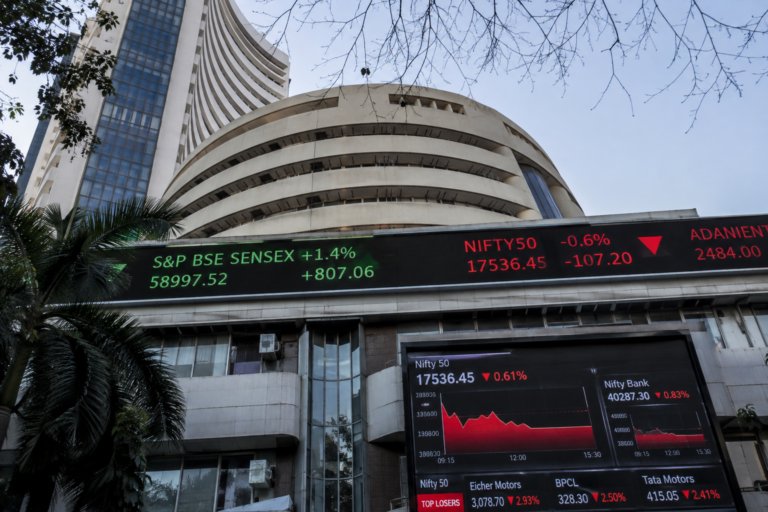
India’s benchmark indices painted a cautious picture on May 5, 2026, as renewed geopolitical uncertainty and rising crude oil prices dragged markets into the red. The Nifty 50 slipped sharply below 24,000 intraday, touching a session low of 23,882, before partially recovering to close near 23,960. The BSE Sensex posted an intraday low of 76,515 — a fall of approximately 754 points from the previous session’s close — reflecting the skittishness that has gripped equity markets amid US-Iran tensions.
However, there is good news as Wednesday dawns: the GIFT Nifty futures were quoted at 24,311.50, up approximately 205 points, signaling that bulls may attempt a recovery as oil prices declined following signals that the US is actively working toward finalizing a deal with Iran. A positive gap-up opening on May 6 looks increasingly likely.
Looking back to the broader picture, the BSE Sensex closed at 77,269.40 on May 4, gaining 355.90 points (+0.46%) in a session marked by brief enthusiasm that faded into a Doji candle — the classic technical signal of buyer-seller indecision. The market had touched an intraday high of 77,910.75 before sellers stepped back in.
Key Index Levels at a Glance (As of May 5–6, 2026):
- Nifty 50 Close (May 5): 23,960 (Intraday Low: 23,882)
- BSE Sensex Intraday Low (May 5): 76,515
- Bank Nifty Pivot (May 6): 54,552.42 with support at 54,216 and resistance at 54,883
- GIFT Nifty (May 6 Pre-Open): 24,311.50 (+205 pts)
📊 Bank Nifty: Navigating Turbulent Waters
The Nifty Bank index has had a tempestuous year, trading with a “slightly negative to cautious bias” and hovering near the 54,800–54,900 zone, reflecting subdued momentum in banking stocks. Key levels to watch are resistance at 55,500–55,600 (immediate) and a stronger barrier at 56,000–56,300, where supply pressure could re-emerge on any recovery attempt.
For the index to turn structurally positive, analysts insist it must first hold above 56,000, and sustain above 57,500 to truly restore bullish market sentiment. The 52-week range tells a contrasting story — the index has swung between a low of ₹47,702.90 and a high of ₹58,577.50, illustrating just how volatile banking stocks have been over the past year.
🎭 Investor Sentiment
Sentiment remains cautiously mixed. Domestic institutional investors (DIIs) continue to provide a floor, but FII (Foreign Institutional Investor) flows remain inconsistent. HDFC Securities’ Head of Institutional Equities, Unmesh Sharma, points out that India’s PE premium to emerging markets has compressed from a 100% peak to around 33%, which he identifies as a “historical entry point for institutional players”. Meanwhile, the mutual fund industry is sitting on approximately ₹2 lakh crore in domestic dry powder, waiting for the right moment to deploy into high-quality large caps.
📈 Key Economic Drivers: GDP, Inflation, RBI & More
India’s GDP: The Fastest-Growing G20 Engine
India’s economic engine is roaring. Real GDP growth for FY2025–26 is estimated at 7.6%, revised upward from an earlier estimate of 7.4%, tying for the sharpest expansion since FY2022. This acceleration is remarkable given that earlier fears about US tariff pressure and constrained Russian oil flows had led the government to project growth in only the 6.3%–6.8% range.
The Economic Survey 2025–26 had already projected India’s GDP growth at 7.4%, describing it as being “driven by the double engine of consumption and investment” — cementing India’s status as the fastest-growing major economy for the fourth consecutive year. Trading Economics forecasts the pace to moderate to approximately 6.5% by end-2026, as base effects and global headwinds normalise the trajectory.
💰 CPI Inflation: Cooling but Not Cold
India’s retail inflation (CPI) edged up to 3.40% year-on-year in March 2026, described as the “highest CPI in the past 12 months” — but still remarkably benign by historical standards. This marks an increase from the sub-3% readings seen in earlier months of FY26. Food inflation came in at 3.87% on a national basis, with rural food inflation at 3.96% and urban at 3.71%.
The macro implication is clear: inflation is ticking up from its trough, but remains well within the RBI’s 2–6% comfort band, giving policymakers room to maneuver if growth concerns intensify.
🏦 RBI Monetary Policy & Repo Rate: The 5.25% Anchor
The Reserve Bank of India (RBI) under Governor Sanjay Malhotra held the repo rate at 5.25% at its 59th MPC meeting in February 2026, maintaining a neutral stance. This rate represents a meaningful reduction from the 6.00% level seen earlier in the financial year, a strategic pivot designed to stimulate growth while keeping inflation anchored.
The rate trajectory matters immensely for equity markets. Geojit Spotlight analysts note that RBI’s ongoing rate cuts are expected to revive real estate and boost private sector credit demand — both powerful tailwinds for banking stocks. HSBC’s Head of Research Yogesh Aggarwal has framed the government’s combined push of personal income tax cuts, GST rationalisation, and interest rate reductions as the fuel for India’s anticipated double-digit equity returns in 2026.
🎯 Nifty 50 Today: Detailed Technical Levels for May 6, 2026
Here’s a point-by-point technical breakdown of Nifty 50 for Wednesday’s session, derived from pivot calculations based on May 5’s high-low-close:
- Pivot Point: 23,998.85 — The fulcrum around which today’s session will revolve. Bulls must reclaim and hold this level for confidence to return.
- Immediate Support (S1): 23,916.00 — First line of defense for dip buyers. A breach here signals near-term weakness.
- Deeper Support (S2): 23,799.20 — Critical floor. A fall here risks further downside momentum and may invite panic selling.
- Immediate Resistance (R1): 24,115.65 — The first hurdle bulls must cross. Expect selling pressure and profit booking near this level.
- Higher Resistance (R2): 24,198.50 — Clearing R2 on a closing basis would signal bullish intent and invite fresh buying.
- Overall Bias: Mildly bullish, range-bound — with a strategy of buying dips near support and booking profits near resistance.
- GIFT Nifty Signal: +205 points at 24,311.50 — A positive opening gap is expected; watch whether the market sustains these gains or fades.
- Key Watch Level: Nifty above 24,200 on a closing basis today would be the first meaningful bullish signal after yesterday’s correction.
- Technical Context: The previous session saw a Doji candle formation on Sensex charts, indicating indecision. Directional clarity may arrive only after the first 30 minutes of trade.
📊 BSE Sensex vs. NSE Nifty 50: May 2026 Comparison
| Parameter | BSE Sensex | NSE Nifty 50 |
|---|---|---|
| Index Composition | 30 blue-chip stocks | 50 large-cap stocks |
| May 4, 2026 Close | 77,269.40 | 24,100 (approx.) |
| May 5 Intraday Low | 76,515 | 23,882 |
| May 6 Pre-Open Signal | Positive (GIFT Nifty) | 24,311 (GIFT Nifty) |
| FY26 Full-Year Return | -7% (down 5,467 pts) | -5% (down 1,188 pts) |
| 52-Week High | 85,978 | 26,277 |
| 52-Week Low | 72,400 | 21,965 |
| YTD 2026 Trend (CY) | Recovering, range-bound | Recovering, range-bound |
| Bull Case Target (2026 End) | ₹98,000 | 29,800 |
| Consensus Analyst Target | ₹89,430–95,000 | 27,200–28,850 |
| Primary Driver | Adani, banking, FMCG weight | Broader bluechip representation |
| Immediate Resistance | 77,800–78,000 | 24,115–24,198 |
| Key Support | 76,500–76,700 | 23,800–23,916 |
The Sensex’s heavier weighting toward banking and financial stocks has made it more volatile during Bank Nifty’s underperformance phases, while the broader Nifty 50 has shown slightly better resilience due to its diversification across 50 large caps. Goldman Sachs projects a 14% gain for Nifty 50 by end-2026, having upgraded Indian equities to “overweight,” flagging the end of the “year-long earnings downgrade cycle” as the primary catalyst.
📰 Latest News Highlights: What’s Moving Markets Today
🛢️ US-Iran Deal Talks: Oil Price Drop = Market Tailwind
The most market-positive headline of the morning: the United States has signalled active efforts to finalize a nuclear deal with Iran. This has pulled crude oil prices lower, which is unambiguously good news for India — the world’s third-largest oil importer. Lower crude reduces the Current Account Deficit (CAD), eases inflationary pressure, and boosts margins across oil-sensitive sectors including airlines, paints, chemicals, and FMCG. GIFT Nifty’s 205-point premium on May 6 is directly attributable to this headline.
Impact: Expect oil marketing companies (OMCs), aviation stocks, and auto stocks to open higher. Sectors that were hit by energy cost concerns could see sharp recovery plays.
🏦 Q4 FY26 Earnings Season: Mixed but Improving
The Q4 FY26 results season has delivered a nuanced picture. Wockhardt surged 8–12% after reporting a Q4 FY26 PAT of ₹166 crore — a dramatic turnaround from a loss of ₹25 crore in Q4 FY25 — with revenues growing an impressive 30%. Tata Technologies also rallied 10% after Q4 net profit rose 8.1% YoY to ₹204 crore. On the downside, KEI Industries fell 7% despite 18% profit growth, because the results missed inflated street expectations — a reminder that valuation premium demands perfection.
Impact: Earnings-driven volatility will continue stock by stock. Focus on companies beating estimates, not just reporting growth.
🌍 Geopolitical Risk: India-Pakistan Situation
Regional tensions stemming from cross-border developments have introduced a risk premium into Indian markets. Historical data shows that during Operation Sindoor in 2025, the Nifty 50 declined 1.69% over the affected week, with sectors like tourism, hotels, and airlines taking the hardest immediate hit. Analysts at Mehta Equities warned that tensions lasting beyond 15–20 days could significantly dampen market sentiment.
Impact: Defense stocks (HAL, BEL) have been acting as hedges, and may see fresh buying interest. Investor caution remains elevated.
📈 RBI’s Rate Cut Cycle: Stimulus for Borrowers
With the repo rate now at 5.25%, down from 6.00%, the rate cut cycle is actively supporting consumer lending, home loans, and MSME credit. This monetary policy support, combined with the government’s income tax relief and GST rationalisation, creates a consumption stimulus that analysts at HSBC expect to translate into double-digit equity returns through 2026.
🌏 Foreign Indices That Influenced Indian Markets
Global cues play a decisive role in shaping Dalal Street’s opening mood. Here’s how key foreign indices are moving and their impact on Indian equities:
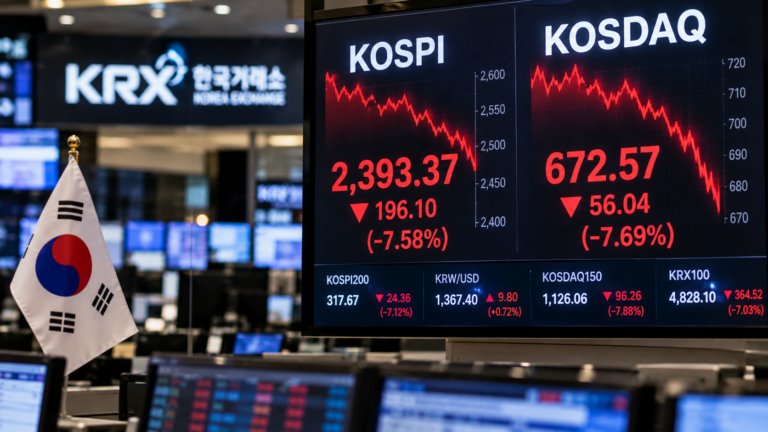
The Kospi hitting a new high on May 6 is particularly significant, as rising EM equity sentiment tends to bring FII flows back to India. A declining Brent crude, driven by Iran deal hopes, is the single most powerful global catalyst for Indian markets today.
🏆 Top 10 Stocks to Buy on NSE/BSE in 2026
These are high-conviction picks backed by analyst research, fundamentals, and sector tailwinds:
1. HDFC Bank (HDFCBANK)
CMP: ₹744–772 | P/E: 18x | Dividend Yield: 1.1%
India’s largest private bank is trading near 52-week lows (52W low ₹720), offering compelling value. Improving NIM, declining NPAs, and credit cycle recovery make this a core banking buy for all risk profiles.
2. TCS (TCS)
CMP: ₹2,384 | P/E: 28x | Dividend Yield: 1.8%
A blue-chip IT compounder, TCS benefits from AI-driven enterprise transformation demand. Despite a FY26 IT sector selloff, valuations have compressed and the long-term trajectory remains intact. Goldman Sachs cites AI and cloud as key FY27 growth drivers.
3. ICICI Bank (ICICIBANK)
CMP: ₹1,251 | P/E: 16.5x | Dividend Yield: 0.8%
One of India’s best-managed private banks, ICICI has a clean balance sheet and consistent earnings. The credit cycle recovery and rate cuts support its lending margins through 2026.
4. HAL (HAL)
CMP: ₹4,200 | Market Cap: ₹2.8 lakh crore
India’s premier defense manufacturer is backed by the government’s record defense capital expenditure. Rising geopolitical tensions only strengthen the order book outlook. HAL is the standout defense pick for 2026.
5. ITC Ltd. (ITC)
CMP: ₹311 | P/E: 11x | Dividend Yield: 3.2%
A classic defensive compounder with attractive dividend yield. ITC’s FMCG segment is gaining share, hotels are booming, and the agribusiness is stabilizing. At 11x P/E, it’s the cheapest quality bluechip on Dalal Street.
6. Bharat Electronics (BEL)
CMP: ₹433 | P/E: 53x | FY26 Return: +33%
The top FY26 large-cap performer with a 33% return, BEL rides India’s defense indigenisation wave. Order book visibility is exceptional.
7. L&T (LT)
India’s infrastructure and engineering conglomerate is a direct play on India’s ₹11 lakh crore capital expenditure budget. Order books remain near all-time highs, with strong execution momentum in FY27.
8. Persistent Systems (PERSISTENT)
The mid-cap IT dark horse of 2026. AI-driven service deals, strong employee metrics, and consistent earnings beats make Persistent a high-conviction mid-cap IT pick, outperforming the broader Nifty IT index.
9. Bajaj Auto (BAJAJ-AUTO)
CMP: ₹9,640 | P/E: 29.5x | TTM EPS: ₹326.58
Premium two-wheeler demand, strong exports to Africa and LATAM, and EV transition execution make Bajaj Auto a compelling consumer discretionary play at current levels.
10. Axis Bank (AXISBANK)
CMP: ₹1,351 | P/E: 17x | 52W Low: ₹999
Axis Bank’s valuation re-rating story is underway. With improving asset quality and management stability, it offers a differentiated risk-reward in the private banking space.
📊 Today’s Top 10 Gainers & Losers (NSE/BSE, May 5, 2026)
🟢 Top 10 Gainers
🔴 Top 10 Losers
🏭 Sector Performance India 2026: Who’s Leading, Who’s Lagging?
💼 Portfolio Recommendations: For Every Risk Appetite
🟢 Conservative Portfolio (Low Risk — Capital Preservation + Income)
This portfolio is designed for investors who want steady returns with minimal sleepless nights:
- HDFC Bank (30%): Pillar of stability; dividend-paying, clean NPA profile
- ITC (20%): Highest dividend yield among quality large caps; 3.2% yield
- HUL (15%): Defensive FMCG; pricing power even in slowdowns
- Infosys (15%): IT bellwether; consistent buybacks and dividends
- L&T (20%): India’s infrastructure play; order book gives earnings visibility
Pros: Low volatility, regular dividend income, limited downside
Cons: May underperform in a sharp bull run; limited growth upside
🟡 Balanced Portfolio (Medium Risk — Growth + Stability)
- ICICI Bank (25%): Credit cycle recovery plus quality management
- TCS (20%): Long-term AI-led IT compounder
- HAL (15%): Defence capex mega-trend
- M&M (15%): SUV dominance + EV leadership
- Persistent Systems (10%): Mid-cap IT alpha generator
- Bharat Electronics (15%): Defence indigenisation plus consistent delivery
Pros: Diversified across 4 high-conviction themes; mix of growth and stability
Cons: HAL and BEL carry execution risk; IT still faces near-term macro headwinds
🔴 Aggressive Portfolio (High Risk — Alpha Generation)
- Dixon Technologies (20%): Apple supply chain + EMS scale-up
- Tata Technologies (20%): Engineering R&D services at an inflection
- HAL (15%): Defense mega-cap with re-rating potential
- Adani Enterprises (15%): Diversified conglomerate with multiple sector catalysts
- Wockhardt (15%): Pharma turnaround; 30% revenue growth momentum
- 360 One WAM (15%): Wealth management boom play; AUM scaling rapidly
Pros: High growth potential; exposure to multiple mega-trends
Cons: High volatility; requires active monitoring; earnings disappointments can cause sharp falls
📌 Stock Recommendations for Today (May 6, 2026)
Based on technicals, the positive GIFT Nifty signal, and the oil-price tailwind from Iran deal talks, here are today’s actionable trade ideas:
- BUY M&M around ₹3,150–3,180 — Strong Q4 earnings momentum confirmed; rural demand recovery is a multi-quarter theme. Target: ₹3,400; Stop-loss: ₹3,050.
- BUY HAL on dips near ₹4,100–4,150 — Geopolitical tensions are structural positives for defence stocks. Long-term accumulate; SL ₹3,900.
- BUY ICICI Bank near ₹1,240–1,250 — Oversold levels after FII profit booking; Bank Nifty recovery expected. Target: ₹1,310; SL: ₹1,210.
- AVOID Coal India today — Sector headwinds and ESG rotation are structural concerns; no near-term catalyst visible.
- WATCH Tata Technologies — After yesterday’s 10% spike on Q4 results, wait for a pullback to ₹600–610 for a fresh entry with better risk-reward.
- BUY UltraTech Cement — Infrastructure capex theme is intact; positive sentiment on crude decline reduces energy cost fears. Target: ₹12,500+.
- STAY CAUTIOUS on Jio Financial Services — NBFC sector headwinds are real; needs a clean technical breakout above ₹260 before fresh buying.
- BUY ITC as a hedge — If markets turn volatile due to geopolitical flare-ups, ITC’s low beta, high dividend yield, and defensive character make it the perfect storm shelter.
💡 Final Thought
Today’s Indian stock market is a story written in two competing inks — optimism and caution. The macro backdrop is compelling: a 7.6% GDP growth rate, CPI inflation comfortably within the RBI’s band at 3.4%, and a repo rate cut cycle that is only deepening. Goldman Sachs and HSBC both project double-digit returns for Indian equities in 2026, and the ₹2 lakh crore in domestic institutional dry powder means the market has a ready floor.
Yet the near-term picture demands vigilance. The Nifty 50 is holding onto the 24,000 handle by its fingernails, Bank Nifty needs to reclaim 55,500 to restore confidence, and geopolitical uncertainty continues to inject volatility. The positive GIFT Nifty signal today, driven by Iran deal hopes and a falling crude price, offers bulls their best opening in days.
The key takeaway for investors: Do not let short-term noise drown out India’s structural bull market story. This is a market that rewards patient capital, selective stock picking, and sector discipline. Defence, banking, pharma, and infrastructure are not just themes — they are decade-long megatrends. The correction of FY26, which saw the Nifty fall 5% and Sensex drop 7%, has actually created the most attractive entry points in nearly two years for quality businesses.
India is not just the fastest-growing G20 economy. It is increasingly becoming the world’s most closely watched investment destination. Wednesday, May 6, 2026, may well be remembered as a day when the next leg of Dalal Street’s bull run quietly began.
Found this analysis valuable? Share it with your fellow investors, drop your views in the comments, and subscribe for daily market briefings. Your next great investment decision might start with this article.
Disclaimer: This article is for informational and educational purposes only. It does not constitute investment advice. Please consult a SEBI-registered financial advisor before making any investment decisions. Market investments are subject to risks.