Fitbit Air Is Coming in 2026 With a Rebranded Google Health Subscription — And It Could Make Whoop's $239/Year Membership Look Obsolete
The fitness wearable industry is bracing for its biggest disruption in years. Google, the tech giant that quietly acquired Fitbit back in 2021 for $2.1 billion, has spent half a decade absorbing, learning, and strategizing — and now it appears ready to strike. The Fitbit Air, a screenless fitness band designed to go head-to-head with Whoop’s cult-favorite subscription model, is reportedly in the pipeline for a 2026 launch, and it’s arriving with a rebrand of the existing Fitbit Premium into something far more ambitious: Google Health. If the early signals hold true, this could be the moment the wearable fitness market gets genuinely reshuffled.
What We Know About the Fitbit Air
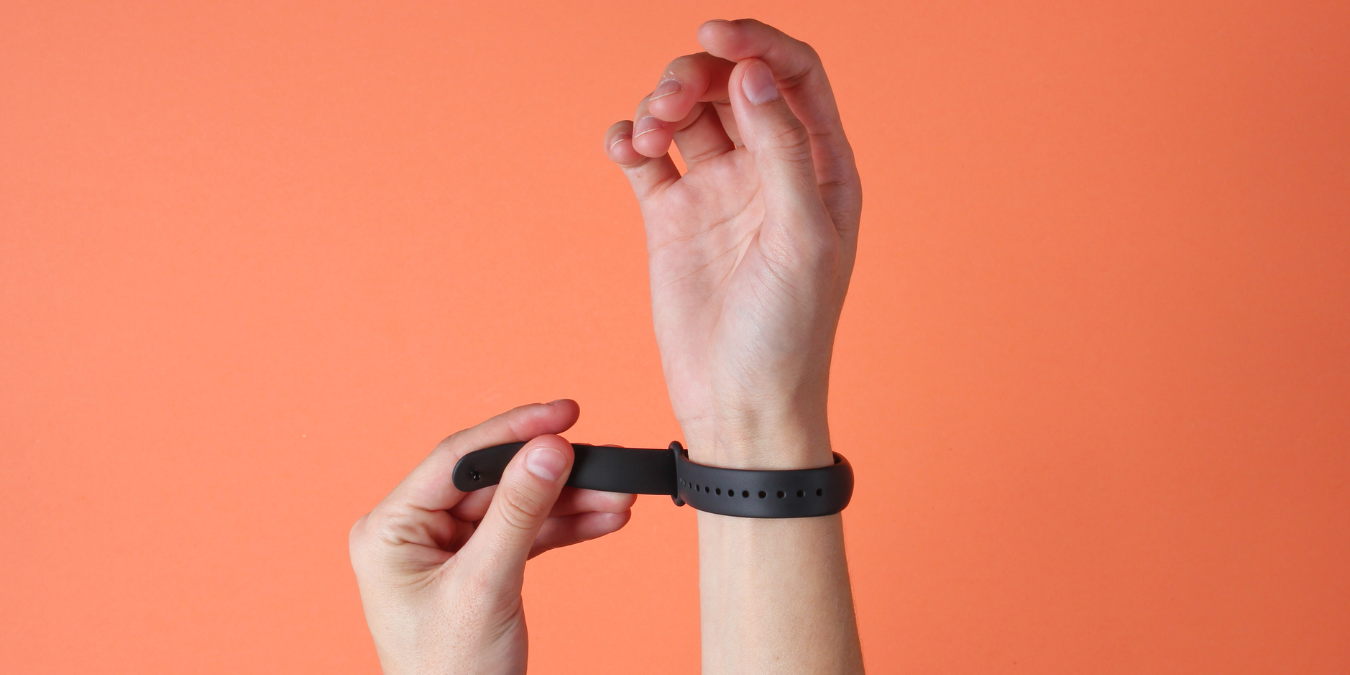
The Fitbit Air is shaping up to be everything the traditional Fitbit lineup is not. Gone is the familiar rectangular display, the step-count glance, and the notification buzzes. In its place is a minimalist, cloth-band wearable — entirely screen-free — designed to sit on your wrist 24/7 and passively collect biometric data with surgical precision. According to reports from Bloomberg and corroborated by 9to5Google, the device draws heavy inspiration from Whoop’s design philosophy: a band that disappears into your daily life and surfaces insights through a connected app rather than an on-device screen.
The move makes strategic sense. Whoop has built one of the most loyal communities in the fitness wearable space by doing exactly this — stripping away the distractions and focusing entirely on recovery scores, heart rate variability (HRV), sleep staging, and strain coaching. Its users are obsessive, evangelical, and willing to pay handsomely for the privilege. Whoop’s current pricing sits at $239 per year for its premium membership tier, with the hardware essentially “free” as part of that subscription. Google is watching that model with great interest — and reportedly preparing to replicate and one-up it.
The Google Health Subscription: A Rebrand With Real Stakes
Perhaps the most significant development surrounding the Fitbit Air isn’t the hardware at all — it’s what’s happening on the software and services side. Fitbit Premium, the existing paid tier that costs around $9.99 per month and offers guided programs, sleep analysis, and wellness reports, is reportedly being retired and relaunched under the Google Health brand umbrella. This isn’t just a cosmetic renaming exercise. Sources suggest the new Google Health subscription will integrate directly with Google’s broader ecosystem: Google Fit data, Android health records, Gemini AI coaching, and even medical record integration that was quietly expanded in the Fitbit app earlier in 2026.
This is where the proposition becomes genuinely compelling. Whoop’s $239/year membership is excellent at what it does — coaching athletes through recovery and readiness — but it exists in relative isolation. It doesn’t talk to your Google Calendar to understand why your HRV tanked after a 14-hour workday. It doesn’t cross-reference your sleep data with your Android health records or offer an AI coach powered by one of the world’s most advanced large language models. Google Health, if executed as rumored, would do all of this. The subscription wouldn’t just be a wearable companion — it would be a personalized health operating system.
Why Whoop Should Be Paying Close Attention
Whoop has done something incredibly difficult in the consumer tech space: it has built a premium brand in a category dominated by feature-packed smartwatches. When Apple Watch and Garmin were racing to add ECG sensors, cellular connectivity, and NFC payments, Whoop doubled down on the boring, unglamorous work of accurate biometric tracking and behavior change coaching. The result is a device worn by professional athletes, Navy SEALs, and Silicon Valley executives who are willing to pay above-market prices for above-market insights.
But Whoop’s moat, while real, is not impenetrable. The core of its value proposition rests on three pillars: hardware accuracy, coaching depth, and community trust. Google, with the Fitbit Air, is credibly attacking all three. On hardware accuracy, Fitbit’s sensor engineering has decades of refinement behind it, and the screenless form factor allows for tighter, more consistent skin contact — a known variable in optical heart rate and SpO2 accuracy. On coaching depth, Gemini-powered AI guidance could offer more personalized, context-aware recommendations than Whoop’s current coaching algorithms. And on community trust, Google Health’s integration with medical records and Android’s 3 billion-device ecosystem provides a distribution and trust surface that Whoop simply cannot match.
The pricing angle is equally threatening. If Google Health launches at a price point meaningfully below $239/year — say, $99 to $149/year — while bundling capabilities that exceed Whoop’s offering, the value comparison becomes uncomfortable for Whoop’s marketing team. Whoop’s brand premium has always been justified by the absence of comparable alternatives. The Fitbit Air would end that absence.
The Screenless Wearable Trend Is Not a Gimmick
Some commentators have dismissed the screenless wearable category as a niche lifestyle choice or a minimalist fashion statement. That interpretation misses the deeper shift happening in how people relate to their health data. The original fitness tracker boom — Fitbit’s own era of dominance, ironically — was built on the premise that seeing your step count in real time would motivate behavior change. A decade of behavioral research has complicated that picture significantly.
Constant data visibility creates a form of metric anxiety that can be counterproductive. People who obsessively check their rings, scores, and readiness numbers throughout the day often experience elevated stress responses that themselves degrade the metrics they’re trying to improve. The screenless design philosophy, pioneered by Whoop and now adopted by Oura (whose ring has no display), is a deliberate response to this feedback loop. It says: collect the data continuously, process it intelligently, and deliver actionable insights at meaningful intervals — not every time you glance at your wrist. Google’s decision to make the Fitbit Air screen-free is not a cost-cutting measure. It is a considered product philosophy informed by years of observing what actually drives health outcomes.
Stephen Curry, Google, and the Art of the Celebrity Signal
One detail that surfaced in coverage of the Fitbit Air is particularly revealing from a brand-building perspective. Reports have noted that Stephen Curry — two-time NBA MVP, four-time NBA champion, and one of the most commercially valuable athletes on the planet — has already been seen wearing what is believed to be a Fitbit Air prototype. Whether this is an official partnership or an organic development, it sends an unmistakable signal to the market.
Whoop built enormous credibility by being the wearable of choice for elite athletes, with figures like LeBron James, Patrick Mahomes, and Michael Phelps publicly endorsing the brand. The fitness wearable market, perhaps more than any other consumer tech category, runs on aspirational identity. When an elite performer trusts a device with their recovery and performance data, amateur athletes and fitness enthusiasts pay attention. A Stephen Curry association — authentic or engineered — places the Fitbit Air squarely in the performance credibility tier that Whoop has long owned.
Google Health and the Medical Records Integration
One of the most underappreciated dimensions of the Google Health subscription story is the medical records integration angle. Earlier in 2026, Google quietly expanded AI health capabilities within the Fitbit app, including functionality that allows users to connect and analyze medical records alongside their wearable data. This is not a trivial feature addition — it represents a fundamentally different tier of health intelligence.
Most fitness wearables, including Whoop, operate in a closed loop: they measure what you do and how your body responds, then coach you based on those internal signals. They have no knowledge of your cholesterol levels, your thyroid function, your prescribed medications, or your family health history. Google Health, by bridging wearable biometrics with medical record data, could offer insights that no fitness tracker has ever been capable of providing. Imagine a recovery score that accounts not just for last night’s sleep and yesterday’s workout, but for the fact that you’re on a medication known to suppress HRV — or that your recent bloodwork showed early markers of iron deficiency that explain your persistent fatigue scores. This is the tier of personalized health intelligence that Google is uniquely positioned to deliver, and it’s the most compelling argument for why the Google Health subscription could justify any price point it sets.
The Fitbit Brand Decision: Strategic Genius or Identity Risk?
An interesting question hovering over all of this is why Google chose to launch this device under the Fitbit name rather than the Pixel brand. The Pixel lineup — phones, tablets, watches, earbuds — carries Google’s premium hardware identity. The Pixel Watch already exists as a direct competitor to Apple Watch. So why Fitbit Air rather than Pixel Band or Pixel Health?
The answer likely lies in brand positioning and target audience segmentation. Fitbit still carries powerful health-specific recognition among a demographic that is not necessarily tech-forward but is deeply health-conscious. Fitbit users are not the same as Pixel users, and they don’t need to be. By keeping the Fitbit brand on a health-focused, medically-adjacent product, Google preserves a separate lane: Pixel for tech enthusiasts who want a smartwatch with apps and notifications, Fitbit for health-first consumers who want a medical-grade wearable experience without the noise. The Fitbit Air under Google Health is a play for the doctor’s-office-adjacent consumer — the person whose physician might someday recommend a health subscription the way they currently recommend an app or a dietary change.
What the Fitbit Air Means for the Broader Wearable Market
The ripple effects of a successful Fitbit Air launch would extend well beyond the Whoop rivalry. Oura, which has built an impressive medical research partnership network around its ring form factor, would face increased competition in the recovery and readiness space. Garmin, whose premium health features on devices like the Fenix 8 and Forerunner 965 are respected but not medically integrated, would face questions about the depth of its health coaching tier. Apple, whose HealthKit platform is the iOS ecosystem’s answer to health data aggregation, would face a genuine Android-native alternative with deeper AI integration and a dedicated hardware companion.
The Fitbit Air also signals a broader industry maturation. The wearable market is splitting into two distinct product categories: smartwatches that happen to track health, and health trackers that happen to be wearable. The former category is dominated by Apple and Samsung. The latter — the category Whoop created and Oura expanded — is the one Google is now entering with serious resources and ecosystem advantages. Consumers benefit enormously from this competition. Prices will be pressured downward, features will evolve faster, and the quality of AI-powered health coaching will improve as multiple well-funded teams compete for market leadership.
The Subscription War: Value, Longevity, and Lock-In
Any honest evaluation of the Google Health subscription model must grapple with the lock-in question. Whoop’s subscription model, for all its cost, has a clean contractual clarity: you pay annually, you get the service and the hardware, and you can cancel. The relationship is transactional and transparent. Google’s ecosystem, by contrast, is famously sticky — and not always in ways that benefit users. Google has a documented history of retiring products and services that users have invested in: Google Reader, Google Play Music, Google Stadia, and others. Health data, unlike a music playlist, carries deeply personal and potentially medical significance. If Google Health as a subscription service were to be discontinued or substantially changed, users who have spent years building a health data history within that ecosystem would face meaningful disruption.
This is a trust question as much as a product question, and it’s where Whoop currently holds an underappreciated advantage. Whoop is a single-product company laser-focused on athletic performance monitoring. It has no competing priorities, no advertising business model to serve, and no incentive to monetize user health data beyond the subscription fee. Google, for all its resources and AI capability, carries institutional baggage that health-conscious users are right to weigh carefully. For Google Health to succeed at the level its ambitions suggest, Google will need to make explicit and credible commitments about data privacy, service continuity, and the non-advertising use of health information. Without those assurances, some users will remain skeptical regardless of the feature set.
Pricing Scenarios and What Makes Sense
Based on current market positioning and Google’s historic approach to subscription pricing, several scenarios are plausible for the Google Health subscription tier that accompanies the Fitbit Air. A base tier in the $8 to $10 per month range ($96 to $120 annually) would undercut Whoop significantly while covering core biometric coaching, sleep analysis, and AI recommendations. A premium tier at $15 to $20 per month ($180 to $240 annually) that unlocks medical records integration, family health tracking, and advanced Gemini AI coaching would be positioned as a direct Whoop competitor on price while offering substantially broader functionality. A potential “Google One Health” bundle — combining Google One storage, Google Health, and possibly YouTube Premium at a household level — could make the health subscription feel like a natural add-on rather than a standalone cost, which would be a distribution advantage no standalone competitor could easily replicate.
The Bigger Picture: Google’s Health Ambitions Are Long-Term
It would be a mistake to view the Fitbit Air and Google Health subscription purely through the lens of the Whoop rivalry. The competitive angle makes for compelling headlines, but Google’s health ambitions are structurally larger than winning a wearable market segment. Google has been building toward a future where its AI systems serve as a first-layer health intelligence platform — catching early disease signals, surfacing lifestyle interventions before symptoms emerge, and bridging the gap between consumer wellness and clinical medicine. DeepMind’s AlphaFold, Google’s partnerships with hospital systems, the expansion of medical record integration in the Fitbit app, and now the Fitbit Air are all pieces of a long-term architecture.
The Fitbit Air’s launch with a Google Health subscription is, in this sense, less about defeating Whoop and more about establishing Google as a credible player in the serious health space. Whoop is a worthy adversary and a useful market benchmark. But the real competition Google is preparing for is the one that hasn’t started yet — the race to become the operating system of personal health, sitting at the intersection of wearable data, AI inference, medical records, and behavior change at population scale. The Fitbit Air is the first hardware foothold in that much larger territory. Whether it succeeds commercially in 2026 will matter, but the strategic intent stretches far beyond any single product cycle. The screenless band on your wrist is, if Google’s vision holds, just the beginning of something considerably more consequential.