The Same iPhone Costs $1,999 in the US and $4,744 in Türkiye: Where Does the Extra Money Go?
There is a particular kind of silence Apple keeps before a revolution. Not the silence of inactivity, but the silence of deep, deliberate engineering happening far from public view — inside supply chain factories in South Korea, behind closed doors at One Apple Park Way, and inside the skunkworks teams that rarely get a headline until their work becomes the headline. That silence around the iPhone 18 Pro camera is now breaking, and what is emerging from it is not an incremental spec bump. It is the most consequential transformation of the iPhone camera system in the device’s entire nineteen-year history. For anyone who has ever pointed an iPhone at a dimly lit restaurant table and wished for something more, for any creator who has ever wanted a shallower depth of field without relying on computational tricks, for every professional photographer who has quietly kept a DSLR bag in the trunk because the iPhone “almost” got there — this is the moment you have been waiting for.
What Apple Has Actually Been Building
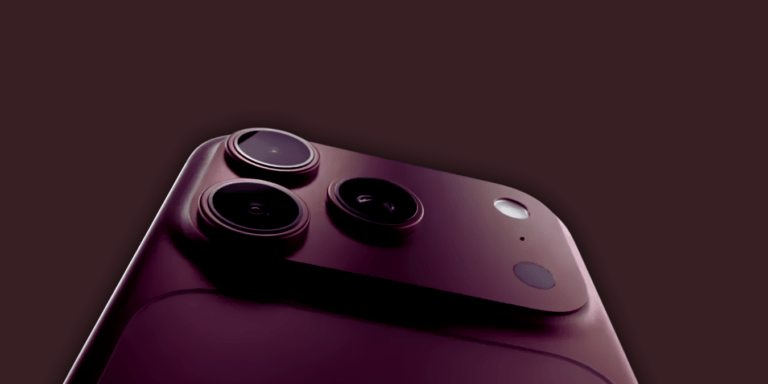
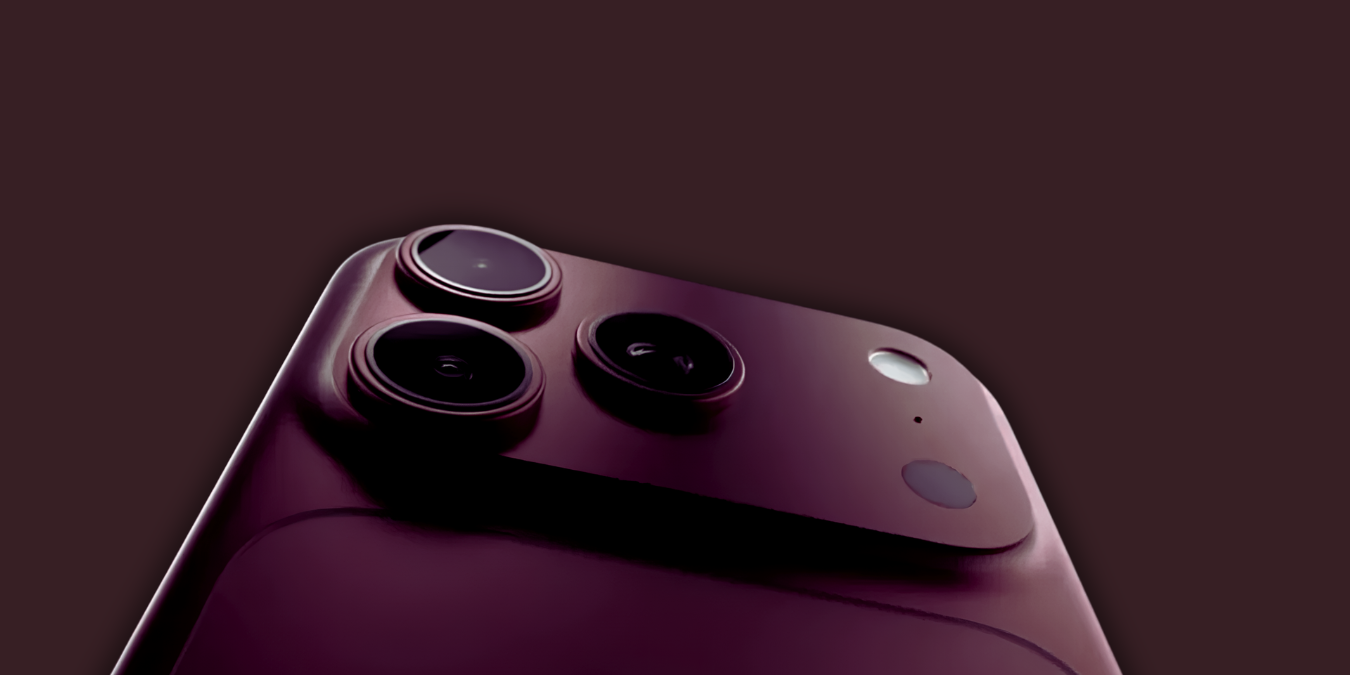
The centerpiece of the iPhone 18 Pro’s camera overhaul is a mechanically variable aperture main lens — a technology that has never appeared in any production iPhone. Variable aperture, for those unfamiliar with the optical physics involved, refers to a lens that can physically expand or contract its iris diaphragm to control how much light reaches the image sensor. In a DSLR or mirrorless camera, a photographer might shoot wide open at f/1.4 in a dark theater to capture as much light as possible, then stop down to f/8 outdoors in bright sunlight to keep everything sharp. Smartphones, until now, have been locked into a single, fixed aperture — a permanent compromise between light-gathering ability and depth of field control. Apple’s solution, reportedly tested with components supplied by Luxshare ICT and Sunny Optical, is a precision mechanical actuator system embedded into the main 48-megapixel Fusion camera module, expected to offer an adjustable range between approximately f/1.4 and f/2.8. This means the iPhone 18 Pro will, for the first time, respond to light the way a real camera does — physically, mechanically, and with an optical authenticity that no amount of computational photography can fully replicate.
Why 2024 Was the Real Starting Point
To understand why this upgrade feels simultaneously sudden and inevitable, you have to rewind to 2024, when multiple converging signals pointed toward Apple making a major optical hardware commitment. Ming-Chi Kuo, arguably the most accurate Apple supply chain analyst in the industry, first flagged the variable aperture direction in a late 2024 note. Shortly after, Korean technology outlet ETNews independently corroborated the rumor with sourcing from Apple’s supply chain partners in Korea. By February 2026, Weibo leaker Digital Chat Station — who has a strong track record on Apple hardware specifics — confirmed that Apple was actively testing “a variable aperture main camera plus a large aperture telephoto lens” simultaneously. That dual-track development is critical: Apple was not experimenting with one isolated change. It was architecting an entirely new optical philosophy for the Pro lineup, and it had been doing so since at least the early planning cycles of 2024.
The Telephoto Gets a Radical Rethink Too
While the variable aperture main camera will command most of the attention, the telephoto lens upgrade on the iPhone 18 Pro deserves equal examination. The current iPhone 17 Pro ships with a f/2.8 aperture on its periscope telephoto — a figure that causes real, visible degradation in low-light zoom shots. Apple is reportedly addressing this with a significantly wider telephoto aperture on the iPhone 18 Pro, a change that would deliver markedly improved performance in conditions where telephoto photography has historically been the weakest link in the iPhone camera chain. Telephoto low-light photography is one of the most difficult problems in mobile optics because the longer focal length requires more light to produce a clean image, and a narrow fixed aperture compounds that difficulty dramatically. A wider aperture telephoto, combined with improved sensor-shift OIS and the computational power of the A20 Pro chip, has the potential to make iPhone zoom photography genuinely competitive with full-frame mirrorless systems in real-world use — not just in lab tests.
The Supply Chain Confirmation That Made It Real
For months, the variable aperture camera lived in the realm of informed speculation. That changed in April 2026, when MacRumors reported that the variable aperture camera module for the iPhone 18 Pro had entered active production. This is the supply chain milestone that separates a rumor from a certainty. Component production at this stage of the calendar — approximately five to six months before an expected September launch — is entirely consistent with Apple’s historical manufacturing timelines. LG Innotek, one of Apple’s primary camera module manufacturing partners, was reported to be installing the specialized equipment required to produce this lens assembly at scale. Sunny Optical was simultaneously confirmed as a co-supplier for actuator components. When two of the world’s most capable precision optics manufacturers are tooling up for a specific component at this volume and at this schedule, the engineering decision is locked. The iPhone 18 Pro will ship with a variable aperture camera. The question is no longer whether it will happen, but what it will feel like in your hands.
Apple’s Four-Part Camera Master Plan
Perhaps the most strategically significant detail to emerge in recent weeks is that the iPhone 18 Pro’s variable aperture is not an isolated feature — it is the first chapter of a four-part camera upgrade roadmap that Apple is executing across the next several iPhone generations. According to the Weibo-based account Digital Chat Station, as noted by MacRumors and AppleWorld.Today, Apple has implementation plans for four sequential hardware improvements: variable aperture on the main camera, a 1/1.12-inch ultra-large main camera sensor, enhanced optical image stabilization for the ultra-wide lens, and a 200-megapixel periscope telephoto lens. Each of these upgrades, taken individually, would be a headline feature. Together, they represent something unprecedented in Apple’s product history — a publicly traceable, multi-year hardware commitment to making the iPhone the unambiguous best camera system in the world, not just among smartphones, but among all portable imaging devices. The iPhone 18 Pro is where that plan publicly begins.
The Halide Connection: Software Meets Hardware
Hardware is only half the story. One of the most quietly significant moves Apple made in the lead-up to the iPhone 18 Pro’s camera era was hiring Sebastian de With, the designer and co-creator of Halide — widely regarded as the most powerful and elegantly designed third-party camera app in the App Store. Apple reportedly attempted to acquire Lux Optics, the company behind Halide, before the deal fell through. Rather than walk away, Apple hired the talent directly. This tells you something essential about Apple’s intentions. A variable aperture lens without sophisticated manual control software is a wasted opportunity. By bringing in the person who built the finest manual camera interface on iOS, Apple is signaling that the iPhone 18 Pro will not just have better hardware — it will offer a fundamentally richer photographic experience. Bloomberg has separately reported that iOS 27 will introduce a new Siri-powered visual intelligence mode inside the Camera app, suggesting that the software layer arriving alongside the iPhone 18 Pro’s hardware will be equally thoughtful and ambitious.
What Variable Aperture Actually Feels Like to Use
It is worth pausing here to explain, in concrete terms, what owning a variable aperture iPhone will actually mean for the people who use it every day. When you shoot with the iPhone 17 Pro in a bright outdoor environment, the camera compensates for excess light by using a neutral density filter — a software-simulated ND filter that reduces light digitally, which is inherently less pure than a physical iris reduction. With variable aperture, the iPhone 18 Pro will physically stop down its lens, just as a professional camera would. The result is optically cleaner images, more accurate color rendering, and true creative control over depth of field — the ability to make a background razor-sharp or beautifully blurred through actual optics rather than AI estimation. For portrait photographers, wedding shooters, content creators, and anyone who has ever felt that iPhone bokeh looks slightly artificial, this is the fix. It is real, not rendered.
Samsung Tried This Before — Here Is Why Apple Will Succeed Where Samsung Failed
A fair and important question arises when discussing iPhone variable aperture: Samsung did this already. The Galaxy S9 and S10 shipped in 2018 and 2019 with a dual-aperture system that could switch between f/1.5 and f/2.4. Samsung eventually dropped the feature entirely. So why should we believe Apple will do better? The answer lies in several compounding advantages Apple holds that Samsung did not in 2018. First, Apple’s A20 Pro chip — built on TSMC’s most advanced process node — delivers computational photography capabilities that are orders of magnitude beyond what was available to Samsung’s Exynos and Snapdragon processors in 2018. Second, Apple’s vertical integration of hardware and software means the aperture control system will be tuned at every level — silicon, firmware, and OS — rather than bolted onto a third-party Android stack. Third, Apple has had years of observing Samsung’s implementation failure and has specifically architected its actuator mechanism to be slimmer and more efficient than previous attempts. Finally, Apple’s investment in hiring Halide-level talent for the Camera app means the user experience of controlling aperture will be intuitive and elegant rather than buried in a settings menu. Samsung’s variable aperture felt like a spec sheet bullet point. Apple’s will feel like a photographic instrument.
The Bloomberg Bombshell That Reframed Everything
On April 28, 2026, Bloomberg’s Mark Gurman — the journalist with the most consistently accurate Apple sourcing in the industry — ended a Camera app report with a sentence that stopped the tech world mid-scroll. He wrote that the software changes “come ahead of the iPhone 18 Pro this fall, which will include some of the biggest camera hardware upgrades in the lineup’s history.” Gurman did not specify which hardware upgrades he was referring to beyond what had already been reported about variable aperture and the telephoto improvements. The fact that he framed even the currently known upgrades as “some of the biggest in the lineup’s history” is significant — because Mark Gurman is not known for hyperbole about incremental improvements. When he says “biggest in history,” the reasonable inference is that there are additional hardware details not yet public that will make the final reveal even more significant than the leaks currently suggest. For a writer of Gurman’s caliber and track record, that is extraordinary language.
Who the iPhone 18 Pro Camera Is Really Built For
It would be easy to frame the iPhone 18 Pro camera as a tool for professional photographers, and it is certainly that. But the more honest and more interesting answer is that it is built for everyone who has ever been frustrated by the gap between what they saw with their eyes and what their iPhone captured. That frustration is universal. It is the dark concert that came out grainy. It is the portrait where the background looks digitally smudged rather than naturally soft. It is the zoom shot of a bird on a fence that dissolved into noise the moment you pinched past 3x. Variable aperture addresses the root cause of all three of those frustrations at the physical, optical level. And because Apple will almost certainly default the system to automatic aperture selection — letting the camera intelligently choose the right f-stop for each scene, just as it already chooses shutter speed and ISO — the overwhelming majority of iPhone 18 Pro users will experience better photographs without ever consciously thinking about aperture at all. That is the Apple approach: profound capability worn lightly.
What This Means for the Entire Smartphone Industry
The iPhone 18 Pro camera’s variable aperture will not remain an iPhone exclusive for long. Apple has a documented historical pattern of introducing hardware categories that the Android ecosystem then scrambles to replicate — computational photography with the A11 Neural Engine in 2017, LiDAR in 2020, Ceramic Shield glass, and satellite connectivity in 2022. Variable aperture, executed at Apple’s level of precision and software integration, will become the benchmark every Android manufacturer is chasing by 2027. Google Pixel, Samsung Galaxy Ultra, and Xiaomi’s flagship division will all have roadmapped responses to this announcement before the iPhone 18 Pro even ships. That competitive pressure is ultimately good for everyone who owns any smartphone, because Apple’s hardware decisions set the floor for what the entire industry considers achievable. When Apple commits to a technology in a Pro iPhone, that technology becomes mandatory for every flagship device within two to three generations.
The Broader Shift in Mobile Photography’s Identity
There is a philosophical dimension to what Apple is doing with the iPhone 18 Pro that goes beyond megapixels and aperture stops. For most of the iPhone’s history, Apple’s camera philosophy has been rooted in computational photography — the idea that software intelligence can compensate for the physical limitations of small sensors and fixed lenses. That philosophy produced remarkable results. But it also produced a specific aesthetic: images that are technically flawless but occasionally feel processed, smoothed, and optimized into a kind of hyper-real perfection that lacks the organic quality of light captured through real optical glass behaving the way physics intends. Variable aperture is Apple’s acknowledgment that computational photography, for all its power, has a ceiling — and that ceiling can only be raised by giving the optics more authentic tools to work with. This is not a retreat from computational photography. It is a maturation of it. The iPhone 18 Pro will combine genuine optical flexibility with the most powerful image signal processor ever placed in a phone, and the result will be photographs that are not just technically superior but emotionally truer to the moment they captured.
The September Moment Is Coming
Active production of the variable aperture module is underway. Mark Gurman has confirmed this will be a historic camera year for the iPhone. The Halide talent is inside Apple engineering the interface. The four-part upgrade roadmap is confirmed and in motion. The supply chain partners — LG Innotek, Sunny Optical, Luxshare ICT — are building the components at scale. Every thread that matters is pulled tight and pointing toward the same moment: the September 2026 iPhone 18 Pro announcement. If you have been holding your breath on a smartphone upgrade, waiting for the one that genuinely changes something rather than just polishing what already exists — you no longer need to wonder whether that moment is coming. Based on everything in the supply chain, every credible leaker, every confirmed Bloomberg report, and every engineering hire Apple has made, it is already being built. The iPhone 18 Pro camera that Apple has been quietly engineering since 2024 is real, it is in production, and when it arrives this fall, it will change what you mean when you say you are “just using your phone” to take a picture.