OnePlus Nord CE 6 Spotted on Geekbench Just Weeks Before a Rumored May 2026 Launch — Everything We Know About Specs, Price, and What's Still Being Hidden
The pre-launch intelligence cycle for the OnePlus Nord CE 6 has officially entered its most revealing phase. On April 19, 2026, a device carrying the model number CPH2805 appeared in the Geekbench 6 database — the clearest signal yet that the Nord CE 6’s launch is not weeks away in some vague, speculative sense, but firmly imminent and on track for a confirmed May 7, 2026 India debut. For followers of the mid-range smartphone market, this Geekbench sighting is the kind of leak that transforms months of rumor and speculation into verifiable hardware data. It confirms the chipset, reveals the RAM configuration, identifies the Android version, and — perhaps most interestingly — exposes a performance gap that tells a more nuanced story about OnePlus’s product strategy than any official press release ever would. What follows is the most complete picture currently available of a phone that, if it delivers on its specifications, could be one of the most compelling value propositions in the under-₹31,000 segment this year.
The Geekbench Sighting: What Was Found and Why It Matters
Geekbench listings are not mere curiosities for tech enthusiasts. They are the closest thing to an official hardware confirmation that exists before a manufacturer chooses to officially announce a product, and they carry specific, verifiable technical information that leak-based rumor mills simply cannot fabricate. The CPH2805 listing — now widely attributed by multiple independent tipsters and outlets to the OnePlus Nord CE 6 — ran Geekbench 6.7.0 for Android AArch64 and posted a single-core score of 1,101 and a multi-core score of 3,117. The listing confirms the device is powered by the Qualcomm Snapdragon 7s Gen 4 SoC with an Adreno 810 GPU, carries approximately 7.21GB of usable RAM (which will be marketed as 8GB in retail configurations), and ships with Android 16 out of the box. Each of these data points is meaningful individually. Together, they paint a precise portrait of where OnePlus has positioned this device within its lineup and what trade-offs were made to hit a price point that keeps the Nord CE 6 competitive against an increasingly aggressive field of mid-range rivals.
The model number CPH2805 itself is informative. OnePlus uses the CPH prefix for devices manufactured and distributed through its Indian and Southeast Asian channels, distinguishing them from Chinese domestic variants that carry internal designations. The CPH2805 designation places this firmly in the global launch trajectory, confirming that the device seen on Geekbench is the same unit that will reach Indian retail shelves in May. There is no ambiguity about regional variants or hardware revisions — this is the phone.
Snapdragon 7s Gen 4: The Heart of the Matter
No single specification generates more discussion around the Nord CE 6 than the choice of the Qualcomm Snapdragon 7s Gen 4. Understanding why requires a brief examination of where this chip sits in Qualcomm’s mid-range hierarchy — and why that positioning is both the Nord CE 6’s greatest value argument and its most debated characteristic.
The Snapdragon 7s Gen 4 is built on a 4nm TSMC process node, which represents a meaningful step forward in thermal efficiency and power management compared to the 4nm Samsung process used in the Snapdragon 7s Gen 3. It features an octa-core CPU configuration — a prime core running at up to 2.3GHz, three performance cores at up to 2.2GHz, and four efficiency cores at up to 1.8GHz — paired with the Adreno 810 GPU, which delivers approximately 20 percent better graphics performance than the Adreno 720 found in the previous generation. The chip also integrates a sixth-generation Qualcomm AI Engine, which directly feeds capabilities like on-device AI photo processing, real-time noise suppression in calls, and the kind of intelligent battery management that has become a baseline expectation in 2026 mid-range devices.
The Geekbench scores of 1,101 (single-core) and 3,117 (multi-core) provide the first real-world benchmark data for the Snapdragon 7s Gen 4 inside the Nord CE 6’s specific thermal and software environment. Contextualizing those numbers against the broader competitive landscape is essential. The outgoing OnePlus Nord CE 5, powered by the Snapdragon 7s Gen 3, posted scores of 1,317 single-core and 3,989 multi-core on the same benchmark suite. This means the Nord CE 6’s Geekbench performance is measurably lower than its predecessor — a counterintuitive finding that has generated genuine debate among tech analysts and enthusiasts in India’s smartphone community. The explanation lies in how Geekbench scores interact with thermal tuning, the specific software build submitted for benchmark testing, and the fact that pre-release benchmark results frequently do not reflect the optimized performance profile that ships in the retail unit. It is a known phenomenon in the industry, and it would be premature to conclude from benchmark data alone that the Nord CE 6 underperforms the CE 5 in real-world usage.
The Full Leaked Specification Sheet
Beyond the Geekbench confirmation, a substantial body of specification intelligence has accumulated from multiple corroborating sources over the past several weeks. The current consensus picture of the OnePlus Nord CE 6’s hardware configuration is the most detailed it has ever been, and several specifications have now been confirmed by enough independent sources to be treated as reliable rather than speculative.
The display is expected to be a 6.78-inch 1.5K AMOLED panel with a 144Hz adaptive refresh rate and an SDR color profile. This is a direct carry-over from the OnePlus Turbo 6V — the Chinese domestic device on which the Nord CE 6 is reportedly based — and it represents a meaningful upgrade over the 120Hz panel on the Nord CE 5. The move from 120Hz to 144Hz at the 1.5K resolution tier is not simply a specification checkbox; it delivers a tangibly smoother scrolling and animation experience that is immediately perceptible during daily use, particularly in gaming and social media scrolling contexts where the mid-range audience spends significant screen time. The display is protected by Crystal Shield Glass, OnePlus’s proprietary damage-resistant coating.
On the battery front, the Nord CE 6 is reportedly equipped with a 9,000mAh silicon carbon battery — an enormous cell by any mid-range standard and a dramatic leap from the 7,100mAh unit in the Nord CE 5. Silicon carbon battery chemistry is still relatively uncommon in devices below the ₹35,000 tier in India, and its inclusion here speaks directly to the battery endurance positioning that OnePlus appears to have made the Nord CE 6’s primary differentiator. This chemistry offers higher energy density in a smaller physical volume compared to conventional lithium-ion cells, which means OnePlus can package a 9,000mAh capacity without the device becoming unacceptably thick or heavy. The charging system supports 80W wired fast charging, with a charger included in the retail box — a detail worth emphasizing in a market where manufacturers have increasingly begun omitting chargers to reduce costs and environmental impact.
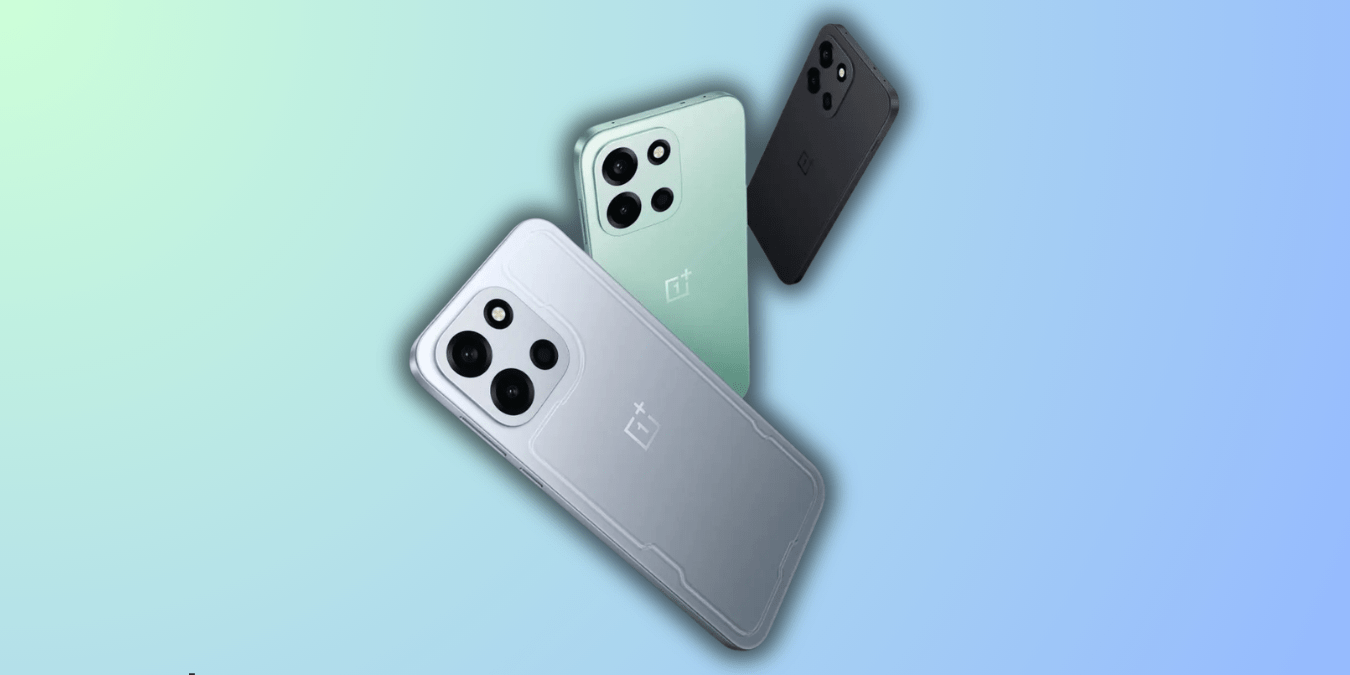
The camera system is a 50MP primary sensor with OIS (optical image stabilization), a 2MP monochrome depth sensor, and a 16MP front camera capable of 4K video recording at 30fps from the rear. OIS at this price tier is a genuine differentiator — it enables the primary camera to produce significantly more stable handheld video and low-light photography results than competing devices relying purely on electronic image stabilization. The 4K recording capability from a sub-₹31,000 device is similarly notable, though the proof of that capability lies in the actual video quality rather than the specification alone.
Connectivity and durability specifications include 5G, Wi-Fi 6, Bluetooth 5.4, USB-C with support for USB 3.2, an under-display optical fingerprint scanner, and — crucially — IP68 and IP69K dual dust and water resistance ratings. The inclusion of IP69K — which certifies resistance against high-pressure, high-temperature water jets, a step beyond the standard IP68 certification — at this price point is unusual and positions the Nord CE 6 as one of the most durability-certified mid-range devices on the Indian market. Storage configuration is 8GB LPDDR4X RAM with 256GB UFS 3.1 internal storage, with higher configurations of up to 12GB RAM and 512GB storage potentially available depending on retail market allocation.
The Android 16 Advantage
One specification that has received less attention than it deserves in coverage of the Nord CE 6 is its confirmed launch on Android 16. The Geekbench listing explicitly confirms Android 16 as the operating system running on the CPH2805 test unit. For a device launching in May 2026, shipping with Android 16 out of the box means OnePlus is not launching a device that will receive the current year’s major OS update months after purchase — it is launching a device that begins its software lifecycle at the current frontier. Combined with OnePlus’s commitment to three years of major Android updates and four years of security patches for its Nord series, this translates to effective software support through Android 19 — a competitive software longevity proposition that rivals Samsung’s Galaxy A series and is superior to most Chinese OEM alternatives at comparable price points.
The OxygenOS 16 skin running on Android 16 also brings meaningful feature additions over the OxygenOS 15 build on the Nord CE 5, including the updated AI Live Photo capabilities, improved AI-driven call noise cancellation using the Snapdragon 7s Gen 4’s sixth-generation AI Engine, and the revamped Always-On Display customization system that OnePlus introduced with OxygenOS 16 earlier in 2026.
The Price: What the Market Evidence Suggests
The expected retail pricing of the OnePlus Nord CE 6 has been one of the most actively debated aspects of the pre-launch coverage, with estimates from credible sources ranging from ₹26,990 to ₹30,999 for the base 8GB/256GB configuration. The wide range reflects genuine uncertainty about how OnePlus will position the device relative to its own Nord 6 flagship — which launched at ₹38,999 — and against the competitive field of Snapdragon 7s Gen 4-powered devices that have already arrived in the Indian market.
That competitive field is worth examining closely. The Motorola Edge 70 Fusion launched in India in early 2026 with the Snapdragon 7s Gen 4 at ₹22,999, establishing the lower end of the pricing band for this chip. The Realme P4 Power arrived at ₹24,999 with similar specifications. OnePlus will need to justify a premium over these alternatives through the combination of its software polish, the OIS-equipped camera system, the IP68/IP69K certification, the silicon carbon battery, and the brand cachet that OnePlus commands in the Indian market — particularly among consumers who have owned previous Nord devices and trust the ecosystem. A price of ₹28,999 to ₹30,999 appears most consistent with the totality of the leaked specifications and OnePlus’s historical positioning in the Nord CE series, but official confirmation awaits the May 7 announcement.
What Is Still Being Hidden
For all the specification intelligence that has accumulated, several important dimensions of the Nord CE 6 remain genuinely unknown — and their omission from leaks is in some cases as revealing as what has been disclosed. The camera sensor identity has not been confirmed by any credible source. Knowing that the primary camera is 50MP tells us relatively little about its actual imaging capability — the difference between a Samsung ISOCELL JN1 and a Sony IMX766 behind identical megapixel counts is the difference between mediocre and excellent low-light photography. OnePlus has historically used quality sensors in its Nord series at this tier, but the specific component matters enormously for how the camera will actually perform in the hands of users.
The software feature set for OxygenOS 16 on the Nord CE 6 has also not been detailed. Specifically, whether the device will receive the full suite of OnePlus AI features — including the AI Photo Enhancement engine, AI Call Translation, and the AI-powered battery optimization algorithms announced for the Nord 6 — or a trimmed version suited to the CE tier’s positioning, remains undisclosed. The distinction matters because AI features have become a genuine differentiator in 2026’s mid-range market, and consumers making a platform choice between OnePlus, Samsung, and Realme are increasingly factoring AI software capability into their decisions.
Wireless charging remains conspicuously absent from all leaked specification sheets. Given that the Nord CE 5 also lacked wireless charging, its absence would not be surprising — but the silence on this point is notable given that several competitors at similar price points have begun incorporating at least 15W wireless charging as a baseline feature. OnePlus may be making a deliberate choice to reserve wireless charging for the Nord 6 flagship tier, or the omission may simply reflect the difficulty of packaging the required hardware alongside a 9,000mAh cell within the device’s form factor constraints.
OnePlus Nord CE 6 Lite: The Sibling in the Wings
The Nord CE 6 does not arrive alone. Its sibling, the OnePlus Nord CE 6 Lite, also made a Geekbench appearance — under model number CPH2943 — on April 15, 2026, just four days before the CE 6’s own listing surfaced. The CE 6 Lite is powered by the MediaTek Dimensity 7400 chip, posting scores of 1,068 single-core and 2,953 multi-core — meaningfully lower than the CE 6’s Snapdragon-powered scores. The Lite variant runs Android 16 with 8GB RAM and is expected to launch alongside or shortly after the CE 6 as a volume entry point for consumers who prioritize value-per-rupee over outright performance. The CE 6 Lite’s expected price of approximately ₹29,999 according to some sources creates an interesting internal competition within the Nord CE family that OnePlus will need to navigate carefully in its launch messaging.
Why the May 7 Launch Date Matters
The confirmation of a May 7, 2026 launch date — attributed directly to OnePlus’s own communications — places the Nord CE 6 in a particularly competitive launch window. May is historically one of the highest-volume months for mid-range smartphone sales in India, driven by the academic year transition, summer purchase cycles, and the proximity to major e-commerce sale events. OnePlus will be entering this window with a device that, on paper, represents the most capable Nord CE specification sheet ever assembled. The 9,000mAh silicon carbon battery, the 144Hz 1.5K AMOLED display, the IP68/IP69K certification, the OIS-equipped 50MP camera, and Android 16 out of the box form a hardware proposition that will be difficult for competitors at the ₹26,000 to ₹31,000 tier to directly counter in the immediate term.
The Geekbench appearance of CPH2805 on April 19 — less than three weeks before the announced launch — is the final phase of a pre-launch intelligence cycle that has been unusually rich. It confirms that hardware testing is complete, software builds are stable enough for benchmark submission, and the production pipeline is aligned with the May 7 calendar commitment. What remains between now and launch day is the official price confirmation, the camera sample disclosure, and the OxygenOS 16 feature documentation that will determine whether the OnePlus Nord CE 6 becomes a category benchmark or merely a well-specified contender in one of the world’s most competitive smartphone markets.