Emerging Markets on the Edge: Why Currency Volatility and Energy Shocks Are Creating a Financial Powder Keg in 2026
The year 2026 was supposed to be different. After years of post-pandemic restructuring, rising interest rates, and geopolitical friction, economists had cautiously penciled in a period of stabilization for the world’s emerging economies. Instead, what we are witnessing is something far more unsettling — a convergence of currency volatility, energy supply disruptions, and sovereign debt stress that is quietly assembling one of the most precarious financial environments in recent memory. For investors, policymakers, and everyday citizens in countries from Pakistan to Peru, the ground beneath their feet is shifting faster than official forecasts acknowledge.
Understanding why this moment is different from previous cycles of EM stress requires more than a glance at headline inflation numbers or central bank policy statements. It requires a deep, honest look at the structural vulnerabilities that have been building for years, the external shocks accelerating them, and what the real-world consequences look like for the billions of people living in these economies.
The Currency Conundrum Deepening in 2026
Currency instability is not new to emerging markets. The Thai baht crisis of 1997, the Argentine peso collapse of 2001, the Turkish lira’s prolonged erosion — history is littered with cautionary tales. But the currency pressures building in 2026 carry a distinct and dangerous character: they are simultaneously hitting multiple major emerging economies at once, and the traditional escape valves are increasingly blocked.
The core driver is the persistent strength of the US dollar. As the Federal Reserve has maintained a higher-for-longer interest rate stance well into 2025 and early 2026, capital has continued to gravitate toward dollar-denominated assets. The logic is brutally simple — when US treasuries offer competitive real yields, institutional investors see little reason to tolerate the additional risk premium of emerging market debt. The result is capital outflow from EM economies, downward pressure on local currencies, and a vicious cycle of imported inflation that central banks in these countries are ill-equipped to fight without inflicting severe domestic pain.
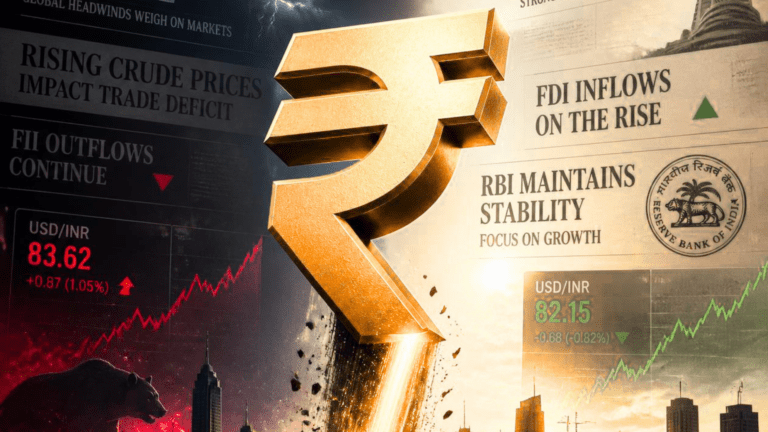
In South Asia, the Indian rupee has faced sustained depreciation pressure, though the Reserve Bank of India has managed the slide through aggressive foreign exchange intervention. Countries with thinner reserve buffers have not been so fortunate. Egypt, Nigeria, and several Sub-Saharan African nations have watched their currencies lose purchasing power dramatically, straining import bills at the worst possible time — precisely when global commodity prices for essential goods like wheat and cooking oil remain elevated.
The structural problem is that many emerging market governments carry significant portions of their debt in foreign currencies, particularly dollars. When the local currency weakens, the real cost of servicing that debt explodes. A government that borrowed at a manageable debt-to-GDP ratio suddenly finds its fiscal space collapsing not because of reckless spending but simply because the exchange rate moved against them. This is the trap that financial analysts call the “original sin” of EM borrowing, and it remains devastatingly relevant today.
Energy Shocks: The Accelerant Nobody Planned For
If currency volatility is the smoldering fire, energy shocks are the accelerant. The global energy landscape in 2026 is characterized by a contradictory mix of long-term transition pressures and short-term supply fragility that has caught many emerging economies in a genuinely impossible position.
On one hand, the global push toward renewable energy and the phasing out of fossil fuel financing from multilateral lenders has reduced investment in new conventional energy production across the developing world. On the other hand, the energy transition itself remains deeply uneven — wealthy nations can afford to subsidize domestic renewable buildout while maintaining energy security, but lower-income emerging economies are caught between fossil fuel dependence and the capital requirements needed to transition. The gap between aspiration and infrastructure is enormous.
The consequences have been visceral. Countries like Pakistan and Sri Lanka have faced recurring energy shortfalls that directly throttle industrial output and household welfare. Blackouts running eight to twelve hours a day in some regions are not a minor inconvenience — they represent destroyed economic productivity, spoiled food supplies, disrupted healthcare facilities, and the erosion of business confidence that takes years to rebuild. Foreign direct investment, already cautious about EM exposure, retreats further when investors cannot trust that the lights will stay on.
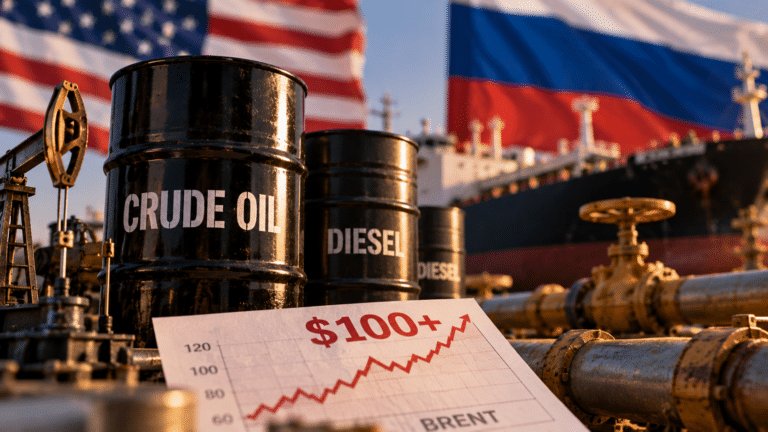
Meanwhile, the geopolitical disruptions affecting global oil and natural gas markets have introduced a layer of price unpredictability that makes planning nearly impossible for energy-importing nations. When oil price spikes hit, emerging market nations that import energy face a double blow — their currencies weaken simultaneously, meaning they pay more in local currency terms for energy priced in dollars. The current account deficit widens, foreign reserves drain faster, and the cycle of pressure intensifies.
For energy-exporting emerging markets, the picture is not straightforwardly better. Nations like Nigeria and Angola have theoretically benefited from elevated oil prices, but the structural inability to translate export revenues into broad-based economic development — due to corruption, underdeveloped downstream industries, and chronic underinvestment in infrastructure — means that the windfall rarely reaches the populations that need it most. The resource curse, as development economists have long documented, distorts institutions and creates political instability that itself feeds into financial market volatility.
Debt Distress: When the Numbers Stop Adding Up
Sovereign debt stress is the third pillar of this converging crisis, and it may be the most dangerous because of how quickly it can trigger systemic consequences. According to data tracked by the International Monetary Fund and World Bank through early 2026, a significant number of low-income and lower-middle-income countries are either in debt distress or at high risk of entering it. The post-COVID borrowing surge, combined with rising global interest rates, has pushed debt-service ratios in many countries to levels where governments are spending more on interest payments than on education, healthcare, or infrastructure combined.
This is not an abstraction. When a government in sub-Saharan Africa must allocate forty or fifty cents of every dollar of revenue to creditor payments, the social contract between state and citizen begins to fracture. Public services deteriorate. Political instability rises. And as instability rises, investor confidence falls further — requiring even higher interest rates on any new borrowing, which worsens the debt dynamics in a self-reinforcing spiral.
The restructuring of sovereign debt has also become more complicated than in previous decades, partly because the creditor landscape has fundamentally changed. Historically, debt restructuring in developing countries was managed primarily through the Paris Club — a group of major Western creditor nations — alongside the IMF. Today, a substantial share of emerging market debt is owed to Chinese state lenders, private bondholders, and a more fragmented array of creditors with very different incentives and restructuring preferences. Coordination is slow, opaque, and politically charged. Countries like Zambia and Ghana, which have been navigating restructuring processes, have experienced delays measured in years rather than months, leaving them in prolonged uncertainty that chills investment and governance capacity simultaneously.
The Contagion Risk That Markets Are Underpricing
One of the most concerning aspects of the current environment is that financial markets appear to be underpricing the risk of contagion — the process by which stress in one emerging market spreads to others through investor sentiment, trade linkages, and commodity price channels. The assumption that each country’s problems are idiosyncratic, unique to its own policy failures or political dysfunction, is a comforting but potentially dangerous simplification.
History suggests that when multiple emerging economies face simultaneous stress, investor psychology shifts in ways that are difficult to predict and hard to reverse. The 1997-98 Asian financial crisis began as a Thai currency problem and became a global financial shock within eighteen months. The 2013 “Taper Tantrum,” triggered by a single Federal Reserve communication, caused simultaneous capital outflows from emerging markets across multiple continents. Today, the combination of factors in play — synchronized currency pressure, shared energy vulnerability, and widespread debt stress — creates conditions where a triggering event in one country could rapidly cascade across others.
The countries most vulnerable to this contagion effect are those with high external financing needs, low foreign exchange reserves relative to short-term debt obligations, significant exposure to commodity price swings, and limited policy credibility with international investors. Unfortunately, this description fits a non-trivial number of economies across Africa, South Asia, and Latin America simultaneously.
The Human Dimension That Statistics Obscure
Economic analysis of financial crises risks becoming a bloodless exercise in data interpretation if it loses sight of what these dynamics mean for actual human lives. Currency depreciation and energy shocks are not just macroeconomic statistics — they translate directly into the cost of food, the reliability of electricity, the availability of medicines, and the dignity of daily life for hundreds of millions of people.
In countries experiencing significant currency depreciation, households that earn in local currency but depend on imported goods — which includes nearly all manufactured goods, many foods, and virtually all pharmaceuticals in commodity-dependent economies — watch their purchasing power evaporate without any corresponding increase in wages. The political consequences of this lived experience are profound. Popular frustration with governments perceived as incompetent, corrupt, or captured by foreign creditors has fueled protest movements and political instability in countries from Ecuador to Kenya to Bangladesh in recent years, and the conditions driving that frustration have not improved in 2026.
Children pulled from school because families cannot afford fees or need additional income earners represent lost human capital that compounds over decades. Healthcare systems strained by austerity conditions imposed as part of IMF program requirements face genuine impossible choices about resource allocation. The economic and developmental cost of these crises is measured not just in GDP points but in human capability and dignity that, once lost, is extraordinarily difficult to recover.
What Differentiates the Resilient from the Fragile
Not all emerging markets are equally vulnerable, and understanding the factors that differentiate resilience from fragility offers both analytical clarity and actionable insight. The countries navigating this environment most successfully share several characteristics that are worth examining closely.
Strong and credible central banks with genuine operational independence have proven critical. When investors trust that monetary policy will be managed with discipline and transparency, they are more willing to hold local currency assets even during periods of external stress. Brazil’s central bank, despite significant political pressure, has maintained a reputation for policy credibility that has helped the real avoid the worst of the depreciation pressures hitting peers. India’s Reserve Bank, similarly, has communicated clearly and intervened strategically in foreign exchange markets to prevent disorderly depreciation without attempting to artificially defend an unsustainable exchange rate level.
Diversified export bases provide another buffer. Countries that depend on a single commodity for the majority of their export earnings are acutely vulnerable to price swings in that commodity. When the commodity price falls, their currency weakens, their fiscal revenues collapse, and their ability to service debt deteriorates simultaneously. Economies that have built diversified manufacturing or service export sectors — Vietnam in electronics and garments, Morocco in automotive components and services, Indonesia across a range of commodities and manufactured goods — demonstrate greater shock absorption capacity.
Domestic capital market development matters enormously as well. Countries that have successfully cultivated deep pools of domestic institutional investors — pension funds, insurance companies, mutual funds holding local currency bonds — are less dependent on the fickle flows of international capital. When global risk appetite shifts and foreign investors exit, domestic institutions can provide a stabilizing counterweight. Building this capacity takes decades of consistent policy effort, but its value in a crisis environment is difficult to overstate.
The Role of Multilateral Institutions: Insufficient and Inconsistent
The IMF and World Bank remain the primary institutional backstops for emerging market economies in distress, and their role in 2026 is under significant scrutiny. Criticism comes from multiple directions simultaneously — some argue that IMF conditionality is too severe and imposes social costs on vulnerable populations that undermine the very stability the programs are supposed to restore, while others argue that multilateral financing is too slow, too small, and too encumbered by political considerations to be effective in acute crisis situations.
The IMF has made genuine efforts to reform its toolkit. The Resilience and Sustainability Trust created to help low-income countries address climate vulnerability represents an acknowledgment that the challenges facing developing nations go beyond traditional macroeconomic imbalances. The Flexible Credit Line and Precautionary and Liquidity Line instruments attempt to provide more proactive support to countries with sound fundamentals before they fall into crisis. These are meaningful improvements, but they remain inadequate to the scale of the challenge.
The deeper problem is one of speed and stigma. Accessing IMF support requires negotiating a program that is politically sensitive domestically — governments face accusations of surrendering sovereignty and imposing hardship on citizens. By the time a country has worked through the political and technical process of securing a program, significant economic damage has often already occurred. Reforms that would make multilateral support faster, larger, and less stigmatizing have been discussed for years but remain largely unrealized.
What Investors and Policymakers Must Do Differently
The powder keg metaphor in the title of this analysis is chosen deliberately, not for dramatic effect but because it captures something important about the current moment: the components of a significant financial disruption are assembled and present, but the detonation is not inevitable. Intelligent action by investors, policymakers, and multilateral institutions can meaningfully reduce the probability and severity of a systemic crisis.
For investors, the current environment demands more granular differentiation within the broad “emerging markets” category. Treating EM as a monolithic asset class — buying or selling a single ETF based on global risk sentiment — misses the enormous variation in fundamentals across countries and creates the very contagion dynamics that make crises more severe. Deep country-level research, attention to political risk, and genuine assessment of debt sustainability metrics should drive allocation decisions rather than simple yield chasing.
For policymakers in emerging market countries, the priority must be building credibility and policy space during periods of relative calm that can be drawn upon during stress. This means maintaining realistic exchange rate flexibility rather than defending artificial pegs that collapse dramatically when pressure becomes irresistible, building foreign exchange reserve buffers thoughtfully, developing domestic capital markets, and being honest with citizens and markets about fiscal constraints. Governance quality — the degree to which public resources are managed transparently and effectively — remains one of the most powerful determinants of financial resilience over any medium-term horizon.
For multilateral institutions and creditor nations, the urgent priority is making the sovereign debt restructuring architecture function faster and more equitably. The prolonged limbo that countries like Zambia and Ghana have endured is not just a technicality — it represents years of policy paralysis, wasted recovery time, and unnecessary human suffering. Building effective mechanisms for rapid, fair, and comprehensive debt restructuring when it becomes necessary would dramatically reduce the cost of financial crises for everyone involved.
The Broader Stakes of Getting This Wrong
The financial stability of emerging markets is not a niche concern for specialist investors. The economies categorized as emerging and developing markets collectively represent a majority of the world’s population, a growing share of global GDP, and the primary source of future growth in global trade. When these economies experience severe financial stress, the consequences ripple outward in ways that affect supply chains, commodity prices, migration patterns, and geopolitical stability across the entire international system.
The convergence of currency volatility, energy shocks, and debt distress in 2026 is a test of whether the international financial architecture built over the past several decades is genuinely capable of managing the scale and complexity of 21st-century economic challenges. The institutions exist. The analytical frameworks exist. The policy tools, while imperfect, are available. What is required is the political will to use them proactively, the intellectual honesty to acknowledge the severity of what is building, and the global coordination to act before a powder keg becomes a detonation.
The time for that action is not after the crisis arrives. It is now, while the window for prevention and mitigation remains open.