Two billion notes, one experiment: Government clears RBI proposal for ₹10 and ₹20 Polymer Banknotes
Currency policy / Explainer / Updated 29 July 2026
Two billion notes, one experiment: India clears ₹10 and ₹20 polymer currency for the field
The Centre has approved the RBI plan for plastic ₹10 and ₹20 notes, one billion pieces of each. Your paper notes stay valid. The interesting story is buried in the RBI’s own numbers on how much India spends printing cash, and how much of it is shredded every year.
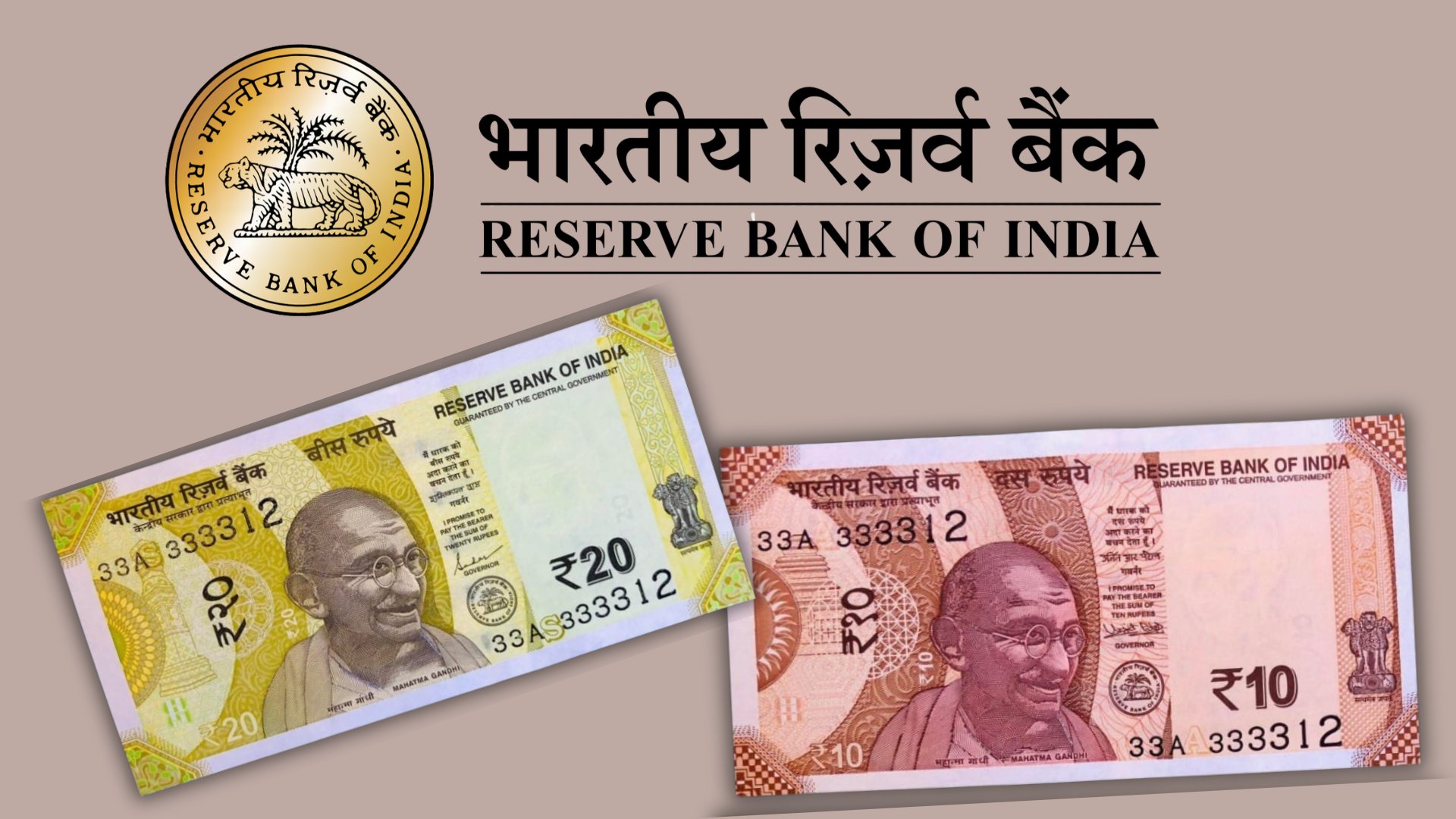
If you have ever been handed a ₹10 note so limp, taped and grey that the shopkeeper waved it away, you already understand the problem the Union government just signed off on solving. In a written reply to an unstarred question in the Lok Sabha, Minister of State for Finance Pankaj Chaudhary confirmed that the Centre has approved a Reserve Bank of India proposal to introduce one billion pieces each of ₹10 and ₹20 polymer banknotes for field trials, with regular issuance in these two denominations to follow if the trials succeed. The proposal was routed through Section 25 of the Reserve Bank of India Act, 1934, on the recommendation of the RBI’s Central Board, which is the statutory path any change in banknote design, form or material has to travel before it reaches a printing press.
Two billion notes sounds enormous. In the context of Indian currency it is a pilot. The RBI has been clear that polymer notes are proposed to be issued alongside paper substrate notes, and that there is no proposal to replace paper currency with polymer. Nothing in your wallet is being demonetised, withdrawn, or given a deadline. What is being tested is a material, in real Indian conditions, at a scale large enough to produce honest data.
Key takeaways
- The Centre has approved the RBI’s proposal for one billion pieces each of ₹10 and ₹20 polymer banknotes for field trials, with regular issuance to be considered after the trials.
- The approval was disclosed by the Minister of State for Finance in a written Lok Sabha reply, under Section 25 of the RBI Act, 1934.
- Paper notes remain fully valid. The government has stated there is no proposal to replace paper currency with polymer substrate banknotes.
- The RBI has told the government that international studies show the lifespan of polymer notes is significantly higher than that of paper notes.
- The economic case sits in two numbers: security printing cost ₹6,372.8 crore in 2024-25, and 2,38,563 lakh pieces of soiled notes were disposed of that year.
- On digital payments, the government’s position is that the effect can only be assessed after regular issuance, and that cash and digital rails are complementary.
What exactly was approved, and what was not
Precision matters here, because currency announcements travel faster than they are read. The approval covers a field trial batch: one billion ₹10 polymer notes and one billion ₹20 polymer notes. It also covers the principle of regular issuance in those two denominations, but only after the field trials are completed successfully. That is a conditional clearance, not a launch date. No trial cities have been notified in the reply, no issue calendar has been published, and no design has been unveiled.
Equally, the reply forecloses the rumour that usually follows. Polymer notes are proposed to be issued along with paper substrate based banknotes. There is no proposal to replace paper currency. If you are holding ₹10 and ₹20 paper notes, they remain legal tender and will continue to be accepted. There is no exchange window, because nothing is being withdrawn.
The money India spends making money
The polymer question is, at bottom, an accounting question dressed up as a materials question. Every note the RBI issues has a manufacturing cost, a distribution cost, a processing cost when it comes back through a currency chest, and a destruction cost at the end of its life. The central bank publishes the first of these in its annual report, and the line has been volatile.
What India spends on printing banknotes
Security printing expenditure, ₹ crore, 2021-22 to 2025-26
Read that chart as a cost of ownership curve rather than a scandal. Printing spend rises when the RBI places a larger indent, which it does when demand for cash grows or when a lot of circulating stock has to be replaced. It falls when the indent is smaller. India’s peak was during the note replacement effort that followed the 2016 withdrawal of the old ₹500 and ₹1,000 notes, when the figure reached about ₹7,965 crore in 2016-17. The relevant point for polymer is simple: a substrate that survives two or three times as long shrinks the replacement half of that indent for as long as it stays in circulation.
The shredder is the real argument
Notes do not usually leave circulation because they are cancelled. They leave because they become soiled, torn, limp, scribbled on, stapled through, or otherwise unfit. Banks return them to currency chests, the RBI verifies and processes them, and the unfit ones are shredded and briquetted. That volume is the clearest measure of how hard Indian cash lives.
Soiled banknotes disposed of by the RBI
Lakh pieces, 2023-24 to 2025-26
That last caveat is important and is the sort of thing that gets lost in headline writing. The dip in 2025-26 is an operational artefact, not evidence that Indian currency has become more durable. The underlying trend across 2023-24 and 2024-25 was upward, with disposal rising more than 12 per cent in a single year. Roughly 24 billion pieces of shredded paper in a year is not a rounding error in anyone’s supply chain.
Which denominations fill the shredder
Soiled notes disposed of in 2025-26, selected denominations, lakh pieces
Look at the ₹20 line again. Just under a billion ₹20 notes were destroyed in a year in which the shredders were partly out of action, and about 1.65 billion in the year before. For a denomination that is used for chai, autos, parking, prasad and change, that is a replacement cycle running fast enough to justify a materials experiment. The RBI’s stated logic is that lower denomination notes are handled the most and wear out the fastest, which makes them the natural place to test a longer-lived substrate.
Why ₹10 and ₹20, and not ₹500
Three reasons converge on the small notes. First, volume. In 2024-25 the ₹500 note held the largest share of banknotes in circulation by volume at 40.9 per cent, with the ₹10 note next at 16.4 per cent, and ₹10, ₹20 and ₹50 together making up 31.7 per cent of all pieces in circulation. Roughly one in three notes in the country is a low denomination note doing the hardest work.
Banknotes in circulation, by volume
Share of total pieces, as on 31 March 2025
Second, wear. A ₹500 note is often stored, counted by machine and moved between banks. A ₹10 note is folded into a shirt pocket, handed through a bus window, soaked in monsoon rain and pressed into a temple donation box. Third, risk containment. If a substrate behaves unexpectedly in ATMs, sorting machines or vending equipment, you would much rather discover it on a denomination that carries a small fraction of the country’s cash value.
What a polymer note actually is
Despite the shorthand, a polymer note is not a stiff plastic card. It is a thin, flexible film, usually biaxially oriented polypropylene, coated with layers of opacifying ink so it can carry printed designs. It folds, it crumples, it goes through counting machines. What differs is the failure mode. Cotton paper absorbs moisture, oils and dirt, then fibres break at the fold lines. Polymer resists water and grease, does not absorb the grime of daily handling, and tends to fail by tearing at a nick rather than by turning into fabric.
The security proposition is different too. A polymer substrate allows a genuinely clear window, a feature that is hard to imitate with paper and easy for a shopkeeper to check in a second. Windows can carry holographic elements, shadow images and embossing. Counterfeiters can and do attempt polymer imitations, but the barrier to a convincing fake is higher, and public verification becomes closer to a one-glance test.
Recyclability is the quieter benefit. Shredded paper notes are typically briquetted and disposed of. Polymer notes and production waste can be granulated and reprocessed into plastic products such as compost bins and plumbing fittings, which changes the end of life from disposal to feedstock.
India has been here before, and that is useful
This is not the first Indian attempt at plastic currency, and the earlier round is the strongest available evidence for how this one will go. Around 2015 to 2017, the government cleared procurement of plastic substrate for ₹10 notes and told Parliament that one billion ₹10 plastic notes would be introduced for field trials in five cities chosen for climatic and usage diversity: Kochi, Mysuru, Jaipur, Shimla and Bhubaneswar. That trial never converted into general issuance, and the plan effectively went quiet for the better part of a decade.
What changed since then is the supply side. On 17 July 2026, Bharatiya Reserve Bank Note Mudran Private Limited, the RBI’s banknote printing subsidiary, floated a global expression of interest for setting up a polymer substrate manufacturing facility in India. That is the difference between a pilot that depends on imported film and a programme that can be sustained domestically. It also sits alongside a broader RBI push, described in its annual reports, towards indigenising primary inputs for banknote production. A currency programme that depends on a single foreign supplier for its raw material is a policy risk. One with a domestic plant is a policy option.
The RBI had informed that, as per international studies, the life span of polymer banknotes is significantly higher than that of paper banknotes.Minister of State for Finance Pankaj Chaudhary, written reply, Lok Sabha
How long is significantly longer
Central banks that made the switch generally report polymer lasting on the order of two and a half times a paper note of the same denomination, with some reporting more in low denominations that circulate hardest. Applying an indicative multiple to Indian conditions is exactly what the field trials are meant to validate, because heat, humidity, dust and handling habits vary enormously across the country, and Indian cash handling includes practices such as stapling bundles that no laboratory test fully anticipates.
Indicative note life, paper against polymer
Relative lifespan index, based on international central bank experience
The economics follow from that multiple. A polymer note typically costs more to produce than a paper note of the same denomination, often substantially more per piece. It only pays for itself if it survives long enough to avoid two or three replacement cycles, and if the savings extend to lower processing, transport and destruction costs. Where central banks have got the maths right, the switch has reduced total currency management cost. Where they have got it wrong, usually by underestimating machine compatibility or public handling, it has been an expensive detour. Nigeria’s polymer experiment, later reversed, is the cautionary case that every currency department cites.
The honest list of risks
A serious explainer has to include the objections, not just the brochure. Four are worth watching during the trials.
Machine compatibility
ATMs, cash recyclers, sorting machines and vending equipment are calibrated for the thickness, stiffness and friction of paper. Polymer notes are thinner and slipperier, and dispensers can double feed them. Industry commentary suggests Indian ATM infrastructure can be enabled for polymer, but enabling is work, and it has to be funded and scheduled across lakhs of machines.
Heat, folding and habits
Polymer tolerates water far better than paper and heat far worse. Notes left on a dashboard in a Rajasthan summer, or ironed, can deform. Sharp repeated folding creates permanent creases that can become tear lines, and India’s habit of stapling note bundles punches holes that propagate in film more readily than in cotton paper. Public education is part of the rollout, not an afterthought.
Counterfeit adaptation
Polymer raises the bar, it does not remove the problem. RBI data for 2025-26 showed counterfeit detections falling in several denominations, with fake ₹100 notes down to 45,621 pieces from 51,069, ₹200 down to 30,591 from 32,660 and ₹50 down to 10,274 from 12,015, even as detections of fake ₹500 notes rose by about 20 per cent. Counterfeiters follow value, which is a reminder that the denominations chosen for polymer are not the ones under the most counterfeiting pressure.
Counterfeit notes detected, selected denominations
Pieces, 2024-25 against 2025-26
Public acceptance
India has an established relationship with the feel of its currency. A note that sounds different, slides differently in a bundle and does not soften with age will take getting used to, particularly for cash handlers who authenticate by touch. Acceptance is a trial metric, not a marketing problem.
Does this mean the government is backing away from UPI
No, and the reply says so directly. The government’s position is that the introduction of polymer banknotes is at a preliminary stage, that any impact on digital payments can be assessed only after regular issuance, and that banknotes and digital payment systems are complementary payment tools available to the public. That framing is consistent with the data. Currency in circulation has continued to climb even as UPI volumes have grown, reaching record levels in 2026. Cash and digital are not in a zero sum contest in India. They serve different situations, different regions and different levels of comfort with technology, and a rupee note that costs the state less to maintain is good policy regardless of what happens to UPI.
What this means for you
| Question | Short answer |
|---|---|
| Are my ₹10 and ₹20 paper notes still valid? | Yes. There is no proposal to replace paper currency with polymer. |
| Do I need to exchange anything at a bank? | No. Nothing is being withdrawn and no deadline exists. |
| When will polymer notes appear? | No date announced. Field trials come first, then a decision on regular issuance. |
| Will they look different? | Design has not been released. Expect polymer-specific features such as a clear window. |
| Will ATMs dispense them? | ATMs would need to be enabled for polymer. Trial denominations are rarely dispensed by ATMs anyway. |
The practical advice is short. Ignore forwarded messages announcing that old notes will stop working on a particular date. Ignore images of supposed new notes until the RBI publishes them. When polymer notes are eventually issued in a trial area, they will circulate side by side with paper notes of the same denomination, and both will be equally good for buying a cup of tea.
What to watch next
Four milestones will tell you whether this becomes a real programme or another quiet decade. The first is the outcome of the BRBNMPL expression of interest for domestic polymer substrate manufacturing, which determines whether India can supply itself. The second is notification of trial geographies, which will probably again span climatic extremes, from coastal humidity to hill cold to desert heat. The third is the RBI’s next annual report, where the currency management chapter is the place any polymer programme has to eventually appear. The fourth is quieter but decisive: whether the cash logistics industry, the ATM operators and the note sorting machine vendors are brought in early enough to certify their equipment before notes reach the public.
Judged on its own terms, this approval is a modest, sensible piece of administration. A central bank identified a recurring cost, proposed a controlled experiment on the denominations where the cost is highest and the risk lowest, sought government approval through the correct statutory provision, and received it with an explicit assurance that existing currency is unaffected. Whether polymer becomes the default substrate for India’s small notes depends on numbers that do not exist yet, which is the entire point of running a trial before printing 26 billion of anything.
Frequently asked questions
Has the government approved polymer notes for all denominations?
No. The approval covers one billion pieces each of ₹10 and ₹20 polymer banknotes for field trials, and regular issuance in those two denominations only after the trials succeed.
Is paper currency being discontinued?
No. The Minister of State for Finance stated that polymer notes are proposed to be issued along with paper substrate banknotes and that there is no proposal to replace paper currency.
Why did the RBI choose the smallest denominations?
Low denomination notes are handled most frequently and wear out fastest, so they generate the largest replacement burden and offer the clearest test of a longer-lasting substrate.
How much does India spend printing notes?
Security printing expenditure was ₹6,372.8 crore in 2024-25, up from ₹5,101.4 crore the previous year, and fell to about ₹4,875 crore in 2025-26 according to RBI accounts.
How many notes are destroyed each year?
The RBI disposed of 2,38,563 lakh pieces of soiled notes in 2024-25 and 1,70,237 lakh pieces in 2025-26, when shredding and briquetting systems at issue offices were being replaced.
Which countries already use polymer currency?
Australia was first in 1988, and dozens of countries including Canada, the United Kingdom, Singapore and Vietnam now issue polymer notes in some or all denominations.
Will this reduce digital payments?
The government’s stated position is that any impact can only be assessed after regular issuance, and that banknotes and digital payments are complementary tools.
Sources and how these figures were compiled
- Written reply of the Minister of State for Finance to an unstarred question in the Lok Sabha on the RBI proposal under Section 25 of the RBI Act, 1934, July 2026.
- RBI Annual Report 2024-25: security printing expenditure, banknotes in circulation by volume and value, denomination shares, soiled note disposal.
- RBI Annual Report 2025-26: soiled note disposal, counterfeit detection by denomination, note printing expenditure.
- BRBNMPL expression of interest for a polymer substrate manufacturing facility in India, dated 17 July 2026.
- Contemporaneous reporting by national business publications on the approval and on the RBI board discussions preceding it.
Where figures are published in lakh pieces, they have been reproduced in the same unit and converted in the captions to avoid ambiguity. Denomination-level disposal figures for 2025-26 are drawn from reporting on the annual report and should be checked against the final published tables before republication.
This article is for general information and is not financial, legal or investment advice. Currency policy details can change after publication. For decisions that depend on the legal tender status of any banknote, rely on notifications published by the Reserve Bank of India and the Ministry of Finance. Figures are as reported at the time of writing on 29 July 2026.