After the Sensex Rocketed 1,534 Points, Can Nifty Finally Conquer 23,000?
Indian Markets / Daily BriefingTuesday, 04 August 2026
Sensex at 78,639, Nifty Reclaims 24,774 and Bank Nifty Hits a Record. Is Dalal Street Building a 25,000 Breakout?
Fresh NSE and BSE data, the RBI repo rate countdown, CPI inflation trends India, sector performance India 2026, and ten bluechip stock picks worth putting on your watchlist.
- BSE Sensex78,639.03+544.39 +0.70%
- Nifty 5024,774.30+390.70 +1.60%
- Nifty Bank58,247.95+983.10 +1.72%
- India VIX11.925+1.40%
- 24,661.00−0.02%
- RALLYFour straight up-sessions. The Sensex closed at its highest level since 21 April; the Nifty cleared the 24,600 ceiling that had capped it for three months.
- BREADTH2,705 advances against 1,496 declines. Every sectoral index except Nifty Media finished green.
- CRUDEBrent fell roughly 5% to below $84 and WTI to $79.62 after Washington cancelled a planned strike on Iran and signalled the Strait of Hormuz will reopen.
- RBIRepo held at 5.25% since December 2025. The verdict lands Wednesday at 10:00 AM. Of 72 economists polled by Reuters, 68 expect a hold and none expect a cut.
- INFLATIONJune CPI at 4.38% breached the RBI’s 4% target midpoint for the first time in six months. Food inflation at 5.32%.
- GROWTHFY26 GDP grew 7.7% with a Q4 print of 7.8%. The Economic Survey pegs FY27 at 6.8 to 7.2%.
- FLOWSFPIs bought roughly ₹20,200 crore in July, their first net buying month in four, after pulling close to $28 billion out earlier in 2026.
- WATCHYouth unemployment hit a record 16.2% even as headline unemployment held at 5.5%.
- LEVELSNifty support 24,500 to 24,555. Resistance 24,820 to 24,900. A close above 24,800 opens the door to 25,000.
Indian Market Overview
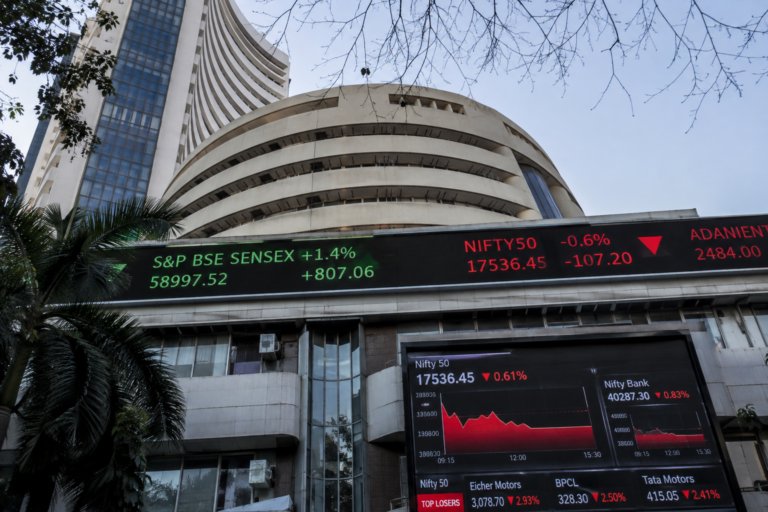
Something changed on Dalal Street last week, and most retail investors missed it. For four straight sessions, Indian equities have refused to sell off. The BSE Sensex closed Monday, 3 August 2026, at 78,639.03, up 544.39 points or 0.70%, its highest level since 21 April. The NSE Nifty 50 did something even more emphatic, surging 390.70 points or 1.60% to 24,774.30. And the Nifty Bank index quietly printed a fresh high at 58,247.95, up 983.10 points or 1.72%, with more than 550 of those points arriving in the final minutes of trade.
The internals were better than the headline numbers. Broader indices did the heavy lifting, comfortably outpacing the frontline benchmarks. That kind of breadth expansion is what separates a durable advance from a narrow, heavyweight-driven bounce.
Nifty IT and Nifty PSU Bank figures reflect the intraday sectoral read. Benchmark figures are closing values for 3 August 2026. Source: NSE, BSE.
Market breadth: the signal underneath the index
An advance-decline ratio near 1.8 to 1 confirms participation was broad rather than concentrated in index heavyweights.
Who is actually buying
Domestic institutions outbought foreign institutions by more than ten to one. FIIs bought ₹18,198.36 crore against ₹18,012.84 crore sold; DIIs bought ₹18,055.93 crore against ₹16,127.78 crore sold.
Market participants have attributed July’s reversal to stabilising domestic markets, reasonable large-cap valuations, improving earnings visibility and a friendlier global backdrop. Meanwhile the domestic SIP engine keeps humming. AMFI chairman Sundeep Sikka has argued that India’s systematic investment plan culture has fundamentally reshaped the equity market by creating a durable buffer against foreign outflows.
Where the Nifty sits on the ladder
Monday’s gap-up open near 24,573 broke the 200-day EMA at roughly 24,400, a level that had capped the index since April. The weekly RSI has improved to around 52.15.
Nifty Today, Broken Down Point by Point
- 01Gap-up open with conviction. The index opened sharply higher near 24,573 on improved global risk appetite after news that US-Iran negotiations would resume, breaking above the 24,400 resistance-turned-support in the first minutes of trade.
- 02Crude did the heavy lifting. WTI retreated into the $79 to $80 range and Brent slid roughly 5% to below $84. For an import-dependent economy that is a direct margin tailwind across autos, aviation, paints, chemicals, FMCG and logistics.
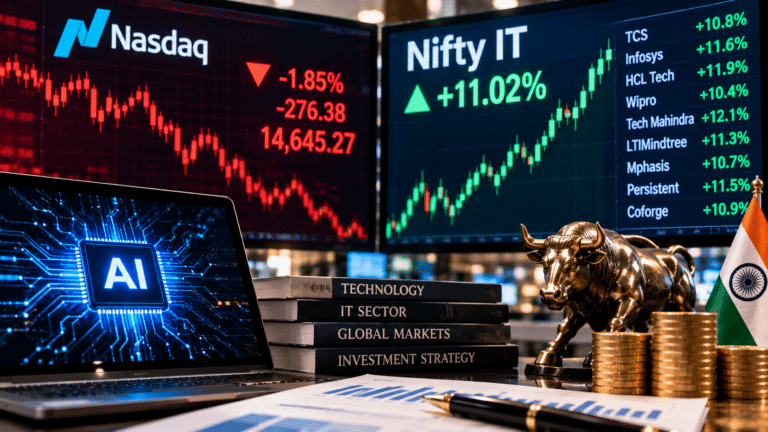
- 03IT led from the front. The Nifty IT index gained more than 3%, the single biggest sectoral contributor. TCS, Infosys and Wipro all finished among the top Nifty gainers.
- 04PSU banks outperformed intraday. The Nifty PSU Bank index was the top sectoral gainer at midday, up 1.94%, ahead of Nifty IT at 1.50% and a firm Nifty FMCG.
- 05The closing auction changed the optics. NSE’s new Closing Auction Session for futures-and-options-eligible stocks went live on 3 August. That mechanism explains the outsized final-minute moves, including Bank Nifty’s 550-point surge, and why the Nifty’s 1.60% gain diverged so sharply from the Sensex’s 0.70%.
- 06Healthcare was the funding trade. Sun Pharma and Apollo Hospitals were the biggest drags as investors rotated out of defensives into cyclicals and technology.
- 07Volatility stayed suppressed. India VIX at 11.925 is consistent with a market expecting range-bound-to-bullish action rather than a violent repricing.
- 08The RBI is the elephant in the room. With the MPC mid-meeting, several institutional desks were reluctant to build fresh directional positions ahead of Wednesday’s announcement.
- 09Earnings flow accelerated. With 573 companies scheduled to report June-quarter numbers this week, stock-specific action increasingly dominates index-level trends.
- 10Tuesday’s setup. GIFT Nifty at 24,661, down 0.02%, points to a flat-to-cautious open. Firm closes across US and European markets provide an underlying cushion.
BSE Sensex Versus NSE Nifty 50
A question readers ask constantly: if both track Indian large caps, why do they diverge so often? Here is the side-by-side.
| Parameter | BSE Sensex | NSE Nifty 50 |
|---|---|---|
| Close, 3 Aug 2026 | 78,639.03 | 24,774.30 |
| Day’s move | +544.39 pts | +390.70 pts |
| Day’s percentage gain | +0.70% | +1.60% |
| Constituents | 30 stocks | 50 stocks |
| Methodology | Free-float market-cap weighted | Free-float market-cap weighted |
| Recent milestone | Highest close since 21 April 2026 | Reclaimed 24,700 for the first time in weeks |
| Prior week close, 31 July | approx 78,095 | 24,383, up 2.59% on the week |
| Sessions of gains | 4 consecutive | 4 consecutive |
| Trailing P/E, consolidated | Broadly in line with Nifty | 21.03, against 20.77 on 17 June |
| Historical average P/E | 20 to 21 | 20 to 21 |
| Sector concentration | Heavier tilt to financial and IT heavyweights | Broader, includes more mid-large names |
| Top contributor, 3 Aug | IT majors | Grasim, up 5.13%; TCS, up 4.57% |
| Biggest drag, 3 Aug | Sun Pharma | Apollo Hospitals, down 1.53% |
| Key level to watch | 79,000, then 80,000 | 24,900, then 25,000 |
| Twelve-month context | −2.93% | Recovering from the March to April drawdown |
The Nifty sits almost exactly on its long-run average multiple. Indian large caps are fairly valued rather than stretched, a meaningfully different starting point from the frothy multiples of late 2024.
The Nifty’s sharper single-day percentage gain is largely explained by its wider constituent base capturing PSU bank and mid-large-cap strength, amplified by the new closing auction mechanics. Because valuation offers neither a cushion nor a discount, alpha in 2026 has to come from selection rather than from index beta.
Key Economic Drivers
India GDP growth: the number that surprised everyone
Q4 FY26 beat the 7.0 to 7.3% consensus. Real GDP for FY26 reached ₹323.12 lakh crore, with gross value added growing 7.9% and nominal growth at roughly 8.9%. FY27 estimate from the Economic Survey 2025-26. Source: MoSPI.
Crucially, Q4 included one month of activity after the outbreak of US-Israel-Iran hostilities on 28 February and the resulting closure of the Strait of Hormuz. ICRA’s chief economist Aditi Nayar noted the economy showed no material damage in that quarter, but warned that sustained elevated energy prices pose downside risk through muted investment demand, pressured corporate profitability and dampened consumer sentiment. The full impact is expected to land in the June 2026 quarter numbers.
CPI inflation trends India: the 4% line has been breached
Inside the 2 to 6% tolerance band, but above the 4% target midpoint for the first time in six months and the fastest print since December 2024. May 2026 stood at 3.93%.
Rural inflation ran at 4.74% against urban at 3.92%. Month-on-month CPI rose 1.03%, the sharpest sequential jump since January 2025. Source: MoSPI.
Rainfall ran 42.8% below normal in June on El Nino conditions, the steepest early-season deficit in a decade, worse than 2019 at 39.3% and 2023 at 31.2%. The deficit narrowed materially by 12 July on surplus early-month rains, which augurs well for kharif sowing. Adequate July and August rainfall remains the single biggest swing factor for food inflation through the rest of FY27.
RBI repo rate: the decision landing Wednesday morning
The repo rate has been unchanged at 5.25% since the 25-basis-point cut in December 2025, making Wednesday a likely fourth consecutive pause. Source: RBI.
The three-day MPC meeting began Monday 3 August and concludes Wednesday 5 August, with Governor Sanjay Malhotra announcing the decision at 10:00 AM IST and holding a press conference at noon. “For the August meeting, we expect a status quo, with the policy rate maintained at 5.25%,” said Prachi Kele, Lead Economist at PL Capital.
A hold keeps floating-rate EMIs unchanged and preserves the current cost-of-funds environment for banks and NBFCs. The market’s real focus will be the forward guidance and revised inflation projections rather than the rate itself. Bank of Maharashtra has already cut home loan rates to 7% with zero processing fees, signalling competitive pressure in retail lending regardless of the outcome.
Unemployment data: a split-screen labour market
Youth labour force participation fell to 40.3% from 42.7% over fifteen months. Fewer young Indians are looking for work, and more of those who are looking cannot find it. Source: PLFS Monthly Bulletin, NSO.
- Labour Force Participation Rate at 54.4% overall. Rural 56.6%, urban up to 50.1% from 49.8%.
- Worker Population Ratio at 51.4%, with rural WPR gaining 0.5 percentage points year-on-year to 53.8%.
- Female LFPR at 32.7%, up 0.7 percentage points year-on-year. Rural female LFPR at 36.6%.
- For markets this matters because it constrains the consumption story underpinning FMCG, retail, auto and consumer discretionary earnings. It is a structural headwind, not a cyclical one.
Latest Market News and Immediate Impact
- Before the announcement
- 3 August close
Brent had surged roughly 24% during July, its strongest monthly gain since March, before the reversal. OPEC plus approved another modest quota increase, completing the restoration of the 2023 output cuts.
- 01The US-Iran truce and the Hormuz reopening. President Trump called off a planned strike on Iran and announced the perimeters of a deal had been agreed, including the complete reopening of the Strait of Hormuz. The truce builds on a 14-point memorandum signed on 17 June. Iran denies direct talks but confirms progress via Oman. Impact: the single most important variable for Indian equities in August. Hormuz carries the bulk of India’s crude, LNG and LPG imports.
- 02Brent cracks below $84. Prices fell roughly 5% after a 20%-plus surge in July, while WTI dropped 5.97% to $79.62. Impact: positive for OMCs, paints, tyres, aviation, cement and logistics. Negative for upstream, with ONGC closing down 0.22%.
- 03RBI policy countdown. The MPC verdict arrives Wednesday at 10:00 AM. Impact: Bank Nifty’s record close suggests a benign outcome is already priced in, creating asymmetric risk if the guidance turns hawkish.
- 04Q1 FY27 earnings reach peak density. 573 companies report this week. Bharti Airtel and Nykaa on Tuesday, Trent and Hero MotoCorp on Thursday, State Bank of India and Titan on Friday. Impact: position sizing matters more than direction this week.
- 05Auto sales blow past expectations. Maruti Suzuki clocked record July production of 2,48,845 units, up 33% year-on-year, beating its March 2026 best of 2,31,933. Hero MotoCorp sales rose 19% and Kia dispatches 27.4%. Impact: strongly positive for the auto ecosystem, though Maruti’s stock fell 0.59% as it traded ex-dividend on a ₹140 payout.
- 06Cigarette makers burned by tobacco taxes. Higher levies hit revenue, volumes and profit at ITC, Godfrey Phillips and VST Industries, which together hold over 90% of the domestic market. Impact: a structural margin overhang on the FMCG index’s largest tobacco-linked constituent.
- 07Pharma under a quality cloud. Sun Pharma recalled ten eye drop brands over contamination concerns. Impact: sentiment-negative near term, though Divi’s Labs posted a 65% Q1 profit jump, showing API and CRAMS strength is intact.
- 08Corporate governance headlines return. The CBI registered an FIR against Anil Ambani and Reliance Capital over an alleged ₹1,816.22 crore EPFO fraud, SEBI fined Zee Entertainment’s top management ₹1.5 crore, and Vodafone Idea received a ₹26.83 crore DoT notice. Impact: contained to specific counters, but governance risk remains live in leveraged names.
- 09The energy and industrial transition accelerates. Coal production rose 7.5% in July with dispatches up 17.3%, even as solar and wind output topped 100 GW for the first time and hit a record 42.8% of supply on 13 July. Semicon 2.0 has moved into production with 12 approved units and $20 billion committed. Impact: structurally supportive for power, capital goods, renewables and electronics manufacturing.
Foreign Indices That Influenced Indian Markets
Indian equities do not trade in isolation. GIFT Nifty, overnight Wall Street action and European closes set the tone before the opening bell.
European bourses outpaced Wall Street, while GIFT Nifty signalled a flat-to-cautious Indian open. GIFT Nifty is the pre-open proxy for the Nifty’s first tick.
| Asian market | State of play | Why it matters to India |
|---|---|---|
| Nikkei 225, Japan | Sharp reversal | Tokyo and Washington confirmed joint yen intervention, the first coordinated bilateral action since 2011, after the yen slid to four-decade lows. |
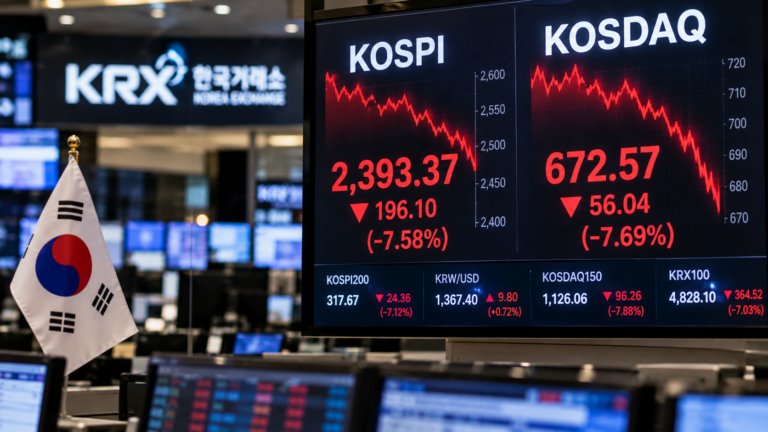
| KOSPI, South Korea | Volatile after July rout | Semiconductor cycle proxy. Retail investors were hit hard by July’s swings. |
| Hang Seng, Hong Kong | Subdued | China demand proxy for Indian metals exporters. |
| Shanghai and CSI 300, China | Muted | Commodity demand read-through. |
AI is no longer a blanket trade. Investors rewarded Microsoft and Amazon for demonstrable returns on AI capex while penalising Meta and Alphabet for rising spend and weaker cash flow. As Rohan Korde of Baroda BNP Paribas Mutual Fund argues, AI may disrupt traditional revenue streams in India’s $280-billion IT services industry, but it could equally drive the sector’s next growth phase through enterprise AI deployment, data engineering, cybersecurity, cloud integration and specialised chip infrastructure.
Top 10 Stocks to Watch on NSE and BSE for 2026
The list below reflects publicly available analyst commentary, consensus estimates and observable business triggers as of 4 August 2026. It is not personalised investment advice. The author is not a SEBI-registered investment adviser and does not know your income, tax position, time horizon or risk tolerance. Valuation descriptions are indicative and must be verified against live NSE and BSE data before you act.
| No | Stock | Sector | Investment rationale | Valuation lens | Dividend character | 2026 trigger |
|---|---|---|---|---|---|---|
| 01 | HDFC Bank | Private bank | Tops Trendlyne consensus lists for twelve-month upside. Q1 FY27 net interest income grew 6.7% to ₹335.3 bn. The optical revenue decline reflects a one-off ₹91.3 bn HDB IPO gain in the base. | Below its own historical price-to-book average | Consistent annual payer, modest yield | Deposit repricing benefit if the RBI holds |
| 02 | ICICI Bank | Private bank | Best-in-class return ratios and asset quality. A core Bank Nifty engine during the record close. | Premium to sector, justified by return on assets | Steady, growing payout | Credit growth revival. Traded ex-dividend this week |
| 03 | State Bank of India | PSU bank | The largest lender. PSU Bank was Monday’s top sectoral gainer at 1.94%. | Cheapest large-cap banking multiple in India | Among the highest yields in the Nifty | Q1 results Friday, the week’s biggest catalyst |
| 04 | Infosys | IT services | Rose 4.42% to ₹1,180. AI-led deal pipeline building as sector sentiment inflects. | Discount to five-year average multiple | Regular dividend plus buyback history | Rupee weakness plus enterprise AI demand |
| 05 | TCS | IT services | Gained 4.57% to ₹2,473.70. Nine large deals in Q1 FY27 including the SKF AI-led transformation mega-deal. | Down 21.23% over twelve months, deep value versus its own history | Highest absolute dividend payer in Indian IT | Margin recovery as the wage-hike impact laps out |
| 06 | Reliance Industries | Conglomerate | On consensus upside screens. The Jio Platforms DRHP filed with SEBI on 19 June unlocks a major value event. | Sum-of-parts discount to intrinsic value | Modest yield, capital-appreciation story | Jio listing, retail scale-up, softer crude aiding refining |
| 07 | Bharti Airtel | Telecom | Raised its Airtel Africa stake to roughly 79%. Airtel Money IPO in the pipeline. Reports Q1 today. | Rich, but supported by ARPU expansion | Rising payout as free cash flow improves | Tariff repair cycle plus fintech monetisation |
| 08 | Larsen and Toubro | Capital goods | Direct beneficiary of India’s infrastructure, defence and Semicon 2.0 order pipeline. | In line with historical average | Reliable annual dividend | ₹84,084 cr Samudra Manthan programme, state capex |
| 09 | NTPC | Power | Q1 FY27 consolidated net profit rose 11.81% to ₹6,721.05 crore. | Among the lowest P/E ratios in the large-cap universe | Strong, dependable yield | Record power demand plus a 60 GW renewables build-out |
| 10 | Maruti Suzuki | Automobile | Record July production of 2,48,845 units, up 33% year-on-year. Heavy CNG order backlog. | Elevated, but earnings are catching up | Declared ₹140 per share, ex-date this week | Falling crude, festive restocking, export momentum |
Top Gainers and Losers, Nifty 50
Money rotated out of defensives such as pharma, healthcare and telecom, and into cyclicals, technology and financials. That is the signature of a market pricing in lower energy costs, a stable policy rate and improving earnings visibility. Source: NSE.
What moved each name
| Stock | Close | Move | Why it moved |
|---|---|---|---|
| Grasim Industries | ₹3,260.00 | +5.13% | Cement and VSF cyclical benefiting directly from cheaper energy and freight |
| TCS | ₹2,473.70 | +4.57% | Deep-value bounce after a 21% twelve-month drawdown, with large-deal momentum recognised |
| InterGlobe Aviation | ₹5,400.00 | +4.43% | The purest crude-price play on the index. ATF is roughly 40% of airline costs |
| Infosys | ₹1,180.00 | +4.42% | Rode the sector-wide IT re-rating ahead of its own results |
| Shriram Finance | ₹1,090.20 | +4.16% | NBFC rate-cycle optimism plus a strong vehicle-finance disbursement backdrop |
| Axis Bank | ₹1,272.00 | +3.46% | Consensus upside candidate that powered the Bank Nifty record |
| Bajaj Finserv | ₹2,096.00 | +3.30% | Financial-services rerating. Bajaj Finance added roughly ₹80,000 crore in market cap last week |
| Bajaj Auto | ₹11,856.00 | +2.91% | Two-wheeler volume strength plus export recovery |
| Eicher Motors | ₹8,050.00 | +2.76% | Royal Enfield premiumisation continues to compound |
| Wipro | ₹188.66 | +2.73% | Beta play on the IT recovery trade |
| Apollo Hospitals | ₹8,820.00 | −1.53% | Defensive rotation out of healthcare into cyclicals |
| Sun Pharmaceutical | ₹1,963.50 | −1.36% | Eye-drop recall over contamination concerns hit sentiment |
| Maruti Suzuki | ₹14,150.00 | −0.59% | Ex-dividend adjustment on the ₹140 payout despite record production |
| Tata Steel | ₹189.08 | −0.32% | Metals capped by muted China demand signals |
| ONGC | ₹242.00 | −0.22% | The direct inverse of the crude collapse, with lower realisations ahead |
| Tech Mahindra | ₹1,649.00 | −0.14% | Lagged the wider IT rally on weaker relative deal flow |
| Bharti Airtel | ₹1,970.50 | −0.08% | Profit-booking ahead of Tuesday’s Q1 results |
| Cipla | ₹1,474.40 | +0.08% | Effectively flat, dragged by the broader pharma de-rating |
Sector Performance India 2026
Figures shown are the 3 August session move where a sector index reading exists, or the most recent earnings or broker data point where noted.
| Sector | 2026 narrative | Latest earnings evidence | Key risk |
|---|---|---|---|
| Information Technology | Reversing a brutal twelve months. TCS is down 21% year-on-year | HCLTech Q1 net profit up 20.3% to ₹4,624 cr on ₹34,579 cr revenue. TCS logged nine large deals including the SKF mega-deal | AI cannibalising legacy revenue. Persistent Q1 profit slipped 9% sequentially to ₹483 cr |
| Banking and Financials | The 2026 leadership sector, powered by credit growth | HDFC Bank NII up 6.7% to ₹335.3 bn. IDFC First PAT up 132.4% to ₹1,075 cr. AU SFB up 37% to ₹796 cr | NIM compression. Bank of Baroda PAT fell 71.85% on a one-off. Utkarsh SFB posted a fifth straight loss with GNPA at 6.1% |
| Pharmaceuticals | Quality and regulatory scrutiny has replaced the export-growth narrative | Divi’s Labs Q1 profit up 65%, showing API and CRAMS strength | Sun Pharma’s ten-brand eye-drop recall. US pricing pressure |
| Consumer Goods and FMCG | Volume recovery hostage to rural incomes and the monsoon | ITC, Godfrey Phillips and VST all hit by higher tobacco taxes. HUL was the only top-ten firm to lose market cap last week | Food inflation at 5.32%. Record 16.2% youth unemployment |
| Automobiles | The clearest beneficiary of falling crude | Maruti July production up 33% to a record 2,48,845 units. Hero up 19%. Kia up 27.4% | Entry-level affordability stress. Input cost inflation |
| Oil and Gas | Upstream and downstream have fully decoupled | E20 blending credited with saving roughly ₹30 per litre during the spike. Commercial LPG cut about ₹209 per cylinder | Upstream realisations fall with Brent. ATF hiked ₹5 |
| Power and Utilities | The quiet structural compounder of 2026 | NTPC Q1 PAT up 11.81% to ₹6,721.05 cr. Coal output up 7.5%, dispatches up 17.3% | Renewables at a record 42.8% of supply are compressing thermal utilisation |
| Metals | Range-bound on soft Chinese demand | Metals cluster reports later in the season | Global demand, freight and tariff uncertainty |
| Media | Structurally challenged | SEBI’s ₹1.5 crore penalty on Zee management for fund diversion | Governance overhang, advertising softness |
| Textiles | The China-plus-one sourcing shift is finally monetising | Nuvama initiated KPR Mill, Indo Count and Sanathan Textiles at Buy with up to 35% upside | Cotton production expected to fall in the 2025-26 season |
Analysis and Portfolio Recommendations
Here is how to frame the opportunity set, segmented by risk appetite. Treat these as starting frameworks to discuss with your adviser, not prescriptions.
- Large cap 55%
- Debt and gilts 30%
- Gold 10%
- Cash 5%
Conservative investor: capital preservation first
EQUITY FOCUS / HDFC Bank / ICICI Bank / NTPC / TCS / Hindustan Unilever
PRONifty large caps at a 21.03 P/E offer a reasonable entry. NTPC delivers dependable dividend income alongside 11.81% profit growth. A stable 5.25% repo rate makes short-duration debt genuinely attractive.
CONYou will lag if the smallcap and midcap rally extends. Those segments outperformed the frontline by 40 to 90 basis points in a single session on Monday.
DRIVERHDFC Bank’s 6.7% NII growth confirms the core franchise is compounding even as one-off gains wash out of the base.
- Large cap 45%
- Mid cap 25%
- Debt 15%
- International 10%
- Gold 5%
Balanced investor: growth with guardrails
EQUITY FOCUS / ICICI Bank / Infosys / Larsen and Toubro / Bajaj Finserv / Maruti Suzuki / Nifty Midcap 150 index fund
PRODirect exposure to the two clearest 2026 tailwinds, the IT recovery trade and the falling-crude margin expansion. The international sleeve hedges rupee risk given the Nifty’s roughly 2.93% twelve-month decline.
CONMid caps carry sharper drawdown risk if the West Asia truce collapses and Brent re-tests $115, as it did in March.
DRIVERHCLTech’s 20.3% profit growth and Maruti’s 33% production surge validate both legs of this allocation.
- Mid and small cap 40%
- Large cap 35%
- Thematic 15%
- Cash 10%
Aggressive investor: high conviction, high volatility
EQUITY FOCUS / Shriram Finance / IndiGo / Grasim / textile exporters / Semicon 2.0 and defence capital goods / selective PSU banks
PROThe highest torque to the crude-and-rates thesis. IndiGo gained 4.43% in a single session on the oil move alone. The $20 billion semiconductor programme across 12 approved units is a genuine multi-year theme.
CONConcentration risk is severe. The Reliance Capital FIR, the Zee penalty and the Vodafone Idea notice all remind us that leveraged and turnaround names can gap down without warning.
DRIVERIDFC First Bank’s 132.4% profit jump illustrates the operating leverage available in mid-tier financials when the credit cycle cooperates.
Portfolio rules that apply regardless of risk appetite
- Never allocate more than 5 to 7% to a single stock. Sun Pharma’s recall was announced on a weekend with zero warning.
- Keep 8 to 12 weeks of expenses liquid and entirely outside your equity portfolio.
- Systematic investment beats timing. India’s SIP culture has demonstrably cushioned the market against $28 billion of foreign outflows this year.
- Rebalance on a calendar, not on emotion. Quarterly or semi-annual, mechanically.
- Check the ex-dividend calendar. Nearly 100 stocks including Maruti, ICICI Bank, Coforge and Bosch turn ex-date between 3 and 7 August. A price fall may simply be a dividend adjustment.
Stock recommendations for today, point by point
- 01Wait for the RBI before adding meaningful risk. With 68 of 72 economists expecting a hold, a hold is fully priced in. The tradeable information is in the guidance and the revised inflation trajectory, not the rate.
- 02Watch 24,800 on the Nifty. A sustained close above the 24,820 to 24,900 resistance band opens 25,000. Failure there sends the index back towards 24,500 to 24,555.
- 03Bank Nifty is stretched into resistance. After a record close driven by a 550-point closing-auction surge, the 58,666 to 58,800 band is the immediate hurdle. Chasing here carries poor risk-reward. Accumulate on dips towards 57,850 to 58,000 instead.
- 04IT deserves accumulation, not a lump sum. TCS down 21% over twelve months while posting nine large deals in a single quarter is a valuation-versus-fundamentals gap. Build across three or four tranches.
- 05Bharti Airtel reports today. Focus on ARPU trajectory and Airtel Africa consolidation commentary rather than the headline profit number.
- 06SBI on Friday is the week’s largest catalyst. As the cheapest large-cap banking multiple in India carrying one of the highest Nifty dividend yields, the result will set the tone for the entire PSU bank complex.
- 07Crude is the master variable. If Hormuz reopens as agreed, extend exposure to autos, aviation, paints and logistics. If talks collapse, rotate immediately into upstream energy and defensives.
- 08Treat pharma with discipline. Divi’s Labs at 65% profit growth and Sun Pharma facing a product recall are not the same investment. Refuse to buy the sector as a basket.
- 09Trim what has run hardest. Grasim at 5.13% and IndiGo at 4.43% in a single session have priced in a great deal of good news. Booking partial profits is not timidity, it is risk management.
- 10Keep dry powder. India VIX at 11.925 signals complacency. The best entries of 2026 have consistently come during volatility spikes, not during calm.
Final Thought
Strip away the noise and Tuesday, 4 August 2026 presents Indian investors with an unusually legible picture.
- The market is fairly valued, not expensive. The Sensex is still down roughly 2.93% over twelve months even after a four-session winning streak.
- The macro is genuinely strong, with one crack. Food inflation at 5.32% on a monsoon that ran 42.8% below normal in June is why the repo rate stays parked at 5.25% and why not a single economist in a 72-person poll expects a cut.
- The labour market is the underdiscussed risk. Headline unemployment looks stable at 5.5%, but youth participation fell to 40.3% from 42.7%. That constrains the consumption thesis for years, and it will never show up in a quarterly result.
- Foreign money has started coming back. July’s ₹20,200 crore of net FPI buying is the single most underappreciated data point in this briefing.
- Crude is the swing factor, and it just swung your way. Brent below $84 with Hormuz reportedly reopening is worth more to Indian corporate margins than any policy announcement this week.
- Rotation, not retreat. 2,705 stocks advanced against 1,496 declining. That breadth distinguishes a durable advance from a heavyweight-driven headfake.
The setup into Wednesday’s RBI decision is constructive but not risk-free. Bank Nifty at a record high carries the burden of a benign outcome already priced in. India VIX at 11.925 suggests few participants are hedged. And 573 companies reporting this week guarantee stock-specific shocks in both directions.
Position accordingly. Respect your allocation limits. And remember that the investors who compounded through 2026’s Hormuz shock were not the ones who predicted it. They were the ones who had already decided what they would own before it happened.
DATA SOURCES
NSE India / BSE India / Reserve Bank of India / Ministry of Statistics and Programme Implementation, covering CPI, GDP and PLFS releases / reporting from Business Standard, Economic Times, NDTV Profit, The Hindu BusinessLine, Forbes India and Reuters. All figures as of 4 August 2026.
Disclaimer: This article is for informational and educational purposes only and does not constitute investment advice, a recommendation, or a solicitation to buy or sell any security. The author is not a SEBI-registered investment adviser. Securities named are illustrative, not recommendatory. Investments in securities markets are subject to market risks; read all related documents carefully before investing. Past performance does not indicate future results. Market data is time-sensitive and may have changed since publication. Please consult a qualified, SEBI-registered financial adviser before making any investment decision.