Pixel 11 Pro: marketing leak nails down the specs Google hasn't announced
Android / Leak analysis
Pixel 11 Pro: marketing leak nails down the specs Google hasn’t announced
Quick Summary
A batch of what appear to be official Google marketing renders reached the public before Google did. Published by leaker Evan Blass and picked up by GSMArena, Notebookcheck, PhoneArena and 91mobiles, the images put the Pixel 11 Pro’s headline specs on the record ahead of the 12 August Made by Google event in New York. Here is what they establish.
- Tensor G6 is confirmed in Google’s own artwork, branded simply “G6” on a promotional slide, and built on TSMC’s 2nm process.
- Zoom climbs to 120x, up from the Pixel 10 Pro’s 100x ceiling, marketed as Pro Zoom and illustrated with a moon shot.
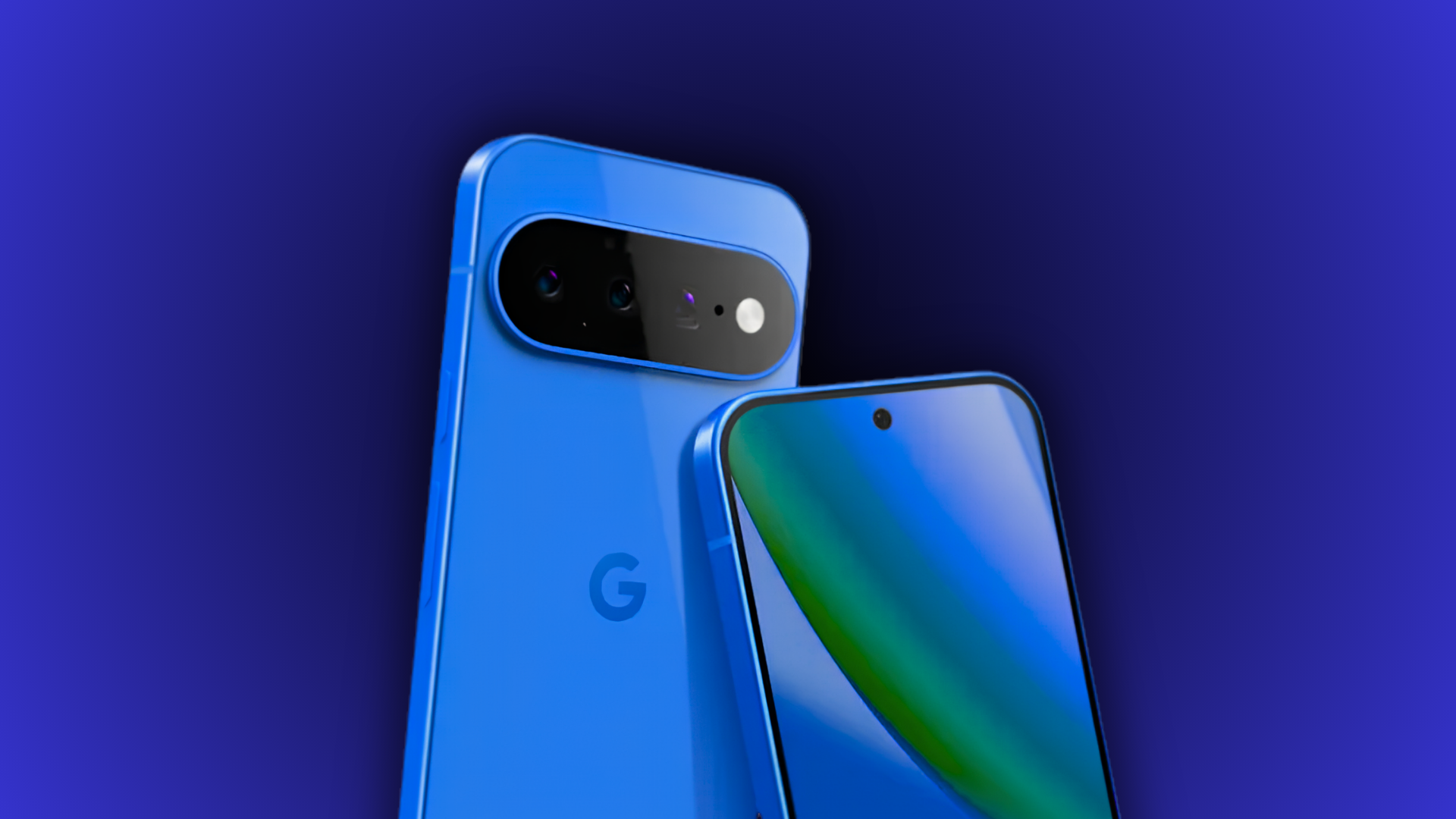
- Pixel Glow is real and Pro-exclusive, a circular RGB light in the rear camera bar that Google already teased officially in July.
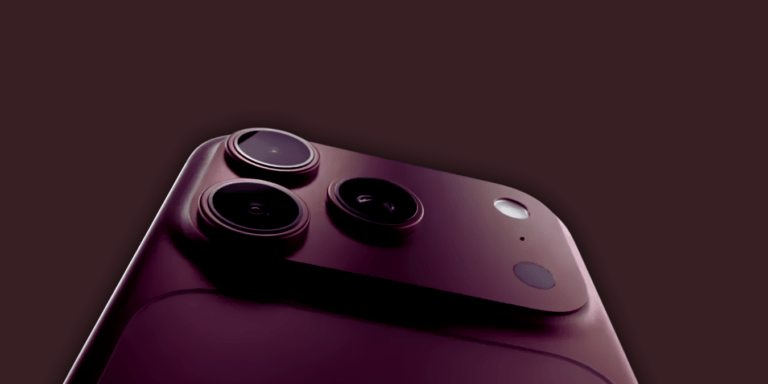
- The camera bar is now fully glass-clad, dropping the metal segment that ran along the right edge on the Pixel 10 Pro.
- Separately, Android Headlines published a full spec sheet: a 6.3-inch LTPO OLED at 3,600 nits, a 50MP main sensor with 48MP ultrawide and 48MP 5x periscope, a 4,850mAh battery, and a $1,099 starting price.
- What is still genuinely unknown: real-world battery endurance, GPU performance, wireless charging speed, and whether Gemini Intelligence has hardware gates.
What actually leaked, and why this batch is different
Most Pixel leaks arrive as component rumours, regulatory filings or third-party renders built from CAD files. This one arrived as finished advertising. Evan Blass, whose track record on pre-release marketing assets stretches back more than a decade, published a set of images that carry the visual grammar of Google’s own campaign work: studio lighting, colour-matched backgrounds, feature callouts written in Google’s marketing voice. That distinction matters, because a CAD render can be wrong about a millimetre while a marketing slide is a document the company itself signed off on.
The renders show the Pixel 11 Pro in a coral finish with a gold camera bar and a matching gold “G” logo, plus an all-black variant that several outlets described as noticeably more matte than previous Pixel blacks. The larger Pixel 11 Pro XL surfaced separately in a peach-and-gold colourway that the leak identifies as Dune. Design-wise, the significant change is structural rather than cosmetic: the camera island is now entirely covered in glass, eliminating the exposed metal strip on the right side that has defined the Pro silhouette for two generations. The bump also appears to sit slightly proud of where the Pixel 10 Pro’s did, though nobody should trust a render to settle a question measured in fractions of a millimetre.
Two slides in the set do the real work. One displays the processor as “G6,” which is the first time Google’s own artwork has put the Tensor G6 name on the Pixel 11 Pro rather than a supply chain document doing it second-hand. The other advertises 120x zoom with a photograph of an orange moon over a treeline, a composition Google has used before precisely because moon shots are the most legible demonstration of a long telephoto. Around those, a pair of renders push Gemini Intelligence, including an agentic messaging demo where the assistant drafts a reply to an animal rescue shelter on the user’s behalf.
| Claim | Source type | Confidence |
|---|---|---|
| 12 August launch event | Google announcement | |
| Pixel Glow notification light | Official Google teaser | |
| Tensor G6 processor | Leaked marketing slide | |
| 120x Pro Zoom | Leaked marketing slide | |
| 3,600 nits peak brightness | Android Headlines spec sheet | |
| $1,099 starting price | Android Headlines spec sheet | |
| Final colour names | Leak, flagged unconfirmed |
Tensor G6: the first Pixel silicon that changes the argument
For five generations, the honest verdict on Tensor was that it bought Google excellent computational photography and on-device machine learning at the cost of sustained performance and thermals. The Pixel 10’s Tensor G5 improved that materially by moving from Samsung Foundry to TSMC’s 3nm process. The Tensor G6 pushes to TSMC’s 2nm node, which puts a Google phone among the first commercial devices on the most advanced fabrication process available.
The engineering detail that matters here is gate-all-around transistor architecture. In a conventional FinFET design, the gate material wraps three sides of the channel that carries current. Gate-all-around surrounds it on all four, which tightens electrostatic control, cuts leakage current between the on and off states, and lets the transistor switch faster without a proportional rise in power draw. TSMC’s own published figures for the node point to a meaningful efficiency gain at equivalent clock speeds, and reporting has consistently landed in the range of 15 to 20 percent better efficiency than Tensor G5.
Leaked configurations describe a seven-core CPU rather than the more common six or eight: one ARM C1-Ultra prime core clocked around 4.11GHz, four C1-Pro cores near 3.38GHz, and two efficiency cores around 2.65GHz. Google has also confirmed a new dedicated TPU block for on-device AI work, which is the part of the chip that actually does the heavy lifting for photo processing, live translation and the local half of Gemini’s workload. Alongside it sits a new Titan M3 security coprocessor, and reporting points to a MediaTek M90 modem replacing the Samsung silicon that has been the root of a long list of Pixel connectivity complaints.
There is one persistent caveat, and it deserves airtime rather than burial. The GPU is still a PowerVR C-Series design, an architecture whose lineage analysts have traced back to 2021. Whatever the 2nm node does for efficiency and thermals, nobody should expect the Pixel 11 Pro to close the gaming gap with a Snapdragon 8 Elite or a flagship Dimensity. If sustained frame rates in demanding titles are your buying criterion, this is not the phone the leak describes.
120x Pro Zoom: what the number does and does not promise
The zoom slide is the most quotable thing in the leak and the most easily misread. A jump from 100x to 120x is a 20 percent increase in the maximum digital reach, not a 20 percent increase in image quality, and the two are not related in any straightforward way. What the leaked spec sheet describes underneath the marketing number is a 48MP periscope telephoto with 5x optical magnification, joined by a 50MP main sensor and a 48MP ultrawide.
The more useful figure in the same material is the list of magnifications Google is willing to call optical quality: 0.5x, 1x, 2x, 5x and 10x. Those are the focal lengths where the phone is either using a native lens or a sensor crop that retains enough real detail to hold up. Everything past 10x is Super Res Zoom territory, where multi-frame stacking and generative reconstruction fill in what the optics never captured. At 120x you are looking at an interpretation of a subject, not a recording of one, and that is true of every phone that advertises a number in this range.
Whether the extra 20x comes from a genuinely new sensor, refined optics, an upgraded Super Res Zoom pipeline, or some combination is exactly the thing a marketing render cannot tell you. Other slides in the batch reference capturing photos and video simultaneously and hint at Night Sight improvements without spelling out the mechanism. That is a reminder of what these assets are for: they sell outcomes, not implementations.
The 5x figure is the periscope’s native optical magnification. The 10x claim relies on sensor cropping from the 48MP telephoto, which is why Google frames it as optical quality rather than optical zoom.
Display, battery and the specs that barely moved
Android Headlines, whose spec sheet was picked up by Digital Trends, Android Authority and Tech Advisor, describes a Pixel 11 Pro that is recognisably the same phone as its predecessor in most dimensions that matter. The display stays at 6.3 inches, stays Super Actua LTPO OLED, stays at 2,856 by 1,280 pixels, and stays on a 1 to 120Hz adaptive refresh rate behind Gorilla Glass Victus 2. The single meaningful change is peak brightness rising from 3,300 to 3,600 nits, which is the sort of improvement you notice on a bright pavement in July and nowhere else.
The body shrinks by amounts you would need callipers to detect: 152.7 by 71.9 by 8.4mm and 204 grams, against 152.8 by 72 by 8.5mm and 207 grams on the Pixel 10 Pro. Battery capacity actually falls slightly, from 4,870mAh to 4,850mAh. Wired charging holds at 30W with Qi2 wireless support, and the IP68 rating carries over unchanged. RAM is described as 12GB or 16GB, with 256GB or 512GB of storage.
A smaller battery reads badly in a spec table and may well read fine in daily use, because capacity is only one term in the equation. If the 2nm Tensor G6 delivers the efficiency gain the node promises, a 20mAh reduction is inside the noise. But this is precisely the claim that cannot be verified from a leak, and battery endurance has been the most persistent weak point in recent Pixel reviews. Treat every runtime prediction, including optimistic ones, as unsupported until independent testing exists.
Pixel Glow: the one design idea that is genuinely new
Pixel Glow is the rare leaked feature that Google has already partly confirmed itself, having teased it in official material in July. It is a circular RGB LED set into the rear camera bar, not a light strip and not a secondary display, and it is exclusive to the Pro models in the Pixel 11 family. The intended use is a notification light for a phone lying face down: colour-coded alerts, call indication, charging status, low battery, and distinct patterns for Gemini listening and responding states.
Traces of it appeared in Android 17 beta strings before any render surfaced, describing coloured light that pulses when the phone is placed face down. Reporting suggests users will be able to assign colours from a palette of roughly eight to specific contacts or apps. Separately, renders indicate the rear temperature sensor introduced on earlier Pro models is being dropped, though whether Pixel Glow physically occupies that vacated cutout has not been established.
The trade is a fair one on its own terms. A thermometer was a novelty that most owners used twice. A notification light is a piece of everyday infrastructure that Android users have been asking to have back since manufacturers quietly deleted it. Whether it lands depends entirely on software: granular per-app control makes it useful, a fixed set of system colours makes it decoration.
Price: $1,099, and the reason behind it
The pricing claim is the part of this leak most likely to shape purchase decisions. Android Headlines puts the Pixel 11 Pro at $1,099 in the United States and 1,199 euros in Europe, a $100 increase over the Pixel 10 Pro’s $999 launch price, with colour options reported as Dune, Light Fog, Midnight Haze and Pine, though the outlet flags that those names are not confirmed. Across the lineup, the leak lists the Pixel 11 at $899, the Pixel 11 Pro XL at $1,299 and the Pixel 11 Pro Fold at $1,899.
The increase is not arbitrary, and the context is worth understanding before deciding whether it is fair. Google vice president Shakil Barkat has publicly attributed pressure on Pixel pricing to a severe supplier-driven RAM shortage. PhoneArena’s pricing analysis cites Morgan Stanley data showing memory costs rising from roughly $2.80 to $12 per gigabyte between 2025 and 2026, close to a sixfold increase. That is an industry-wide input cost, not a Google decision, and it will show up in competing flagships too.
There is also a quieter change in how the base tier is constructed. The 128GB option has reportedly been removed from the lineup, so the entry configuration now starts at 256GB. Depending on how you read it, that is either a doubling of included storage or a removal of the cheapest way in. Comparing equivalent 256GB configurations, some models hold roughly steady while the Pro XL and Pro Fold take an explicit 100 euro increase in Europe.
How the four models separate
The leaked spec sheet describes a lineup with clearer internal logic than recent Pixel generations. All four models share the Tensor G6, the Titan M3 security chip, Qi2 wireless charging, Android 17 out of the box and high-brightness OLED panels. The differentiation sits in size, camera hardware and the Pro-exclusive Pixel Glow.
| Model | Display | Battery | Rear cameras | US price |
|---|---|---|---|---|
| Pixel 11 | 6.3in OLED, 2424×1080, 3,000 nits, 60-120Hz | 4,985mAh | 48MP main, 13MP ultrawide, 30x Super Res | $899 |
| Pixel 11 Pro | 6.3in LTPO, 2856×1280, 3,600 nits, 1-120Hz | 4,850mAh | 50MP main, 48MP ultrawide, 48MP 5x periscope | $1,099 |
| Pixel 11 Pro XL | 6.8in LTPO, 2992×1344, 3,600 nits | 5,115mAh | Matches Pro, faster charging | $1,299 |
| Pixel 11 Pro Fold | Foldable, side-mounted fingerprint sensor | Not detailed | Not fully detailed | $1,899 |
The Pro XL is the interesting comparison for anyone weighing 100 dollars against screen size. It measures 162.7 by 76.5 by 8.5mm at 226 grams, carries the same 3,600 nit peak brightness, and pairs a larger 5,115mAh cell with faster charging, though that capacity is itself down slightly from the previous generation’s 5,200mAh. Camera hardware appears to match the smaller Pro, which means the choice reduces cleanly to size, battery and charging speed rather than photographic capability.
Gemini Intelligence and the question the leak leaves open
Gemini Intelligence is the thread running through every render in the batch, and it is plainly the campaign’s centre of gravity. The agentic messaging demo, where Gemini composes a reply on the user’s behalf, signals a shift from an assistant that answers questions to one that takes actions inside apps. Combined with the new TPU block and Pixel Glow’s Gemini-specific light patterns, the picture is of AI presented as ambient rather than summoned.
The open question is hardware gating. Reporting has raised the possibility that a lower RAM configuration on the base Pixel 11 could exclude it from the full Gemini Intelligence feature set, which would be an awkward position for a company marketing AI as the reason to buy. For the Pro, with 12GB or 16GB reported, this is unlikely to be a constraint. For anyone considering the cheaper model specifically to get Google’s AI features, it is the single most important thing to verify on 12 August before ordering.
Should you wait, buy now, or skip
If you own a Pixel 10 Pro, the leak makes a weak case for upgrading. A 300 nit brightness gain, 20 extra multiples of digital zoom, a marginally smaller battery and a $100 higher price do not constitute a generational leap, and the most substantial improvements sit in silicon efficiency that is difficult to feel day to day. Pixel Glow is charming rather than essential.
If you own a Pixel 8 Pro or older, the accumulated difference is real: two full manufacturing node jumps, a considerably brighter display, a rebuilt AI stack and a modem change that may finally address Pixel’s connectivity reputation. That is a genuine upgrade cycle.
If you are cross-shopping against Samsung or Apple, the Pixel’s argument remains what it has always been, computational photography and software depth rather than raw throughput, and the ageing GPU means the benchmark comparison will not flatter it. And if you simply want a Pixel 10 Pro, the arrival of a successor on 12 August is historically the moment its price falls hardest. Waiting a week costs nothing either way.
When is the Pixel 11 Pro officially launching?
Google has confirmed a Made by Google event on 12 August 2026 in New York, where the Pixel 11 lineup and the Pixel Watch 5 are expected. Pre-orders are anticipated to open the same day.
Is the 120x zoom optical or digital?
Digital. The periscope telephoto is a 48MP sensor with 5x optical magnification. Google quotes optical quality up to 10x using sensor cropping, and everything beyond that is computational Super Res Zoom.
Does the standard Pixel 11 get Pixel Glow?
No. Every source covering the leak describes Pixel Glow as exclusive to the Pro models.
Why is the battery smaller than the Pixel 10 Pro’s?
Google appears to be trading a 20mAh reduction for a slightly thinner and lighter body, betting that the 2nm Tensor G6’s efficiency gains more than compensate. That bet is untested until review units ship.
How reliable are these leaks?
The marketing renders come from Evan Blass, who has a long and accurate record with pre-release promotional assets, and the imagery carries the hallmarks of official Google campaign material. The detailed spec sheet comes from Android Headlines, which has been reliable on Pixel specifications. Neither is a Google announcement, and companies do change details late.
Sourcing and method. This analysis draws on the leaked marketing renders published by Evan Blass and reported by GSMArena, Notebookcheck, PhoneArena and 91mobiles between 2 and 3 August 2026; the full lineup specification and pricing report from Android Headlines as covered by Digital Trends, Android Authority and Tech Advisor; Google’s own July teaser confirming Pixel Glow and the 12 August event date; and published TSMC documentation on the N2 process node. Where sources disagree or a detail is unverified, we have said so in the text rather than presenting it as settled. We will update this article with confirmed specifications following Google’s presentation on 12 August.