Is Every EMI a Liability — or Only the Ones That Buy Something That Loses Value?
Personal Finance · Debt · India, 2026
Is Every EMI a Liability — or Only the Ones That Buy Something That Loses Value?
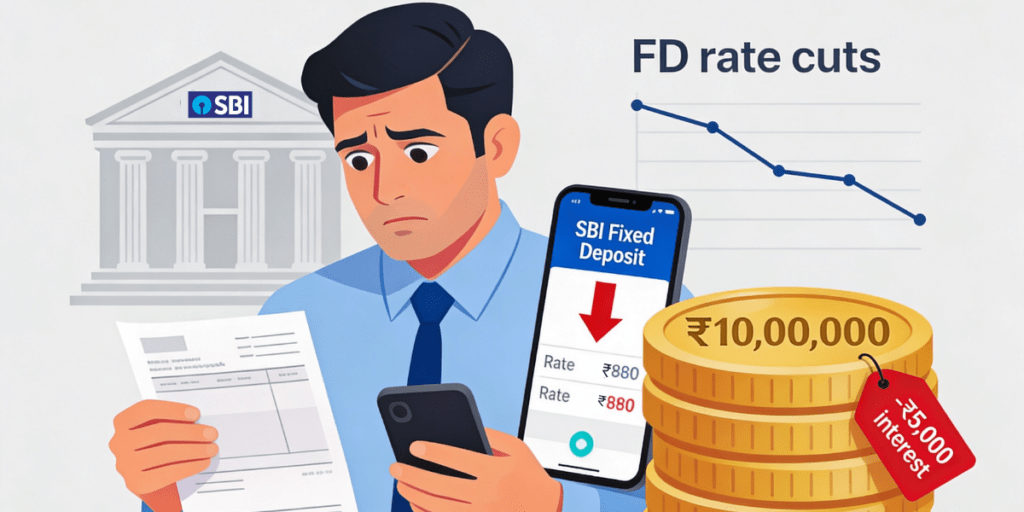
There is a genre of personal-finance post doing the rounds that argues EMIs are not a lifestyle but a liability, and that buying a phone, a bike, a car or a wedding on instalments is a mistake. The sentiment lands because it is mostly right, and because the data behind it has got worse, not better.
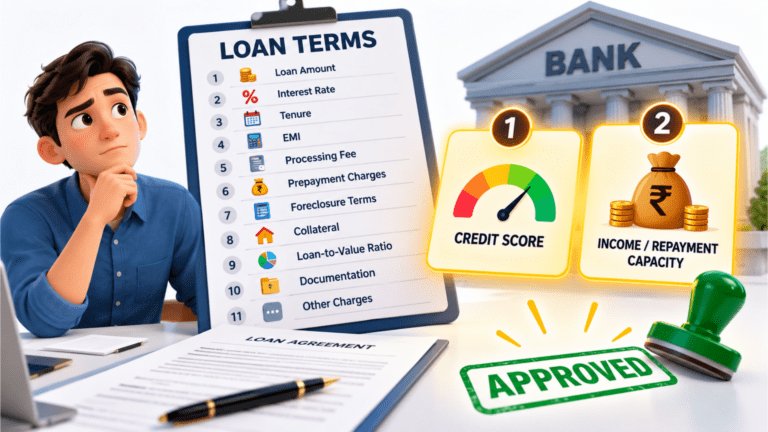
But “mostly right” is doing real work in that sentence. An EMI is a repayment schedule, not a moral category. What determines whether it builds you or breaks you is the interest rate, what the money buys, and what share of your income the instalment consumes. Get those three right and some debt is genuinely useful. Get them wrong and a Rs 50,000 phone can quietly cost you Rs 75,000.
Quick Summary
Indian household debt reached 45.5 per cent of GDP by September 2025, up from around 33 per cent in 2018-19, and 58.4 per cent of it is now non-housing retail borrowing rather than asset-creating loans. Delinquencies on small-ticket loans rose to 6.4 per cent by March 2026 from 4.5 per cent two years earlier, and roughly half of those loans went to borrowers under 35. The rate spread is what matters: a home loan costs around 8 per cent against an appreciating asset, while a revolved credit card balance costs 30 to 48 per cent against nothing at all.
The data behind the warning
The RBI’s Financial Stability Report of June 2026 put household debt at 45.5 per cent of GDP as of September 2025, a steady climb from roughly 33 per cent in 2018-19. India remains less indebted than China, Malaysia or Thailand on this measure. The concern is not the level but the composition.
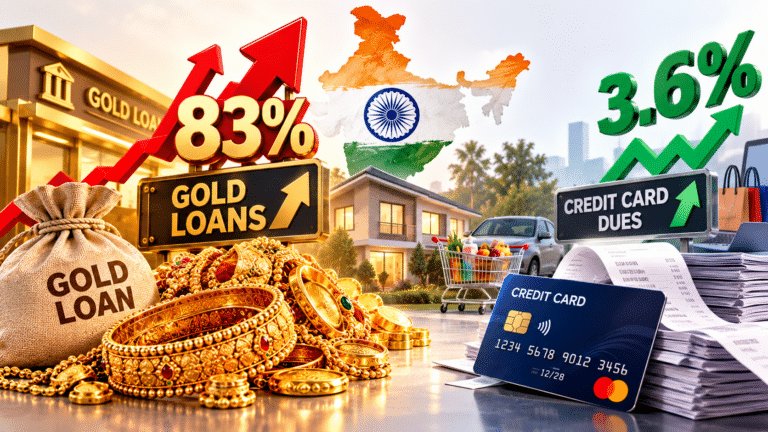
Three details in that report deserve more attention than the headline. Outstanding gold loans reached Rs 5.14 lakh crore by May 2026, driven largely by repeat borrowers using rising gold prices to unlock more credit, which is a concentrated bet on gold staying expensive. The RBI flagged elevated impairment among borrowers holding unsecured loans from five or more lenders at once. And a debt resolution platform reported that its typical client owes about Rs 5 lakh across three or four lenders, with repayments absorbing 40 to 60 per cent of monthly income.
The pattern that precedes trouble
Small-ticket loans under Rs 1 lakh carry the highest delinquency rates of any category. That is not a coincidence of size. Small loans are the ones taken to cover regular expenses rather than to buy an asset, and they are the ones most easily stacked across multiple lenders. When new borrowing is used to service old borrowing, the arithmetic works for a while and then stops working suddenly. Meanwhile salary increments have moderated from 9.6 per cent in 2024 to a projected 9.1 per cent in 2026, so incomes are not growing into the debt.
Not all EMIs are the same debt
Here is where the blanket version of the argument breaks down. The rate you pay and the direction your asset moves are two independent variables, and together they decide everything.
| What you borrow for | Typical rate | Asset direction | Tax relief | Builds or drains | Verdict |
|---|---|---|---|---|---|
| Home loan | About 8% to 9% | Usually appreciates | Sec 24(b) and 80C, old regime | Builds equity | Defensible debt |
| Education loan | About 9% to 12% | Raises earning power | Sec 80E, old regime | Builds capacity | Defensible debt |
| Car loan | About 9% to 11% | Depreciates steadily | None for salaried | Drains | Only if essential |
| Two-wheeler loan | About 10% to 15% | Depreciates | None for salaried | Depends on use | Fine if it earns |
| Gold loan | About 10% to 18% | Collateral you own | None | Neutral | Emergencies only |
| Personal loan | About 11% to 24% | Nothing pledged | None | Drains fast | Rarely justified |
| Card EMI conversion | About 13% to 24% | Depreciates fast | None | Drains fast | Avoid by default |
| Revolved card balance | About 30% to 48% | Nothing at all | None | Drains fastest | Clear immediately |
The credit card number that makes everything else look mild
The poster’s second point, about shopping on a credit card without the ability to repay, is the one that most deserves its bluntness. Card interest in India runs from roughly 18 to 49 per cent depending on the issuer and whether the payment was late. This is the most expensive mainstream borrowing available to an ordinary household.
Worked example: what the minimum payment actually does
Rahul carries a balance of Rs 50,000 on a card charging 3.5 per cent a month, which is 42 per cent a year. He pays the minimum due of 5 per cent of the outstanding each month, exactly as the app suggests. Interest adds 3.5 per cent while his payment removes 5 per cent of the new total, so the balance falls by only about 1.7 per cent a month. At that rate it takes roughly 41 months just to halve the balance, and more than eleven years to clear it. If he simply stopped paying for twelve months, the balance would compound to about Rs 75,560, meaning the interest alone would exceed half the original amount inside a single year.
The minimum payment is not a repayment plan. It is the smallest amount that keeps the account current, and it is calibrated to keep the balance alive rather than to retire it. Anyone carrying a revolving balance should treat clearing it as the highest-return financial act available to them, because a 42 per cent guaranteed saving beats any investment return on offer.
What “no-cost EMI” actually costs
The phrase is a misnomer, and the RBI said so as far back as 2013, observing that the interest in zero-per-cent schemes was camouflaged and passed to the customer as a processing fee. The mechanics today are more transparent but the cost has not vanished.
Worked example: a Rs 60,000 phone on a nine-month no-cost EMI
The seller discounts the phone by the interest amount, so the bank still charges interest on the discounted price and you appear to pay Rs 60,000. On a nine-month tenure at an implied 15 per cent, the embedded interest is about Rs 3,812. Three costs survive the discount. GST at 18 per cent on that interest is Rs 686, and you pay it. A processing fee of around Rs 199 plus GST adds Rs 235. And most issuers pay no reward points on EMI transactions, so a 1 per cent card that would have earned Rs 600 earns nothing. Total real cost: roughly Rs 1,521, or about 2.5 per cent of the purchase. Modest, but not zero, and it is never the number on the banner.
There is a fourth cost that does not appear on any statement. Converting a purchase to EMI blocks that amount of your credit limit for the tenure, which raises your credit utilisation ratio and can pull down your credit score at exactly the moment you might want a home loan. Foreclosing early attracts a charge capped by the RBI at 3 per cent of the outstanding.
The car EMI, priced honestly
This is where the poster’s absolutism is most defensible in arithmetic terms and least defensible in life terms. A car is a genuine need for many households. It is also, financially, one of the worst things to borrow for.
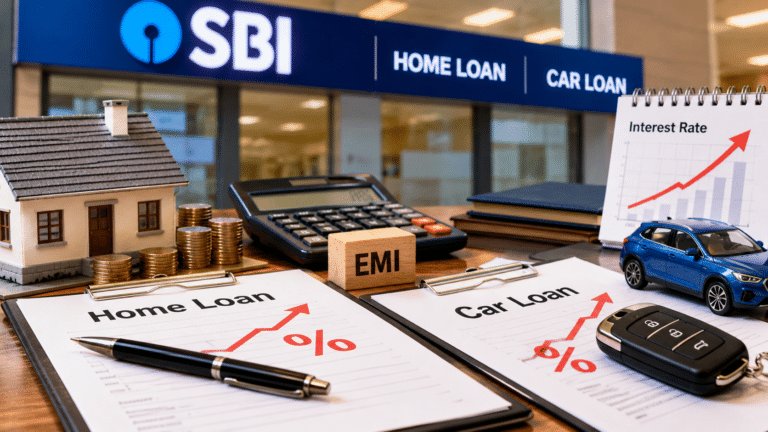
Run the loan itself. A Rs 12 lakh car with 20 per cent down leaves a Rs 9.6 lakh loan. At 9.5 per cent over seven years the EMI is about Rs 15,690, and total repayment comes to roughly Rs 13.18 lakh, of which Rs 3.58 lakh is interest. Add the down payment and the car has cost Rs 15.58 lakh in cash outflow. Seven years on, a typical mass-market car retains perhaps a third of its price, so the asset is worth around Rs 4 lakh. That is the shape of the transaction, and no amount of festive-season framing changes it.
None of which means never finance a car. It means the honest comparison is not EMI versus nothing; it is a smaller car bought sooner, a used car bought outright, or a larger down payment that shortens the tenure. A seven-year tenure exists to make an unaffordable car look affordable.
The two-wheeler point needs separating
The blanket claim that buying a bike on EMI is not sensible is the weakest link in the argument, because it conflates two entirely different purchases. For a delivery rider, a field sales executive, a tradesperson or anyone whose income depends on reaching customers, a two-wheeler is working capital. If it enables earnings that exceed the EMI, it is a productive asset that happens to depreciate.
The same vehicle bought as a status upgrade, on a longer tenure than needed, is a different transaction with identical paperwork. The test is not the object; it is whether the thing you are financing generates income, saves a larger cost, or simply signals something. The first two justify interest. The third does not.
The 40 per cent line
Lenders use a ratio called FOIR, or fixed obligation to income ratio, to decide how much they will lend. Total EMIs are generally expected to stay within 40 to 50 per cent of net monthly income. That is the lender’s risk threshold, not your comfort threshold, and the distressed borrowers in the resolution data were sitting at 40 to 60 per cent.
Healthy
Manageable
Tight
Lender ceiling
Distress zone
Getting out, in order of effect
If the numbers feel overwhelming, that is information, not failure
Debt stress is genuinely distressing, and the shame around it stops people acting while acting is still cheap. Roughly half the small-ticket loans behind the rising delinquency figures went to borrowers under 35, which means a very large number of people are in the same position and most of them are not talking about it. Writing down every loan, its rate and its outstanding on one page is usually less frightening than the vague version carried around in your head, and it is the only way to work out which one to attack first.
Decoder: the terms that decide the real cost
| Term | What it means | Typical figure | Why it bites |
|---|---|---|---|
| FOIR | Total EMIs divided by net income | 40% to 50% lender cap | The cap is the lender’s risk limit, not your safety margin |
| Finance charge | Card interest on unpaid balance | 2.5% to 4% a month | Compounds, often daily, from the transaction date |
| Minimum due | Smallest payment keeping the account current | Usually 5% of outstanding | Reduces the balance by under 2% a month |
| No-cost EMI | Interest passed back as an upfront discount | GST plus fees survive | Costs roughly 2% to 3% despite the name |
| Flat rate | Interest on the original principal throughout | Roughly 1.8x the reducing rate | A 10% flat rate is closer to 18% in reality |
| Credit utilisation | Balance as a share of your card limit | Keep below 30% | EMI conversion blocks limit and raises the ratio |
| Foreclosure charge | Fee for closing a loan early | RBI caps card EMI at 3% | Can wipe out the saving from prepaying |
| Loan stacking | Borrowing from many lenders at once | 5 or more is the RBI flag | Stress on one loan cascades to the rest |
Seven questions before you tap “convert to EMI”
- Could you pay the full amount in cash today? If not, the purchase is above your means regardless of what the monthly figure looks like.
- What is the total you will repay, not the monthly instalment? Multiply the EMI by the tenure and compare it to the sticker price.
- Is the rate quoted flat or reducing? A flat rate roughly doubles when expressed properly.
- What will this be worth when the last instalment clears? A phone at month 24 and a house at year 20 are different transactions.
- What does this take your total EMI-to-income ratio to? If the answer is above 40 per cent, the answer to the purchase is no.
- What are the processing fee, the GST on it, and the foreclosure charge? They are disclosed, usually in the terms nobody opens.
- Does this purchase generate income, avoid a larger cost, or signal something? Only the first two justify paying interest.
Habits that keep debt from compounding
Frequently asked questions
Is taking an EMI always a bad financial decision?
No. What matters is the interest rate, what the borrowing buys, and what share of your income the instalment takes. A home loan at around 8 per cent against an appreciating asset, with tax relief available under the old regime, is a different proposition from a revolved credit card balance at 42 per cent against nothing. The blanket version of the argument is directionally useful but analytically wrong.
What is the real cost of a no-cost EMI in India?
Typically around 2 to 3 per cent of the purchase. The seller discounts the interest upfront, but 18 per cent GST is still charged on that interest component, a processing fee of roughly Rs 99 to Rs 250 applies with GST on top, and most issuers pay no reward points on EMI transactions. On a Rs 60,000 nine-month plan, those add up to roughly Rs 1,521. The RBI noted in 2013 that zero-per-cent scheme interest was being camouflaged as fees.
How much of my salary should go to EMIs?
Lenders generally allow total EMIs up to 40 to 50 per cent of net income under the FOIR test, but that is their risk ceiling rather than a comfortable target. Under 20 per cent is healthy, 20 to 30 per cent is manageable, and above 40 per cent leaves almost no savings capacity. Borrowers seeking debt resolution in India typically had repayments absorbing 40 to 60 per cent of monthly income.
Why is paying only the minimum due on a credit card so dangerous?
Because interest compounds faster than the minimum reduces the balance. At 3.5 per cent monthly interest and a 5 per cent minimum payment, the outstanding falls by only about 1.7 per cent a month. A Rs 50,000 balance takes roughly 41 months just to halve, and over eleven years to clear. The minimum due is designed to keep the account current, not to retire the debt.
Is a car loan worth it, or should I save and buy outright?
A Rs 9.6 lakh car loan at 9.5 per cent over seven years costs roughly Rs 3.58 lakh in interest, taking total repayment to about Rs 13.18 lakh. Seven years later a typical mass-market car retains perhaps a third of its price. If transport is a genuine need, the better comparison is not loan versus nothing but a cheaper car, a used car bought outright, or a bigger down payment with a shorter tenure.
Is it ever sensible to buy a two-wheeler on EMI?
Yes, when it generates income. For delivery riders, field sales staff and tradespeople, a two-wheeler is working capital, and if the earnings it enables exceed the instalment the interest is justified. The same vehicle bought as a status upgrade on a stretched tenure is a different transaction with the same paperwork. The test is whether the purchase earns, saves a larger cost, or merely signals.
How much household debt does India actually have?
Household debt reached 45.5 per cent of GDP as of September 2025, according to the RBI’s Financial Stability Report of June 2026, up from roughly 33 per cent in 2018-19. India remains less indebted than China, Malaysia or Thailand. The concern is composition: non-housing retail loans now form 58.4 per cent of household debt, against about 50 per cent in 2019-20, meaning consumption borrowing is outgrowing asset-creating borrowing.
What does it mean that small-ticket loan delinquencies are rising?
Delinquencies on small-ticket loans rose to 6.4 per cent by March 2026 from 4.5 per cent two years earlier, and loans under Rs 1 lakh carry the highest default rates of any category. Roughly half went to borrowers under 35. Small loans are typically taken to cover regular expenses rather than to buy assets, and they are the easiest to stack across multiple lenders, which is why they break first.
Does converting a purchase to EMI affect my credit score?
It can. Conversion blocks that amount of your credit limit for the tenure, which raises your credit utilisation ratio, and utilisation is a significant scoring input. Keeping utilisation below 30 per cent is the usual guidance. The RBI has also flagged elevated impairment among borrowers holding unsecured loans from five or more lenders, so the number of active credit relationships matters alongside the amounts.
Which debt should I repay first if I have several?
The highest interest rate, not the largest balance. A rupee prepaid against a 24 per cent personal loan saves nearly three times what the same rupee saves against a 9 per cent car loan. Clear any revolving card balance before anything else, since that is effectively a guaranteed return of 30 to 48 per cent. Check foreclosure charges first, which the RBI caps at 3 per cent for card EMI.
The short version
The sentiment behind the poster holds up. Indian household debt is at 45.5 per cent of GDP, most of the growth is consumption rather than assets, small-ticket delinquencies have climbed to 6.4 per cent, and incomes are growing more slowly than they were. But the useful version of the rule is narrower and more usable than “EMIs are bad”. Borrow for things that appreciate or that raise your earning power, at rates in single digits, for tenures shorter than the useful life of the thing. Never carry a card balance. Keep total instalments below 30 per cent of take-home pay. And treat the monthly figure on the banner as marketing, because the number that decides whether this was a good idea is the total repaid, and it is always printed somewhere less prominent.