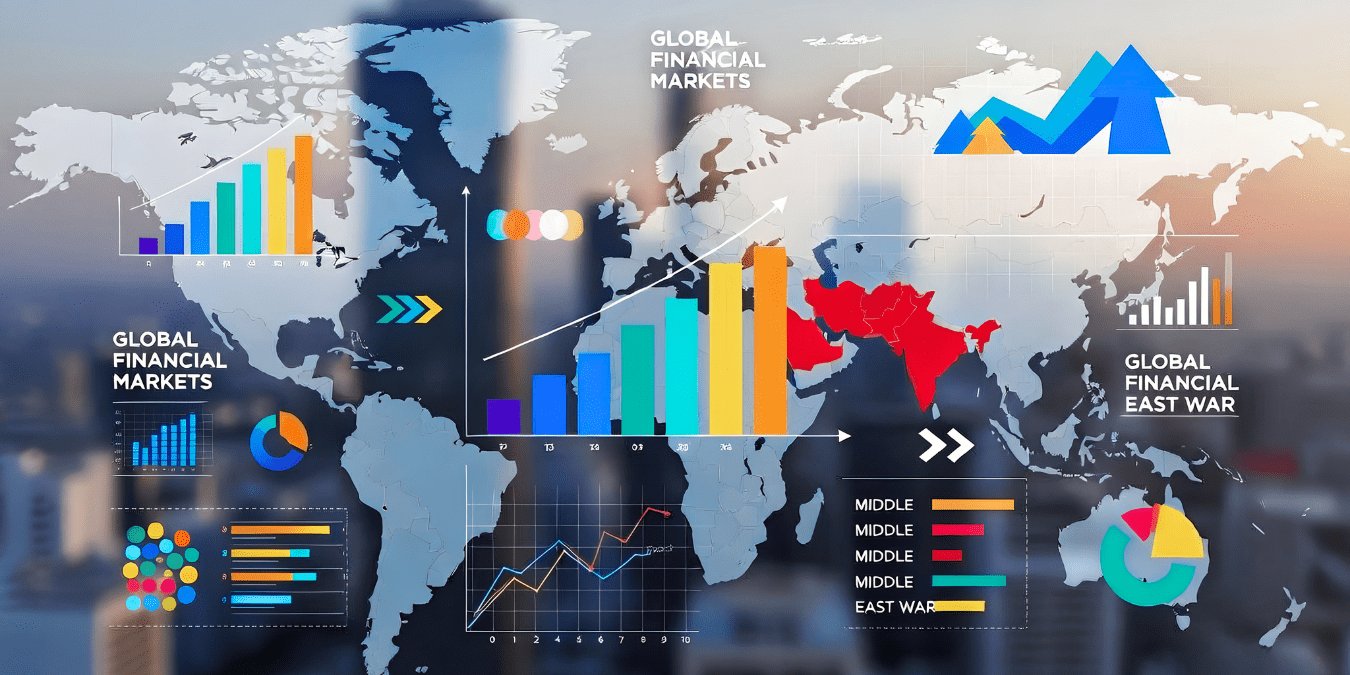
Global Financial Markets vs. Middle East War: IMF's Shocking New Stability Report Reveals the Hidden Amplification Risks
When War Meets Wall Street
The world has always been an uneasy marriage between geopolitics and finance. But the IMF’s latest Global Financial Stability Report has done something remarkable — it has put hard numbers to a fear that most investors quietly carry but rarely discuss openly. The hidden amplification risks embedded in global financial markets, triggered by the ongoing Middle East conflict, are not just a regional problem. They are a systemic threat that could reverberate across every asset class, every central bank balance sheet, and every retirement portfolio on the planet. Having closely tracked global risk indicators and IMF policy frameworks for over a decade, the patterns emerging from this report are unlike anything seen since the 2008 financial crisis — and in some ways, they are more structurally dangerous.
The IMF’s report doesn’t just flag the obvious: oil price spikes, trade disruptions, and humanitarian costs. It goes deeper, identifying what financial engineers call “amplification channels” — the invisible wiring inside the global financial system that can turn a regional conflict into a worldwide economic earthquake. Understanding these channels is no longer the exclusive domain of hedge fund managers and central bankers. In today’s hyper-connected world, every investor, policymaker, and informed citizen needs to grasp what’s at stake.
The Middle East Conflict: More Than a Regional Crisis
The Middle East has historically been the world’s most geopolitically sensitive region when it comes to financial markets, primarily because of its outsized role in global energy supply. But the current conflict landscape has evolved dramatically. Beyond oil, the region sits at the crossroads of critical shipping lanes, rare earth mineral supply chains, and increasingly, digital infrastructure corridors. The Strait of Hormuz alone handles approximately 20% of the world’s oil and 30% of global LNG trade. Any sustained military escalation that disrupts this artery doesn’t just spike Brent crude prices — it triggers a cascade of second and third-order effects that the IMF now explicitly labels as “non-linear amplification risks.”
What makes the current situation uniquely dangerous, according to the IMF’s assessment, is the combination of three simultaneous vulnerabilities: high sovereign debt levels across major economies still recovering from post-pandemic fiscal expansion, interest rate environments that remain elevated compared to the pre-2020 era, and geopolitical fragmentation that has already weakened the multilateral institutions designed to provide financial stabilization. This toxic trifecta means the global financial system has far less shock-absorbing capacity than it did during previous Middle East crises in 1973, 1990, or even 2003.
What the IMF Report Actually Says
The IMF’s Global Financial Stability Report, released in the first quarter of 2026, uses a framework that distinguishes between “direct exposure risks” and “amplification risks.” Direct exposure is straightforward — banks holding sovereign debt from conflict-affected countries, energy companies with operations in the region, and supply chain-dependent manufacturers. These risks are visible, priceable, and to some extent, hedgeable.
Amplification risks are where the report becomes genuinely alarming. The IMF identifies five primary amplification channels that transform a localized shock into a systemic financial crisis. The first is the liquidity withdrawal spiral, where risk-averse investors simultaneously flee to safe-haven assets, draining liquidity from emerging market economies that depend on foreign capital flows. The second is the collateral degradation effect, where assets used as collateral in repo markets and derivatives contracts lose value simultaneously, forcing margin calls that generate fire sales across unrelated asset classes. The third is the sentiment contagion mechanism, where algorithmic trading systems and investor psychology create correlated sell-offs even in markets with zero direct exposure to the conflict. The fourth is the currency fragmentation channel, where dollar strength triggered by safe-haven flows crushes debt-servicing capacity in developing nations with dollar-denominated obligations. The fifth, and perhaps most underappreciated, is the fiscal amplification loop, where governments already stretched by post-pandemic debt find themselves forced to choose between supporting their financial systems or funding military and humanitarian responses.
The Hidden Amplification: Why This Time Is Different
Financial crises have a frustrating habit of looking obvious in hindsight and invisible in real time. The 2008 crisis wasn’t really about subprime mortgages — it was about how those mortgages were packaged, leveraged, and distributed through a shadow banking system that regulators didn’t fully understand. The IMF’s current warning echoes that same structural critique, but applied to a geopolitical trigger rather than a financial innovation.
The amplification risk today is hidden inside three relatively new structural features of global finance. First, the explosive growth of passive investment vehicles — ETFs, index funds, and algorithmic strategies — means that when geopolitical risk triggers a broad risk-off sentiment, selling pressure hits every market simultaneously and with extraordinary speed. There is no longer a class of contrarian, fundamentals-driven investors large enough to absorb these flows and stabilize prices. The market has become a single, correlated machine.
Second, the post-2020 expansion of central bank balance sheets has created a paradox. While quantitative easing was designed to provide financial stability, it has also compressed risk premiums across the globe, meaning that investors have been forced into riskier assets to achieve adequate returns. This “reach for yield” behavior has loaded up institutional portfolios — pension funds, insurance companies, sovereign wealth funds — with assets that look safe in normal times but become correlated and illiquid during crises. When the Middle East conflict generates a genuine risk-off trigger, the unwinding of these positions could be violent and disorderly.
Third, the fragmentation of the global financial system itself is an amplifier. The IMF has documented in previous reports how sanctions regimes, capital controls, and the weaponization of financial infrastructure have created parallel financial systems. China’s CIPS payment network, the expansion of bilateral currency swap arrangements, and the gradual de-dollarization efforts of BRICS nations have created a world where financial shocks no longer transmit through clean, well-understood channels. Instead, they travel through opaque networks that regulators in Washington, Brussels, and Tokyo cannot fully monitor or influence.
Oil Markets: The Obvious Risk With Non-Obvious Consequences
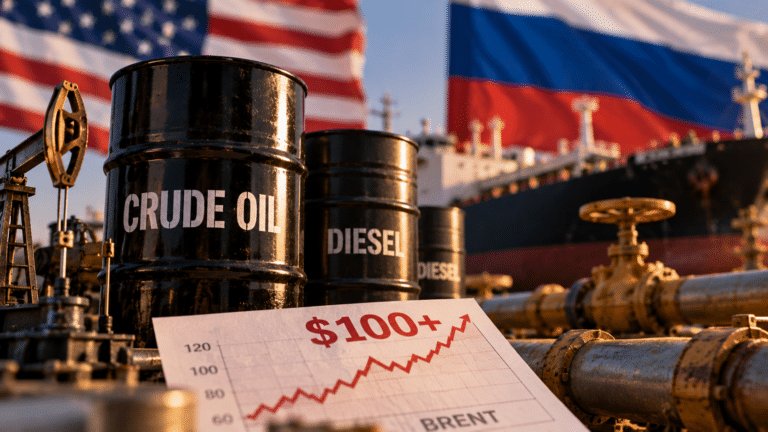
No discussion of the Middle East and financial markets is complete without addressing energy. The IMF’s report dedicates substantial analysis to oil price scenarios, modeling outcomes under three conflict trajectories: contained escalation, regional spillover, and full theater conflict. Under the contained scenario, Brent crude stabilizes in a range that is manageable for most consuming economies. Under regional spillover — the scenario the IMF considers most probable — the price shock is significant enough to reignite inflationary pressures in economies where central banks have only recently achieved price stability after the brutal rate-hiking cycles of 2022 to 2024.
But the truly non-obvious consequence isn’t the oil price itself. It’s what a renewed inflationary shock does to central bank policy credibility. Central banks in the United States, Europe, and the United Kingdom have staked enormous institutional credibility on their inflation-fighting achievements. A geopolitically-driven energy price surge puts them in an impossible position: raise rates to fight inflation and risk triggering recession, or hold rates and allow inflation expectations to de-anchor. Either path generates financial market instability, but through entirely different mechanisms. This is what the IMF means by non-linear amplification — the same external shock can produce radically different financial outcomes depending on the policy response, and there is no clearly dominant strategy.
Emerging Markets: The Amplification Fault Lines
If advanced economies face difficult tradeoffs, emerging market economies face existential ones. The IMF report’s most sobering section deals with the amplification risks facing the approximately 40 developing economies that the fund identifies as having significant financial vulnerabilities coinciding with geopolitical exposure. These countries — spanning Sub-Saharan Africa, South and Southeast Asia, Latin America, and Eastern Europe — share a common profile: high dollar-denominated external debt, limited foreign exchange reserves, dependence on commodity exports or remittances, and political institutions that are under stress.
For these economies, the amplification mechanism works with brutal efficiency. Dollar strength triggered by Middle East risk aversion increases the local currency cost of debt service. Simultaneously, portfolio capital flows reverse, reducing liquidity. Commodity prices may rise for energy importers while falling for non-energy commodity exporters whose terms of trade deteriorate. The IMF’s models suggest that under a regional spillover scenario, the number of emerging market economies facing acute debt distress could double within 18 months — not because of anything those countries did, but because of amplification dynamics entirely outside their control.
Banking Sector Vulnerabilities: The Quiet Accumulation of Risk
The global banking sector enters this period of geopolitical stress carrying a more complex risk profile than the headline capital adequacy ratios suggest. The IMF’s stress testing framework highlights three specific concerns. Commercial real estate exposures, particularly in North American and European banking systems, remain elevated at a time when valuations are under pressure from remote work trends and higher financing costs. Sovereign bond portfolios, expanded during the quantitative easing era, contain mark-to-market losses that are manageable in calm conditions but could become acute if a liquidity event forces asset sales. And cross-border interbank exposures to Middle Eastern financial institutions create direct transmission channels for conflict-related stress.
The report notes with particular concern the interconnection between Gulf Cooperation Council sovereign wealth funds and global asset markets. These funds, which collectively manage trillions of dollars in assets, have historically played a stabilizing role during periods of market stress — deploying capital as countercyclical investors. But if the conflict directly threatens the fiscal revenues of GCC states, these funds could shift from stabilizers to sources of additional selling pressure. This reversal of a traditional circuit breaker would remove one of the most important informal shock absorbers in the global financial system.
The IMF’s Policy Prescriptions: Necessary but Insufficient
To its credit, the IMF doesn’t simply document risks — it offers a framework for policy response. The report calls for four parallel tracks of action. Enhanced macroprudential supervision to identify and reduce hidden amplification risks within domestic financial systems. Strengthened international coordination mechanisms to manage cross-border capital flow volatility. Accelerated debt restructuring processes for vulnerable emerging market economies before crisis conditions make orderly resolution impossible. And strategic communication from major central banks to anchor inflation expectations and prevent premature policy tightening that could amplify recessionary dynamics.
These are sound prescriptions, but they share a common limitation: they require a level of multilateral cooperation that the current geopolitical environment actively undermines. The same fragmentation that creates amplification risks in financial markets also fragments the policy community that needs to respond. The G20, IMF, Bank for International Settlements, and Financial Stability Board are all institutional frameworks designed for a more cooperative era. Their effectiveness in a world of strategic rivalry between great powers, weaponized financial infrastructure, and eroding trust in multilateral institutions is genuinely uncertain.
What Investors Should Understand Right Now
For individual and institutional investors navigating this environment, the IMF’s amplification risk framework has practical implications that go beyond standard portfolio diversification advice. The report’s key insight — that amplification risks are non-linear and can materialize rapidly — suggests that traditional risk management models, which are calibrated to normal distribution assumptions, may dramatically underestimate tail risk exposure.
Several specific considerations deserve attention. Geographic diversification across financial systems, not just asset classes, has become more important as different payment systems and regulatory regimes create genuinely distinct risk pools. Liquidity management deserves more weight than it typically receives in institutional portfolio construction, because the amplification dynamics described by the IMF are most dangerous when investors are forced to sell illiquid assets during crisis conditions. Inflation hedging strategies need to be re-evaluated in light of the scenario where central banks face an impossible choice between fighting geopolitically-driven inflation and supporting financial stability. And exposure to emerging market assets needs to be evaluated not just on standalone fundamentals but on the amplification pathway through which Middle East conflict stress could reach those markets.
The Bigger Picture: Financial Stability as National Security
Perhaps the most profound insight buried in the IMF’s report is one that rarely gets discussed in mainstream financial commentary: financial stability has become a national security issue of the first order. The weaponization of financial systems — through sanctions, capital controls, and the disruption of payment infrastructure — means that the boundary between military conflict and financial conflict has effectively dissolved. The Middle East war is not just being fought with weapons. It is being fought with oil pricing, currency interventions, sanctions regimes, and the strategic deployment of sovereign wealth.
This means that financial market participants are no longer just bystanders to geopolitical events — they are participants in them, whether they choose to be or not. The decisions made by pension fund managers in Amsterdam, sovereign wealth fund officers in Riyadh, central bank governors in Washington, and retail investors in Mumbai collectively shape the financial conditions that influence the duration, intensity, and ultimate resolution of geopolitical conflicts. This is not a comfortable insight, but it is an honest one.
Conclusion: Reading the Map Before the Storm Arrives
The IMF’s Global Financial Stability Report on Middle East war amplification risks is not a prediction of imminent catastrophe. It is a detailed map of the fault lines that exist within the current global financial architecture — fault lines that the ongoing conflict is actively stressing. The difference between a map and a forecast matters enormously. A map tells you where the dangers lie and gives you the opportunity to navigate around them or prepare for them. A forecast tells you what will happen regardless of your actions.
The amplification risks documented in this report are real, structurally embedded, and significantly underappreciated by markets that continue to price geopolitical risk as a temporary and localized phenomenon. The hidden wiring of the global financial system — through liquidity dynamics, collateral chains, algorithmic trading, and cross-border banking exposures — creates pathways for shocks to travel that are invisible until they are activated. Understanding this architecture, and taking it seriously as a framework for risk management, policy design, and investment decision-making, is not optional. It is the minimum requirement for financial literacy in the world we actually live in today.
The IMF has drawn the map. Whether governments, institutions, and investors choose to read it carefully before the storm arrives is the only question that remains open.
This analysis is based on publicly available IMF reports, macroeconomic research, and financial market data. It is intended for informational and educational purposes and does not constitute investment advice. Readers are encouraged to consult qualified financial advisors before making investment decisions based on geopolitical risk assessments.