Apple's New Siri in the AI Race: How the iPhone Maker Is Playing the Game Differently
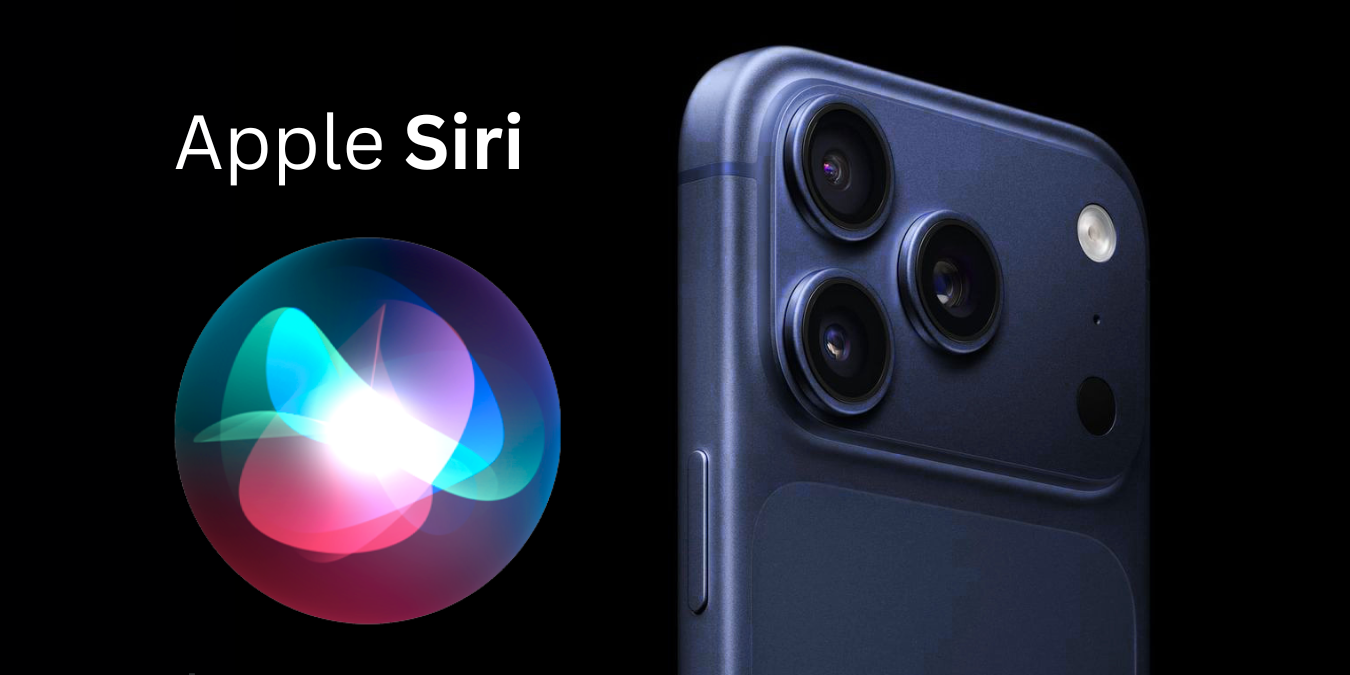
The global artificial intelligence race has intensified dramatically over the past three years, with OpenAI’s ChatGPT, Google’s Gemini, and Microsoft’s Copilot dominating headlines and user attention. Yet in June 2026, Apple made its most significant move yet by unveiling Siri AI—an entirely reimagined assistant powered by a strategic partnership with Google’s Gemini technology while maintaining Apple’s signature privacy-first architecture. This isn’t just another software update; it represents Apple’s calculated entry into the generative AI arena, positioning Siri as a “dark horse” that could ultimately win the race by leveraging what the company already has: over 2 billion active devices worldwide and an ecosystem users trust.
The Strategic Pivot: Why Apple Turned to Google
For years, critics assumed Apple would build all its AI capabilities from scratch. The reality proved more pragmatic. In January 2026, Apple announced a multiyear collaboration with Google to utilize Gemini AI models for Siri’s core technologies. This partnership, reportedly worth approximately $1 billion annually for a custom large language model, represents a recognition that developing state-of-the-art AI foundation models requires resources and time Apple chose to allocate differently.
The decision reflects Apple’s unique position in the AI market. Unlike Google or OpenAI, Apple doesn’t need to build its own models to monetize AI technology. The company’s revenue comes from hardware sales, services, and the ecosystem lock-in that comes with 2 billion active devices. By partnering with Google, Apple accelerates Siri’s capabilities while avoiding the multi-year development timeline required to create competitive foundation models independently.
Craig Federighi, Apple’s senior vice president of Software Engineering, stated during the WWDC 2026 keynote: “We believe that truly helpful AI must be centered around you and your needs.” This quote encapsulates Apple’s philosophy: AI should serve users within their existing workflows rather than becoming a standalone product people must actively seek out.
Siri AI’s Four Pillars of Transformation
Siri AI represents a complete rebuild from the ground up, powered by the next generation of Apple Intelligence foundation models. The assistant delivers four transformative capabilities that distinguish it from competitors:
Personal Context Understanding allows Siri to search across messages, emails, photos, and apps to surface relevant information. Users can ask Siri to find a restaurant recommendation a friend messaged about, retrieve a hotel confirmation number from an old email, or pull up vacation photos with family. This capability extends to third-party apps when developers integrate with Spotlight, making Siri genuinely useful across the entire iOS ecosystem.
Onscreen Awareness enables Siri to answer questions about content currently displayed on the user’s screen. If someone receives a text about a potluck, they can brainstorm with Siri what to bring and then add a recipe directly to the Notes app. This visual intelligence transforms Siri from a command-based assistant into a contextual partner that understands what users are actually doing.
Broad World Knowledge provides up-to-date information from the web on virtually any topic. Siri can answer questions about when and where to see the next solar eclipse, when a musician is coming to town, or current news events. Users can extend almost any response into rich conversation and ask follow-up questions without restarting the interaction.
Systemwide App Actions let users get things done across applications. Siri can draft an email from scratch, edit and share sets of photos, or perform multi-step tasks that span multiple apps. This moves Siri beyond simple commands into genuine task completion.
Visual Intelligence: Siri’s Multimodal Advantage
One of Siri AI’s most distinctive features is Visual Intelligence, which integrates multimodal capabilities directly into the Camera app. iPhone users can tap the shutter button to let Siri see what they see and receive useful responses. This Camera mode includes practical actions like splitting a dinner bill with friends using Apple Cash or getting nutritional facts about a plate of food.
Visual Intelligence has expanded beyond iPhone to iPad, Mac, and Apple Vision Pro. On iPad, it integrates into the screenshot experience. On Mac, users access it through a dedicated keyboard shortcut, allowing them to select something on the display and type directly to Siri. Apple Vision Pro users can simply look at physical objects or open windows to ask questions, leveraging spatial computing with 3D visualizations placed anywhere in their space.
This multimodal approach addresses a key limitation of earlier Siri versions, which struggled with image understanding. While Google Gemini offers more mature multimodal processing across images, videos, and documents, Siri’s on-device image understanding combined with iOS integration provides a privacy-focused alternative that appeals to Apple’s core user base.
The Dedicated Siri App: Conversation History Across Devices
For the first time, Siri includes a dedicated app where users can revisit past conversations or start new ones. The Siri app uses iCloud to privately sync conversational history across products, enabling users to start chatting on Mac and continue on iPhone, iPad, Apple Watch, or Apple Vision Pro. This brings rich conversations together in one place, finally making Siri behave like the chatbots users have become accustomed to over the past three years.
The standalone app represents a fundamental shift in how users interact with Siri. Previously, Siri conversations disappeared immediately after completion. Now, users maintain a conversation history that persists across devices, enabling truly continuous assistance. This feature addresses one of the most common complaints about the original Siri: the inability to reference past interactions or build upon previous conversations.
Writing Tools: Siri as Your Personal Editor
Siri AI now includes integrated Writing Tools that work virtually anywhere users type. Users can describe what they need, and Siri generates a draft from scratch. If refinement is needed, users describe the change, and Siri quickly updates the text. This capability transforms Siri into a writing assistant that works seamlessly within Mail, Messages, and third-party apps.
The Writing Tools demonstrate remarkable personalization. When writing in Mail and Messages, Siri reflects how users typically communicate with each recipient, including punctuation and tone. If someone normally sends their manager short bullet points, that’s what populates when they draft an email with Siri. Siri also provides tips and suggestions to improve written work, and automatically proofreads as users type across the system, including within most third-party apps.
This personalization stems from Siri’s analysis of past conversations to match specific communication patterns. The result is writing assistance that feels genuinely personal rather than generic, addressing a key weakness of AI writing tools from other companies that often produce one-size-fits-all output.
Privacy as the Competitive Advantage
Apple’s most significant differentiator in the AI race is privacy. Siri AI is built on architecture specifically designed to protect user privacy, with on-device processing handling sensitive personal data wherever possible. The next generation of Apple Intelligence foundation models runs on device and on servers using Private Cloud Compute for more complex requests.
Private Cloud Compute represents a groundbreaking approach to server-based AI processing. When handling user requests, personal data is not stored nor made accessible to Apple or anyone else. Outside experts can verify this privacy promise at any time by inspecting the software binaries and source code of key PCC components.
The technical architecture ensures that data sent to and returned by Private Cloud Compute is processed only to fulfill requests, after which results are returned securely to the device and not retained. Apple collects only limited information about requests—such as approximate size, which features are used, and request duration—without including any content information.
This privacy model contrasts sharply with competitors. Google Gemini’s deep integration with Google Search makes it unbeatable for live knowledge and factual queries, but it requires users to trust Google with their data. ChatGPT excels in creativity, reasoning, and coding but similarly requires data submission to OpenAI. Siri’s privacy-first approach appeals to users who prioritize data protection, representing Apple’s core competitive advantage.
Independent security researchers can verify PCC’s guarantees through a Virtual Research Environment that allows anyone to install and test PCC software on a Mac with Apple silicon. Apple has also expanded its Security Bounty to include rewards up to $1 million for vulnerabilities compromising PCC’s fundamental security and privacy guarantees.
Device Compatibility: The Hardware Bottleneck
Despite Siri AI’s capabilities, a significant challenge limits its adoption: device compatibility. Morgan Stanley research indicates that over 1.3 billion iPhones cannot support advanced Siri features, and more than 850 million iPhones are incapable of running basic Apple Intelligence queries.
Siri AI requires iPhone 15 Pro, iPhone 15 Pro Max, or iPhone 16 models or later. The most advanced features—expressive voices and advanced dictation—require 12 GB of unified memory, available only on iPhone 17 Pro, iPhone 17 Pro Max, iPhone Air, iPad with M4 or later, and Mac with M3 or later.
The bottleneck stems from chip architecture and memory requirements. Apple Intelligence requires substantial on-device processing, necessitating newer hardware with advanced neural engines. This creates a significant adoption challenge as Apple attempts to position AI as the next major reason for consumers to upgrade devices.
For iPad users, supported devices include iPad mini with A17 Pro chip and any iPad Air or Pro with M1 or newer. Mac support requires M1 or newer chips. Apple Watch compatibility requires pairing with an iPhone running Apple Intelligence, working only when the paired device is nearby.
Regional Restrictions: EU and China Limitations
Siri AI faces geographic limitations that will affect significant user populations. The assistant will initially be unavailable in the European Union for iOS, iPadOS, and watchOS, though Mac and Apple Vision Pro users in the EU can access it when set to a supported language. Apple cited the Digital Markets Act for the restriction, stating it spent several months proposing solutions that EU regulators rejected.
Siri AI and new Apple Intelligence features will also not be available in China while Apple works through regulatory requirements. These restrictions mean billions of potential users cannot access Siri AI initially, significantly limiting Apple’s market reach compared to competitors without such limitations.
The EU situation reflects ongoing tensions between Apple’s privacy model and the Digital Markets Act’s requirements. Apple’s insistence that data is not stored or made accessible to Apple conflicts with certain regulatory demands for transparency and data access, creating an unresolved conflict.
Siri AI vs. Competitors: Where It Stands
Comparing Siri AI to existing AI assistants reveals both strengths and limitations. Google Gemini remains superior for live knowledge, search, and multimodal tasks due to its deep Google Search integration. ChatGPT leads in creativity, reasoning, coding, and human-like conversation. Siri’s biggest strength is iOS integration, where it excels with device control and automation from HomeKit to Shortcuts.
In conversational reasoning, Siri AI offers massive improvements over previous versions with natural back-and-forth conversation where users ask follow-up questions without starting over. However, ChatGPT and Gemini’s ability to engage in human-like dialogue with nuance and long-form reasoning still surpasses Siri.
For multimodality, Google Gemini is the clear winner with more mature processing of images, videos, and documents. Siri supports on-device image understanding but lacks the flexibility offered by Gemini or ChatGPT’s multimodal tools.
Siri’s unique advantage is ecosystem integration. For Apple users looking for context and device control, Siri’s integration is unmatched. From controlling HomeKit devices to executing Shortcuts, Siri works within the existing Apple infrastructure rather than requiring users to adopt separate AI products.
The partnership with Google means Siri AI runs on Gemini under the hood for certain capabilities, combining Google’s model strength with Apple’s privacy architecture. This hybrid approach allows Apple to offer competitive AI capabilities without building models from scratch.
The Writing Tools Personalization: A Hidden Gem
One of Siri AI’s most impressive but underappreciated features is how Writing Tools adapt to individual communication patterns. When drafting emails in Mail, Siri analyzes past conversations to automatically match the specific tone and punctuation users normally use with each recipient. This personalization creates writing assistance that feels genuinely tailored rather than generic.
For example, if someone typically sends their manager concise bullet points but writes longer, more casual messages to friends, Siri produces different output for each recipient. This contextual awareness stems from Siri’s personal context understanding, which extends beyond simple pattern matching to genuine communication style adaptation.
This feature addresses a key criticism of AI writing tools: they often produce output that doesn’t match the user’s natural voice. By learning individual communication patterns, Siri’s Writing Tools produce assistance that enhances rather than replaces personal style.
On-Device Model: Expressive Voices and Advanced Dictation
For devices supporting Apple’s most advanced on-device model, Siri AI offers more expressive voices and a major accuracy boost in systemwide dictation. Users can customize the expressiveness and pace of Siri’s voice to match their preferences. Dictation now captures spoken words as polished text with greater precision, automatically handling capitalization, punctuation, and formatting.
Improved speech understanding allows users to speak naturally and trust that their words will appear clearly, accurately, and as intended. This represents a significant improvement over previous Siri versions, which often struggled with natural speech patterns and required users to speak in rigid command formats.
The on-device model requires 12 GB of unified memory, limiting these features to iPhone 17 Pro, iPhone 17 Pro Max, iPhone Air, iPad with M4 or later, Mac with M3 or later, and Apple Vision Pro. This memory requirement ensures the most advanced capabilities remain tied to premium hardware, supporting Apple’s upgrade cycle strategy.
Apple Intelligence: The Foundation Behind Siri AI
Siri AI sits within the broader Apple Intelligence framework, which brings powerful AI capabilities into everyday experiences. The next generation of Apple Intelligence includes incredible editing capabilities in Photos, tools that transform web browsing in Safari, new ways to bring imagination to life in Image Playground, and more.
Apple Intelligence is available in 17 languages: English, Danish, Dutch, French, German, Italian, Norwegian, Portuguese, Spanish, Swedish, Turkish, Vietnamese, Chinese (simplified and traditional), Japanese, and Korean. Some features may not be available in all regions or languages, with support expanding quickly.
The framework uses the system orchestrator to tap into core capabilities like the Spotlight index and App Toolbox, which work entirely on device to keep users in control of their data. This architecture ensures that sensitive personal data remains on the device while still enabling powerful AI capabilities.
The Business Strategy: Why This Approach Makes Sense
Apple’s Siri AI strategy reflects a sophisticated understanding of its market position. The company doesn’t need to win the AI race by building the most advanced models. Instead, Apple wins by integrating AI deeply into devices users already own and trust. This approach leverages Apple’s existing strengths: hardware quality, ecosystem integration, and privacy reputation.
The Google partnership accelerates capabilities while avoiding the multi-billion dollar investment required to develop competitive foundation models independently. Apple can allocate resources to hardware innovation, ecosystem development, and privacy features—areas where the company already dominates.
From a business perspective, Siri AI serves Apple’s hardware sales strategy. By tying advanced AI features to newer devices, Apple creates a compelling reason for consumers to upgrade. The 1.3 billion incompatible iPhones represent potential upgrade candidates, creating a massive market opportunity.
The privacy model also supports Apple’s brand differentiation. In an era where users increasingly worry about data collection, Apple’s commitment to on-device processing and Private Cloud Compute’s verifiable privacy promises strengthen the company’s position as the trusted alternative to data-centric competitors.
Timeline and Availability: What Users Should Expect
Siri AI features are available for developer testing starting June 2026 through the Apple Developer Program, across iOS 27, iPadOS 27, macOS 27, and visionOS 27. A public beta arrives later in 2026 for users with supported devices set to English, with language support expanding quickly.
The beta timeline means consumers won’t access Siri AI until late 2026, approximately two years after Apple firstdemoed Siri improvements in 2024. This delay reflects the complexity of rebuilding Siri from the ground up while maintaining privacy standards.
Support will expand quickly to more languages after the English beta, though the EU and China restrictions will persist until Apple resolves regulatory conflicts. Users in affected regions should expect continued delays beyond the global rollout.
The Dark Horse Argument: Why Siri Could Win
The Economist labeled Siri AI a “dark horse” in the AI race, arguing that Apple doesn’t need to build models to cash in on the technology. This perspective recognizes that the AI race’s winner may not be the company with the most advanced models but the one that integrates AI most effectively into products users already love.
Siri’s potential victory stems from several factors. First, ubiquity: over 2 billion active Apple devices mean Siri has a larger installed base than any competitor. Second, integration: Siri works within existing workflows rather than requiring users to adopt separate products. Third, privacy: Apple’s commitment to data protection appeals to users concerned about AI privacy issues.
Fourth, habit: users have interacted with Siri for over a decade, creating familiarity that new assistants must overcome. Fifth, ecosystem: Siri controls HomeKit devices, executes Shortcuts, and manages iOS settings in ways competitors cannot replicate.
The Google partnership ensures Siri has competitive AI capabilities without Apple needing to become an AI model company. This hybrid approach—combining Google’s model strength with Apple’s privacy architecture—creates a uniquely positioned assistant.
Challenges and Criticisms: What Could Go Wrong
Despite its strengths, Siri AI faces significant challenges. The hardware bottleneck limits adoption to newer devices, potentially alienating users with older iPhones who constitute the majority of Apple’s install base. The 1.3 billion incompatible iPhones represent a massive portion of potential users who cannot access advanced features.
Regional restrictions in the EU and China eliminate access for billions of users, significantly limiting market reach. The EU situation may persist indefinitely if regulatory conflicts remain unresolved, creating a permanent gap in Apple’s global coverage.
Competitive pressure remains intense. Google continues improving Gemini, OpenAI advances ChatGPT, and Microsoft integrates Copilot deeper into Windows. Siri must deliver continuously impressive improvements to maintain relevance in this rapidly evolving landscape.
The partnership with Google creates dependency on a competitor. While the multiyear agreement provides stability, Apple relies on Google for core AI capabilities, potentially limiting long-term strategic flexibility.
Privacy concerns persist despite Apple’s promises. Some users question whether any AI system can truly protect privacy while delivering powerful capabilities. Independent verification helps, but skepticism remains among privacy-conscious users.
The Future of Siri: What Comes Next
Siri AI represents the first major iteration of Apple’s reimagined assistant, but continued development will expand capabilities. Apple announced it’s developing a second version of Apple Foundation Models capable of understanding speech, reading text, and processing images, suggesting future improvements beyond current Gemini-powered capabilities.
Developer integration with Spotlight will enable third-party apps to leverage Siri’s personal context understanding, potentially creating an ecosystem of Siri-enhanced applications. This developer support could unlock capabilities Apple hasn’t yet envisioned.
The Siri app’s conversation history sync across devices creates a foundation for continuous improvement. As users maintain conversation history, Siri can learn from patterns and improve personalization over time, creating a self-reinforcing cycle of improvement.
Hardware evolution will expand compatibility. As newer iPhones, iPads, and Macs with advanced neural engines and increased memory become mainstream, Siri AI’s adoption will grow naturally through the upgrade cycle.
Apple’s Different Path in the AI Race
Apple’s new Siri represents a fundamentally different approach to the AI race. Rather than competing for the most advanced models, Apple integrates AI deeply into existing products while maintaining privacy as a core principle. The Google partnership accelerates capabilities without requiring Apple to become an AI model company.
Siri AI’s four pillars—personal context understanding, onscreen awareness, broad world knowledge, and systemwide app actions—transform the assistant from a command-based tool into a contextual partner. Visual Intelligence adds multimodal capabilities, the dedicated Siri app enables conversation continuity, and Writing Tools provide personalized editing assistance.
The privacy architecture, centered on on-device processing and Private Cloud Compute’s verifiable guarantees, distinguishes Siri from competitors. While this approach limits some capabilities compared to data-centric alternatives, it appeals to Apple’s core user base prioritizing data protection.
The hardware bottleneck and regional restrictions present significant challenges, limiting initial adoption. However, Apple’s massive installed base, ecosystem integration, and privacy reputation provide competitive advantages that could enable Siri to win the AI race through different means than model superiority.
For users considering whether Siri AI justifies upgrading to newer hardware, the answer depends on AI priorities. Those prioritizing privacy, ecosystem integration, and device control will find Siri AI compelling. Users prioritizing advanced reasoning, creativity, or multimodal processing may still prefer ChatGPT or Gemini. The choice reflects different values in the AI landscape.
Apple’s Siri AI proves that the AI race has multiple paths to victory. By leveraging what it already has—devices, ecosystem, and privacy reputation—Apple positions Siri as a dark horse that could ultimately win by playing the game differently rather than trying to beat competitors at their own game.