New Fed Chair Kevin Warsh's "Greenspan-Style" Policy Statements Are Already Rattling Wall Street — Here's Why Investors Are Nervous
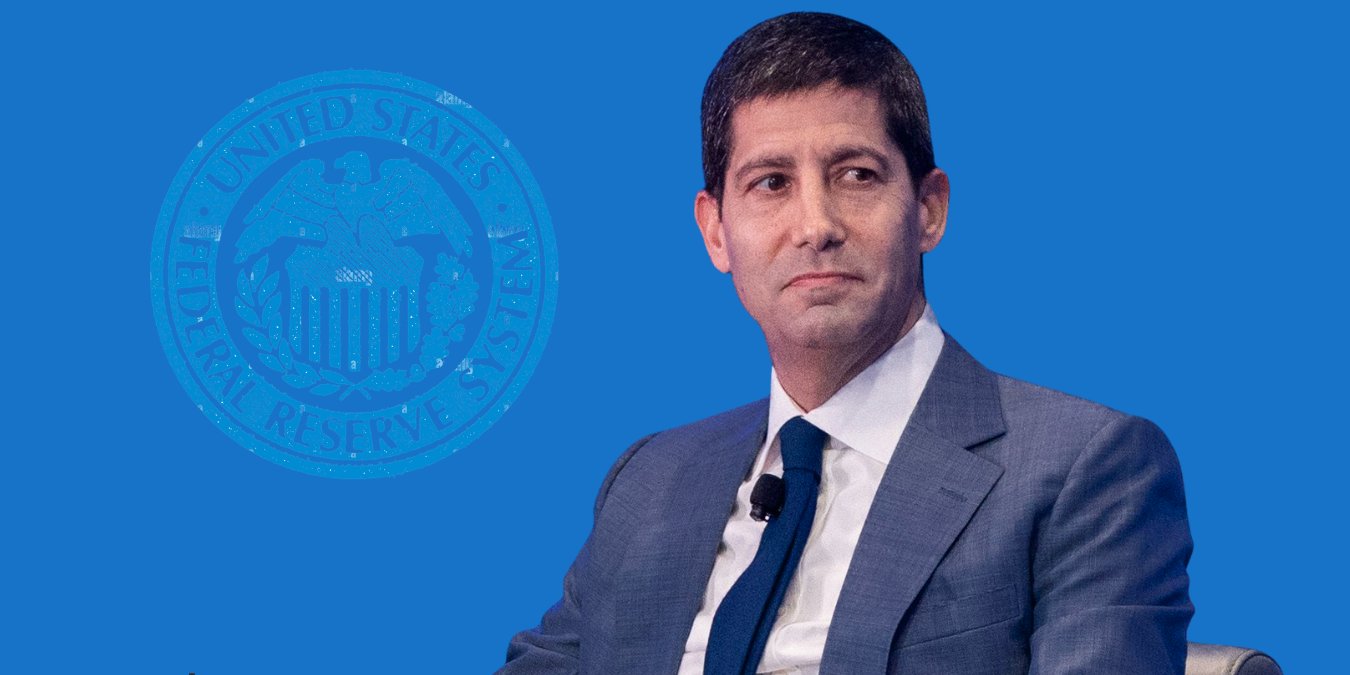
When Jerome Powell stepped down as Federal Reserve Chair earlier this year, markets had already priced in the transition. Kevin Warsh — a former Fed governor, Wall Street veteran, and long-time critic of unconventional monetary policy — had been widely expected to bring a more hawkish, disciplined approach to the central bank. But nobody quite anticipated just how quickly his communication style would become its own market event.
Within weeks of assuming the chairmanship, Warsh delivered a series of remarks that sent traders, economists, and portfolio managers scrambling for their translation guides. The language was deliberate, layered, and — to many observers — unnervingly reminiscent of the famously cryptic Alan Greenspan era. Wall Street, which had grown comfortable with Powell’s plain-spoken “Fed-speak lite,” suddenly found itself back in an age of purposeful ambiguity. The anxiety that followed was swift, real, and instructive.
Who Is Kevin Warsh?
To understand why Warsh’s words carry such weight — and why they unsettle markets the way they do — it helps to understand the man behind them. Kevin Warsh served as a Federal Reserve Governor from 2006 to 2011, a tenure that spanned the Global Financial Crisis. He was among the youngest governors in the Fed’s history at the time of his appointment, bringing with him a background in mergers and acquisitions at Morgan Stanley rather than the traditional academic economics pedigree most Fed officials carry.
That background matters more than people realize. Warsh has always seen markets not just as transmission mechanisms for monetary policy, but as dynamic, sometimes irrational actors that central banks must engage with strategically. He has been openly skeptical of forward guidance as a policy tool, arguing that over-reliance on explicit communication erodes the Fed’s optionality and, paradoxically, creates fragility rather than stability. His thinking has been shaped more by the realities of trading floors than the models of economics departments — and that shapes how he speaks.
Since leaving the Fed in 2011, Warsh has been a vocal critic of quantitative easing, low-rate policies, and what he has called the “coddling” of financial markets by central banks. His 2026 appointment, championed largely on the promise of restoring institutional credibility and fighting the inflation persistence that lingered longer than expected through mid-decade, was seen as a signal that the Fed would no longer prioritize market comfort over monetary discipline.
The Return of Deliberate Ambiguity
Alan Greenspan, who chaired the Federal Reserve from 1987 to 2006, was legendary for a communication style that became its own art form. He once told a Senate committee, “I know you think you understand what you thought I said, but I’m not sure you realize that what you heard is not what I meant.” That wasn’t an accident — it was policy. Greenspan believed that excessive clarity about the Fed’s intentions would allow markets to front-run central bank decisions, destabilizing rather than steadying the financial system.
Warsh appears to have absorbed that lesson deeply. In his first major address as Fed Chair, he spoke of the need for “policy that is calibrated to the moment’s emergent realities rather than anchored by the prior cycle’s residual consensus.” He warned against “the complacency that precision enables” and described forward guidance as “a crutch that markets have mistaken for a guarantee.” These were not throwaway lines. For veteran Fed-watchers, they read as a direct signal: the era of explicit dot plots and carefully telegraphed rate paths is under review.
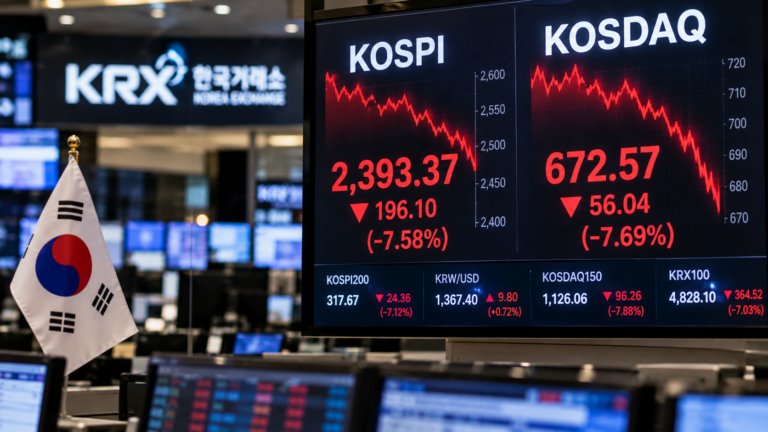
The markets noticed immediately. The S&P 500 dropped nearly 1.4% on the day of that address. The two-year Treasury yield, which is most sensitive to near-term Fed expectations, swung sharply as traders reassessed their models. Volatility indices spiked. The reaction wasn’t panic — it was recalibration, which in some ways is more significant. Panic fades. Recalibration reshapes positioning for months.
Why Ambiguity Itself Becomes a Risk Factor
Here is the core of what makes investors nervous, and it is worth unpacking carefully. Modern financial markets are not just reactive to what central banks do — they are reactive to what they expect central banks to do. An enormous industry has grown up around Fed-watching: interpreting statements, modeling rate paths, and pricing assets based on probabilities assigned to future policy moves. The CME FedWatch tool, which aggregates market expectations for rate changes, gets millions of visits in the hours after any Fed communication. Hedge funds employ full-time economists whose sole job is to decode Fed language.
When that language becomes deliberately less decodable, it does not simply mean that traders have less information. It means the entire risk premium framework shifts. Uncertainty about central bank intentions is not neutral — it is itself a cost. It raises the discount rate that investors apply to future cash flows, which mechanically depresses asset valuations. It widens bid-ask spreads in rate-sensitive markets. It increases the volatility of bond yields, which then bleeds into equities, credit spreads, and currency markets. A Fed Chair who intentionally introduces ambiguity is, in effect, tightening financial conditions beyond whatever the policy rate itself implies — without moving a single basis point.
This is not a theoretical concern. Research from the Bank for International Settlements has consistently shown that increases in monetary policy uncertainty are associated with measurable tightening in credit conditions, reduced business investment, and slower hiring — even when the actual policy rate is unchanged. Warsh almost certainly knows this. The question investors are asking is whether that tightening is intentional or collateral damage.
The “Greenspan Put” Is Gone — And That’s the Point
One of the most consequential phrases in modern financial history is the “Greenspan put” — the market’s belief that the Fed under Greenspan would step in to support asset prices during significant downturns. This belief, whether or not it was ever explicitly confirmed, created a one-sided risk environment that encouraged leverage and risk-taking. It was succeeded by the “Bernanke put,” the “Yellen put,” and eventually the “Powell put,” each iteration reinforcing the idea that the central bank viewed its role as partially backstopping financial markets.
Warsh has been one of the most persistent critics of this dynamic. In his pre-appointment writings and testimony, he argued that the perception of a Fed backstop for asset prices distorts capital allocation, encourages systemic risk-taking, and ultimately makes the financial system less resilient. He has written explicitly that a credible central bank must be willing to allow asset price corrections to play out without reflexively easing policy to cushion the blow.
His early statements as Chair have been consistent with this view. When asked directly whether the Fed would respond to equity market volatility, Warsh gave a response that was notable for what it did not say. He acknowledged that financial conditions matter for the real economy but declined to specify any threshold of market stress that would trigger a policy response. For a market that has been conditioned to believe there is always a number — always a percentage decline that will bring the Fed to the rescue — this non-answer was seismic.
Investors who built portfolios on the assumption of a continued Fed backstop are now repricing that assumption. That repricing does not happen quietly.
The Inflation Credibility Bet
There is a coherent and, arguably, compelling policy rationale behind Warsh’s approach that deserves serious attention. The United States spent much of the early-to-mid 2020s grappling with inflation that proved more stubborn than the “transitory” label initially suggested. The Fed’s credibility as an inflation fighter — the bedrock of its ability to anchor long-term inflation expectations — took a genuine hit during that period. Restoring it is not simply a matter of raising rates. It requires convincing households, businesses, and financial markets that the Fed will prioritize price stability even when doing so is economically and politically painful.
Deliberate ambiguity can serve this goal. A Fed that refuses to pre-commit to easy policy in the face of market stress signals that it is serious about not letting asset prices dictate monetary decisions. A Fed that speaks in layered, conditional language is harder to game, harder to front-run, and therefore more genuinely independent. Warsh is, in effect, making a long-term credibility bet: accept short-term market volatility and discomfort as the price of rebuilding the Fed’s institutional standing as an unconditional inflation fighter.
Whether that bet pays off depends on factors that no one can fully control — the trajectory of inflation itself, the resilience of the labor market, the global macroeconomic environment, and the political pressures that inevitably bear on any central bank operating in a democratic system. But the intellectual coherence of the strategy is real, and dismissing it as mere provocation misses the point.
What Sectors Are Most Exposed
For investors trying to navigate this environment practically, the sector-level implications of Warsh’s approach are significant and uneven.
Rate-sensitive sectors like real estate investment trusts (REITs), utilities, and long-duration growth stocks are most directly exposed to the uncertainty premium his communication style introduces. These assets are valued heavily on the basis of discounted future cash flows, and when the discount rate becomes harder to predict, their valuations compress. The U.S. REIT index has underperformed the broader market since Warsh’s appointment, and technology stocks with high price-to-earnings multiples have shown elevated volatility.
Financial sector stocks present a more complex picture. Banks generally benefit from a steeper yield curve — and Warsh’s hawkishness relative to the prior regime has contributed to some curve steepening. But the uncertainty about the policy path also complicates long-term lending decisions and introduces credit risk in commercial real estate and leveraged loan portfolios. Regional banks, already carrying residual stress from the 2023 banking turbulence, are watching closely.
Commodities and inflation-linked assets have held up relatively well, consistent with the market’s reading that Warsh will keep policy tighter for longer to ensure inflation is fully contained. Gold has seen modest gains, reflecting both the uncertainty premium and the reduced confidence in a rapid Fed pivot.
Emerging market assets denominated in local currency face headwinds from a stronger dollar, which tends to accompany expectations of sustained Fed tightening. Countries with significant dollar-denominated debt are particularly vulnerable.
The Political Dimension
No analysis of a new Fed Chair’s impact on markets is complete without acknowledging the political environment in which monetary policy operates. Warsh was appointed during a period of significant political scrutiny of the Fed’s independence, and his communications have had to navigate that terrain carefully. His Greenspan-style ambiguity serves a dual purpose: it preserves policy optionality while simultaneously making it harder for political actors to characterize any given statement as a commitment that the Fed is then failing to honor.
This is a delicate balancing act. Warsh has been careful to invoke the Fed’s statutory dual mandate — maximum employment and price stability — in his public remarks, even as his overall framing tilts clearly toward the inflation side of that mandate. He has avoided the kind of explicit language that would invite accusations of either reckless tightening or political capitulation. The ambiguity, from this angle, is not just an economic tool — it is an institutional defense mechanism.
Wall Street understands this, even if it doesn’t like it. Many senior investors who have expressed concern about Warsh’s communication style privately acknowledge that the Fed’s institutional credibility is worth protecting and that some short-term market discomfort may be a reasonable price to pay for it. What they are less certain about is whether the cost-benefit calculation has been correctly calibrated, and whether the ambiguity strategy can be sustained without tipping from productive uncertainty into damaging confusion.
What History Tells Us
It is worth remembering that markets adapted to Greenspan. The initial adjustment period after any significant shift in Fed communication style tends to be the most volatile phase. Investors eventually develop new heuristics, new mental models, and new ways of reading the signals. The uncertainty premium that markets are currently pricing in to account for Warsh’s ambiguity will narrow as his tenure proceeds and his revealed preferences become clearer through his actual decisions.
The Greenspan era ultimately produced one of the longest bull markets in U.S. history, though it also planted seeds of fragility that bore bitter fruit in 2008. The lesson is not that ambiguous communication is inherently good or bad — it is that communication style is inseparable from the broader policy framework it serves. If Warsh’s ambiguity accompanies sound, consistent decisions that genuinely restore inflation credibility and reduce systemic moral hazard, markets will eventually reward the discipline. If it accompanies inconsistency, reactive pivots, or policy errors, the ambiguity will look like a liability rather than an asset.
Watching the Signals
For now, investors would be well-served to focus less on parsing every word of Warsh’s statements — a game that is likely to produce more confusion than clarity — and more on the actual data that the Fed is responding to. Core inflation trends, labor market conditions, credit spreads, and financial stability indicators will ultimately drive decisions. Warsh’s communication style tells you about his philosophy and his instincts, but the data will tell you about the path.
What is clearly true is that the comfortable, predictable relationship between markets and the Federal Reserve that defined much of the Powell era is over. Kevin Warsh has, deliberately and methodically, introduced a new dynamic — one that demands more from investors in terms of independent analysis and scenario planning. The nervousness on Wall Street is not irrational. It is the sound of a market being asked to do more of its own work, and trusting the Fed less to do it for them. Whether that is ultimately healthy for financial markets — and for the broader economy — is the most important question in macro finance right now. The answer will take years to fully emerge.