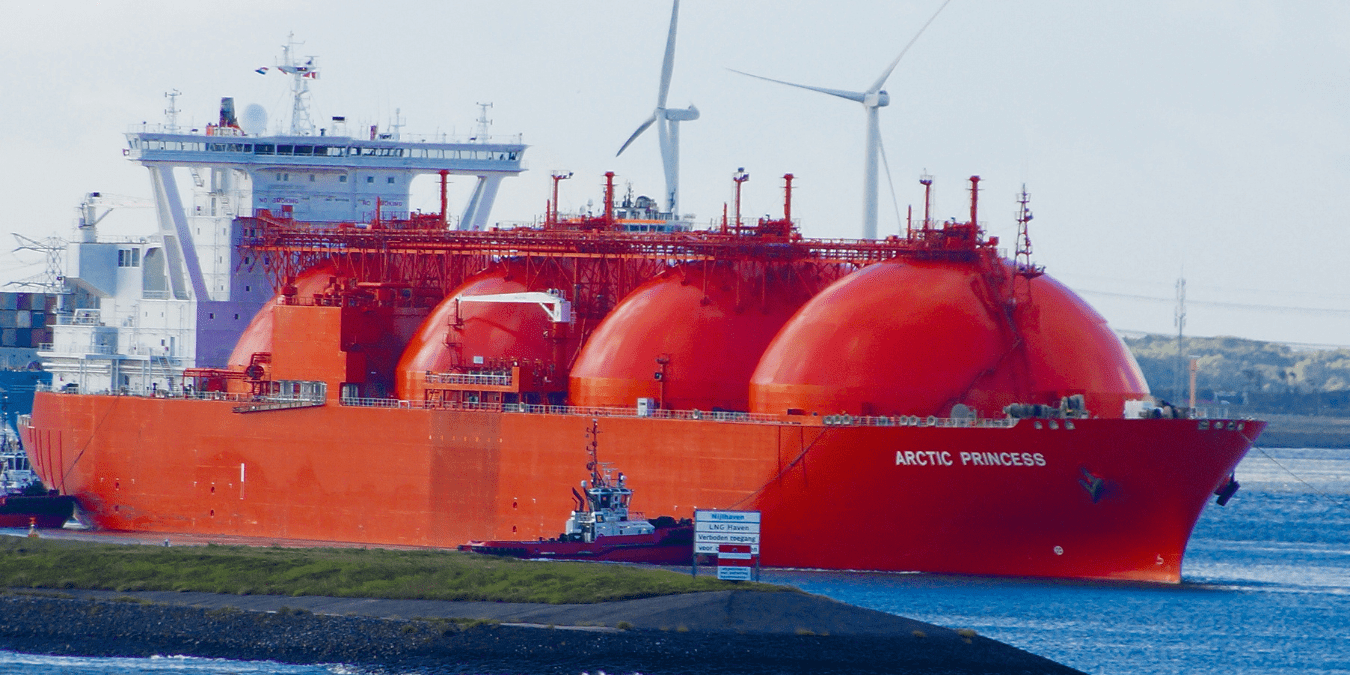
Oil Tankers Flowing Through the Strait of Hormuz Again — But Has the 100-Day Closure Already Changed Global Energy Markets Forever?
The ships are moving again. Four months after one of the most seismic disruptions in the history of global energy trade, oil tankers are threading their way through the narrow 33-kilometre passage between Iran and Oman — the Strait of Hormuz — following a U.S.-Iran agreement signed in Geneva in June 2026. But as the first Saudi supertankers and Qatari LNG carriers re-enter open waters, energy analysts, policymakers, and traders worldwide are confronting an uncomfortable truth: the reopening of the strait may have arrived too late to reverse the structural shifts the 100-day closure has already set into motion.
What Happened at Hormuz
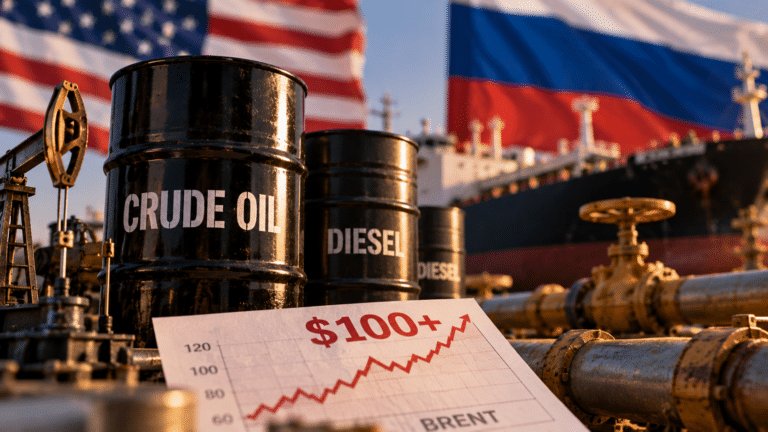
The crisis began on February 28, 2026, when Iran’s Revolutionary Guard closed the Strait of Hormuz following joint U.S.-Israeli military strikes on Iran. It was not a theoretical blockade or a brief tactical warning shot — it was a sustained, enforced closure of the world’s most critical energy chokepoint, one that the U.S. Energy Information Administration had previously reported handles an average of 20.9 million barrels of petroleum liquids per day, or roughly 20% of global petroleum consumption. Within hours, major shipping companies including Maersk and Hapag-Lloyd had halted all operations through the strait, rerouting vessels around the Cape of Good Hope. Within days, Brent crude had surged nearly 10%, and within weeks, Dubai crude prices had rocketed toward $170 per barrel — levels far beyond anything seen during prior geopolitical crises, including the 1973 oil embargo.insight.
The International Maritime Organization reported that by late April, approximately 20,000 mariners and 2,000 ships were stranded inside the Persian Gulf, unable to exit. Vessel-tracking services recorded over 400 oil-laden tankers anchored outside the Gulf waiting for clearance, representing hundreds of millions of barrels of crude oil frozen in economic limbo. Iran briefly declared a 10-day ceasefire opening on April 17, 2026, allowing an initial convoy of tankers to transit, but reasserted control within 24 hours citing the continuing U.S. naval blockade of Iranian ports. Full momentum toward reopening only began in mid-June 2026 when the U.S. and Iran finalized a Memorandum of Understanding, with Iran agreeing to permit ships to pass toll-free for 60 days.
The Scale of the Supply Shock
No previous disruption in the history of oil markets matches the scope of what occurred during this 100-day closure. The closure constrained approximately one-fifth of global crude oil supply, one-fifth of global natural gas exports, one-fifth of global refined product flows — including gasoline, diesel, and jet fuel — as well as over one-third of global helium supply and over one-third of global urea and sulfur, both critical agricultural fertilizer inputs. Wood Mackenzie estimated in May 2026 that more than 11 million barrels per day of Gulf crude and condensate supply remained curtailed, and projected oil prices could reach $200 per barrel in a worst-case sustained scenario. Luminix AI analysis calculated that the disrupted volume — at 20 million barrels per day — was three times larger than any prior oil supply shock in recorded history, with bypass pipeline capacity covering only 25% of normal Hormuz flows.
Qatar, the world’s most significant single-source LNG exporter, suffered direct physical damage when Iranian drone strikes hit facilities at Laff Industrial City and Mesaieed Industrial City, forcing a suspension of production. This simultaneously stripped European nations of a major LNG supplier at a time when they were trying to refill storage ahead of winter, while Asian buyers — already suffering — suddenly found themselves in direct competition with European utilities for every available LNG cargo in the Atlantic basin. The result was a dual shock: physical scarcity compounded by financial repricing across every energy-linked commodity simultaneously.
Asia’s Disproportionate Pain
Asia bore the sharpest edges of the crisis, and the geography of that pain exposed structural dependencies that have now become impossible for policymakers to ignore. India faced the most severe combined exposure — more than 60% of its oil imports originate from the Middle East, while a substantial share of its LNG contracts are Gulf-indexed, meaning both its physical supply and its financial hedges collapsed at the same moment. Analysts from UBP described this as “a dual physical and financial shock” with no near-term buffer mechanism.
Thailand emerged as one of the highest-impact losers in Southeast Asia, with the highest ratio of oil imports to GDP in the region. Every 10% rise in oil prices worsened Thailand’s current account deficit by approximately 0.5 percentage points of GDP. South Korea and the Philippines similarly faced severe LNG supply disruptions, with spot-reliant buyers forced to compete at extraordinary premiums. China, with its larger strategic petroleum reserves and diversified supply relationships, maintained a degree of insulation — but even Beijing would have faced growing shortages had the closure extended beyond the 100-day mark, as it would have needed to compete for Atlantic-basin cargoes, driving prices higher across the entire Pacific region.
The Alternative Routes Exposed
One of the most revealing dimensions of the crisis was just how inadequate the existing alternatives to Hormuz proved to be. Saudi Arabia’s East-West Pipeline, spanning 1,200 kilometres to the Red Sea port of Yanbu, has a nameplate capacity of 7 million barrels per day but an effective operational capacity estimated at around 4.5 million barrels per day — and onward shipping from Yanbu through the Bab el-Mandeb strait carried its own serious risk, given continuing Houthi militant activity in Yemen. The UAE’s Habshan-Fujairah pipeline (ADCOP), connecting Abu Dhabi’s onshore fields to the Gulf of Oman port of Fujairah, has a capacity of 1.5 to 1.8 million barrels per day — but Iranian drone strikes disrupted oil loadings at Fujairah almost immediately after the conflict began. Iraq’s Kirkuk-Ceyhan pipeline through Turkey, which had only resumed operations in September 2025 after a 2.5-year shutdown, was managing to pump 170,000 barrels per day as of mid-March 2026 — a drop in the ocean against the 20 million barrels per day normally transiting Hormuz.
Together, all available bypass infrastructure could cover only 25 to 40% of the volume normally flowing through the strait. The long-mooted Iraq-Jordan pipeline to the Red Sea port of Aqaba — a project first proposed in the 1980s — remained stalled on financial and political obstacles. A canal bypassing Hormuz through the Hajar Mountains, while theoretically possible, would involve engineering costs in the hundreds of billions of dollars and a construction timeline measured in decades. The crisis proved, with brutal clarity, that no realistic combination of existing alternatives could substitute for Hormuz.
The Repricing That Cannot Be Undone
Perhaps the most consequential long-term impact is not on physical oil flows, but on the pricing architecture of global energy markets. The Brent-Dubai crude spread — a reliable measure of market stress — peaked near $85 per barrel during the crisis, a figure with no historical precedent. Energy risk has been permanently repriced. Shipping insurance premiums for vessels operating in the Persian Gulf and adjacent waters have risen to levels that will not simply normalise when traffic resumes. Tanker owners, having seen over 400 vessels stranded for months, are recalibrating long-term investment decisions around geopolitical risk in ways that will affect charter rates and freight economics for years.
The EIA’s May 2026 outlook explicitly warned that the effects of the conflict are expected to persist “well beyond the immediate supply disruption,” with global oil market rebalancing requiring structural adjustment rather than simple resumption. Brookings Institution analysts writing in June 2026 noted that even after the strait reopens, the market will take months to normalize, and the pricing environment is likely to remain elevated during that window. The Gulf Institute for Finance reinforced this assessment, arguing that the closure “redrew trade flows, revived the strategic importance of non-Gulf …” energy producers, and reconfigured the geopolitical hierarchy of energy security in ways that outlast any single ceasefire agreement.
The Strategic Beneficiaries
Every major crisis produces winners, and the Hormuz closure has accelerated several geopolitical and commercial energy transitions simultaneously. The United States, already a significant LNG exporter, emerged as a critical alternative supplier to Europe and Asia alike during the disruption — strengthening the strategic case for continued investment in U.S. LNG export capacity that now carries both commercial and national security justifications. Canada, Norway, and other non-Gulf producers saw demand for their crude grades rise sharply as refiners scrambled to replace Persian Gulf medium-sour crude, which is a chemically specific grade that cannot simply be substituted with light sweet crude from shale basins without significant refinery retooling.
Malaysia, as Nomura analysts noted, sat on the relative beneficiary side of the ledger as an energy-exporting nation. African LNG producers — including projects in Mozambique, Senegal, and the Republic of Congo — found themselves newly elevated in European and Asian procurement strategies. Schroder’s research published in April 2026 drew an explicit parallel to past oil shocks, noting that every previous disruption of this magnitude had galvanised sustained investment in energy security infrastructure that outlasted the original crisis by a decade or more. The Hormuz closure is unlikely to be different.
The Reopening Is Real — But Incomplete
As of the third week of June 2026, over 20 oil tankers had navigated the Strait of Hormuz following the U.S.-Iran implementation agreement, with daily traffic reaching its highest level since early June. Kpler data showed four supertankers carrying approximately 8 million barrels of crude exiting or transiting the strait on June 18 alone, including the first Saudi-owned tankers to make the journey since the conflict began. Iran agreed to permit toll-free passage for 60 days while the broader diplomatic framework is negotiated, and committed to restoring traffic to pre-conflict levels within 30 days.
But Kpler analysts themselves cautioned that traffic could rise to only 40% to 50% of pre-war levels within the first 30 days of the agreement. The pre-conflict figure was over 100 vessels per day; as of June 19, only 25 vessels were crossing per 24-hour period. The backlog of 118 loaded tankers estimated to be waiting in the Gulf represents a one-time release of supply rather than a sustainable recovery of flows. Hapag-Lloyd stated publicly that returning to normal operations “will take weeks, if not months.” The physical infrastructure at Qatari LNG facilities, refineries, and export terminals damaged during the conflict will require assessment and repair before production can fully resume.
Four Permanent Shifts in Global Energy
The consensus among energy analysts, geopolitical researchers, and institutional investors is that the 100-day Hormuz closure has produced at least four structural changes in global energy markets that no diplomatic agreement can reverse.
Energy security spending will surge. Governments across Asia, Europe, and the Americas are now treating the diversification of energy supply routes as a national security imperative rather than an economic optimisation exercise. Emergency strategic reserve requirements are being reviewed upward across the OECD. The BNP Paribas economic research team noted in May 2026 that market recovery options were being weighed against a backdrop of permanently elevated geopolitical risk pricing.
Demand for non-Gulf energy will be structurally higher. The scramble for Atlantic-basin LNG, U.S. crude, and African and Norwegian supplies has introduced a new price floor in those markets reflecting diversification demand that did not exist before February 28. This is not transient — procurement officers across Asia and Europe have spent four months learning that over-concentration in Gulf supply is an existential vulnerability.
Alternative infrastructure will now get built. Projects that sat in planning documents for decades — the Iraq-Jordan pipeline, expanded UAE bypass capacity, new LNG liquefaction projects in non-Gulf jurisdictions — have moved from “strategically desirable” to “politically unavoidable.” The political will to fund them, previously absent, has been generated by the crisis itself.
The governance of chokepoints is now a live diplomatic issue. The U.S.-Iran agreement’s clause allowing Iran to charge tolls for Hormuz passage after the 60-day toll-free period has introduced an entirely new dimension of international maritime law and energy geopolitics that analysts at Oxford Energy and UNCTAD are only beginning to map. How the world’s most critical energy corridor will be governed in the medium term — and who has leverage over that governance — is a question that has no settled answer.
The World Has Already Changed
The tankers are flowing again, and that matters enormously. Markets need physical supply, and the gradual restoration of transit through Hormuz will bring oil prices down from their crisis peaks, ease energy costs for consumers across Asia and Europe, and reduce the acute financial strain on import-dependent economies like India and Thailand. But the reopening of a gate does not erase the memory of what happened when it was shut. The 100-day closure of the Strait of Hormuz has functioned as the most comprehensive real-world stress test ever conducted on the global energy system — and the system failed significant portions of that test. What energy strategists, investors, and policymakers do with that finding will define the structure of global energy trade for the next generation. The ships are moving. The question now is whether the world is moving fast enough to ensure it never has to stop them again.