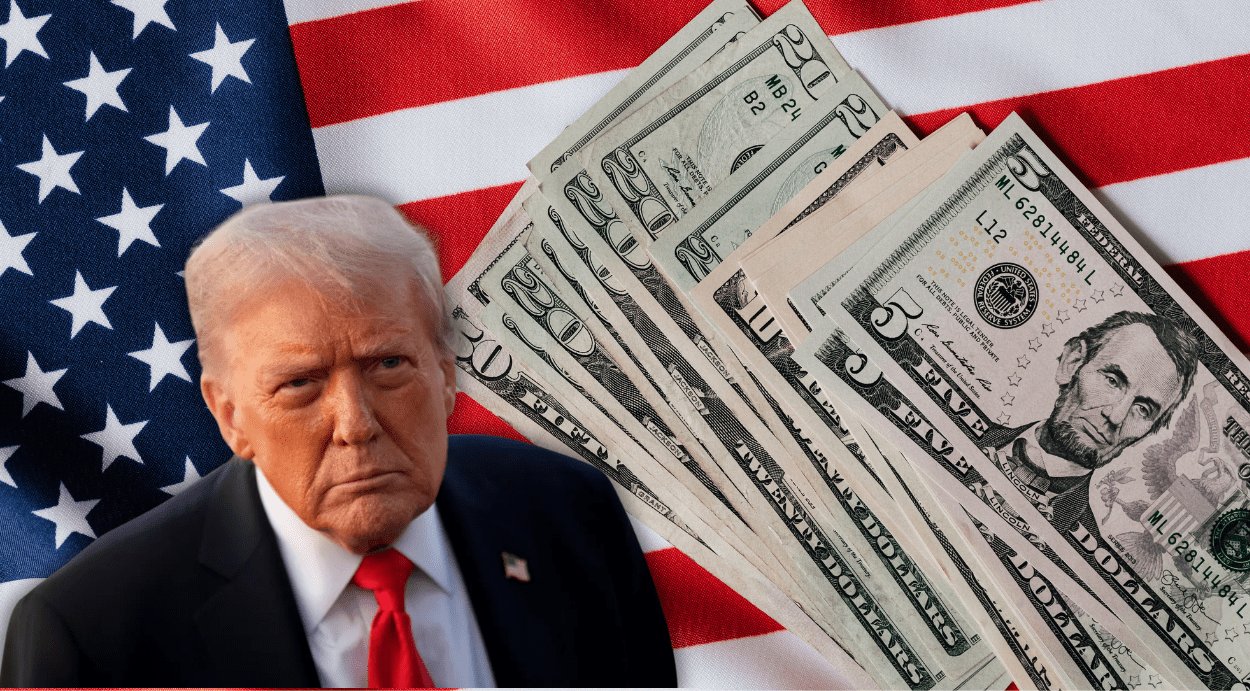
Trump Just Hinted He Won't Slap India with a 25% Tariff Over Russian Oil — Here's What Changes for Indian Exporters
For nearly a year, the Indian export community has lived under the shadow of a punishing tariff regime tied directly to the country’s crude oil purchases from Russia. That shadow now appears to be lifting. In early February 2026, President Donald Trump signaled a decisive shift, announcing that the additional 25% tariff imposed on Indian goods over Russian oil purchases was being dropped, following a direct conversation with Prime Minister Narendra Modi. This is not a minor policy tweak. It marks the end of one of the most disruptive trade episodes in recent India-US history, and it changes the calculus for thousands of exporters who had been bracing for prolonged pain.
How We Got Here
To understand why this reversal matters so much, it helps to revisit how the tariff saga unfolded. In August 2025, Trump signed an executive order imposing an extra 25% tariff on Indian imports specifically because of India’s continued purchases of Russian crude oil, pushing the total tariff burden on Indian goods entering the US to a staggering 50%. This was among the highest tariff rates the US had placed on any trading partner at the time, and it targeted labor-intensive sectors that form the backbone of India’s export economy, including textiles, gems and jewelry, leather goods, seafood, and auto components.
The rationale behind the tariff was explicitly geopolitical rather than purely economic. Trump repeatedly framed India’s Russian oil purchases as indirectly financing the war in Ukraine, and he used tariffs as leverage to pressure New Delhi into curbing that trade. At one press briefing, he even hinted at raising tariffs “very substantially” if India did not comply, underscoring how tightly trade policy had become entangled with foreign policy objectives.
The consequences were immediate and measurable. Indian merchandise exports to the US, the country’s single largest export market, fell nearly 20% in September 2025 alone, with a cumulative decline of 37.5% between May and September as the tariffs took hold. The Global Trade Research Initiative estimated the tariffs affected exports worth roughly 48.2 billion dollars, and warned that entire product lines could become commercially unviable overnight. Small and medium enterprises, which rely heavily on razor-thin margins in the American market, were hit hardest, with industry leaders calling the situation “extremely shocking”.
The Turning Point
Behind the scenes, New Delhi had been working to defuse the standoff for months. By January 2026, India began asking domestic refiners to submit weekly data on Russian and US oil imports, a move officials said was intended to give Prime Minister Modi’s office real-time visibility as the government pursued a broader trade deal with Washington. Reports indicated that stricter US and European sanctions had already been squeezing the flow of Russian oil to India, with Russian crude imports falling to a three-year low of around 1.2 million barrels per day in December 2025, a nearly 40% drop from the roughly 2 million barrels per day peak seen earlier in the year.
This quiet recalibration set the stage for the announcement that followed. On February 2, 2026, Trump revealed on Truth Social that India had agreed to halt its purchases of Russian oil altogether, and in exchange, the US would remove the 25% Russia-linked tariff while also cutting the baseline country-specific tariff on Indian goods from 25% to 18%. Trump further claimed India had committed to increasing oil purchases from the United States, and possibly from Venezuela, and to eventually reducing its own tariffs and non-tariff barriers against American goods to zero.
What Exactly Is Changing
The practical shift for Indian exporters comes down to a meaningful reduction in the effective tariff burden. Under the previous regime, Indian goods faced a combined tariff of up to 50%, made up of a 25% baseline rate plus the 25% Russian oil penalty. With the penalty tariff removed and the baseline rate trimmed to 18%, the effective tariff on many Indian exports could fall by more than half.
This is a substantial relief for the sectors that had been absorbing the brunt of the earlier hikes. Textiles and apparel, gems and jewelry, leather footwear, engineering goods, and chemicals had all reported sharp declines in US-bound orders as buyers shifted to competitors in countries with lower tariff exposure. Fitch Ratings had noted that the effective US tariff rate on Indian goods had jumped from around 2% to nearly 20% during 2025, a shift severe enough to threaten India’s foothold in global value chains.
It’s worth noting that certain categories, including pharmaceuticals and electronics such as iPhones, had already been exempted from the additional tariffs even during the worst of the standoff, offering some cushion to those industries throughout the dispute. Those exemptions are expected to remain intact, but the broader relief now extends to the labor-intensive sectors that had no such protection.
Why This Matters for Exporters on the Ground
For exporters in cities like Agra, Surat, Tirupur, and Jaipur, this development is not abstract policy news, it is the difference between viable order books and canceled contracts. Puran Dawar, a leather footwear exporter from Agra, had previously warned that the industry would face a considerable downturn unless the tariffs were reversed or domestic and alternative export markets picked up the slack. Ajay Sahai, director general of the Federation of Indian Export Organisations, had similarly described the earlier 50% tariff regime as making entire product lines “unviable overnight”.
With the tariff burden now easing, exporters have a genuine opportunity to recover lost ground in the US market, which had seen a four-month streak of declining shipments through September 2025. That said, recovery is unlikely to be instantaneous. Buyers who diversified sourcing toward competitors in Vietnam, Bangladesh, or other lower-tariff countries during the crisis may take time to shift orders back, and rebuilding trust with American importers after months of supply disruption will require sustained effort from Indian exporters and trade bodies alike.
The Broader Trade Deal Context
This tariff rollback did not happen in isolation. It is being framed as part of a wider trade agreement between the US and India, one that reportedly includes India agreeing to increase purchases of American energy and to work toward eliminating its own tariffs and non-tariff barriers on US goods over time. This suggests the current 18% baseline tariff may not be the final destination but rather a transitional rate as both sides negotiate a more comprehensive trade framework.
For Indian policymakers, the episode has also reinforced the strategic value of diversification. Even as the US market contracted sharply during the tariff dispute, India managed to offset some of the decline through improved trade relations with the UAE and China, a hedge that softened the overall blow to export revenue. Exporters and industry groups are likely to continue pushing for this kind of market diversification even as US trade terms improve, given how exposed the sector proved to be when a single geopolitical dispute could jeopardize nearly half of India’s American-bound export basket.
What Exporters Should Watch Next
While the tariff relief signals a clear de-escalation, several open questions remain that exporters should track closely in the coming weeks and months.
- Implementation timeline: it remains unclear exactly when the reduced 18% baseline and the removal of the 25% oil-linked tariff will formally take effect through official US Trade Representative notices.
- Compliance verification: how the US will monitor and verify India’s actual halt in Russian oil purchases, since any perceived backsliding could reignite tensions.
- Sector-specific carve-outs: whether additional product categories beyond pharmaceuticals and electronics will receive further exemptions or preferential treatment under the new framework.
- Long-term trade deal terms: the specifics of India’s commitment to reduce its own tariffs and non-tariff barriers, which could open up reciprocal opportunities for Indian exporters seeking better access to other markets.
- Global oil market shifts: whether India’s pivot toward US and potentially Venezuelan crude changes its energy cost structure in ways that ripple into manufacturing and export pricing.
The end of the 25% Russia-linked tariff represents one of the most significant trade policy reversals affecting India in recent memory, and it offers real breathing room to an export sector that had absorbed months of uncertainty and lost revenue. Exporters who move quickly to re-engage US buyers, while also maintaining the market diversification strategies built during the crisis, will likely be best positioned to capture the upside as trade normalizes.