Why Is the Sensex Falling on 7.8% GDP Growth — and Which Nifty Level Decides What Happens Next?
Markets · India Equity Briefing · Tuesday, 08 September 2026
Why Is the Sensex Falling on 7.8% GDP Growth — and Which Nifty Level Decides What Happens Next?
India just posted its fastest quarterly growth print in five quarters. Corporate balance sheets are healthier than they have been since the pandemic. Domestic institutions are absorbing every share foreign investors sell. And the Sensex still closed at 76,132.81 on Monday, roughly 7,700 points below where it stood in late February. If that gap feels like it should not exist, you are asking the right question.
This briefing reconstructs what happened in the last session and what is set up for Tuesday, using confirmed exchange data. Then it explains the mechanism that reconciles strong growth with a falling index, and gives the price levels that decide whether this correction ends near current prices or extends toward the July low.
Quick Summary
The Nifty 50 closed at 23,779.15 on 7 September, down 0.50%, and the Sensex at 76,132.81, also down 0.50%. The disconnect between 7.8% GDP growth and a falling index comes down to one thing: Brent crude near $97 and a repriced global rate outlook are compressing the multiple investors will pay, even while earnings hold up. The level that matters on Tuesday is 23,600 to 23,500 on the Nifty. Hold it, and the oversold RSI supports a bounce toward 24,150. Lose it, and the correction extends.
Indian Market Overview: What the 7 September Close Actually Tells You
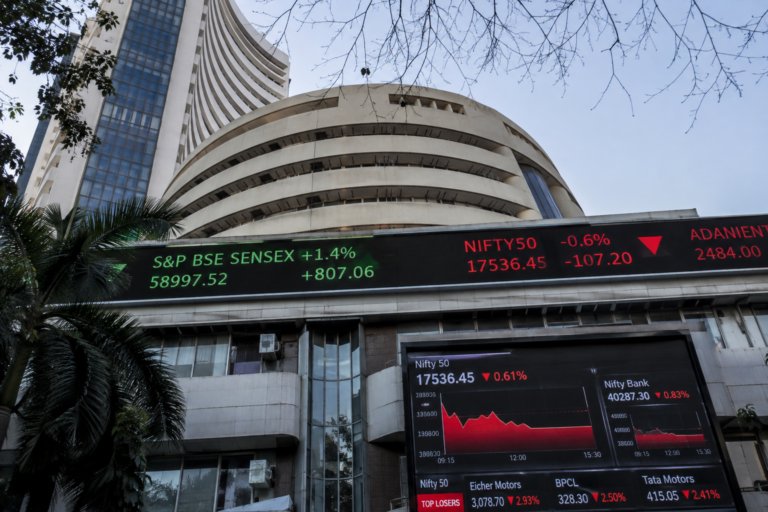
Monday was the second leg of a decline that has now become the defining pattern of early September. The Sensex shed 382.62 points, or 0.50%, to settle at 76,132.81. The Nifty 50 lost 118.55 points, also 0.50%, to close at 23,779.15. Neither number is dramatic on its own. What makes the session significant is that the index resumed falling after a one-day pause, and it did so on a day when the macro news flow was, on paper, entirely supportive.
Underneath the headline, the market is not moving as one block. The Nifty MidCap 100 fell 0.46%, roughly in line with the benchmark, but the Nifty SmallCap 100 closed 0.02% higher, supported by company-specific earnings rather than index flows. That divergence is the most useful signal on the tape right now.
Sector breadth was almost uniformly negative. Barring Nifty Pharma, every sectoral index on the NSE settled lower on Monday. Nifty IT was the worst of the group, tumbling more than 2%, with metal, PSU bank, realty and media also underperforming. Nifty Pharma and Nifty Healthcare were the only pockets of strength, which is the classic defensive rotation you see when investors are reducing risk without leaving equities entirely.
The laggards were revealing. Infosys, SBI Life and HDFC Life led the Nifty 50 decline, yet two of the three were among the biggest gainers two sessions earlier, when SBI Life rose 3.50% and HDFC Life added 2.42%. When the same names top the gainers list on Friday and the losers list on Monday, that is positioning being unwound, not a change of view.
Sentiment can be measured rather than guessed at. India VIX has contracted to around 11, a low reading that marks this as a grinding, orderly decline rather than a panic. Yet Nifty September futures traded at 23,866, down 0.76%, at a 97-point premium to spot. Low volatility plus persistent selling plus a healthy futures premium is the signature of institutional repositioning, not retail capitulation.
The flow data completes the picture. On 4 September, FIIs sold a net Rs 3,111.90 crore in the cash segment while DIIs bought Rs 8,930.10 crore, close to three rupees of domestic buying per rupee of foreign selling. That pattern has held since 2025, when DIIs invested a record Rs 6 trillion and foreign portfolio investors withdrew about $23.3 billion. Domestic money is why the index is drifting rather than cracking.
NIFTY Today In Detail: The Nine Points That Define Tuesday’s Session
Here is the full technical and derivative picture for the Nifty 50 going into 8 September, assembled from the levels published by SBI Securities and Bajaj Broking Research after Monday’s close. Read these as a decision framework, not a forecast.
- The close was structurally bearish. The Nifty formed a bearish candle on the daily chart with both a lower high and a lower low. Bajaj Broking Research notes the close below 23,800 signals continuation of the corrective phase rather than a one-day dip.
- 24,025 is the trend-decider. The immediate trend remains negative for as long as the index trades below 24,025. Nothing on the daily chart turns constructive until that level is reclaimed on a closing basis.
- 23,600 to 23,500 is the support that matters. This zone coincides with the previous major gap region and the July 2026 low. It is the single most important band on the chart because two independent technical features overlap there.
- A tighter first line sits at 23,720 to 23,680. Sudeep Shah, head of technical and derivatives research at SBI Securities, places the 61.8% Fibonacci retracement of the 23,070 to 24,774 upmove in this region. A decisive breach below 23,680 opens the path to 23,550.
- 24,150 is the resistance to watch on the upside. It combines last week’s high with the 50-day exponential moving average. A move above it would be the first evidence that the downtrend is losing momentum.
- Momentum indicators have reached oversold territory. The daily stochastic and the 14-period RSI have both approached oversold levels. Bajaj Broking’s Pabitro Mukherjee argues that if the index holds above 23,600 to 23,500, a pullback toward the 50-day EMA near 24,150 becomes the base case.
- Options positioning brackets the move tightly. For the 8 September weekly expiry, maximum call open interest sits at the 24,000 strike and maximum put open interest at 23,500. Option writers are effectively defining a 500-point corridor.
- GIFT Nifty pointed to a negative open. It was quoted around 23,797, a discount of nearly 62 points to the previous Nifty futures close, ahead of Tuesday’s session.
- Four stocks are in the F&O ban period. Inox Wind, Kaynes Technology, LIC Housing Finance and SAIL are restricted, which mechanically reduces liquidity and can exaggerate intraday moves in those names.
Trend repair
Watch
Corrective
Defend
Extend
Bank Nifty: A Nine-Week Range That Has Not Broken
Bank Nifty is in its own corrective phase and also printed a bearish candle with a lower high and a lower low on Monday. The near-term expectation is a 57,000 to 58,000 band. A close below 57,000 would strengthen selling pressure and drag the index toward the 56,500 to 56,200 support area, which is important because it combines the 52-week exponential moving average with the lower boundary of a nine-week trading range.
On the upside, 58,000 is the immediate hurdle. Sustaining above it opens the way toward 58,500 to 58,700. Failure to clear it keeps the index inside the 57,000 to 58,000 corridor. For context, Bank Nifty closed at 57,409.60 on 1 September after falling 1.06%, so it is currently sitting in the lower half of its own range. The wider consolidation band remains 56,500 to 58,700, and it has now contained price for nine weeks without a decisive resolution.
BSE Sensex Versus NSE Nifty 50: A Session-By-Session Comparison For September 2026
The two benchmarks track each other closely, but the gaps between them carry information. The Sensex has 30 constituents and is concentrated in banking and IT heavyweights, so it amplifies whatever those sectors do. The Nifty 50, with meaningful weights in energy, autos and consumer names, gives a smoother read.
| Session | BSE Sensex close | Sensex change | NSE Nifty 50 close | Nifty change | What drove the gap |
|---|---|---|---|---|---|
| 1 Sep 2026 | 76,944.28 | Down 12.99 pts, 0.02% | 24,055.80 | Down 24.60 pts, 0.10% | IT and FMCG gains offset a 1.06% fall in Bank Nifty to 57,409.60 |
| 4 Sep 2026 | 76,515.43 | Up 362.57 pts, 0.48% | 23,897.70 | Up 24.25 pts, 0.10% | Sensex breadth 19 up versus 10 down; Nifty breadth negative at 23 up, 27 down |
| 7 Sep 2026 | 76,132.81 | Down 382.62 pts, 0.50% | 23,779.15 | Down 118.55 pts, 0.50% | Nifty IT down over 2%; metal, PSU bank, realty and media all lower |
| 8 Sep pre-open | Not yet set | Futures pointed lower | GIFT Nifty 23,797 | Discount of about 62 pts | Brent near $97 and a 0.38% fall in S&P 500 futures during Asian hours |
| Month to date | Down about 811 pts | Down about 1.05% | Down about 277 pts | Down about 1.15% | Nifty lagging the Sensex slightly as insurance and IT weights bite |
| Since 26 Feb 2026 | From 82,249 | Down about 7.4% | From 25,497 | Down about 6.7% | Multiple compression, not earnings collapse: P/E fell from above median to 20.2x |
Worked example: what the drawdown actually cost, and what it did not
Take a portfolio that held Rs 10,00,000 of a Nifty 50 index fund at the 26 February 2026 close of 25,497. At Monday’s close of 23,779.15, that position is worth about Rs 9,32,630, a paper loss of roughly Rs 67,370 before costs. Now look at the earnings side. Nifty 500 companies grew earnings 15.6% in FY26, and Q1 FY27 GDP came in at 7.8%. The index P/E has fallen from above its 10-year median to 20.2x against a median of 23.3x. In other words, almost the entire loss is the market paying less for each rupee of profit, not the profits shrinking. That is a valuation event, and valuation events reverse faster than earnings events do.
Key Economic Drivers: India GDP Growth, CPI Inflation And RBI Repo Rates
The Indian macro picture in September 2026 is unusual. Growth is accelerating, inflation is rising from a low base, and the central bank is standing still. Each fact pulls the market a different way, which is why the index drifts down while the economy expands.
GDP: 7.8% Growth That Beat Every Major Forecast
The Ministry of Statistics and Programme Implementation reported on 31 August 2026 that real GDP grew 7.8% year on year in Q1 FY27, reaching Rs 81.36 lakh crore against Rs 75.46 lakh crore a year earlier. That is a substantial beat. The RBI had projected 7.0%. A Moneycontrol poll of 17 economists had a median of 7.3%, and a Reuters poll of 58 economists came in at 7.1%. Nominal GDP rose 10.3% to Rs 88.27 lakh crore, and real gross value added increased 8.2% to Rs 73.82 lakh crore.
The composition matters more than the headline. Gross fixed capital formation jumped 20.4% during April to June 2026. Services expanded 10%, with financial, real estate and professional services growing 12.1%. Manufacturing grew 9.2%, construction 7.7% and agriculture 3.6%. Private consumption grew 7.1%, solid but well behind investment. This is an investment-led expansion, and those lift capital goods, cement, power and industrial financiers over a multi-year horizon.
CPI Inflation: A 19-Month High, And Rising For The Wrong Reason
Retail inflation reached 4.45% in July 2026, up from 4.38% in June and 3.93% in May. That is the highest reading since December 2024 and the second consecutive month above the RBI’s 4% target, though still comfortably inside the 2% to 6% tolerance band. The Consumer Food Price Index rose 5.52%. Rural inflation at 4.84% ran well ahead of urban at 3.96%, which is the reverse of the pattern seen through most of 2025.
The category detail explains why markets care. Restaurant and accommodation inflation jumped from 6.91% in June to 7.7% in July, a direct pass-through from fuel. Transport ran at 4.43%, while housing was subdued at 2.22% and recreation at 1.6%. This is energy-driven inflation, imported through crude and amplified by a rupee at 94.51. Domestic demand is not the culprit, which is both reassuring and unhelpful, because monetary policy cannot fix an oil price.
Forecasters are not expecting relief. Aditi Nayar of ICRA expects CPI to harden to about 4.7% in August and cross 5% in September as the base effect turns unfavourable, with a full-year average near 5%. Her view, published after the July print, is that the next move in rates is more likely to be a hike than a cut, potentially as early as December, if price pressures broaden. The August CPI release is due around 12 September, which makes it the most consequential data point of the coming week.
RBI Repo Rate: Four Meetings Of Deliberate Stillness
The Monetary Policy Committee, chaired by Governor Sanjay Malhotra, kept the repo rate unchanged at 5.25% on 5 August 2026. The vote was unanimous at 6-0 and the stance stayed neutral. The standing deposit facility rate remains 5.00%, and the marginal standing facility rate and bank rate both stand at 5.50%. This was the fourth consecutive hold, following the last move, a cut from 5.50% to 5.25% in December 2025.
Alongside the decision, the RBI raised its FY27 real GDP growth forecast to 6.7% from 6.6% and lowered its FY27 CPI projection to 5.0% from 5.1%. Malhotra described the committee as “neither dovish nor hawkish” and said policy would be guided by headline inflation, which he expects to rise further in the near term even as underlying inflation stays controlled.
Here is what most commentary gets wrong about this policy. The pause is not indecision. With FY27 growth tracking above forecast and inflation drifting up because of an external energy shock, cutting would be reckless and hiking would punish a domestic economy that is not overheating. Standing still is the correct answer, and it will remain the correct answer until either crude falls or domestic demand starts generating its own price pressure. The next MPC meeting runs from 5 to 7 October 2026.
Employment: The Data That Quietly Improved
MoSPI’s Periodic Labour Force Survey for July 2026 showed unemployment among those aged 15 and above falling to 5.1% from 5.5% in June, with the labour force participation rate rising to 55.4%. The improvement was concentrated in rural India, where unemployment fell to 4.5% from 5.0%, while urban unemployment held near 6.7%. The worker-population ratio rose to 52.5%, and female participation reached 34.4%, up 1.7 percentage points in a month.
Set against the GDP composition, this is nuanced. Growth is driven by capital-intensive investment, which is not labour-absorbing in the short run, and urban youth unemployment stays structurally elevated. The market read-across: consumption-facing companies should expect steady rather than accelerating volumes, while capital goods and financing businesses have the stronger tailwind.
Two more macro data points complete the frame. Industrial production grew 7.3% year on year in June 2026, with manufacturing up 7.8% and electricity and gas supply up 10.6%, taking the general IIP index to 123.1 from 114.7. For April to June FY27 as a whole, IIP expanded 5.8%. India’s foreign exchange reserves stood at $692.86 billion, or Rs 66,12,148 crore, as of 31 July 2026, which is a meaningful buffer against the currency pressure that a $97 oil price creates.
Latest Market News: Eight Developments Moving Indian Stocks Today
Each item landed between Monday’s close and Tuesday’s open. The second half of every point is what matters, because a headline without a transmission mechanism is just noise.
- Brent crude is holding near $97 a barrel, with intraday trades near $100. Brent has climbed 1.6% over two sessions and West Texas Intermediate is above $92, as investors wait for details of a reported Iran-Oman arrangement to safeguard shipping through the Strait of Hormuz. Immediate impact: the single largest drag on Indian equities. Every $10 on Brent widens the import bill, pressures the rupee at 94.51 and feeds the transport and restaurant components of CPI. Oil marketing companies, paints, tyres and aviation carry the margin risk; upstream producers benefit.
- US August payrolls came in at 162,000 against a 53,000 consensus. The unemployment rate held at 4.1% and both June and July figures were revised upward. Immediate impact: the two-year Treasury yield hit its highest level since January 2025, and expectations shifted toward the Federal Reserve raising rates rather than cutting. Higher US yields raise the hurdle rate for emerging market equities and are the proximate reason FIIs stayed net sellers.
- Fed Chair Kevin Warsh has hinted at addressing persistent inflation by hiking. Vice President JD Vance publicly argued the opposite, that the Fed should cut to make housing more affordable. Immediate impact: policy uncertainty at the world’s most important central bank raises the global risk premium. For Indian IT services, which sell to US corporate budgets, a hiking Fed is a demand headwind, and it explains Monday’s 2% fall in Nifty IT.
- GE Vernova T&D India was declared L1 bidder by Power Grid. The mandate covers design and execution of a 6,000 MW, 800 kV HVDC terminal station to evacuate renewable power from Barmer-II to South Kalamb. Immediate impact: a concrete, dated confirmation that the transmission capex cycle is live. This supports the entire power T&D chain and validates the 20.4% GFCF growth in the GDP data.
- Adani Power received a letter of intent on 7 September to acquire GVK Energy’s 330 MW hydro plant. Immediate impact: incremental hydro capacity with a firm regulatory profile. Watch for the consideration to be disclosed before assuming it is accretive.
- PVR Inox fell 8%, its sharpest intraday drop in six months, then clarified an internal review. An anonymous complaint received in April 2026 prompted a preliminary independent review, which found no evidence of kickbacks. Separately, the company’s Rs 300 crore buyback opens on 10 September and closes 17 September, covering up to 20.69 lakh shares, or 2.11% of equity, at Rs 1,450 per share. Immediate impact: the buyback price sets a visible floor reference. Governance headlines in mid-cap consumer names have been punished hard in this tape.
- The United Forum of Bank Unions has served strike notices on State Bank of India. The notices cover 11 September, 28 to 30 September, and a continuous strike from 26 October 2026. Immediate impact: a genuine operational risk for PSU banking through the festive quarter, at exactly the point when retail credit disbursement peaks. Nifty PSU Bank was already among Monday’s underperformers.
- Three mainboard IPOs opened on 8 September, together seeking Rs 1,984 crore. Kanohar Electricals is raising Rs 1,056 crore, Prasol Chemicals Rs 500 crore and Glass Wall Systems Rs 428 crore, all closing 10 September. Recent listings have been polarised: Rays of Beliefs was subscribed 107.71 times and Deepa Jewellers 43.40 times, while Purple Style debuted at a 7% discount. Immediate impact: roughly Rs 2,000 crore of primary absorption drains secondary market liquidity in an already soft week.
The earnings signal buried in the insurance updates
Two August business updates released before Tuesday’s open deserve more attention than they will get. ICICI Prudential Life reported annualised premium equivalent up 23.4% year on year to Rs 893.9 crore in August, with first-half FY27 APE up 14.6% to Rs 2,136 crore. Bajaj Allianz Life’s new business premium grew 31.6% to Rs 1,954 crore in the month, and cumulative April-to-August NBP surged 41.7% to Rs 7,017 crore. Bajaj Allianz General’s gross direct premium rose 11% to Rs 2,291 crore. Life insurance is compounding at 20% to 40% while the insurance stocks themselves led Monday’s decline. That is the clearest example on the tape of price moving away from fundamentals.
Foreign Indices That Influenced Indian Markets Today
Indian equities do not trade in isolation. Most of the overnight information that sets the Indian open comes from three places: the US close, the Asian morning session, and the commodity complex. Here is what each contributed going into 8 September.
| Index or market | Latest level | Move | Session | Transmission into Indian markets |
|---|---|---|---|---|
| Dow Jones Industrial Average | 53,414.25 | Down 271.86 pts, 0.51% | 4 Sep close | Sets the global risk tone. Fell on the hot payrolls print that revived US rate-hike odds. |
| S&P 500 | 7,718.60 | Down 0.38% | 4 Sep close | Futures were a further 0.38% lower during Asian hours on 8 September, pointing to a soft Indian open. |
| Nasdaq Composite | 26,506.99 | Down 0.29% | 4 Sep close | The single most important read for Nifty IT. Nasdaq weakness maps almost directly onto TCS, Infosys and HCL Tech. |
| Nikkei 225 | 65,020.94 | Up 1.26% | 4 Sep close | Topix slipped 0.4% on 8 September. A weakening dollar-yen shifts Asian fund allocation at the margin. |
| Kospi (South Korea) | 6,687.21 | Up 1.64% | 4 Sep close | Rose a further 1.1% on 8 September as memory-chip makers rallied on the OpenAI GPT-6 launch. |
| Hang Seng (Hong Kong) | Around 25,213 | Down 0.4% | 3 Sep close | Mainland money rotating into Hong Kong AI names competes directly with India for emerging-market allocation. |
| Shanghai Composite | 3,932.70 | Up 0.07% | 7 Sep | Chinese crude buying is tightening global oil supply, which is an indirect but powerful negative for India. |
| Euro Stoxx 50 futures | Futures | Up 0.17% | 8 Sep, Asian hours | European bond yields rose on inflation worries. Stoxx 600 swung between gains and losses. |
| MSCI Asia Pacific | Index | Up 0.2% | 8 Sep, Asian hours | Regional strength was technology-led and did not extend to India, which underlines the India-specific oil drag. |
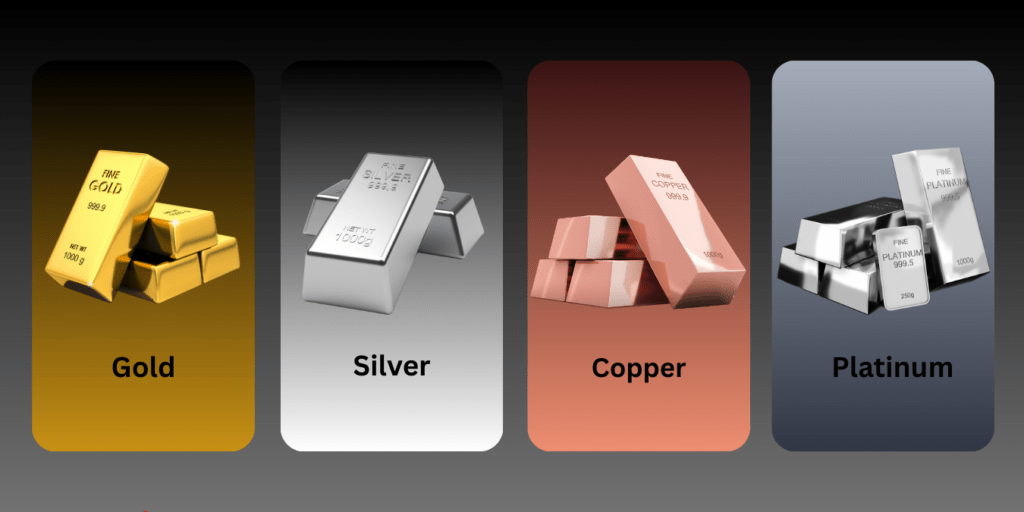
The commodity complex is doing at least as much work as the equity indices. Gold is holding near $4,400 an ounce, with spot at $4,409.68, and silver at $66.22. Domestically, 22-carat gold is quoted around Rs 14,129 per gram and silver near Rs 2,49,900 per kilogram. LME three-month copper hit an all-time high of $14,533 a tonne on expectations that the US will broaden tariffs on refined metal imports. Petrol at Rs 111.21 and diesel at Rs 97.83 tell you the fuel pass-through is already in household budgets.
The practical reading: six of the eleven S&P 500 sectors are higher this quarter, energy leading at 22% and industrials lagging at negative 7%. Global capital is rotating toward hard assets and away from long-duration equity. India, a large crude importer with an index heavy in financials and technology, sits on the wrong side of that rotation. Nothing about India’s fundamentals has to be wrong for the index to fall in that environment.
Top 10 Stocks To Buy On NSE And BSE For 2026: The Consensus Shortlist
This is not a personal recommendation list. It is the overlap between the published 2026 model portfolios of Nomura, Jefferies and Axis Securities. The valuation column shows the NSE sector price-to-earnings multiple as of 2 September 2026, not the individual stock’s multiple, because sector position determines whether a good business is also a good price today.
| Stock | Sector | Sector P/E, 2 Sep 2026 | Versus own average | Investment rationale and 2026 trigger |
|---|---|---|---|---|
| ICICI Bank | Private banking | 13.5x (Bank Nifty) | 9.5% below average | Top pick at Nomura. Bank Nifty trades at a 3-year median of 14.95x with a 3-year low of 12.56x, so downside from here is limited. Credit growth is intact; NIM compression is the watch item. |
| Axis Bank | Private banking | 13.5x (Bank Nifty) | 9.5% below average | Appears in both Nomura’s top 20 and Jefferies’ top 10. Jefferies is overweight lenders for 2026 on the view that the earnings cycle turns from downgrades to upgrades. |
| Infosys | IT services | 19.8x (Nifty IT) | 28.3% below average | The deepest valuation discount of any large sector. Nifty IT’s 3-year median is 27.69x. Risk is real: Jefferies is underweight IT while Nomura holds it as a top pick. That disagreement is the opportunity. |
| Bajaj Finance | NBFC | Financials complex | Fairly valued | Nomura top pick. NBFCs were projected to deliver about 20% profit growth in Q1 FY27 on robust credit growth. Gained 1.10% on 4 September against a falling index. |
| Mahindra & Mahindra | Automobiles | 32.5x (Nifty Auto) | 26.9% above average | In both Nomura’s and Jefferies’ 2026 lists. Reported a 37% year-on-year rise in total June vehicle sales. India Ratings affirmed IND AAA/Stable on 7 September. The caution is the auto sector multiple. |
| UltraTech Cement | Cement | Commodities complex | Sector re-rating | Nomura prefers cement over metals. Rose 1.18% on 4 September. Direct beneficiary of 7.7% construction GVA growth and the 20.4% capital formation surge. |
| Bharti Airtel | Telecom | Telecom complex | Premium, justified | Jefferies top-10 pick and overweight telecom. Fell 1.55% on 4 September, which is the kind of pullback long-horizon buyers watch for in a name with pricing power. |
| Titan Company | Consumer discretionary | Retail complex | Premium | Nomura top pick. Gained 1.01% on 4 September. Gold at Rs 14,129 per gram is a double-edged input: it lifts ticket values but tests volume elasticity. |
| Dr Reddy’s Laboratories | Pharmaceuticals | 41.5x (Nifty Pharma) | Highest sector P/E | Nomura top pick, but Jefferies is underweight pharma. Pharma was the only NSE sector that rose on 7 September, confirming its defensive role. Buy the defensiveness, not the multiple. |
| Dixon Technologies | Electronics manufacturing | Manufacturing complex | High growth, high multiple | Nomura maintains a Buy with an estimated 36% upside, flagging a challenging period for the mobile division but recovery drivers beyond the current fiscal year. This is the highest-risk name on the list. |
What people get wrong about a list like this
A consensus shortlist is a research starting point, not a portfolio. Three things it cannot tell you. First, sector P/E is not stock P/E, and a cheap sector can contain expensive companies. Second, these houses set their 2026 Nifty targets when the index was materially higher: Citi at 27,000, Axis Securities at 27,360, Jefferies at 28,300, Kotak at 29,120 and Nomura at 29,300. Against Monday’s 23,779.15, every one of those implies double-digit upside, which should make you more suspicious, not less. Third, Nuvama’s Prateek Parekh has explicitly warned that FY27 earnings per share estimates are likely to be cut as tax-cut tailwinds fade and El Nino risk emerges, warranting a defensive bias. Verify each name against its own latest filing before acting.
Top 10 Gainers And Losers: The Last Confirmed Full Session Data
A note on method: at publication on Tuesday morning the session is incomplete, so no closing gainer and loser percentages exist for 8 September. The tables use the last two sessions with full exchange-confirmed constituent data. Treat 4 September as the reference session and the 7 September names as directional.
Top 10 Gainers, 4 September 2026 Session
| Rank | Stock | Gain | Index | Short analysis |
|---|---|---|---|---|
| 1 | SBI Life Insurance | Up 3.50% | Nifty 50 | Led the index, then reversed to become a top loser on 7 September. Classic two-day positioning unwind. |
| 2 | Tata Steel | Up 2.91% (Sensex) | Both | Up 2.49% on the Nifty. Metals benefited from record LME copper and the broad commodity bid. |
| 3 | HDFC Life Insurance | Up 2.42% | Nifty 50 | Same reversal pattern as SBI Life. Insurance APE growth of 20% plus is not being rewarded consistently. |
| 4 | Reliance Industries | Up 1.61% (Sensex) | Both | Up 1.50% on the Nifty. The heaviest index weight and a natural hedge when crude rises. |
| 5 | Bajaj Finance | Up 1.47% (Sensex) | Both | Up 1.10% on the Nifty. NBFC credit growth remains the strongest sub-segment inside financials. |
| 6 | Trent | Up 1.34% (Sensex) | Both | Up 1.33% on the Nifty. Discretionary retail holding up despite 7.1% private consumption growth being the slowest major GDP line. |
| 7 | Adani Ports | Up 1.33% | Sensex | Port volumes track trade activity, which grew 8.5% in the Q1 FY27 GVA data. |
| 8 | HDFC Bank | Up 1.30% | Sensex | Bank Nifty at 13.5x is 9.5% below its own average. Value buyers are visible in the largest private lenders. |
| 9 | JSW Steel | Up 1.30% | Nifty 50 | Commodity producers are the one clear winner from the supply shock that is hurting everyone else. |
| 10 | UltraTech Cement | Up 1.18% | Both | Up 1.11% on the Sensex. Construction GVA grew 7.7%, and cement is the cleanest listed proxy for it. |
Top 10 Losers, 4 And 7 September 2026 Sessions
| Rank | Stock | Fall | Session | Short analysis |
|---|---|---|---|---|
| 1 | PVR Inox | Down about 8% | 7 Sep | Sharpest intraday fall in six months on the governance review headline. The Rs 1,450 buyback price is the reference level. |
| 2 | HCL Technologies | Down 1.94% | 4 Sep | Steepest Nifty decline that session despite Q1 FY27 net profit rising 20.3% to Rs 4,624 crore. Nasdaq weakness overrides company results. |
| 3 | Infosys | Top Nifty loser | 7 Sep | Led the decline as Nifty IT tumbled over 2%. Also the sector with the deepest valuation discount at 19.8x. |
| 4 | SBI Life Insurance | Top Nifty loser | 7 Sep | Complete reversal of Friday’s 3.50% gain. No company-specific news accompanied the fall. |
| 5 | HDFC Life Insurance | Top Nifty loser | 7 Sep | Same pattern. Insurance was the sharpest two-day round trip on the index. |
| 6 | Bharti Airtel | Down 1.55% | 4 Sep | Down 1.24% on the Sensex. A defensive that is not currently behaving defensively. |
| 7 | Maruti Suzuki | Down 1.27% | 4 Sep | The company is raising prices of select models by up to Rs 20,000 in September, testing demand at an auto sector P/E of 32.5x. |
| 8 | Bajaj Finserv | Down 1.11% | 4 Sep | Fell even as its insurance subsidiaries reported August NBP growth of 31.6% and GDPI growth of 11%. |
| 9 | Max Healthcare | Down 1.02% | 4 Sep | Healthcare services is one of the segments Nomura has explicitly flagged caution on for 2026. |
| 10 | Eternal | Down 1.09% | 4 Sep | New-economy names remain the highest-beta expression of global risk appetite in the index. |
Sector Performance India 2026: Where Valuation And Earnings Actually Meet
Sector rotation is where this market is being decided, and a raw price-to-earnings number tells you little. Banks structurally trade cheap and FMCG structurally trades rich. The useful comparison is each sector against its own history, which is what the fourth column does.
| Sector | P/E, 2 Sep 2026 | 3-year median P/E | Versus own average | 7 Sep session | Earnings and trigger read |
|---|---|---|---|---|---|
| Nifty IT | 19.8x | 27.69x | 28.3% below | Down over 2% | Cheapest major sector against its own history. HCL Tech Q1 FY27 PAT up 20.3%. Held back by a hawkish Fed and US demand risk, not by profitability. |
| Nifty Bank | 13.5x | 14.95x | 9.5% below | PSU banks underperformed | 3-year range 12.56x to 16.78x, so the downside band is narrow. Private lenders were expected to post good Q1; NIM pressure is the swing factor. |
| Nifty PSU Bank | 7.7x | Lowest of all sectors | Deep value screen | Among the laggards | The cheapest listed sector in India. The UFBU strike notices on SBI for 11 and 28 to 30 September are a live operational overhang. |
| Nifty FMCG | 32.1x | Well above market | 24.8% below | Lower with the market | GST 2.0 consolidated rates into 5% and 18% slabs, and FMCG was projected to deliver double-digit Q1 growth. High absolute multiple caps upside. |
| Nifty Auto | 32.5x | Below current level | 26.9% above | Weak | The only major sector trading meaningfully above its own average. M&M June volumes up 37%, but Maruti is raising prices into a 4.45% CPI environment. |
| Nifty Pharma | 41.5x | About 33.10x | Highest sector P/E | Only sector up | Behaving exactly as a defensive should. Nomura holds Dr Reddy’s and Alembic; Jefferies is underweight the sector. Pay for safety, not for growth. |
| Nifty Metal | Cyclical, low base | Volatile | Commodity-led | Underperformed | Commodity producers ex-oil marketing were expected to post very strong Q1 profit growth on the supply shock. Record LME copper at $14,533 a tonne supports the thesis. |
| Nifty Realty | Cycle-dependent | Wide range | Rate-sensitive | Underperformed | A stable 5.25% repo supports affordability, but a possible December hike is the risk. Pre-sales conversion is the metric to track, not launches. |
| Nifty 50 (benchmark) | 20.2x | 23.3x 10-year median | About 13% below | Down 0.50% | Price-to-book 2.93x versus a 3.62x long-term average; dividend yield 1.18%. The index is fairly valued to slightly cheap on its own history. |
Analysis And Recommendations: A Diversified Portfolio For Three Risk Appetites
The macro data and the price action point in opposite directions. When earnings grow while multiples contract, the correct response is to increase exposure gradually rather than time a bottom. Axis Securities recommends holding 10% to 15% liquidity to deploy into dips in phases. The allocations below are illustrative frameworks built on that principle, not personalised advice.
Stock Recommendations For Today: Seven Actionable Points For 8 September
These are framework observations tied to Tuesday’s setup, drawn from published broker levels and confirmed exchange data. Position sizing and suitability are yours to determine.
- Do not initiate fresh index longs above 23,900 without confirmation. The 23,870 to 23,900 zone is the immediate hurdle identified by SBI Securities, and 24,025 is the trend-decider. Buying into resistance in a confirmed downtrend has poor odds.
- Treat 23,600 as the accumulation trigger, not 23,779. The confluence of the previous gap region, the July 2026 low and the 61.8% Fibonacci level at 23,680 makes this the highest-probability reversal zone on the chart. Oversold RSI and stochastic readings improve the setup.
- Favour pharma and healthcare for defensive allocation this week. These were the only NSE sectors that closed higher on Monday. The trade is defensiveness, not value: pharma at 41.5x is the most expensive sector in the market against its own history.
- Watch IT for a capitulation entry rather than a momentum entry. Nifty IT fell over 2% on Monday and trades 28.3% below its own average. But it will not bottom until the US rate narrative settles, and Fed Chair Kevin Warsh has hinted at hiking. Wait for the August US CPI and the September FOMC before sizing up.
- Insurance names deserve a second look after the two-day round trip. SBI Life and HDFC Life topped the gainers on 4 September and the losers on 7 September with no adverse company news, while ICICI Prudential Life reported August APE growth of 23.4% and Bajaj Allianz Life NBP growth of 31.6%. Price moved; fundamentals did not.
- Avoid adding to PSU banking before 30 September. The UFBU strike notices cover 11 September and 28 to 30 September, with a continuous strike threatened from 26 October. At 7.7x the sector is the cheapest in India, but there is no reason to buy the overhang rather than after it.
- Keep the 12 September CPI print circled. ICRA expects about 4.7% for August. A print at or below that is largely priced. A print above 4.9% would move rate-hike expectations forward and hit rate-sensitive sectors, realty and autos first, banks second.
Frequently Asked Questions
Why is the Sensex falling when India’s GDP grew 7.8%?
Because share prices are the product of earnings and the multiple investors will pay for them, and only the first of those is improving. Nifty 500 earnings grew 15.6% in FY26 and Q1 FY27 GDP came in at 7.8%, well above the RBI’s 7.0% projection. Meanwhile the Nifty P/E has fallen to 20.2x against a 10-year median of 23.3x. Brent crude near $97 and expectations of a US rate hike are compressing that multiple. This is a valuation event, not an earnings event.
What was the Sensex and Nifty 50 closing level on 7 September 2026?
The BSE Sensex closed at 76,132.81, down 382.62 points or 0.50%. The NSE Nifty 50 closed at 23,779.15, down 118.55 points or 0.50%. The Nifty MidCap 100 fell 0.46% while the Nifty SmallCap 100 rose 0.02%. Barring Nifty Pharma, every sectoral index on the NSE settled lower, with Nifty IT the worst performer, down more than 2%.
What is the Nifty support and resistance level for 8 September 2026?
Bajaj Broking Research places crucial support at 23,600 to 23,500, where the previous major gap region and the July 2026 low overlap. SBI Securities identifies a tighter first line at 23,720 to 23,680, the 61.8% Fibonacci retracement of the 23,070 to 24,774 upmove. Resistance is at 24,150, which combines last week’s high with the 50-day EMA. The trend stays negative below 24,025.
What is the current RBI repo rate in September 2026?
The repo rate is 5.25%. The Monetary Policy Committee held it unchanged by a unanimous 6-0 vote on 5 August 2026, retaining a neutral stance. This was the fourth consecutive hold since the December 2025 cut from 5.50%. The standing deposit facility rate is 5.00% and the marginal standing facility rate and bank rate are both 5.50%. The next review runs from 5 to 7 October 2026.
What is India’s CPI inflation rate right now, and will the RBI hike?
CPI inflation was 4.45% in July 2026, a 19-month high, up from 4.38% in June. Food inflation was 5.52%. The RBI has projected FY27 CPI at 5.0%. ICRA’s Aditi Nayar expects about 4.7% in August and above 5% in September, and has flagged that the next rate move is more likely to be a hike than a cut, possibly as early as December, if price pressures broaden beyond fuel. The August print is due around 12 September.
What is the Bank Nifty trend and target range for this week?
Bank Nifty is expected to move between 57,000 and 58,000 in the near term. A close below 57,000 would take it toward 56,500 to 56,200, where the 52-week EMA meets the lower boundary of a nine-week range. Above 58,000 the path opens to 58,500 to 58,700. The wider consolidation band is 56,500 to 58,700. It closed at 57,409.60 on 1 September after falling 1.06%.
Which are the top 10 stocks to buy on NSE and BSE for 2026?
The overlap between the published 2026 model portfolios of Nomura, Jefferies and Axis Securities includes ICICI Bank, Axis Bank, Infosys, Bajaj Finance, Mahindra & Mahindra, UltraTech Cement, Bharti Airtel, Titan, Dr Reddy’s Laboratories and Dixon Technologies. Note that these houses disagree meaningfully: Jefferies is underweight IT and pharma while Nomura holds Infosys and Dr Reddy’s as top picks. Verify each name against its own latest filing before acting.
Which sector is cheapest in the Indian market in September 2026?
By absolute multiple it is Nifty PSU Bank at 7.7x. Relative to its own history the cheapest is Nifty IT at 19.8x, some 28.3% below its average and against a 3-year median of 27.69x. Nifty Bank sits at 13.5x, 9.5% below its average. Nifty Auto is the only major sector trading above its own average, at 32.5x, and Nifty Pharma carries the highest absolute multiple at 41.5x.
How much are FIIs selling and DIIs buying in Indian equities?
On 4 September 2026, foreign institutional investors were net sellers of Rs 3,111.90 crore in the cash segment while domestic institutional investors bought a net Rs 8,930.10 crore, close to a three-to-one ratio. This mirrors the structural pattern from 2025, when DIIs invested a record Rs 6 trillion and foreign portfolio investors withdrew about $23.3 billion. Domestic flows are the main reason the index is drifting lower rather than falling sharply.
What are brokerages forecasting for the Nifty by December 2026?
Published 2026 year-end targets include Citi at 27,000 on 19 times forward earnings, Axis Securities at 27,360 on 19.5 times December 2027 estimated earnings, Jefferies at 28,300, Kotak at 29,120 and Nomura at 29,300 on 21 times December 2027 forecasts. Against the 7 September close of 23,779.15, all imply double-digit upside. Most were set when the index was materially higher, so treat them as scenarios rather than forecasts, and note that Nuvama has warned FY27 earnings estimates may be cut.
Final Thought: The Short Version
India is running one of the strongest macro configurations of any large economy right now. Q1 FY27 GDP grew 7.8% against a 7.0% RBI projection, with gross fixed capital formation up 20.4% and services up 10%. Unemployment fell to 5.1% in July as female labour force participation jumped 1.7 percentage points. Industrial production grew 7.3% in June. Foreign exchange reserves stand at $692.86 billion. Corporate earnings across the Nifty 500 grew 15.6% in FY26. None of that is a market in trouble.
What is in trouble is the price investors will pay for it, and the reason sits outside India’s borders. Brent near $97 lifts imported inflation and pushes CPI to a 19-month high of 4.45%. A hot US payrolls print of 162,000 against a 53,000 consensus, plus a Fed chair openly discussing a hike, has raised the global discount rate. Foreign investors sold Rs 3,111.90 crore on 4 September alone. The result is a Nifty P/E of 20.2x against a 23.3x 10-year median, which is the entire story of a benchmark down roughly 6.7% from its late-February level while earnings rose.
That leaves one number to watch on Tuesday and through the week: 23,600 on the Nifty 50. Hold it, with the RSI and stochastic already oversold, and 24,150 becomes the reasonable target. Lose it decisively and 23,550 then 23,070 come into view. Bank Nifty’s 57,000 floor is the confirming signal. The August CPI release around 12 September and the 5 to 7 October MPC review are the two scheduled events that can change the arithmetic. Until then, the market is not asking you to predict growth. It is asking you what you will pay for growth you already know is there.