Why Is the Stock Market Falling in October 2026 — and What Should Nifty Investors Do Now?
Markets · Nifty and Sensex · India, October 2026
Why Is the Stock Market Falling in October 2026 — and What Should Nifty Investors Do Now?
Nifty hit a 52-week low of 22,179.90 on 8 October, about 16% below its January peak, before a sharp rebound on 13 October. Here is what drove the fall and how to respond without guessing the bottom.
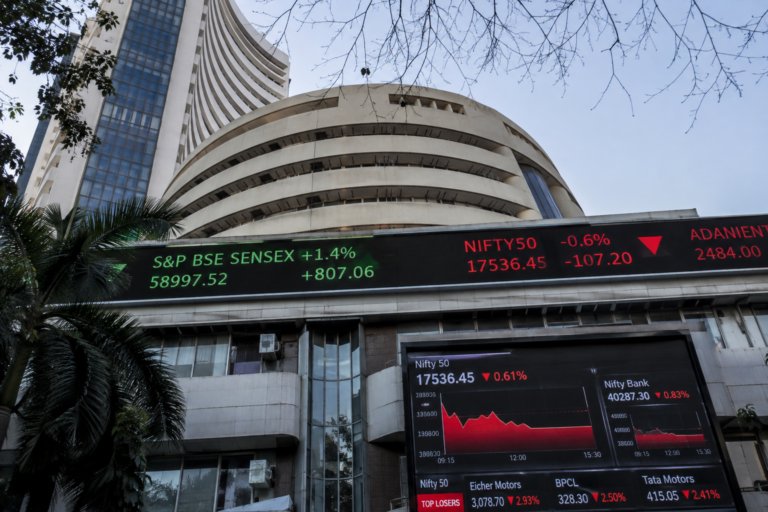
If you opened your mutual fund app last week, the red was hard to miss. On Thursday 8 October the Nifty 50 closed at 22,232, down 1.64% in a day, and touched 22,179.90 during the session, its lowest point in a year. BSE-listed companies lost ₹10.2 lakh crore of market value that day alone. The index had been at 26,373 in early January.
Then, on Tuesday 13 October, the Nifty jumped 1.60% to 22,721.95. So is this a crash, a correction, or a bottom? Nobody can say for certain, and anyone who claims to is guessing. What can be said with confidence is why prices fell, which levels the market is watching, and what tends to work for ordinary investors in falls like this one.
What We Know
- The Nifty 50 reached 26,373.2 on 5 January 2026 and fell to an intraday low of 22,179.90 on 8 October, a decline of about 15.9%.
- Foreign portfolio investors have sold a net ₹3.08 lakh crore of Indian equities in 2026 up to 12 October, according to NSDL data, nearly double 2025’s full-year ₹1.66 lakh crore.
- The RBI raised the repo rate by 25 basis points to 5.50% at its October review and shifted its stance to calibrated tightening.
- Brent crude traded above $102 a barrel on 8 October amid supply worries in West Asia, and the US 10-year Treasury yield was reported at 5.31%.
- On 13 October the Nifty closed 358.60 points higher at 22,721.95 after the finance minister said debate on securities taxation should be encouraged.
What Is Still Unclear
- Whether 22,180 marks a bottom or only a pause; one strong session does not confirm a reversal.
- Whether the government will change long-term capital gains tax or STT in Budget 2027. The finance minister said it was not the right time to discuss specifics, and no proposal exists.
- How many more rate rises follow. Analysts quoted by Business Standard expect about two more 25 basis point hikes, but the RBI has not committed.
- How second-quarter company earnings, being reported from this month, will compare with expectations.
A Correction, Not Yet a Bear Market
Words matter here, because they change how people behave. Market convention calls a fall of 10% from a peak a correction and a fall of 20% a bear market. At the 8 October low, the Nifty was down about 15.9% from its January high. At the 13 October close it was about 13.8% below. That is a deep correction, not a bear market, and not a crash in the sense of 2008 or March 2020.
The average index tells only part of the story. In a recent market tally, 18 of the 50 Nifty stocks were more than 20% below their 52-week highs. In September alone, the Nifty and Sensex each lost about 6% and the Nifty Midcap index about 7%. Many individual portfolios are therefore down by more than the headline index, which is why the fall feels worse than the number suggests.
Each of the four earlier falls was eventually recovered. The 2020 Covid fall of nearly 40% took less than a year to undo; the 2008 fall took far longer. History does not promise the same this time, but it does show that the depth of a fall and the time to recover vary widely, and that selling near a low has rarely been rewarded.
The Five Pressures Pushing Prices Down
No single event caused this fall. It is the overlap of five pressures, each of which on its own would have been manageable.
1. Foreign investors are selling at a record pace
Foreign portfolio investors have withdrawn a net ₹3.08 lakh crore from Indian shares this year, by NSDL’s count. That is nearly twice the ₹1.66 lakh crore they took out in all of 2025. In 2024 they were small net buyers. The selling has accelerated: ₹35,861 crore in September and ₹47,417 crore in just the first 12 days of October. A Motilal Oswal study cited by Business Standard says foreign selling over the past two years has erased the cumulative inflows of the eight years before it.
Why are they leaving? Market reports point to three reasons: US government bonds now yield more than 5%, an artificial intelligence rally in the US, Taiwan and South Korea is attracting money that India’s market has little exposure to, and Indian valuations still looked expensive relative to earnings growth.
2. Oil above $100 a barrel
India imports most of its crude oil. When Brent rose above $102 a barrel on 8 October on supply worries tied to attacks on Gulf shipping and the Strait of Hormuz, the effect ran through the whole economy: a wider import bill, pressure on the rupee, and a higher inflation outlook. Oil marketing companies and airlines fell up to 5% that day. Mirae Asset has said Brent could reach $120 in the near term, though forecasts of oil prices are notoriously unreliable.
3. US bond yields above 5%
The US 10-year Treasury yield rose to 5.31% on 8 October, which Business Standard described as near its 2002 levels and among the highest in about two decades. A safe return above 5% in dollars raises the bar for every risky asset worldwide, and emerging markets usually feel it first. V K Vijayakumar of Geojit Investments has said higher fixed-income returns put pressure on equity valuations.
4. India’s first rate hike in years
The RBI raised the repo rate by 25 basis points to 5.50% and moved to a “calibrated tightening” stance. Higher rates make borrowing dearer for companies and households, and make fixed deposits and bonds more attractive than shares at the margin. Analysts now expect perhaps two further hikes in this cycle.
5. A crowded IPO calendar
Through 12 October, foreign investors put ₹56,485 crore into new share offerings even while selling existing shares. G Chokkalingam of Equinomics Research told Business Standard that the large number of IPOs had drawn liquidity out of the secondary market. When supply of new shares rises and foreign demand falls, prices of existing shares have to adjust.
The Sessions That Broke, Then Lifted, the Index
The fall did not happen in one day. It built through late September and early October before the first sharp rebound.
- 5 Jan 2026Nifty reaches 26,373.2, its high for the past year.
- April 2026Nifty falls to 22,183, the low that held until October.
- SeptemberNifty and Sensex lose about 6%; foreign investors sell ₹35,861 crore.
- 1 OctoberSensex drops 1,280 points intraday to a 2026 low of 71,293 as auto stocks fall 4%.
- October reviewRBI raises the repo rate 25 basis points to 5.50%.
- 8 OctoberNifty closes at 22,232 and hits a 52-week low of 22,179.90; ₹10.2 lakh crore of value lost.
- 9 OctoberSensex rises 879 points as crude eases.
- 13 OctoberNifty rises 1.60% to 22,721.95; Sensex gains 1,109 points to 73,033.78.
What actually sparked Tuesday’s rebound
The 13 October rally came after Finance Minister Nirmala Sitharaman, speaking at the Bloomberg New Economy Forum, said healthy debates on securities taxation should be encouraged, while adding that it was not the right time to discuss what the government might consider for Budget 2027. Markets read this as openness to reviewing long-term capital gains tax and the securities transaction tax. It is worth being precise: nothing has been proposed. Siddhartha Khemka of Motilal Oswal also pointed to the IMF raising its forecast for India’s growth in 2026-27 to 7% from 6.4%.
The Nifty Levels Traders Are Watching
Technical analysts look at price levels where buying or selling has clustered before. These are not predictions, and they shift every session, but they explain why commentators keep naming the same numbers. The levels below come from Sudeep Shah of SBI Securities, given on 8 and 13 October.
What to Do Now, by Type of Investor
The right response depends far more on your situation than on the market. Use the matrix to find your row.
| Investor | Time horizon | Sensible action | Avoid |
|---|---|---|---|
| SIP investor | 5 years or more | Continue the SIP; it buys more units at lower prices | Pausing or stopping the SIP |
| Lump sum ready to invest | 5 years or more | Deploy in 3 to 6 monthly parts | Investing all of it on one day |
| Goal within 1 to 3 years | Short | Keep that money in debt or FDs | Adding equity to recover losses |
| Retiree drawing income | Ongoing | Draw from the debt bucket, not equity | Selling equity at a low to fund expenses |
| Trader in F&O | Days to weeks | Cut position size, honour stop-losses | Averaging down on leveraged losses |
| Investor with a loan against shares | Any | Check margin; reduce the loan if needed | Waiting for a margin call |
- Check your emergency fund first. Six months of expenses in a savings account or liquid fund means you will never be forced to sell shares in a fall.
- Look at your allocation, not your returns. If you planned 60% equity and the fall has taken it to 52%, adding to equity brings you back to plan.
- Keep SIPs running. Stopping a SIP in a falling market means buying only when prices are high again.
- Stagger new money. Splitting a lump sum over 3 to 6 months reduces the regret of buying the day before another drop.
- Avoid borrowed money. Leverage turns a temporary fall into a permanent loss when lenders force a sale.
- Review quality, not price. A stock that is 30% cheaper is not a bargain if its earnings have fallen 30% too.
The Recovery Maths Few People Do
Losses and gains are not symmetrical. A fall of 16% needs a rise of about 19% to get back to where you started, and the gap widens quickly as falls deepen. This is why protecting against large losses, through allocation and avoiding leverage, matters more than catching the exact bottom.
Market Terms Decoded
Coverage of a falling market is full of jargon. Here is what each term means and whether it should change what you do.
| Term | What it means | Current reading | Should you act? |
|---|---|---|---|
| Correction | Fall of 10% to 20% from a peak | Nifty down about 13.8% to 15.9% | Review allocation only |
| Bear market | Fall of 20% or more | Not reached; would be below about 21,100 | Same plan, more patience |
| FPI or FII | Foreign funds buying Indian shares | Net sellers of ₹3.08 lakh crore in 2026 | No direct action |
| DII | Domestic funds, insurers, pension funds | Net buyers of ₹6.83 lakh crore in 2026 | No direct action |
| Support | Level where buyers appeared before | 22,550 to 22,580, then 21,950 | Relevant to traders |
| Resistance | Level where sellers appeared before | 22,830 to 22,850 | Relevant to traders |
| Repo rate | RBI’s lending rate to banks | 5.50%, raised 25 basis points | Check floating loan EMIs |
| STT and LTCG | Taxes on trades and long-term gains | Unchanged; debate only | None until a proposal |
Your Checklist for the Weeks Ahead
- Emergency fund covers at least 6 months of expenses
- Money needed within 3 years is out of equity
- Equity allocation within 5 percentage points of your plan
- All SIPs active; none paused because of headlines
- No loans against shares above 50% of their value
- Lump sums split into 3 to 6 monthly parts
- Portfolio checked once a month, not daily
- Floating-rate loan EMIs reviewed after the 25 basis point hike
Frequently Asked Questions
Why is the Indian stock market falling in October 2026?
Five pressures have combined: record foreign selling of ₹3.08 lakh crore in 2026, Brent crude above $100 a barrel, US 10-year yields above 5%, the RBI’s 25 basis point rate hike to 5.50%, and a heavy IPO calendar drawing money away from existing shares.
How much has the Nifty fallen from its peak?
The Nifty 50 fell from 26,373.2 on 5 January 2026 to an intraday low of 22,179.90 on 8 October, about 15.9%. After the 13 October close of 22,721.95, it was about 13.8% below the January high.
Is this a stock market crash or a correction?
By common definitions it is a correction, which is a fall of 10% to 20% from a peak. A bear market is usually a fall of 20% or more, which for the Nifty would mean a level below about 21,100.
Should I stop my SIP when the market falls?
For long-term goals, most advisers suggest continuing. A SIP buys more units when prices are lower, which reduces the average cost. Stopping it during a fall means missing the cheapest purchases. Money needed within three years should not be in equity at all.
Is it a good time to invest a lump sum in Nifty?
Nobody can identify the bottom reliably. A practical approach is to split a lump sum into three to six monthly instalments, so that some money is invested at lower prices if the fall continues and some is in place if prices recover.
What are the key Nifty support and resistance levels now?
On 13 October, Sudeep Shah of SBI Securities placed support at 22,550 to 22,580 and resistance at 22,830 to 22,850, with a sustained move above 22,850 potentially targeting 23,000. A lower support near 21,950 was flagged on 8 October.
Why did the market rise on 13 October 2026?
The Sensex rose 1,109 points and the Nifty 1.60% after the finance minister said healthy debate on securities taxation should be encouraged, which markets read as openness to reviewing capital gains tax and STT. No change has been proposed. An IMF upgrade to India’s growth forecast also helped.
Why are foreign investors selling Indian stocks?
Reports cite US bond yields above 5%, a global AI-led rally in markets where India has little exposure, crude oil near $100, a weaker rupee and Indian valuations that looked high relative to earnings growth.
The Short Version
The Nifty fell about 16% from its January peak to a 52-week low on 8 October because foreign selling, $100 oil, 5% US bond yields, a domestic rate hike and a crowded IPO calendar all hit at once. Domestic institutions have bought more than twice what foreigners sold, which has kept the fall short of a bear market. Tuesday’s rebound is welcome but does not confirm a bottom. If your goals are five years away, keep SIPs running, stagger new money, avoid leverage and check your allocation rather than the daily index.