Business · Technology and Politics · United States, November 2026
Why Trump Pushed to Bring Jensen Huang Back as Nvidia CEO — the Market Stakes, the AI Race and the Security Questions Still Open
Nvidia’s board reinstated Jensen Huang on 23 November, 11 days after he resigned over affairs including one with a woman US officials suspect of ties to Chinese intelligence. President Trump says he “made the deal”. Here is what drove it, and what is still unresolved.
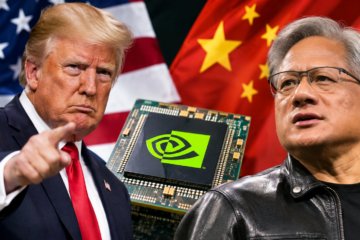
For 33 years, Nvidia had one chief executive. Then, on 12 November, it had none it wanted. Jensen Huang resigned after reports of extramarital affairs, one of them with a businesswoman whom some US officials believe is a Chinese intelligence asset. The board accepted, named its finance chief as interim CEO, and a week later told investors it did not intend to bring him back.
Eleven days after the resignation, Huang was back in his office in Santa Clara, to applause from staff. In between, the president of the United States, the vice-president and senior officials spent a weekend talking to Nvidia’s directors and their lawyers. A sitting president openly pushing a company’s board to rehire a chief executive is close to unheard of. Why did Donald Trump go this far, and what did he and Nvidia get in return?
The Comeback in Numbers
The scale of what happened to Nvidia’s share price explains a great deal of the political urgency. Nvidia sits at the centre of the AI boom, and its stock had become one of the largest single weights in US markets. When the founder left, the market treated it as a structural shock, not a personnel change.
- 33 yearsHuang’s run as Nvidia CEO before he resigned on 12 November
- 27.7%Fall in Nvidia shares to their 20 November low, per Al Jazeera
- $1tnApproximate market value added after the reinstatement, per CNBC
- 3.58%Huang’s ownership stake, not enough to control the board
- 90%Nvidia’s approximate share of the data centre GPU market
- 180,000+Signatures on a public petition backing Huang’s return
Percentage change on the day. Nvidia figure is early trading on 23 November; Asian markets are 24 November. Source: Al Jazeera’s market report.
Taiwan and South Korea host the chipmakers that supply Nvidia, so a wobble at Nvidia travels through the whole AI supply chain.
What Actually Happened Before the Resignation
The facts at the centre of the story are still partly disputed, so precision matters. Huang admitted to at least two extramarital affairs, according to TechCrunch. One was with Alice Huang, a former executive at Megaspeed, a Singapore-based Nvidia customer. Some US officials believe she is a Chinese intelligence asset. China has denied she is a spy. The New York Times first reported the alleged intelligence link.
The concern is not the affairs as such. It is the combination of personal exposure and commercial access. US officials accuse Megaspeed of transferring Nvidia chips to China in breach of export controls, which the company denies, according to CBS News. Hours after Huang’s return, the US added Megaspeed to its trade blacklist. Senator Kevin Cramer, a North Dakota Republican, put the worry bluntly in early November: “The potential for extortion is so tremendous that something as sensitive as Nvidia chips, I just think he’s got to go.”
What people often get wrong: no public finding says Jensen Huang passed secrets to anyone. The administration says he is not a target of a Justice Department investigation. The open questions concern Megaspeed, possible chip diversion and whether his relationship created a security risk, which are separate issues from proven wrongdoing.
A warning Trump had heard before
According to The New York Times, as summarised by NewsBytes, Trump had been warned about the national security implications of Huang’s relationship with Alice Huang at least twice, last year and this spring, and took no action. CBS News reports that Secretary of State and National Security Adviser Marco Rubio had prepared a classified memo warning about the relationship and her contacts with China’s Ministry of State Security. That history shapes how critics read the reinstatement.
Eleven Days From Exit to Return
Drawn from Nvidia’s statements and reporting by CBS News, Gizmodo, IBTimes, Newsweek and Al Jazeera.
- Senator Cramer calls for Huang to resign. Trump calls Huang the same day, urging him to fight for his job, according to The New York Times.
- The board accepts Huang’s resignation and Nvidia announces it. CFO Colette Kress becomes interim CEO and Harvey Jones becomes board chair.
- Trump says he “would not mind” Huang returning. The Washington Post reports the board is not considering it.
- The board chair tells investors Nvidia does not intend to reinstate Huang, CBS News reports.
- Trump tells Fox News: “We have to take care of our geniuses; by the way, we don’t have that many of them.”
- Nvidia shares hit their low, 27.7% down. Trump tells advisers he wants Huang back.
- Trump and Vice-President JD Vance speak repeatedly with Huang, directors and their lawyers. On Sunday, Huang meets the board for hours.
- The board votes unanimously to reinstate Huang before the market opens. Megaspeed is added to the US trade blacklist hours later.
- Date House Republicans proposed for a closed-door transcribed interview with Huang, per ABC News.
- Democrats take control of both chambers of Congress after the midterm elections.
Reason One: A Trillion-Dollar Hole in the Market
The most consistent thread in the reporting is money. CBS News reports that Trump was privately worried about the broader effect on the US economy if Nvidia’s value collapsed, and that his calls with Wall Street and Silicon Valley leaders left him convinced the country needs a strong Nvidia. When the board was first reported to be weighing a replacement, he asked confidants about the likely market impact and feared a major downturn, according to The New York Times.
That fear had a basis. Tech and AI companies make up about 40% of S&P 500 valuations, according to Al Jazeera, and analysts had estimated Huang’s departure could wipe up to 30% off Nvidia’s value. Most American retirement savings sit in index funds that hold Nvidia in large weights. A falling Nvidia is felt in millions of pension and 401(k) statements.
US dollars, trillions. The 20 November low and 23 November close are from Al Jazeera. The pre-scandal level and the 30% scenario are our own calculations from the reported figures and are indicative only.
Worked example, our own arithmetic. If a $3.04 trillion valuation represented a 27.7% fall, the starting value was about $3.04 trillion divided by 0.723, or $4.20 trillion. Getting from $3.04 trillion back to $3.98 trillion is a rise of about 31%, which matches the early-trading jump reported on 23 November.
Put another way, the 11-day episode moved Nvidia’s value by roughly $1.16 trillion on the way down and $0.94 trillion on the way back. Huang’s 3.58% stake alone swung by tens of billions of dollars. These are approximations from reported figures, not exchange data.
Reason Two: “You Can’t Replace People”
The second reason is personal. Trump has repeatedly called Huang a “genius” and, according to NBC News, a “national treasure”. In his Fox News interview he framed the resignation as a loss: “It’s a tragedy. He’s such a brilliant man,” adding of the board that “you can’t replace people.” He compared it to his support for Elon Musk in his first term.
That view was shared by much of the technology industry. TechCrunch reports that a long list of executives, including Musk, publicly pushed the board to bring Huang back, and CBS News says Musk told officials that people he knew in tech and business strongly supported Huang. A petition backing his return gathered more than 180,000 signatures.
The succession gap nobody had filled
There was also a practical problem. Nvidia lacked a clear succession plan, according to analysts quoted by Al Jazeera. Kress, a respected finance chief, was explicitly interim. With no obvious successor in place, the board faced a long external search at the moment AI customers such as Microsoft, Google, Amazon and Meta were placing multi-year orders.
Why Huang could not simply return on his own
Unlike some tech founders, Huang does not control his company. He holds 3.58% of Nvidia, according to Al Jazeera. By comparison, Mark Zuckerberg holds about 13.4% of Meta’s economic interest but nearly 60% of its voting power. Huang’s return depended entirely on the board’s choice, which is why the board’s assurances, and the government’s role in giving them, became the deciding factor.
Reason Three: The Assurances the Board Needed
Huang said the board wanted him back but needed assurance that the government did not regard him as a national security risk, according to CBS News. That is where the White House stepped in. Board members were told Huang was not a target of a Justice Department investigation, that the government had no legal issues with him and that his return would not be seen as a problem.
CBS News reports that Attorney General Todd Blanche was willing to personally confirm Huang was not under investigation, and that Director of National Intelligence Jay Clayton reviewed intelligence on Alice Huang and her interactions with Huang. Trump later said Huang had been “exonerated” after “a pretty good investigation”. The White House said the assurances did not extend to Alice Huang. Nvidia’s statement said the board had received “input from senior levels of the United States government”.
Trump described his own role in stark terms. “I made the deal,” he told CNBC. He also said he spoke “directly and indirectly” with the board, according to NBC News. On Truth Social, he wrote that the board had “made the correct and proper decision”.
Who Pushed, Who Objected
The episode split Trump’s own administration and his party. The table summarises the positions reported so far.
| Person | Role | Reported position | Source |
|---|---|---|---|
| Donald Trump | President | Pushed for reinstatement; says he “made the deal” | CNBC, NBC News |
| JD Vance | Vice-President | Pressed the board repeatedly over the weekend | CBS News |
| Scott Bessent | Treasury Secretary | Earlier urged an outside CEO; softened publicly, private concerns reported | Axios, CBS News |
| Marco Rubio | Secretary of State and NSA | Wrote a classified warning memo; reportedly angry at the decision | CBS News |
| Kevin Cramer | Republican senator | Called for resignation; says national security is his top priority | Politico, CNBC |
| Chuck Schumer | Senate Democratic leader | Says Congress must investigate Trump’s role | NBC News |
| Harvey Jones | Nvidia board chair | Board “confident” return “poses no national security risk” | Nvidia, Al Jazeera |
CNBC describes Trump as unusually isolated within his party on this issue, coming soon after midterm elections in which Democrats won the Senate and the largest House majority this century. Supporters of the decision argue that the government reviewed the intelligence and found no basis to keep Huang out, and that punishing an American company for a personal scandal would only help foreign competitors. Critics argue the review was rushed, that the president’s personal involvement is itself a conflict, and that Congress has not seen the evidence.
The Investigations That Did Not End on Monday
Reinstatement settled who runs Nvidia. It did not settle the questions that forced Huang out. CNBC notes that Nvidia still faces an internal investigation and California and federal scrutiny, and analysts say governance, compliance and regulatory risks remain.
| Inquiry | Who is running it | Focus | Status as reported |
|---|---|---|---|
| Counterintelligence review | FBI | Huang’s alleged links to a suspected intelligence asset | Ongoing |
| Export control probe | FBI and Justice Department National Security Division | Possible violations involving Megaspeed and Super Micro Computer | Ongoing |
| Antitrust probe | Justice Department | Nvidia’s business practices | Ongoing |
| Accounting inquiry | SEC | Nvidia’s accounting | Ongoing |
| Congressional inquiry | House and Senate panels | Possible chip diversion to China via Megaspeed | Testimony sought from Huang |
| Internal review | Nvidia board committee | Foreign intelligence targeting; new export control committee | Ongoing |
Percentages as reported by Al Jazeera and analysts it cited, November 2026. Shown together for scale; they measure different things.
Democrats take control of Congress in January, and Senator Chris Coons, expected to chair the Senate Foreign Relations Committee, has called for an investigation into whether national security was compromised while Nvidia and the White House benefited, according to Fast Company. The inquiries will now examine a sitting CEO.
What This Means for Investors and the AI Race
For Nvidia shareholders, Monday’s rally priced in relief, not resolution. The key risks now are legal and regulatory rather than leadership. A finding against Megaspeed, new export rules or congressional findings could still hit the company. The administration has also announced tighter rules on AI chip sales that may be reaching China, which begin after 90 days, according to Gizmodo.
- 90 daysUntil new curbs on AI chip sales that may reach China take effect
- 1 DecProposed date for Huang’s closed-door congressional interview
- JanuaryDemocrats take control of House and Senate committees
- 4+Federal inquiries that remain open after the reinstatement
For the AI race, the administration’s argument is that continuity at Nvidia keeps America’s most important AI supplier stable while China builds its own chips. The opposing argument is that the episode shows how far commercial priorities can shape security decisions, and that export enforcement, not leadership stability, is the real test.
Confirmed Facts, and the Gaps
What We Know
- Huang resigned on 12 November and was reinstated as president, CEO and director on 23 November.
- The board vote was unanimous, after input from senior US government officials.
- Trump and Vance personally engaged with the board and its lawyers over the weekend.
- Officials told the board Huang was not a target of a Justice Department investigation.
- Megaspeed was added to the US trade blacklist on the day of the reinstatement.
- Colette Kress has returned to her role as chief financial officer.
What Is Still Unclear
- What the intelligence review on Alice Huang found, beyond the summary given to the board.
- Whether any Nvidia chips reached China through Megaspeed, and in what volume.
- Whether the assurances to the board came with any conditions.
- When and in what form Huang will testify to Congress.
- How the incoming Democratic Congress will pursue the inquiries.
- Whether the reinstatement affects Nvidia’s export licences or US chip policy.
Frequently Asked Questions
Why did Jensen Huang resign from Nvidia?
He resigned on 12 November 2026 after reports of extramarital affairs, including one with Alice Huang, a former Megaspeed executive whom some US officials suspect of ties to Chinese intelligence. China denies she is a spy.
Is Jensen Huang CEO of Nvidia again?
Yes. Nvidia’s board unanimously reinstated him as president, CEO and board director, effective immediately, on 23 November 2026.
Why did Trump want Jensen Huang back?
Reporting points to three reasons: concern that a collapse in Nvidia’s value would hurt the US economy, Trump’s view that Huang is an irreplaceable “genius” for the AI race, and a government review that found Huang himself was not a target of a Justice Department investigation.
What did Trump say about Huang’s reinstatement?
He told CNBC “I made the deal” and wrote on Truth Social that the board had “made the correct and proper decision”.
How did Nvidia stock react to Huang’s return?
Shares rose about 31% in early trading on 23 November, adding roughly $1 trillion, after falling 27.7% to a 20 November low, according to Al Jazeera and CNBC.
Who was interim CEO of Nvidia?
Chief financial officer Colette Kress served as interim CEO and has returned to her CFO role.
Is Jensen Huang under investigation?
Officials told Nvidia’s board he is not a target of a Justice Department investigation. Separate inquiries continue, including an FBI counterintelligence review, export control probes into Megaspeed, and congressional investigations.
What is Megaspeed?
A Singapore-based Nvidia customer that US officials accuse of transferring Nvidia chips to China, which it denies. It was added to the US trade blacklist on 23 November.
The Short Version
Jensen Huang left Nvidia on 12 November and was back 11 days later. In between, Nvidia’s value fell 27.7%, and Trump concluded that the US economy and its AI ambitions needed Huang in charge. He and Vance worked the board over a weekend, and officials assured directors that Huang was not a target of a Justice Department investigation. The board agreed unanimously and the stock regained about $1 trillion. What did not change is the set of investigations into Megaspeed, chip diversion and national security, which a Democratic Congress will take up in January.