RBI MPC Meeting October 2025 LIVE: Why It Matters Now
Quick Summary
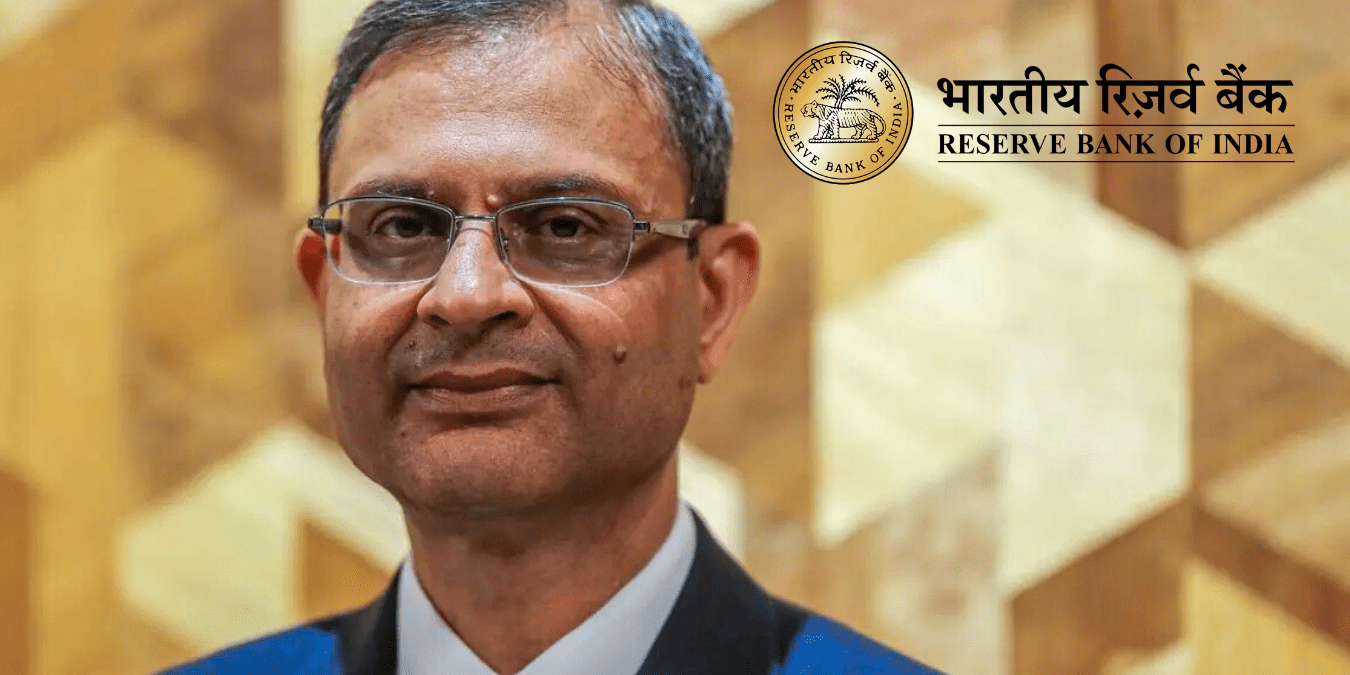
- The Reserve Bank of India’s Monetary Policy Committee kept the policy repo rate unchanged at 5.25 per cent on 5 August 2026, with all six members voting in favour and the stance staying neutral.
- Real GDP growth for FY27 was revised up by 10 basis points to 6.7 per cent, helped by a stronger-than-expected first quarter now pegged at 7 per cent.
- CPI inflation for FY27 was trimmed to 5 per cent from 5.1 per cent, but the RBI expects headline inflation to peak in the third quarter on food and fuel pressure before easing.
- Home loan, car loan and personal loan EMIs linked to the repo rate stay where they are, and so do most bank deposit rates, at least until the next review.
- Governor Sanjay Malhotra described the stance as neither dovish nor hawkish, keeping the door open in both directions ahead of the 5 to 7 October 2026 meeting.
Monetary PolicyRepo Rate 5.25%FY27 GDP 6.7%
India’s central bank did the least dramatic thing it could have done this week, and that in itself was the message. At the close of a three-day Monetary Policy Committee meeting held from 3 to 5 August 2026, Governor Sanjay Malhotra announced that the policy repo rate would stay at 5.25 per cent, that the stance would remain neutral, and that the committee had voted unanimously to do so. What made the announcement worth reading past the headline was the pair of forecast revisions tucked into the statement: growth up, inflation down. For a central bank that has spent the past eighteen months managing an unusually noisy mix of global shocks and domestic resilience, that combination is close to the best case it could have hoped to report.
Anyone who has followed the RBI’s rate cycle closely will recognise how far the story has travelled. The repo rate has come down by a cumulative 125 basis points since February 2025, when the easing cycle began, with the most recent cut delivered in December 2025. Since then the committee has chosen to sit still, letting the transmission of those earlier cuts work its way through bank balance sheets, lending rates and credit demand rather than adding fresh stimulus into an economy that already appears to be doing well on its own.
What The RBI Monetary Policy Committee Actually Decided On 5 August 2026
The decision itself is quickly stated. The repo rate, which is the rate at which the RBI lends overnight funds to commercial banks against government securities, stays at 5.25 per cent. The Standing Deposit Facility rate, the floor of the corridor at which banks park surplus liquidity with the central bank, remains at 5 per cent. The Marginal Standing Facility rate and the Bank Rate, which together form the ceiling of the corridor, are unchanged at 5.5 per cent. The policy stance stays neutral, which in the RBI’s own vocabulary means the committee has given itself permission to move in either direction depending on incoming data.
Unanimity matters more than casual readers usually assume. In previous cycles, dissent within the MPC has often been the earliest and most reliable signal that a turn was coming, with one or two external members breaking ranks a meeting or two before the majority followed. A clean 6-0 vote in August 2026 tells you that the committee sees no urgent case for either a cut or a hike right now, and that the internal debate is about timing rather than direction.
| Policy Instrument | August 2026 | June 2026 | Change |
|---|---|---|---|
| Policy Repo Rate | 5.25% | 5.25% | No change |
| Standing Deposit Facility (SDF) | 5.00% | 5.00% | No change |
| Marginal Standing Facility (MSF) | 5.50% | 5.50% | No change |
| Bank Rate | 5.50% | 5.50% | No change |
| Policy Stance | Neutral | Neutral | Retained |
| MPC Vote | 6-0 | Unanimous | Retained |
Why The RBI Projects GDP Growth Of 6.7 Per Cent For This Fiscal Year
The upgrade from 6.6 per cent to 6.7 per cent looks trivial on paper. Ten basis points on a full-year national growth forecast is well inside the margin of error of any macroeconomic model, and no economist would stake a reputation on the difference. What matters is where the upgrade came from, because the composition of the revision says considerably more than the headline number.
Almost the entire upgrade is carried by the first quarter. In June the RBI had projected Q1 FY27 growth at 6.6 per cent. In August it lifted that estimate to 7 per cent, a 40 basis point jump that reflects domestic activity coming in ahead of what the central bank’s own high-frequency indicators had suggested. The remaining quarters are broadly where they were: Q2 nudged up marginally, Q3 held, Q4 held. In other words, the RBI has recognised that the economy started the year stronger than expected, but it has not yet been willing to declare that the stronger momentum will persist through the whole year.
FY27 Real GDP Growth Projections
August 2026 review compared with the June 2026 review, in per cent
Governor Malhotra attributed the resilience largely to robust domestic demand, which has been the consistent theme of this cycle. India’s growth has been carried by consumption and investment inside its own borders at a time when external demand has been unreliable, and that internal engine has proved more durable than most forecasters expected when the West Asia conflict first began disrupting trade routes and energy prices. The RBI’s own framing is that risks to the growth outlook are evenly balanced, which is central bank shorthand for saying it can see plausible paths to both a stronger and a weaker outcome and does not wish to lean on either.
How The FY27 Forecast Has Moved Across Four Policy Meetings
The single most revealing piece of data in this policy is not the 6.7 per cent number itself but the direction it represents. Track the RBI’s own FY27 projections across the past four reviews and a clear story emerges: the central bank spent the first half of the financial year steadily marking growth down and inflation up, and August 2026 is the first meeting at which both moved the other way.
The First Inflection Since February
RBI’s own FY27 projections for real GDP growth and CPI inflation, as stated at each policy review, in per cent
Source: RBI Monetary Policy Statements, February, April, June and August 2026
The scale of the earlier deterioration is easy to underestimate now. In February 2026 the RBI was projecting FY27 growth at 7.4 per cent and inflation at 4.2 per cent. By June, after the West Asia conflict had worked its way into energy prices and supply chains, those numbers had become 6.6 per cent and 5.1 per cent respectively, a swing of 80 basis points on growth and 90 basis points on inflation in the space of two reviews. Against that backdrop, an August revision that adds 10 basis points to growth and takes 10 off inflation is not a rounding error. It is the first evidence the RBI has offered that the deterioration has stopped.
| FY27 projection | Feb 2026 | Apr 2026 | Jun 2026 | Aug 2026 | Net change since Feb |
|---|---|---|---|---|---|
| Real GDP growth | 7.4% | 6.9% | 6.6% | 6.7% | 70 bps lower |
| CPI inflation | 4.2% | 4.6% | 5.1% | 5.0% | 80 bps higher |
| Repo rate | 5.25% | 5.25% | 5.25% | 5.25% | Unchanged |
| Policy stance | Neutral | Neutral | Neutral | Neutral | Unchanged |
The Inflation Picture Behind The Repo Rate Pause
If growth was the good news, inflation was the reason the committee did not act on it. The RBI lowered its full-year CPI inflation projection for FY27 to 5 per cent from 5.1 per cent, but the quarterly path underneath that number is anything but flat. The central bank expects headline inflation to climb in the near term and to peak in the third quarter of the financial year, driven principally by food and fuel, before moderating again.
FY27 CPI Inflation Trajectory
Quarterly projections as announced on 5 August 2026, in per cent
Inflation Against The Tolerance Band
Projected FY27 quarterly CPI path plotted inside the RBI’s mandated band of 4 per cent plus or minus 2 percentage points
Source: RBI Monetary Policy Statement, 5 August 2026
The contrast with last year is what makes the current caution intelligible. Inflation averaged close to 1.9 per cent through most of FY26 and printed at 1.33 per cent as recently as December 2025, below even the lower tolerance limit. Within eight months the RBI is forecasting a quarter at 5.9 per cent. A central bank that has watched inflation travel that far that fast has every reason to want confirmation before it eases again.
That expected Q3 peak of 5.9 per cent is the single most important number in the entire policy statement, and it explains the pause more completely than any other data point. The RBI’s inflation target is 4 per cent with a tolerance band of two percentage points on either side, so 5.9 per cent sits inside the band but uncomfortably close to its upper edge. A central bank that cut rates into a quarter where it expects inflation to touch nearly 6 per cent would be spending credibility it has taken years to accumulate. Holding rates while forecasting that peak is the internally consistent choice.
There is a second, more encouraging observation buried in the statement. Core inflation, which strips out volatile components including food, fuel and precious metals, has stayed largely stable and is expected to converge gradually towards headline inflation by the end of the financial year. Stable core inflation is what allows a central bank to look through a food-driven spike rather than react to it. If core were accelerating alongside headline, the conversation in August would have been about hikes rather than about how long the pause should last.
The Full Repo Rate Cycle, From The First Cut To The Fourth Pause
Zooming out from a single meeting is the fastest way to understand why the committee is comfortable doing nothing. The easing cycle that began in February 2025 delivered 125 basis points of cuts across four meetings, and then stopped. August 2026 is the fourth consecutive review at which the repo rate has been left at 5.25 per cent, which makes this the longest pause of the current cycle.
Repo Rate Path, February 2025 To August 2026
Policy repo rate in per cent at each MPC review. Orange markers are rate cuts, indigo markers are holds.
Source: RBI Monetary Policy Statements, February 2025 to August 2026
Meeting-By-Meeting Decision Log
| MPC review | Repo rate | Action | Stance | Defining context |
|---|---|---|---|---|
| February 2025 | 6.25% | Cut 25 bps | Neutral | First cut in five years, opening the easing cycle |
| April 2025 | 6.00% | Cut 25 bps | Accommodative | Inflation comfortably below target |
| June 2025 | 5.50% | Cut 50 bps | Neutral | Front-loaded cut, stance shifted back to neutral |
| August 2025 | 5.50% | Hold | Neutral | Waiting on transmission and the CRR reduction |
| October 2025 | 5.50% | Hold | Neutral | Growth forecast lifted to 6.8% for FY26 |
| December 2025 | 5.25% | Cut 25 bps | Neutral | Most recent cut, with inflation near record lows |
| February 2026 | 5.25% | Hold | Neutral | FY27 first projected at 7.4% growth, 4.2% inflation |
| April 2026 | 5.25% | Hold | Neutral | West Asia conflict cuts growth view to 6.9% |
| June 2026 | 5.25% | Hold | Neutral | Growth trimmed to 6.6%, inflation raised to 5.1% |
| August 2026 | 5.25% | Hold | Neutral | First upgrade to growth and downgrade to inflation |
What Neutral Actually Means This Time
At the post-policy press conference, the Governor offered a formulation worth holding on to: the RBI is neither dovish nor hawkish, and will continue to be guided by headline inflation, with future decisions depending on how growth and inflation evolve. Read carefully, that is a more meaningful commitment than it first appears. By naming headline inflation rather than core as the guiding variable, the Governor has told markets that a food-driven print in the winter months will register in the committee’s thinking even if the underlying picture is benign.
The practical implication for anyone trying to anticipate the next move is that the October meeting is unlikely to produce a cut. If inflation is projected to peak in Q3, which runs from October to December, then the meeting scheduled for 5 to 7 October 2026 arrives just as the peak begins. The more realistic window for the next move, in either direction, is the review after that, once the committee can see whether the projected moderation is materialising in actual prints rather than in forecasts.
What The Repo Rate Decision Means For Your Home Loan And EMI
Most retail floating-rate loans sanctioned in India since October 2019 are linked to an external benchmark, and for the large majority of banks that benchmark is the repo rate. When the repo rate does not change, the external benchmark lending rate does not change, and your EMI stays where it is. That is the direct and immediate consequence of this policy for home loan, car loan and personal loan borrowers, and it applies equally to loans from non-banking financial companies that use repo-linked pricing.
| If you are | Immediate effect | What to actually do |
|---|---|---|
| A repo-linked home loan borrower | EMI and tenure unchanged at the next reset | Check whether your bank has fully passed through the 125 bps of cuts since February 2025, and ask for a spread review if it has not |
| On an older MCLR-linked loan | Transmission is slower and partial | Compare your effective rate against current repo-linked offers before deciding whether a switch is worth the conversion fee |
| Planning a new home loan | Borrowing costs are stable, not falling further | Rate-shop on spread over the benchmark rather than waiting for another cut that the inflation path does not obviously support |
| A fixed deposit saver | Deposit rates hold near current levels | Consider laddering across tenures rather than locking everything at one maturity while the direction is genuinely two-sided |
| A debt mutual fund investor | Limited near-term duration trigger | Match fund duration to your own holding period instead of positioning for a rate move the RBI has not signalled |
EMI Ready Reckoner At A Representative 8.5 Per Cent
Since the repo rate is holding, the practical question for most households is simply what a loan costs at the rates currently on offer. The table below uses 8.5 per cent, a level broadly representative of well-priced repo-linked home loans in the current market, and assumes a standard reducing-balance calculation. Your own rate will depend on your bank’s spread, your credit score and your loan-to-value ratio.
| Loan amount | EMI over 15 years | EMI over 20 years | EMI over 25 years |
|---|---|---|---|
| Rs 25 lakh | Rs 24,618 | Rs 21,696 | Rs 20,131 |
| Rs 50 lakh | Rs 49,237 | Rs 43,391 | Rs 40,261 |
| Rs 75 lakh | Rs 73,855 | Rs 65,087 | Rs 60,392 |
| Rs 1 crore | Rs 98,474 | Rs 86,782 | Rs 80,523 |
The number worth sitting with is the tenure effect. Stretching a Rs 50 lakh loan from 15 years to 25 years lowers the monthly outgo by roughly Rs 8,976, which feels like relief, but it adds ten more years of interest payments. At 8.5 per cent, every Rs 1 lakh borrowed over 20 years costs about Rs 1.08 lakh in interest across the life of the loan. Tenure, not the repo rate, is the lever most borrowers actually control.
What The 125 Basis Points Of Cuts Were Worth
Borrowers who have held a repo-linked loan through the entire easing cycle have already banked a meaningful gain, assuming their bank passed the cuts through in full. The comparison below sets a pre-cycle rate of 9.75 per cent against a post-cycle 8.5 per cent on a twenty-year loan.
| Loan amount (20 years) | EMI at 9.75% | EMI at 8.50% | Monthly saving | Saving over full tenure |
|---|---|---|---|---|
| Rs 25 lakh | Rs 23,713 | Rs 21,696 | Rs 2,017 | Rs 4.84 lakh |
| Rs 50 lakh | Rs 47,426 | Rs 43,391 | Rs 4,035 | Rs 9.68 lakh |
| Rs 75 lakh | Rs 71,139 | Rs 65,087 | Rs 6,052 | Rs 14.52 lakh |
| Rs 1 crore | Rs 94,852 | Rs 86,782 | Rs 8,069 | Rs 19.37 lakh |
The more useful exercise for existing borrowers is not to watch the repo rate at all but to audit the spread your bank charges above it. Transmission in this cycle has been uneven, and it is entirely common for two borrowers with similar credit profiles at the same bank to be paying materially different effective rates purely because one took the loan at a moment when the bank was competing harder for business. That gap is negotiable in a way the repo rate is not.
The Risks The RBI Named, And Why They Are Difficult
The Governor identified three broad risk clusters, and each of them has the awkward property of pushing inflation up while pulling growth down, which is precisely the combination monetary policy handles worst.
- Renewed tensions in West Asia. The conflict has already reshaped trade routes and supply chains through the past several policy cycles. Its most direct channel into Indian inflation is energy, and the fuel component of the projected Q3 peak reflects that exposure directly.
- Trade-related uncertainty. Global trade policy has become a source of volatility rather than a stabiliser, and export-facing sectors face a demand environment they cannot plan around with confidence.
- Weather and the El Nino risk. The Governor specifically flagged the possibility of an adverse impact on rural incomes, while noting that other factors could offset it. Food inflation and rural demand are the two channels here, and they work against each other in ways that complicate any single policy response.
None of these are risks a central bank can neutralise with an interest rate. What a rate decision can do is avoid making them worse, and holding steady while explicitly naming them is a reasonable version of that.
Market Reaction And What Analysts Are Watching
A fully anticipated decision rarely moves markets much, and the immediate reaction was correspondingly muted. Bond market participants had broadly priced in a hold, and the more consequential signal for fixed income was the shape of the inflation path rather than the rate itself, since a projected Q3 peak effectively removes the near-term case for duration positioning built on an expectation of imminent cuts. Anil Bamboli, Head of Fixed Income at HDFC Asset Management, characterised the policy as a prudent and calibrated approach given the prevailing global uncertainty, which is close to the consensus reading across the sell side.
Industry bodies were similarly measured. Rajeev Juneja, President of the PHD Chamber of Commerce and Industry, noted that inflation remains within the target range while upside risks are being posed by geopolitical headwinds, global energy prices and deficient monsoon conditions linked to El Nino, a framing that closely mirrors the RBI’s own.
Key Dates And Numbers To Track Before The October Review
| What to watch | Why it matters |
|---|---|
| Monthly CPI prints for August and September 2026 | The clearest early test of whether the projected Q3 peak of 5.9 per cent is on track or is being revised by reality |
| Q1 FY27 GDP data release | Confirms or challenges the 7 per cent first-quarter estimate that carried the entire full-year upgrade |
| Monsoon progress and kharif sowing | Food inflation is the dominant swing factor in the RBI’s own near-term projection |
| Crude oil and West Asia developments | The fuel channel is named explicitly in the inflation forecast and is the least predictable input |
| MPC meeting, 5 to 7 October 2026 | The next scheduled opportunity for the committee to change rate, stance or forecasts |
Frequently Asked Questions
What is the current repo rate in India after the August 2026 MPC meeting?
The policy repo rate is 5.25 per cent, unchanged from the June 2026 review. The SDF rate is 5 per cent and the MSF rate and Bank Rate are both 5.5 per cent.
Why did the RBI keep the repo rate unchanged despite raising the growth forecast?
Because the inflation forecast, not the growth forecast, is the binding constraint. The RBI expects headline inflation to peak near 5.9 per cent in Q3 FY27 on food and fuel pressure, which leaves little room to ease even with growth running ahead of expectations.
What is the RBI’s GDP growth projection for FY27?
Real GDP growth is projected at 6.7 per cent for FY27, revised up from 6.6 per cent, with quarterly estimates of 7 per cent in Q1, 6.4 per cent in Q2, 6.5 per cent in Q3 and 6.8 per cent in Q4.
Will my home loan EMI change after this policy?
Not because of this decision. Repo-linked floating rate loans reset against an unchanged benchmark, so EMIs on those loans stay the same. Changes in your individual spread, credit profile or loan reset schedule can still alter your EMI independently.
When is the next RBI Monetary Policy Committee meeting?
The next MPC meeting is scheduled for 5 to 7 October 2026, with the decision announced on the final day of the meeting.
What does a neutral policy stance mean?
It means the committee has not committed to a direction and can raise, lower or hold the repo rate at the next meeting depending on how growth and inflation data evolve. The Governor described the current position as neither dovish nor hawkish.
The Bottom Line
The August 2026 policy is best understood as a central bank choosing patience while it has the luxury of doing so. Growth is running slightly ahead of its own forecast, core inflation is stable, and the transmission of 125 basis points of earlier cuts is still working through the system. Against that backdrop, the cost of waiting one more cycle is low and the cost of easing into a projected inflation peak would be high. The unanimous vote suggests every member of the committee arrived at the same arithmetic.
For households and businesses, the practical takeaway is that borrowing costs have stopped falling for now without beginning to rise, which is a stable enough environment to plan in. The variable worth watching between now and October is not the repo rate, which is likely to stay put, but the monthly inflation prints that will determine whether the RBI’s projected Q3 peak turns out to be a peak or a plateau. That distinction, more than anything the committee said this week, will shape what happens to interest rates through the rest of this financial year.