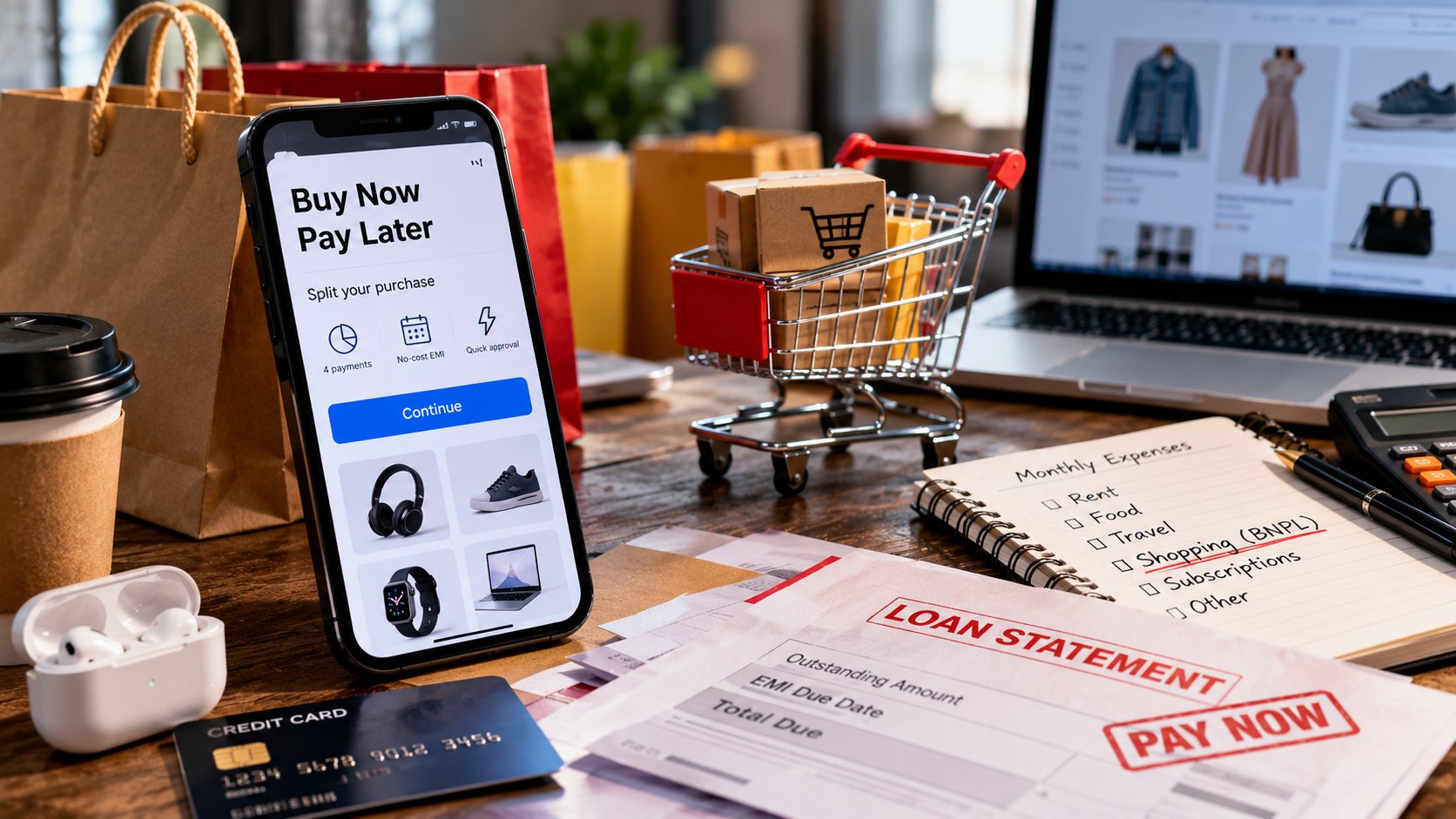
Is Gen Z's Buy-Now-Pay-Later Habit Fuelling India's Unsecured Loan Boom — and When Does It Turn Into a Debt Trap?
Is Gen Z’s Buy-Now-Pay-Later Habit Fuelling India’s Unsecured Loan Boom — and When Does It Turn Into a Debt Trap?
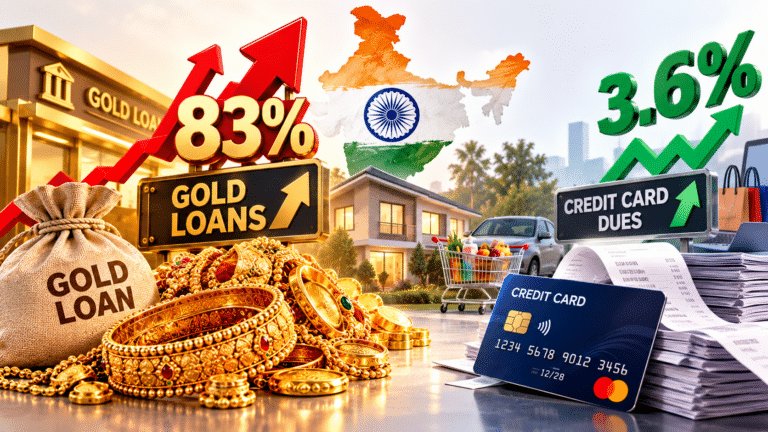
Half of India’s new credit card holders are now 30 or younger, and many arrive already carrying small-ticket loans. Credit bureau and RBI data show young Indians borrowing earlier and faster than any generation before them. Here is what the numbers say, and where the risk lies.
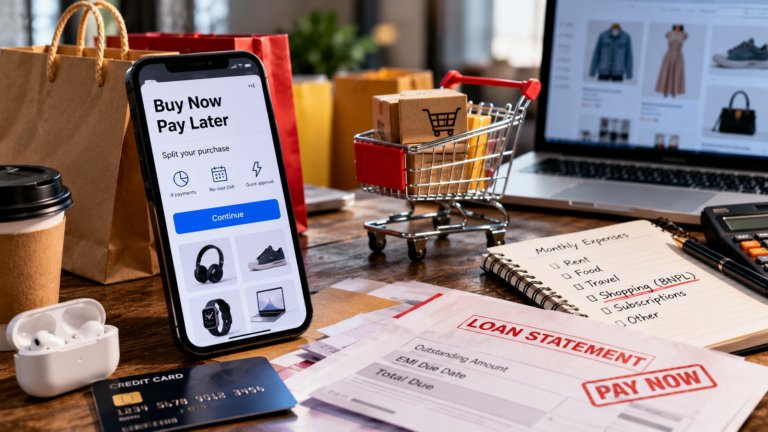
It rarely starts with a loan. It starts with a checkout button. A ₹1,200 food order on “Pay Later”. A ₹3,500 pair of shoes split into three. A phone on “no-cost EMI”. Each feels like a convenience, not a debt. Then the app offers a pre-approved ₹40,000 loan, the first credit card arrives, and within a year a 23-year-old can be juggling five repayment dates on three different apps.
That pattern is now visible in India’s credit data. Young Indians are entering formal credit earlier than any previous generation, mostly through small, unsecured products, and they are adding new credit lines faster. Lenders like it, because young borrowers are tomorrow’s home loan customers. Regulators are watching closely, because unsecured loans go bad more often than secured ones. This article looks at what the numbers actually show, separates healthy credit-building from risky stacking, and sets out how young borrowers can use pay-later tools without paying for it later.
Quick Summary
Yes: buy-now-pay-later and small app-based loans have become one of Gen Z’s most common gateways into credit, and they are feeding a broader rise in unsecured borrowing. TransUnion CIBIL found half of new credit card holders were 30 or younger in March 2026, and 23% of Gen Z already had a small-ticket personal loan when they got their first card. Unsecured retail loans had a gross NPA ratio of 1.7% against 0.7% for secured loans, the RBI reported. Used carefully, these products build a credit history. Stacked, they can damage a score for years.
What We Know
- As of March 2026, half of new-to-credit-card consumers were aged 30 or below, up from 43% in March 2022, TransUnion CIBIL reported in July.
- About 31% of Gen Z taking a first card in 2024 already had at least two other open credit accounts.
- Nearly 28% of Gen Z cardholders spent ₹25,000 or more in their first three months, against 20% of millennials.
- Other personal loans outstanding rose from ₹9.02 lakh crore in March 2022 to ₹17.32 lakh crore in March 2026.
- The RBI said household debt among lower-rated borrowers needs “close monitoring”.
What Is Still Unclear
- How large BNPL lending is in India; no official series separates it from other small loans.
- Default rates specifically for Gen Z borrowers, which bureaus have flagged but not published.
- How much pay-later debt is reported to credit bureaus versus held off-report.
- Whether the RBI will tighten rules on small-ticket digital loans further.
A Generation That Borrows Earlier Than Any Before It
A Paisabazaar analysis of more than 10 million consumers, reported in May 2026, found that the age at which Indians take their first credit product has fallen sharply. People born in the 1960s typically first borrowed at about 47, usually for a home. Those born in the 1990s started at 25 to 28, often with a card, personal loan or consumer durable loan. The post-2000 generation is starting at about 22, through small-ticket loans and buy-now-pay-later.
Starting earlier is not a problem in itself. A credit history built at 22 can make a home loan easier at 30. The difference is what young people are borrowing for. Their parents’ first loan bought an asset that usually rose in value. Today’s first loans more often pay for phones, clothes, food delivery, travel and concert tickets, which do not.
The stacking pattern bureaus are seeing
TransUnion CIBIL’s July 2026 report on credit cards found that young borrowers rarely arrive at their first card empty-handed. Only 30% of Gen Z first-card holders in 2024 had no previous credit, compared with 56% of millennials when they got their first card in 2018. Nearly a quarter already had a small-ticket personal loan open.
“A growing share is entering the card market with prior credit experience,” Bhavesh Jain, MD and CEO of TransUnion CIBIL, said. WION reported that the same study flagged rising early-stage delinquencies among younger borrowers, though it did not publish a figure.
What “Buy Now, Pay Later” Really Is
Buy now, pay later sounds like a payment method. In India it is credit. When you choose “Pay Later” at checkout or split a purchase into instalments, a regulated lender, usually a bank or a non-bank finance company partnering with the app, lends you the money. Many such loans are reported to credit bureaus, which means a missed payment can appear on your credit report just like a missed credit card bill.
That is the most common misunderstanding. Because the amounts are small and the app feels like a wallet, many users do not think of pay-later dues as loans. They are. And because each product has its own app, statement and due date, it is easy to lose track. The table below compares the main forms of credit young Indians use.
| Product | Typical use | Who lends | Cost if paid on time | Main risk |
|---|---|---|---|---|
| Pay Later at checkout | Food, shopping, bills | Bank or NBFC partner | Often interest-free for a short period | Late fees; easy to forget several due dates |
| Split into instalments | Clothes, gadgets | Bank or NBFC partner | Varies; may include fees | Several small EMIs add up |
| No-cost EMI | Phones, appliances | Card issuer or NBFC | Interest offset by a discount | Processing fees; ties up card limit |
| Credit card | Everyday spending | Bank | Free if full bill paid by due date | Paying only the minimum due |
| Small-ticket app loan | Travel, emergencies, gaps | NBFC or bank via app | Interest from day one | High rates on short tenures; repeat borrowing |
| Consumer durable loan | Appliances, two-wheelers | NBFC or bank | Varies by scheme | Commits future income |
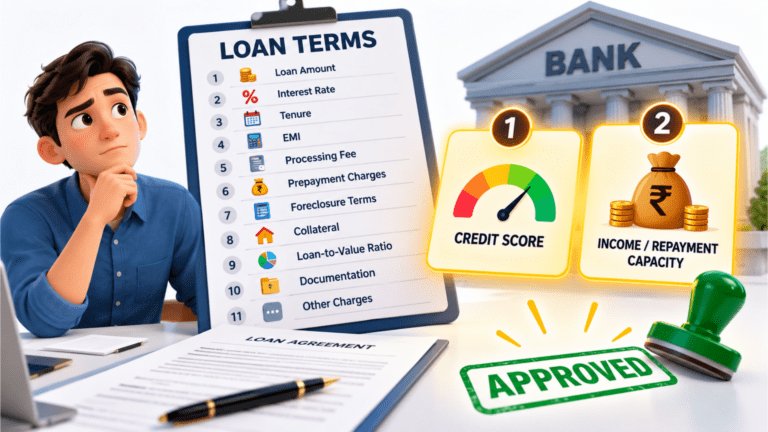
Costs vary widely by lender and offer. Before accepting any credit, check the Key Fact Statement, which lenders must provide for retail and digital loans, showing the annual percentage rate and all fees in one place.
From Checkout Button to Unsecured Loan Boom
Pay-later habits do not stay small. They are, for many young borrowers, the first rung of a ladder that leads to credit cards and personal loans. And across the system, those unsecured products have grown fast.
Finance Ministry data reported by The Indian Express showed non-housing retail loans rose to 58.4% of household borrowing in March 2026, from 54.9% a year earlier. In other words, a growing share of what Indian households owe is not for homes but for consumption.
Fintechs are where the youngest borrowers go
Small loans are dominated by fintech lenders. The Indian Express reported fintechs held 56.8% of the market for loans below ₹50,000, with 70.5% of fintech loan books unsecured and about half of those loans going to borrowers under 35. Earlier, TransUnion CIBIL found more than 60% of fintech borrowers were under 30, and that small-ticket personal loans made up 92% of fintech loan originations in December 2024.
What young Indians are borrowing for
Some of the spending is about experiences. Economists cited by The Indian Express estimated ₹1,600 crore to ₹2,000 crore was spent on music concerts over 24 months. Airbnb research from January 2026 found 62% of respondents planned to travel around concerts or festivals that year. Muthoot Finance data showed more than a quarter of personal loans in the first half of 2025 were taken for travel. None of this is reckless on its own. The risk is when experiences are financed by stacking short-term debt.
Where the Stress Shows Up First
Unsecured loans default more often than secured ones, because there is no asset for the lender to recover. The RBI’s Financial Stability Report put the gross NPA ratio for unsecured retail loans at 1.7% by March 2026, against 0.7% for secured retail loans, Outlook Business reported. That overall figure looks modest. The stress is concentrated in the smallest loans.
TransUnion CIBIL’s data on over-leverage adds context. The share of consumers it classifies as over-leveraged rose from 5% in FY17 to 18% in FY24, before easing to 15% in FY26. The easing followed the RBI’s November 2023 decision to raise risk weights on unsecured consumer credit, which made such lending more expensive for banks and NBFCs and slowed its growth.
- Mar 202243% of new credit card customers are aged 30 or below
- Jun 2022RBI stops non-bank prepaid cards from being loaded through credit lines, reshaping fintech pay-later cards
- Nov 2023RBI raises risk weights on unsecured consumer loans and cards
- Dec 202492% of fintech loan originations are small-ticket personal loans
- Mar 202650% of new card customers are 30 or below; card balances reach ₹3.1 lakh crore
- Jul 2026CIBIL report flags rising early delinquencies among young borrowers
How One Missed Payment Travels Through Your Credit Report
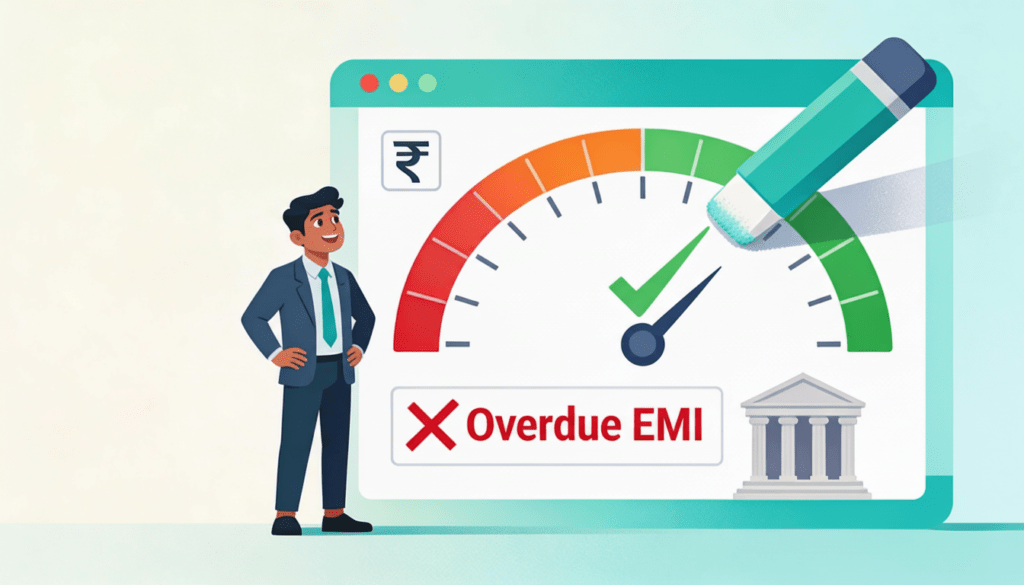
The real cost of mismanaged pay-later credit is rarely the late fee. It is what happens to your credit report, which lenders will check for every loan you apply for, for years to come. Here is how a missed payment escalates under RBI classification rules.
- Day 1Payment missedLate fee and interest may apply. Pay now and the damage is usually limited.
- 1 to 30 daysSMA-0: overdueThe account is flagged as overdue in the lender’s system and can be reported to bureaus.
- 31 to 60 daysSMA-1: stressDays past due appear on your credit report. Your score typically drops.
- 61 to 90 daysSMA-2: serious stressCollection calls intensify. New lenders are likely to decline you.
- 90+ daysNPA: defaultThe loan is classed as non-performing. Recovery steps begin.
The “settled” label that follows you
Many borrowers who fall behind agree a one-time settlement for less than the amount owed. It ends the calls, but the account is typically reported as “settled” rather than “closed”. Lenders read that as a sign you did not repay in full. Years later, it can mean a rejected home loan application or a higher rate. If you can, repay the full amount, even slowly, rather than settle.
| Status on your report | What it means | How lenders read it | What to do |
|---|---|---|---|
| Standard, 0 days past due | Paid on time | Positive | Keep paying on time |
| Days past due, 1 to 89 | Payments late | Caution; may decline or charge more | Clear arrears quickly |
| Sub-standard or NPA | 90+ days overdue | High risk; most decline | Contact lender, repay or restructure |
| Settled | Paid less than owed | Negative for years | Prefer full repayment |
| Written off | Lender gave up recovery | Very negative | Repay and request status update |
| Closed | Repaid in full | Positive | Check it shows correctly |
The Money Maths of a Stacked Month
The danger in stacking is that each repayment looks small. Added together, they can quietly consume a large slice of a first salary.
A common guideline from financial planners is to keep all loan repayments below about 30% of take-home pay when you are starting out, leaving room for savings and emergencies. Lenders may allow more, but what a lender will approve and what is comfortable are different numbers.
How to Use Pay-Later Without Paying for It Later
Credit used well is useful. A young borrower who pays every bill on time builds a credit score that makes later loans cheaper. The aim is not to avoid credit, but to stay in control of it.
- List every credit line you have: pay-later accounts, cards, EMIs and app loans, with due dates and amounts.
- Check your free credit report once a year from each bureau to see what lenders see.
- Keep total repayments under about 30% of take-home pay.
- Set up auto-pay for full balances, not minimum dues, where possible.
- Close pay-later accounts you no longer use, so you are not tempted at checkout.
- Build an emergency fund of at least 3 months’ expenses before taking a loan for travel or gadgets.
- Read the Key Fact Statement and compare the annual percentage rate before accepting any app loan.
- If you fall behind, call the lender before 30 days pass and ask for a revised schedule.
- No more than 2 pay-later apps active at a time
- Card utilisation under 30% of limit
- Pay credit card bills in full, every month
- No new loan within 6 months of the last one
- Avoid loans to repay other loans
- Check the APR, not just the EMI
- Only borrow from RBI-regulated lenders
- Prefer full repayment over settlement
Frequently Asked Questions
Is buy now pay later a loan in India?
Yes. Pay-later and split-payment options are credit extended by a bank or NBFC, usually in partnership with the app. Missed payments can be reported to credit bureaus and affect your score.
Does BNPL affect my CIBIL score?
It can. Many pay-later loans are reported to credit bureaus. On-time payments can help build a history; late payments can lower your score and appear on your report for years.
Why is Gen Z taking more unsecured loans?
Easy app-based access, pay-later at checkout, and spending on gadgets, travel and experiences. TransUnion CIBIL found half of new credit card holders were 30 or below in March 2026.
Are unsecured loans risky?
They carry higher interest and default more often than secured loans. The RBI reported a 1.7% gross NPA ratio for unsecured retail loans against 0.7% for secured loans in March 2026.
What happens if I miss a pay-later payment?
You may pay a late fee and interest. After 30 days past due, it can show on your credit report, and after 90 days the loan is classed as non-performing, which seriously damages your score.
Is a settled loan bad for my credit score?
Yes. A “settled” status shows you repaid less than you owed, and lenders treat it as negative for years. Full repayment is better where possible.
How many pay-later apps should I use?
There is no rule, but fewer is easier to manage. Many planners suggest no more than one or two, with all repayments kept under about 30% of take-home pay.
How can I check if a loan app is legitimate?
Check that the lender is a bank or an RBI-registered NBFC named in the app and agreement, and that you receive a Key Fact Statement with the annual percentage rate and fees.
The Short Version
Gen Z is entering credit at about 22, typically through pay-later and small app loans, and is adding credit fast: half of new card customers were 30 or younger in March 2026, and 69% of young first-card holders opened another product within a year. That is fuelling growth in unsecured borrowing, where defaults run higher than for secured loans and are highest in the smallest loans. Pay-later is credit. Used with limits, it builds a score. Stacked, it can cost you a home loan years later.