₹50,000 a Month From the Post Office With No Income Tax? What Is True, What Is Not, and Who Can Actually Do It
₹50,000 a Month From the Post Office With No Income Tax? What Is True, What Is Not, and Who Can Actually Do It
No Post Office savings scheme pays tax-free interest. But a retired couple who combine the Senior Citizen Savings Scheme and the Monthly Income Scheme can draw about ₹52,000 a month and still owe no income tax, because of how the new regime’s slabs and ₹12 lakh rebate work. It takes about ₹78 lakh, and the details decide whether it stays tax-free.
The message has been shared thousands of times: invest in the Post Office, get ₹50,000 every month, and pay no income tax on it. For a couple approaching retirement, it sounds like the perfect plan. A government-backed income, a round number that covers most household bills, and nothing for the taxman.
Part of that is true, and part is badly misleading. The Post Office does offer schemes that pay regular income, backed by the Government of India. A couple can, in fact, collect around ₹50,000 a month from them. And under today’s tax rules, they may well pay nothing. But the interest itself is not tax-free, the deposit needed is far larger than most people expect, and a pension or rent on top can quickly turn “no tax” into a sizeable bill. This guide shows exactly how the arithmetic works.
Quick Summary
Yes, a senior citizen couple can get about ₹50,000 a month from Post Office schemes and pay no income tax, but only under specific conditions. They would need about ₹74.6 lakh to ₹78 lakh across the Senior Citizen Savings Scheme at 8.2% and the Monthly Income Scheme at 7.4%. The interest is taxable, but split between two people it comes to about ₹3.1 lakh each a year, below the ₹4 lakh nil slab under the new regime. Add a large pension and tax returns.
What We Know
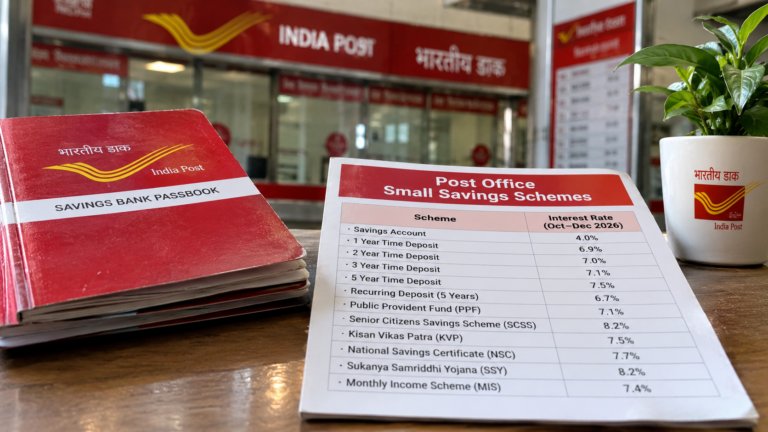
- For October to December 2026, SCSS pays 8.2% and MIS pays 7.4%, unchanged after the 30 September review.
- SCSS allows ₹30 lakh per person; MIS allows ₹9 lakh per person, or ₹15 lakh in a joint account.
- Interest from both schemes is fully taxable at slab rates; neither is tax-exempt.
- Under the new regime for tax year 2026-27, income up to ₹4 lakh is taxed at nil, and a rebate makes tax nil up to ₹12 lakh.
- From 1 April 2026, Form 121 replaced Forms 15G and 15H for stopping TDS on interest.
What Is Still Unclear
- Which specific scheme or combination the viral ₹50,000 claim assumed.
- Whether small savings rates will change for January to March 2027, given the RBI’s 7 October hike.
- Whether future budgets will keep the ₹12 lakh rebate and current slabs.
- How each post office branch is handling Form 121 in its first year.
Where Does ₹50,000 a Month Actually Come From?
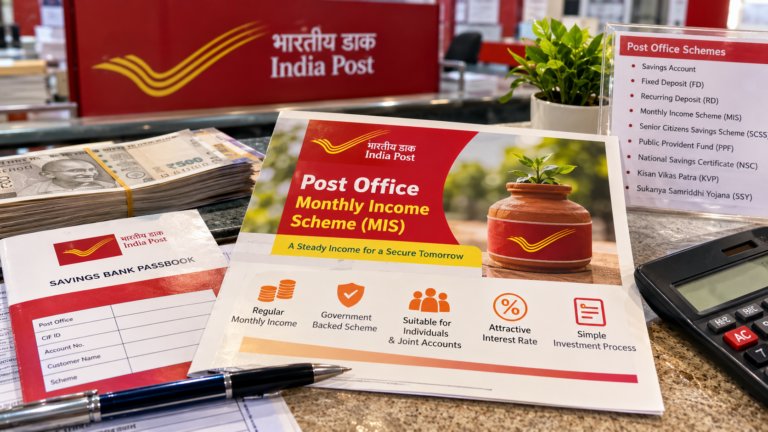
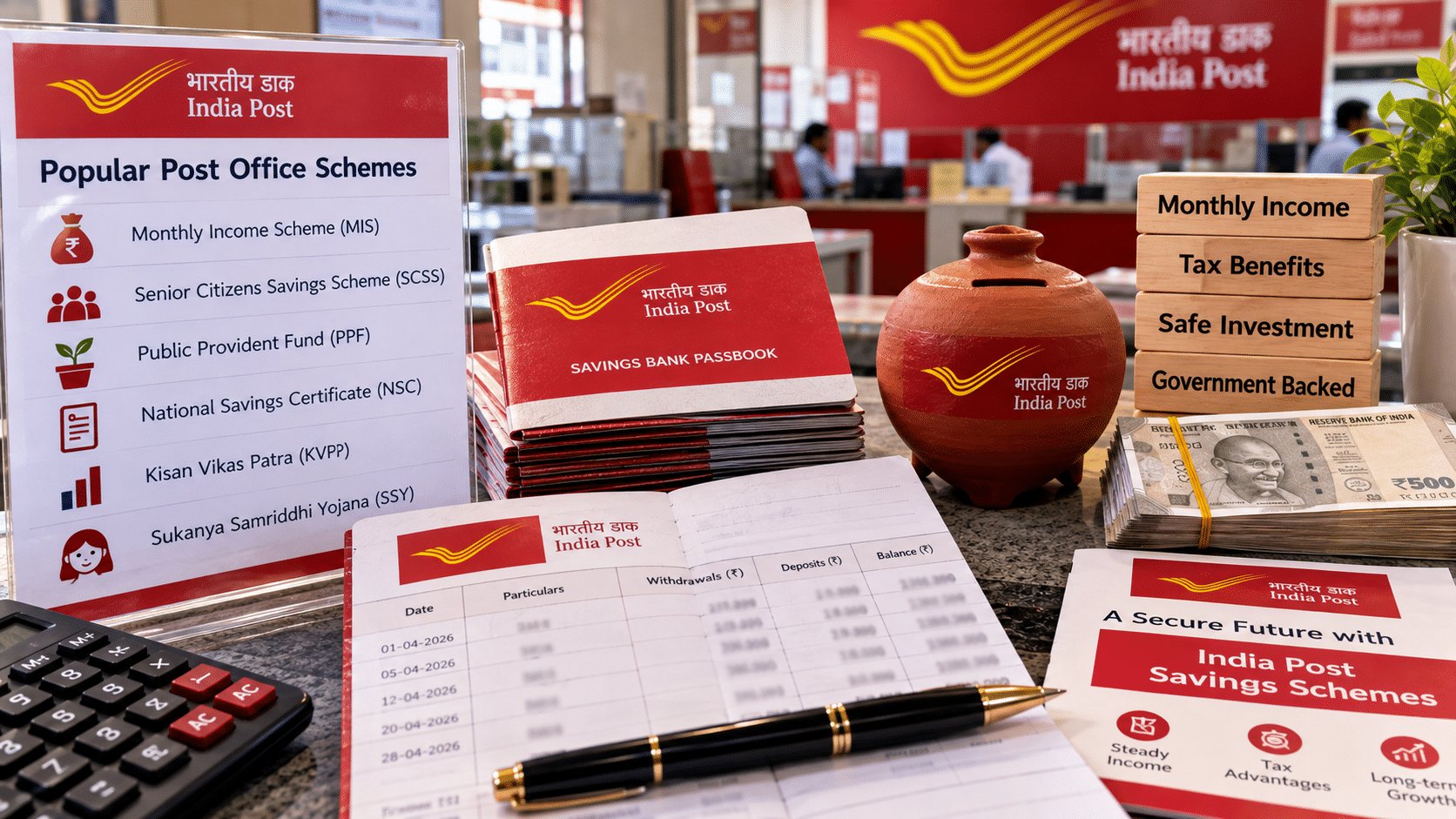
No single Post Office scheme can pay ₹50,000 a month. The Monthly Income Scheme caps each person at ₹9 lakh, which pays ₹5,550 a month at 7.4%. A couple’s maximum is ₹18 lakh, or ₹11,100 a month. The Senior Citizen Savings Scheme is more generous: up to ₹30 lakh per person at 8.2%, paying ₹61,500 every quarter, or ₹20,500 a month on average. It is open to those aged 60 and above, and to some early retirees under specific conditions.
Combine them and the number appears. A couple, both aged 60 or above, can each open an SCSS account of ₹30 lakh, together paying ₹41,000 a month. Add a couple’s full MIS of ₹18 lakh at ₹11,100 a month, and the total reaches ₹52,100 a month. That is the realistic source of the ₹50,000 claim, and it needs ₹78 lakh in deposits.
For exactly ₹50,000, the couple could keep both SCSS accounts at ₹30 lakh and put about ₹14.6 lakh into MIS, for ₹9,000 a month. That brings the total deposit to about ₹74.6 lakh. Either way, this is a plan for a household that already has a large retirement corpus, not a trick that turns modest savings into a large income.
- 8.2%SCSS rate, paid quarterly, Oct to Dec 2026
- 7.4%MIS rate, paid monthly, Oct to Dec 2026
- ₹30 lakhSCSS limit per person; ₹60 lakh for a couple
- ₹9 lakhMIS limit per person; ₹18 lakh for a couple
What a single retiree would need
A single person aged 60 or above can hold ₹30 lakh in SCSS and ₹9 lakh in MIS, for ₹26,050 a month. To reach ₹50,000, they would need about ₹38 lakh more in another Post Office product, such as the 5-year time deposit at 7.5%, which pays interest yearly rather than monthly. The total comes to about ₹77 lakh, all held by one person, with an annual income of ₹6 lakh that is taxable in their name alone.
“Tax-Free” Decoded: Why Taxable Interest Can Still Cost Nothing
This is where the viral claim confuses people. Post Office schemes fall into two groups. A few, like the Public Provident Fund and Sukanya Samriddhi, have tax-free interest by law. The income schemes, SCSS and MIS, do not. Their interest is added to your income and taxed at your slab rate, like a bank FD.
What makes the couple’s ₹50,000 effectively tax-free is the slab structure. Under the new tax regime for tax year 2026-27, the first ₹4 lakh of income is taxed at nil, and a rebate of up to ₹60,000 makes the tax nil for total income up to ₹12 lakh. When ₹6.25 lakh of interest is split between two spouses, each has about ₹3.13 lakh, below even the nil slab. When one person has ₹6 lakh, they fall within the rebate. Either way, the tax works out to zero.
Note the old regime result. A retiree with ₹6 lakh of interest pays about ₹20,800 a year under the old regime after the first year, because the old regime’s rebate only covers income up to ₹5 lakh. Under the new regime, the same person pays nothing. For most interest-dependent retirees, the new regime is now the better choice, though anyone with large deductions should compare both before filing.
The ₹12 lakh line is a cliff, not a slope
The rebate disappears once total income crosses ₹12 lakh. Marginal relief softens the jump for incomes just above the line, but beyond about ₹12.7 lakh the full slab tax applies. So the real question is not whether the Post Office income is tax-free, but whether all your income together stays below ₹12 lakh.
When the Zero-Tax Promise Breaks
The tax-free outcome depends entirely on what else you earn. Pension, rent, capital gains and other interest all count. The table shows a single retiree with ₹6 lakh of Post Office interest and different levels of pension.
| Annual pension | Taxable income, new regime | New regime tax a year | New regime tax a month | Old regime tax a year |
|---|---|---|---|---|
| None | ₹6,00,000 | ₹0 | ₹0 | ₹20,800 |
| ₹3 lakh | ₹8,25,000 | ₹0 | ₹0 | ₹72,800 |
| ₹6 lakh | ₹11,25,000 | ₹0 | ₹0 | ₹1,45,600 |
| ₹6.75 lakh | ₹12,00,000 | ₹0 | ₹0 | ₹1,69,000 |
| ₹9 lakh | ₹14,25,000 | ₹97,500 | ₹8,125 | ₹2,39,200 |
The new regime figures deduct the ₹75,000 standard deduction from pension; the old regime figures deduct ₹50,000 standard deduction and ₹50,000 under Section 80TTB. All include 4% cess and ignore surcharge and other deductions. A retiree with ₹6 lakh of interest and a ₹9 lakh pension would pay about ₹8,125 a month in tax under the new regime, so the ₹50,000 income would effectively shrink to about ₹41,875.
Why splitting between spouses matters
Each person is taxed separately in India. Spreading deposits across both spouses uses two sets of slabs, two nil bands and two rebates. That is why the couple structure is so efficient. But note the clubbing rule: if one spouse gifts money to the other to invest, the income from that gift is generally added back to the giver’s income for tax. Money each spouse genuinely owns, such as their own retirement benefits or savings, avoids this problem.
TDS Can Still Bite Even When Tax Is Nil
Zero tax does not automatically mean zero deduction. SCSS interest above ₹1 lakh a year attracts TDS at 10% for seniors with a PAN on record. On a ₹30 lakh SCSS account paying ₹2,46,000 a year, that is ₹24,600 deducted, even if the depositor owes no tax at all. The money comes back only as a refund after filing a return.
- Before 1st payoutSubmit Form 121Replaced 15G and 15H from 1 April 2026
- Each yearFresh form neededValid for one financial year, per payer
- If missed10% TDS₹24,600 a year on ₹30 lakh SCSS
- After filingRefundClaim excess TDS in your return
Form 121 is a self-declaration that your total tax for the year will be nil after the basic exemption and rebate. Under the Income-tax Act, 2025, it can only be filed if that is true. It must be submitted to each payer before interest is credited, and renewed every financial year. Filing a return is still advisable, both to claim any refund and to keep a clean record.
The Fine Print Behind the Monthly Cheque
SCSS and MIS are among the safest products in India, backed directly by the Government of India with no insurance cap. But they come with rules that matter for a retirement plan built around them.
- SCSS5 years, extendable by 38.2%Quarterly payouts. Early closure costs 1% to 1.5% of the deposit, and closing in year one forfeits interest.
- MIS5 years, fixed7.4%Monthly payouts. No exit in year one; then 2% deducted up to year 3 and 1% after.
- InflationPayouts never rise5.54%September 2026 CPI. ₹50,000 buys about ₹38,184 worth after 5 years at that pace.
Inflation is the tax nobody mentions
Even if income tax is zero, inflation is not. If prices rise at September 2026’s 5.54% each year, ₹50,000 a month will buy about ₹47,375 worth of goods after one year, ₹42,532 after three years and ₹38,184 after five. The ₹78 lakh principal also comes back at face value. A retirement income that never grows needs a plan for the years beyond the first term.
How it compares with bank FDs
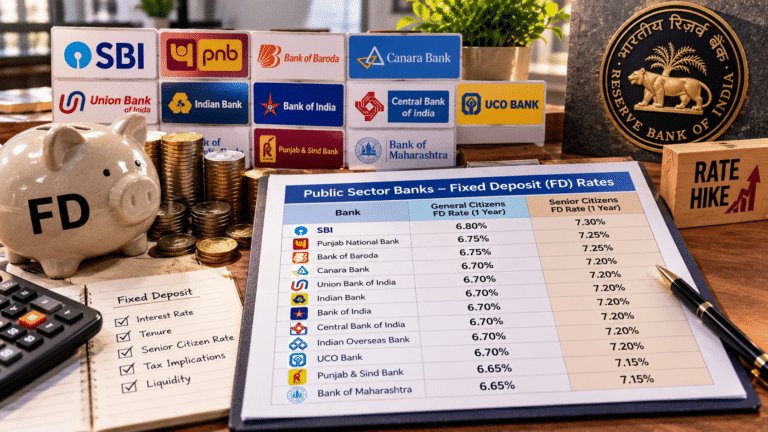
To earn ₹6 lakh a year from a bank FD with monthly payouts, a senior would need about ₹85.1 lakh at SBI’s 7.05% for 5 to 10 years, and a regular depositor about ₹99.2 lakh at 6.05%, based on SBI’s October 2026 card. Bank FDs also carry DICGC insurance only up to ₹5 lakh per bank. That is why SCSS, with its higher rate and full government backing, is the anchor of most Post Office income plans.
The Timeline That Made This Possible
The ₹50,000 combination only works because of a few rule changes over the past three years. These dates show how the pieces came together.
- April 2023SCSS limit doubled to ₹30 lakh; MIS limits raised to ₹9 lakh single and ₹15 lakh joint
- Apr to Jun 2023SCSS rate raised to 8.2%, where it has stayed since
- 1 April 2025New regime rebate covers income up to ₹12 lakh; senior TDS threshold raised to ₹1 lakh
- 1 April 2026Income-tax Act, 2025 takes effect; Form 121 replaces 15G and 15H
- 30 Sep 2026SCSS 8.2% and MIS 7.4% kept for October to December 2026
- End Dec 2026Next small savings rate review for January to March 2027
A checklist before you commit ₹75 lakh
- Confirm both spouses are 60 or above for two SCSS accounts
- Keep each spouse’s MIS holdings within ₹9 lakh
- Add up pension, rent and other interest before assuming no tax
- Keep total income per person below ₹12 lakh for nil tax
- File Form 121 with each payer before the first payout
- Choose the new regime unless deductions exceed its benefit
- Keep 6 to 12 months of expenses outside these schemes
- Plan for inflation: ₹50,000 buys about 24% less after 5 years
Frequently Asked Questions
Can I really get ₹50,000 a month from the Post Office?
A senior citizen couple can, by combining two SCSS accounts of ₹30 lakh at 8.2% with up to ₹18 lakh in MIS at 7.4%. That pays about ₹52,100 a month on ₹78 lakh. No single scheme pays ₹50,000 a month on its own.
Is Post Office monthly income tax-free?
No. SCSS and MIS interest is fully taxable at your slab rate. It can result in zero tax if your total income stays within the new regime’s nil slab of ₹4 lakh or its rebate limit of ₹12 lakh.
How much tax will I pay on ₹6 lakh of SCSS and MIS interest?
Nil under the new regime if you have no other income, because the rebate covers income up to ₹12 lakh. Under the old regime, a senior would pay about ₹20,800 a year after the first year.
What is the SCSS interest rate for October to December 2026?
8.2% a year, paid quarterly. The government kept it unchanged on 30 September 2026. The rate is fixed for the account’s five-year term.
What is the maximum investment in SCSS and MIS?
SCSS allows ₹30 lakh per person, or ₹60 lakh for a couple with separate accounts. MIS allows ₹9 lakh per person, ₹15 lakh in a joint account, with each person’s total capped at ₹9 lakh.
Is TDS deducted on SCSS interest?
Yes, at 10% if interest exceeds ₹1 lakh in a year for a senior with a PAN. If your total tax will be nil, submit Form 121, which replaced Forms 15G and 15H from 1 April 2026, to stop the deduction.
Should retirees choose the old or new tax regime?
For retirees whose income is mainly interest and pension, the new regime is usually better because of its ₹12 lakh rebate. Those with large deductions should compare both.
Is the ₹50,000 tax-free scheme message genuine?
No specific “tax-free ₹50,000 scheme” exists. The figure comes from combining SCSS and MIS. Open accounts only at a post office or authorised bank, never through a private agent or link.
The Short Version
There is no tax-free Post Office scheme that pays ₹50,000 a month. A senior couple can get about ₹52,100 a month by putting ₹30 lakh each into SCSS at 8.2% and ₹18 lakh into MIS at 7.4%, a total of ₹78 lakh. The interest is taxable, but split between two people it stays below the new regime’s ₹4 lakh nil slab, so the tax is zero. A large pension can push income past ₹12 lakh and end the zero-tax result. File Form 121 to avoid TDS, and plan for inflation, because the payout never rises.