Which Bank Service Charges Still Apply in 2026 — and Which Ones Quietly Disappeared
Banking · Service charges · India · Top 25 banks
Which Bank Service Charges Still Apply in 2026 — and Which Ones Quietly Disappeared
Open your last twelve statements and find every line that is not a payment you made. There will be more of them than you expect, and most will be under ₹300, which is exactly why nobody disputes them. A debit card fee in the month you opened the account. Twenty-three rupees at an ATM that was not your bank’s. Eighteen per cent GST on top of each. Individually trivial, collectively the reason Indian banks booked over ₹17,000 crore from four fee heads alone last financial year.
Quick Summary
The single biggest savings-account charge in India is no longer the minimum balance penalty. Ten of the twelve public sector banks have scrapped it on savings accounts, and the fee that replaced it is the debit card annual maintenance charge, which alone brought public sector banks ₹7,564 crore in 2025-26. Private banks moved the other way and now collect 70% of all minimum balance penalties. ATM withdrawals beyond the free limit are capped at ₹23, and a Basic Savings Bank Deposit Account carries no penal charges at all.
The scale: what Indian banks actually collected last year
Fee income on savings accounts is not a rounding error, and Parliament now publishes the numbers bank by bank. In a written reply to the Rajya Sabha, Minister of State for Finance Pankaj Chaudhary put total penalties for non-maintenance of minimum average balance at ₹7,086.63 crore in 2025-26, split ₹4,948.71 crore from private banks and ₹2,137.92 crore from public sector banks.
The five-year picture is larger still. Banks have collected at least ₹27,973.01 crore in balance penalties, with ₹12,033.39 crore from public sector banks over five financial years and ₹15,939.62 crore from private banks over the four years for which data exists. The government’s framing is that this is small: ₹8,092.83 crore over three years works out to roughly 0.23% of public sector banks’ total income. That is true at the level of a bank balance sheet. It is not how it feels on a ₹4,000 salary credit.
What the aggregate hides is the direction of travel. Public sector collections fell 11% year on year, from ₹2,409 crore to ₹2,138 crore, as bank after bank waived the charge. Private sector collections rose. The gap between the two models is now the single most useful thing a customer can understand about bank charges in India.
The charge everyone worries about is dying. The one nobody watches is growing
Minimum balance is the fee Indians argue about, and it is on its way out of the public sector. State Bank of India removed the penalty on all savings accounts back in March 2020. Then 2025 brought a cascade: Canara Bank waived the average monthly balance requirement across every savings variant from 1 June, Punjab National Bank followed on 1 July, Bank of Baroda the same day for all standard savings schemes, Indian Bank from 7 July, and Union Bank of India from the September quarter for general savings accounts. The government told Parliament that ten of the twelve public sector banks have now discontinued the penalty entirely, with the remaining two having rationalised theirs.
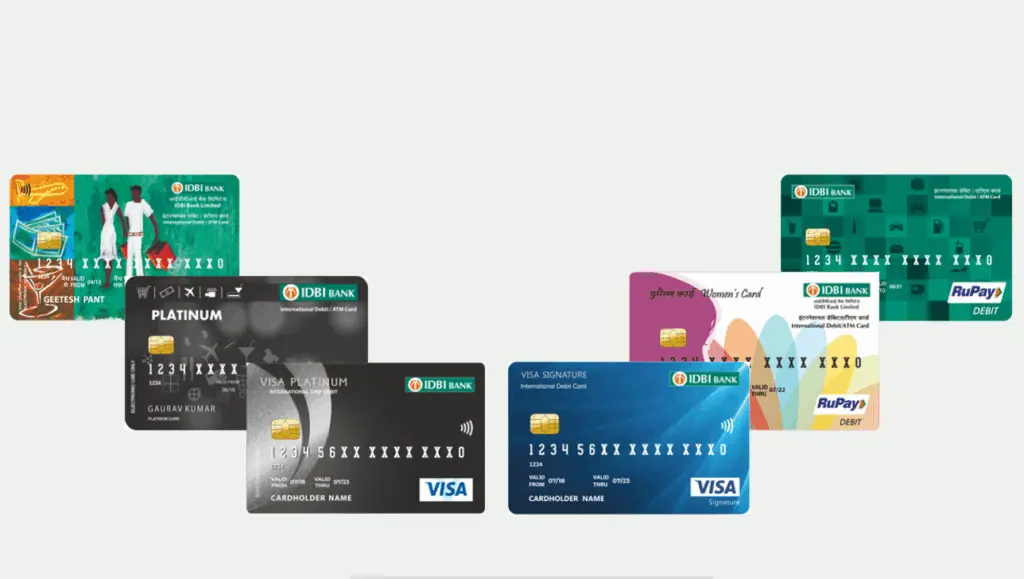
Meanwhile the debit card annual maintenance charge has grown into something much larger. Public sector banks collected ₹7,564 crore from debit card charges in 2025-26 — more than three times what they took in balance penalties, and over six times their ATM fee income. State Bank of India alone accounted for ₹3,117.03 crore of it. This is a fee that arrives once a year, is usually between ₹125 and ₹300 plus GST, and is almost never questioned, because the card feels like something you are supposed to pay for.
Read those two facts together and the strategy becomes legible. Balance penalties are visible, politically awkward and easy to campaign against. Card maintenance fees are invisible, annual and attached to a product the customer believes they chose. The waiver headlines are real. They are also cheap.
Where the balance penalty went instead
Two private banks now collect more in balance penalties than most of the public sector. HDFC Bank took ₹1,798 crore in 2025-26 and Axis Bank ₹1,081 crore. Together that is ₹2,879.5 crore, about 58% of everything private banks collected under this head, and more than the combined total of all twelve public sector banks.
The trend lines diverge just as sharply. Between 2022-23 and 2025-26, HDFC Bank’s collections under this head rose 74%, Federal Bank’s 71%, Kotak Mahindra Bank’s 51%, and Yes Bank’s more than tripled. None of this is improper — the Reserve Bank permits banks to fix penal charges under a board-approved policy, provided they are reasonable and broadly aligned with the cost of providing the service. But a customer choosing between a public and a private savings account in 2026 is, in fee terms, choosing between two genuinely different regimes.
The ATM maths almost nobody does correctly
From 1 May 2025 the Reserve Bank allowed banks to charge a maximum of ₹23 per transaction beyond the free monthly limit, up from ₹21 which had applied since 1 January 2022. Your free allowance is five transactions a month at your own bank’s ATMs, plus three at other banks’ ATMs in metro centres and five in non-metro centres.
Here is the part people get wrong. That allowance counts non-financial transactions too. A balance enquiry, a PIN change and a mini-statement each consume one of your five. Check your balance at the ATM three times in a month and you have spent more than half your own-bank allowance without withdrawing a rupee. The same rules apply at cash recycler machines, except for cash deposits.
The economics behind the increase are worth knowing, because they explain why this fee will not fall. The National Financial Switch steering committee raised the interchange fee that your bank pays the ATM’s owner to ₹19 for financial and ₹7 for non-financial transactions in March 2025. India had approximately 258,000 ATMs and cash recyclers as of February 2025 while withdrawal volumes fell from over 57 crore transactions in January 2023 to 48.83 crore in January 2025. Fewer transactions across the same fixed cost base means a higher price per transaction.
Where the 25 largest banks stand on the minimum balance penalty
The list below covers the 25 banks most Indians hold accounts with, grouped by what has actually changed. Waived means the bank has publicly removed the penalty on standard savings accounts. Applies means a shortfall still attracts a charge. Check means the bank falls inside the government’s count of public sector banks that have discontinued or rationalised, without an individually verified announcement.
One caveat that matters more than any single entry: waivers routinely exclude premium and customised savings variants. Bank of Baroda’s waiver explicitly does not cover premium schemes, and Union Bank’s covers general savings deposit accounts only. If you hold a salary-linked, wealth or priority variant, the headline does not necessarily apply to you.
The account that has no charges at all
Every bank on that list must offer a Basic Savings Bank Deposit Account. There is no minimum balance, no penalty for a nil balance, and RBI rules require at least four free cash withdrawals a month including ATM withdrawals, plus a free debit card and free electronic transfers. The government told Parliament that roughly 73 crore such accounts, including Jan Dhan accounts, already carry no penal charges. The trade-off is that you may hold only one BSBDA, and holding one usually bars you from a regular savings account at the same bank.
What a savings account should actually cost you in a year
Add up the annual total, not the individual line. A debit card fee plus quarterly SMS charges plus a handful of out-of-network ATM uses is a real number, and once you know it you can judge whether your account is priced correctly for how you use it.
Normal
Watch
Act
Wrong product
Switch
The full charge sheet, by bank type
Charges differ far more between sectors than between banks within a sector, which is why the table below is organised that way. Every figure carries 18% GST on top, and the statutory column is the only part that no bank may exceed.
| Charge head | Public sector | Private sector | Small finance | Statutory position |
|---|---|---|---|---|
| Balance shortfall | ₹0 at 10 of 12 | ₹150 to ₹750 a month | ₹100 to ₹600 | No cap; board policy |
| ATM beyond free limit | ₹21 to ₹23 | ₹21 to ₹23 | ₹21 to ₹23 | RBI cap ₹23 |
| Debit card annual fee | ₹125 to ₹300 | ₹200 to ₹750 | ₹199 to ₹500 | No cap |
| Cheque leaves | 20 to 25 free, then ₹3 to ₹5 | 25 free, then ₹4 | 10 to 25 free | No cap |
| SMS alerts | ₹0 to ₹15 a quarter | ₹0 to ₹25 a quarter | ₹0 to ₹20 | Must be usage-based |
| NEFT and RTGS online | ₹0 | ₹0 | ₹0 | Nil for savings online |
| IMPS online | ₹0 to ₹5 | ₹0 to ₹15 | ₹0 to ₹10 | No cap |
| Cheque or mandate return | ₹150 to ₹500 | ₹200 to ₹500 | ₹200 to ₹500 | No cap |
| Account closure | ₹0 | ₹0 to ₹500 | ₹0 to ₹500 | Free under 14 days |
Worked example: what Meera’s free account actually costs
Meera holds a regular savings account at a private bank with a ₹10,000 average monthly balance requirement she always meets, so she pays no penalty. Her debit card fee is ₹250, SMS alerts ₹15 a quarter, and she uses other banks’ ATMs eight times a month in Mumbai — five of them beyond her three free metro transactions. That is ₹250 + ₹60 + (5 × 12 × ₹23) = ₹1,690 before tax, and ₹1,994 with 18% GST. Her savings account pays 2.75% on an average balance of ₹12,000, which earns her ₹330 a year. She is paying roughly six times more in fees than she earns in interest, and the entire gap is the ATM habit.
What to do, in order
Work through these once, in sequence. The first three take about twenty minutes and account for most of the money.
- Download twelve months of statements and search for the narration codes in the decoder table below. Total them. That number is your starting point.
- Identify your account variant, not just your bank. The variant determines your balance requirement and card fee, and most people cannot name theirs.
- Count your ATM transactions, including balance enquiries. Five at your own bank, three at others in metro centres, five in non-metro. Everything past that is ₹23.
- Check whether your bank waived the balance penalty in 2025 and whether the waiver covers your variant. Premium and customised schemes are routinely excluded.
- Ask what your debit card variant costs and what it gives you. A ₹500 card with lounge access you never use is a downgrade waiting to happen.
- Move recurring debits off cheques and onto e-mandates to remove the ₹200 to ₹500 return charge from your risk surface entirely.
- Consider a BSBDA for the account you barely use, rather than keeping a low-balance regular savings account that attracts penalties.
- Dispute anything that looks like a flat SMS levy. Alert charges are meant to track actual usage, not to be a fixed quarterly fee.
Getting a charge reversed
Reversals happen more often than people expect, particularly where the charge was levied on a variant that should have been exempt. Each rung has a realistic response time.
Decoder: what each line on your statement means
Narrations vary between banks, but the abbreviations are broadly standard. This is the complete set you are likely to meet on a savings account.
| Narration | What it is | What triggered it | How to stop it |
|---|---|---|---|
| AMB or MAB CHG | Balance shortfall penalty | Average balance below the variant’s floor | Downgrade variant or switch bank |
| ATM TXN CHG | ATM use past the free limit | Sixth own-bank or fourth metro other-bank use | Use own-bank ATMs; check balance in-app |
| DR CARD AMC | Debit card annual maintenance | Card issue date anniversary | Ask for a lower card variant |
| SMS ALERT CHG | Transaction alert charge | Quarterly billing on alerts sent | Query if it looks like a flat levy |
| CHQ RTN CHG | Cheque returned unpaid | Insufficient balance or signature mismatch | Move to e-mandates; keep a buffer |
| ECS or NACH RTN | Auto-debit mandate failed | Balance short on the debit date | Align mandate dates with salary credit |
| DECLINE CHG | Failed card transaction fee | ATM or POS declined for low balance | Check balance before withdrawing |
| CASH HDLG CHG | Branch cash handling | Deposits or withdrawals past the free limit | Use ATMs and cash recyclers instead |
| DD or PO CHG | Demand draft or pay order | Issue, cancellation or revalidation | Use NEFT or RTGS, which are free online |
| CGST and SGST | Goods and services tax | 18% on every fee above | Only avoidable by avoiding the fee |
Eight habits that cut the annual total
None of these require switching banks. Together they remove most of what a typical account holder pays.
Frequently asked questions
Which bank service charges still apply in 2026 and which have been removed?
The minimum balance penalty has been removed on standard savings accounts at ten of the twelve public sector banks, including SBI, PNB, Bank of Baroda, Canara Bank, Indian Bank and Union Bank. It still applies across the private sector. Debit card annual fees, ATM charges beyond the free limit, cheque return charges and cash handling charges continue everywhere.
How much can a bank charge for an ATM withdrawal beyond the free limit?
A maximum of ₹23 per transaction, effective 1 May 2025, up from ₹21. You get five free transactions a month at your own bank’s ATMs, and three at other banks’ ATMs in metro centres or five in non-metro centres. Balance enquiries, PIN changes and mini-statements all count towards those free limits.
Which banks have waived minimum balance charges on savings accounts?
State Bank of India removed the penalty in March 2020. Canara Bank followed from 1 June 2025, Punjab National Bank and Bank of Baroda from 1 July 2025, Indian Bank from 7 July 2025, and Union Bank of India from the September 2025 quarter. The government told Parliament that ten of the twelve public sector banks have now discontinued it.
Is the debit card annual fee compulsory?
The card itself is not compulsory, and the fee depends on the variant. Public sector banks collected ₹7,564 crore from debit card charges in 2025-26, making it their largest fee head. Ask your branch which variant you hold and what a lower one costs. A Basic Savings Bank Deposit Account carries a free debit card by rule.
What is a BSBDA and does it really have no charges?
A Basic Savings Bank Deposit Account has no minimum balance requirement and no penalty for a nil balance. RBI rules require at least four free cash withdrawals a month including ATM withdrawals, a free debit card and free electronic transfers. Around 73 crore such accounts including Jan Dhan accounts are already exempt from penal charges.
Do the 2025 waivers cover every type of savings account?
No, and this is the most common misreading. Bank of Baroda’s waiver explicitly excludes premium savings schemes, and Union Bank’s applies to general savings deposit accounts rather than customised products. If you hold a salary, wealth or priority variant, check your own schedule of charges rather than relying on the announcement.
Are NEFT and RTGS transfers free from a savings account?
Online NEFT and RTGS from a savings account carry no processing charge. Branch-initiated transfers may still attract a fee, and IMPS is charged separately at most banks, typically between nothing and ₹15 depending on amount and channel. Every one of these charges carries 18% GST on top of the listed amount.
Can I get a wrongly levied bank charge reversed?
Often, particularly where the charge applied to a variant that should have been exempt. Raise it in writing with the exact statement narration and date, and ask which clause of the schedule of charges authorised it. If the bank does not resolve it within 30 days, the RBI Ombudsman is free and accepts complaints about unreasonable charges.
Why did banks raise ATM charges when they are already profitable?
ATM volumes are falling while fixed costs are not. Withdrawals dropped from over 57 crore transactions in January 2023 to 48.83 crore in January 2025 across roughly 258,000 machines. The interchange fee that your bank pays the ATM’s owner rose to ₹19 per financial transaction in March 2025, and the customer cap moved from ₹21 to ₹23 to match.
The short version
The fee to watch is no longer the one you were warned about. Minimum balance penalties are gone at ten of the twelve public sector banks and still growing across the private sector, where HDFC Bank alone collected ₹1,798 crore last year. The charge quietly costing more is the debit card annual fee, worth ₹7,564 crore to public sector banks in 2025-26. ATM use beyond the free limit is capped at ₹23, and balance enquiries count towards that limit. Add up twelve months of charges, compare the total against the interest your balance earns, and if fees exceed interest, the account is wrong for you rather than the bank being unfair.